 Anacortes Roofing
 Metal Roofing Built for Conway's Conditions
Conway sits low in the Skagit Valley, close enough to Skagit Bay and the Puget Sound corridor that salt-laden air is a daily fact of life, not an occasional nuisance. Add the region's long, wet fall-through-spring stretch and the shade from surrounding tree cover, and you get a climate that is genuinely hard on roofing. Homes here don't fail because owners neglected them — they fail because the materials weren't matched to what Skagit County actually throws at a roof year after year. Metal roofing, installed correctly, is one of the few systems that holds up to all three stresses at once: salt air corrosion, sustained driving rain, and moss that never really stops growing.
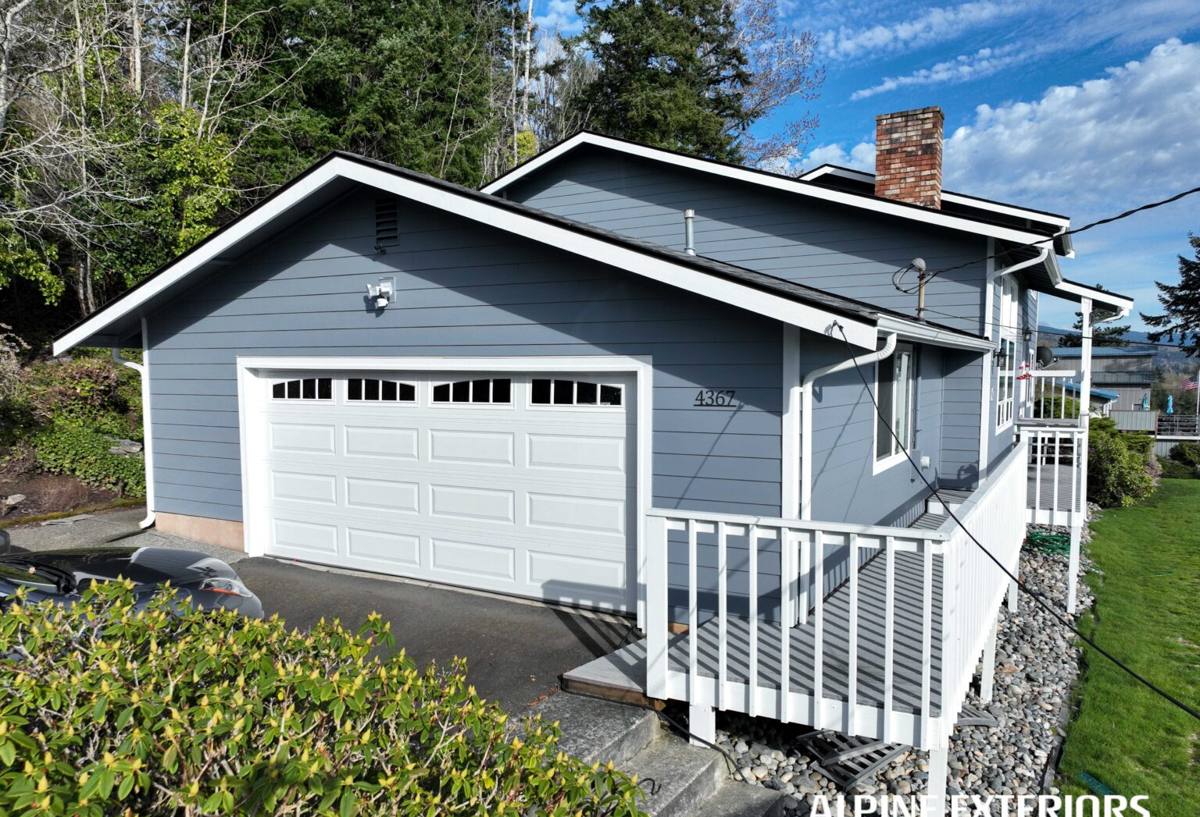
What Conway's Climate Actually Does to a Roof
It helps to understand the specific mechanisms at work, because they're different from what a roof faces on the dry side of the state.
Salt Air and Corrosion
Airborne salt from the Sound settles on every exterior surface, including roofing fasteners, flashing, and metal panels. On lower-grade or improperly coated materials, this accelerates rust and corrosion around fastener heads and cut edges — exactly the points where a roof is most vulnerable to leaks in the first place.
Driving Rain
Skagit County storms rarely fall straight down. Wind-driven rain pushes water sideways and upward under laps, seams, and flashing that weren't detailed for that kind of pressure. A roof that sheds rain fine in calm weather can still leak during a wind event if the underlayment and flashing details weren't built for wind-driven moisture.
A Long Moss Season
Shade, moisture, and mild temperatures mean moss and algae have a growing season that stretches most of the year in this part of Skagit County. Moss doesn't just look bad — it holds moisture against the roof surface, lifts shingle tabs, and works its way into any gap it can find. On some materials it's a constant, expensive maintenance fight.
Why Metal Roofing Performs Well in Conway
Corrosion Resistance Where It Matters
Properly specified metal roofing — galvanized or galvalume steel with a factory-applied coating, or aluminum where salt exposure is a bigger concern — is built to resist the exact corrosion process salt air causes. The coating system matters more than the base metal alone; we specify products and fastener hardware rated for coastal exposure rather than standard-grade materials that are fine inland but marginal here.
A Surface Moss Struggles to Hold
Moss needs a rough, porous surface and standing moisture to establish itself. A smooth metal panel with proper slope and no exposed organic material gives moss very little to grip. It doesn't make a roof moss-proof forever, but it dramatically reduces the growth compared to asphalt shingles or wood shakes in the same shaded, damp conditions.
Water Shedding Under Wind Pressure
Standing seam and properly lapped panel systems are built around continuous, mechanically locked seams rather than overlapping tabs. That construction handles wind-driven rain far better than a shingle system relying on gravity and adhesive strips alone, which is exactly the failure mode driving rain exploits.
Metal Roofing Options We Install
Not every metal roof is the same system, and Conway's conditions make some options a better fit than others. Here's how the common choices compare for a home in this specific environment.
| System | Best For | Salt Air Performance | Trade-Offs |
|---|---|---|---|
| Standing Seam (concealed fastener) | Most Conway homes, especially near the water or under tree cover | Excellent — no exposed fasteners for salt to attack | Higher upfront cost; requires skilled installation |
| Exposed Fastener Panel | Outbuildings, shops, budget-conscious projects | Good, but fastener seals need periodic inspection | Fasteners are the weak point in salt air over time |
| Stone-Coated Steel | Homeowners wanting a shake or tile look with metal durability | Good, with proper coating spec | More installation detail at cut edges and coating exposure |
What a Correct Metal Roof Installation Involves
The metal itself is only part of the system. Most metal roof problems we get called to fix trace back to details underneath the panels, not the panels themselves.
Underlayment Built for Wind-Driven Rain
We use synthetic or high-temp underlayment rated for the wind-driven moisture Conway sees, with self-adhering membrane at eaves, valleys, and penetrations — the spots where sideways rain finds its way in first.
Fastening and Panel Spacing
Fastener type, spacing, and torque all affect how a panel handles thermal movement and wind uplift. Over- or under-driven fasteners are a common source of leaks and premature coating failure, especially in salt air where any exposed metal at a fastener head corrodes faster.
Flashing, Valleys, and Penetrations
Every valley, chimney, vent pipe, and wall intersection is a place water pressure concentrates during a storm. These need custom-formed flashing integrated with the underlayment, not generic trim pieces caulked into place.
Ventilation
Metal roofs need proper attic and roof-deck ventilation to manage condensation, which matters even more in a consistently damp climate like Skagit County's. Poor ventilation can trap moisture against the underside of the deck regardless of how good the metal above it is.
Our Process for a Conway Metal Roofing Project
- On-site inspection. We walk the existing roof, check the deck condition, note shade patterns and moss history, and identify problem valleys or penetrations before quoting anything.
- System selection. Based on the home's exposure — how close to the water, how much tree cover, roof slope and complexity — we recommend the panel type and coating that fits, not a one-size-fits-all default.
- Tear-off and deck prep. We remove the old roofing, inspect the deck for rot or soft spots (common under long-term moss growth), and repair before anything new goes down.
- Underlayment and flashing installation. This is where wind-driven rain resistance actually gets built — done carefully, before a single metal panel is installed.
- Panel installation. Panels are installed to spec for fastener type, spacing, and seam engagement, with extra attention at valleys, eaves, and any wall or chimney intersections.
- Final walkthrough. We check seams, flashing, and fastener lines, clear debris, and confirm the roof is ready for the next storm season, not just for closing out the job.
Maintenance in a Salt Air, Moss-Prone Environment
A correctly installed metal roof needs far less maintenance than shingles in this climate, but "less" isn't "none." A short annual routine keeps small issues from becoming leaks.
- Clear overhanging branches and debris that trap moisture against the panels or in valleys.
- Check gutters and downspouts each fall — clogged gutters back water up under eave flashing during heavy rain.
- Look at exposed fasteners (if your system uses them) for early rust staining, and have them addressed before it spreads.
- Watch for moss or algae starting in shaded valleys or north-facing slopes, and treat it early rather than letting it establish.
- After any major windstorm, a quick visual check of flashing and seams is worth the ten minutes it takes.
Cost Factors for a Conway Metal Roofing Project
Metal roofing costs more upfront than asphalt shingles, and the honest answer is that the price depends heavily on the specifics of your roof. The main variables we price against are:
- Panel system — standing seam runs higher than exposed-fastener panel, largely due to labor and material.
- Roof complexity — valleys, dormers, and multiple roof planes add flashing work and labor time.
- Deck condition — rot or soft decking found during tear-off means repair before installation can proceed.
- Coating and gauge — coastal-grade coatings and heavier gauge steel cost more but hold up better to salt exposure.
- Access — steep pitch, tall walls, or tight lot access affect labor time regardless of material.
We give a firm, itemized quote after the on-site inspection rather than a ballpark over the phone, because two roofs that look similar from the curb can have very different underlying conditions.
Why Hire a Crew That Already Works in Conway
Detailing a roof correctly for salt air, driving rain, and heavy moss isn't something you learn from a general roofing manual — it's something you learn by working this specific stretch of Skagit County repeatedly. A crew that already knows how Conway's shade patterns, wind exposure, and moisture behave will spot the flashing and ventilation details that matter here before they become the callback that a generalist crew has to learn about the hard way. That local pattern recognition is worth as much as the material spec itself.
If you're weighing metal roofing for a home in Conway, we're happy to walk the roof, talk through the options that make sense for your specific exposure, and put together a straightforward, no-pressure estimate. There's a form below — reach out and we'll get you scheduled.