 Anacortes Roofing
 Decks Built for Mount Vernon's Skagit Valley Conditions
Mount Vernon sits inland from the water compared to some of the towns we work in around Skagit County, but it still gets the same weather pattern that defines this whole corner of Washington: long wet winters, a short dry season, and air that carries enough moisture and salt off Puget Sound and the Skagit River delta to work on anything left outdoors year-round. A deck built here has to survive months of standing dampness, freeze-thaw cycles in the shoulder seasons, and a moss and algae season that can run from October through April. A deck design that works fine in a drier climate often struggles here within a few years — soft spots in the decking, rusted fasteners, slick surfaces, and rot at the ledger board are the most common problems we get called out to fix.
This page covers what actually matters when you're building a custom deck in Mount Vernon: the materials that hold up, the construction details that keep water from doing damage, and what our process looks like from first call to final walkthrough.
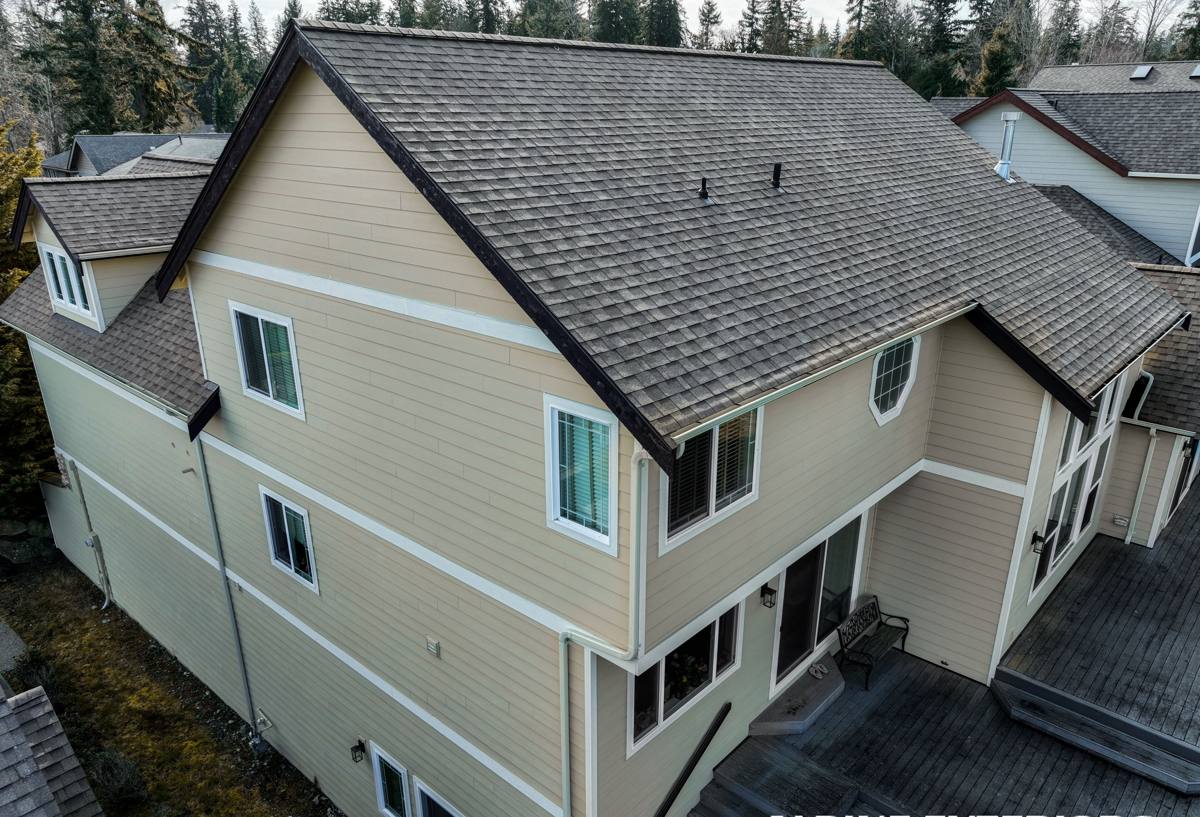
What Salt Air, Rain, and Moss Actually Do to a Deck
Moisture and Driving Rain
Skagit County doesn't just get rain — it gets sustained, wind-driven rain that pushes water sideways into places a lot of builders assume are protected. Ledger boards (where the deck attaches to the house), stair stringers, and the underside of railings take the brunt of it. If water gets behind flashing or sits in a joint that can't drain, wood starts to break down from the inside before it ever looks bad on the surface.
Salt Air and Corrosion
Being near Puget Sound means airborne salt is part of the environment, even a few miles inland. Salt accelerates corrosion in anything metal — screws, joist hangers, bolts, and railing hardware. A deck built with the wrong fastener grade can develop rust stains and weakened connections well before the wood itself is a problem. This is one of the most common shortcuts we see on older decks in this area.
Moss, Algae, and Slip Risk
Shaded decks, north-facing decks, and anything under tree cover in Mount Vernon will grow moss and algae during the wet months if the surface holds moisture. Beyond the cosmetic issue, a mossy deck board is a genuine slip hazard, and moss holds water against the wood longer than bare boards would, speeding up rot underneath.
Choosing the Right Decking Material for This Climate
There's no single "best" decking material — the right choice depends on your budget, how much upkeep you want to do, and how exposed the deck is to sun, shade, and standing moisture. Here's how the common options actually perform in Skagit County conditions.
| Material | Moisture Performance | Maintenance | Typical Lifespan Here |
|---|---|---|---|
| Pressure-treated fir/hem-fir | Good if sealed regularly; vulnerable at cut ends and fastener holes | Annual cleaning, re-seal every 1-2 years | 15-20 years with upkeep |
| Cedar | Naturally rot- and insect-resistant, but still needs sealing to hold color and shed water | Cleaning plus periodic staining/sealing | 20-25 years with upkeep |
| Composite decking | Excellent — doesn't absorb water or rot; some early-generation composites held mildew, current products handle Northwest moisture well | Occasional wash-down, no sealing or staining | 25-30+ years, manufacturer-warrantied |
| PVC/capped polymer | Best moisture resistance of any decking surface material | Lowest — soap and water | 25-30+ years, manufacturer-warrantied |
Composite and capped polymer decking cost more up front but make sense for homeowners who want to spend their weekends using the deck instead of maintaining it. Wood decking costs less initially and can look excellent, but only if the sealing schedule is kept up — skip a year or two here and you'll see it in the wood's condition faster than you would in a drier climate.
What a Correctly Built Deck Actually Involves
A deck that holds up in this climate isn't about using premium boards on top of a standard frame — the details underneath and behind the visible surface matter more.
Footings and Framing
Footings need to be sized and set below frost depth per local code, and framing lumber should be rated for ground contact where it's close to grade or exposed to consistent moisture. Undersized footings or framing that skips this rating are a common source of long-term settling and squeaking.
Ledger Board Flashing
Where the deck attaches to your house is the single most important detail on the whole structure. Proper flashing — installed correctly, in the right order relative to your home's siding and house wrap — keeps water from tracking behind the ledger board and into your wall framing. This is the detail most responsible for hidden rot damage when it's done wrong, and it's also the hardest to inspect once the deck is finished, which is why it has to be done right the first time.
Fastener and Hardware Grade
Given the salt air here, we use stainless or hot-dip galvanized fasteners and connectors rated for coastal or treated-lumber exposure, not the standard-grade hardware that's fine in drier inland regions. It costs a little more upfront and saves you from rust streaks and weakened joints down the road.
Drainage and Airflow Underneath
Decks built low to the ground or over patios need a plan for water to get out from underneath, not pool there. Poor under-deck drainage is one of the biggest contributors to moss growth and slow rot that homeowners don't notice until the deck starts to feel soft.
Our Process for a Mount Vernon Deck Project
- On-site consultation. We walk the space with you, talk through how you'll actually use the deck, and assess sun exposure, drainage, and how the deck will tie into your home.
- Design and material selection. We go over material options honestly, including cost and maintenance trade-offs, so you're picking based on real information, not just what looks good in a photo.
- Permitting. Most deck projects in Skagit County require a permit depending on size and height — we handle that process so you don't have to chase it down yourself.
- Construction. Footings, framing, ledger flashing, and decking installed in the right order, with inspections built into the schedule rather than rushed at the end.
- Final walkthrough. We go over the finished deck with you, including what maintenance it needs and when, so there are no surprises in year two or three.
Permits and Local Code Basics
Deck permitting requirements vary by height, size, and whether the structure is attached to your home, and Skagit County and local jurisdictions review these against current building code. Rather than guess at what applies to your project, we pull the actual requirements for your specific deck before we start design work, so the plan we build is the plan that gets approved — not a redesign after the fact.
Seasonal Deck Maintenance Checklist
Whatever material you choose, a little seasonal attention goes a long way in this climate. A simple checklist we give homeowners:
- Clear leaves and debris from between boards and off ledger areas before fall rains set in
- Wash the surface at least once a year to remove early moss and algae growth before it establishes
- Check railing and stair hardware annually for rust or looseness, especially on decks facing prevailing wind and rain
- Reseal wood decking on the schedule recommended for your specific product — don't wait until it looks dry and gray
- Confirm under-deck drainage paths stay clear, particularly after storms
- Look at the ledger board area where the deck meets the house once a year for any staining, soft wood, or gaps in flashing
Why Hiring a Crew That Already Works in Mount Vernon Matters
A deck built with a generic, one-size-fits-all approach can look fine the day it's finished and still fail years earlier than it should, simply because it wasn't built for this specific climate. A crew that regularly works Skagit County jobs already knows which fastener grades hold up, how the local permitting process runs, and where water tends to cause problems on homes in this area. That familiarity shows up in fewer callbacks, fewer surprises, and a deck that's still solid a decade or two down the road instead of needing early repairs.
If you're planning a new deck or replacing one that's showing its age, we're happy to come take a look, walk you through material and design options honestly, and put together a straightforward, no-pressure estimate using the form below.