 Anacortes Roofing
 Why Mount Vernon Decks Wear Out Faster Than the Manual Says
A deck in Mount Vernon lives a harder life than the lumber yard tag on the joists would suggest. This part of Skagit County sits close enough to the water to pick up salt-laden air, and the region's long stretch of overcast, wet months means a deck can go weeks at a time without a real drying-out period. Add in the moss and algae that thrive on shaded, damp wood surfaces here, and you have a structure that's constantly being asked to hold moisture it was never designed to hold for that long. Homeowners who moved here from drier climates are often surprised at how much faster a deck shows wear compared to what they're used to.
None of this means a deck is doomed — it means repair and maintenance have to account for local conditions instead of following a generic checklist. A deck built or repaired without that in mind will look fine for a season or two and then start failing in places that are expensive to fix once they're hidden behind good-looking boards.
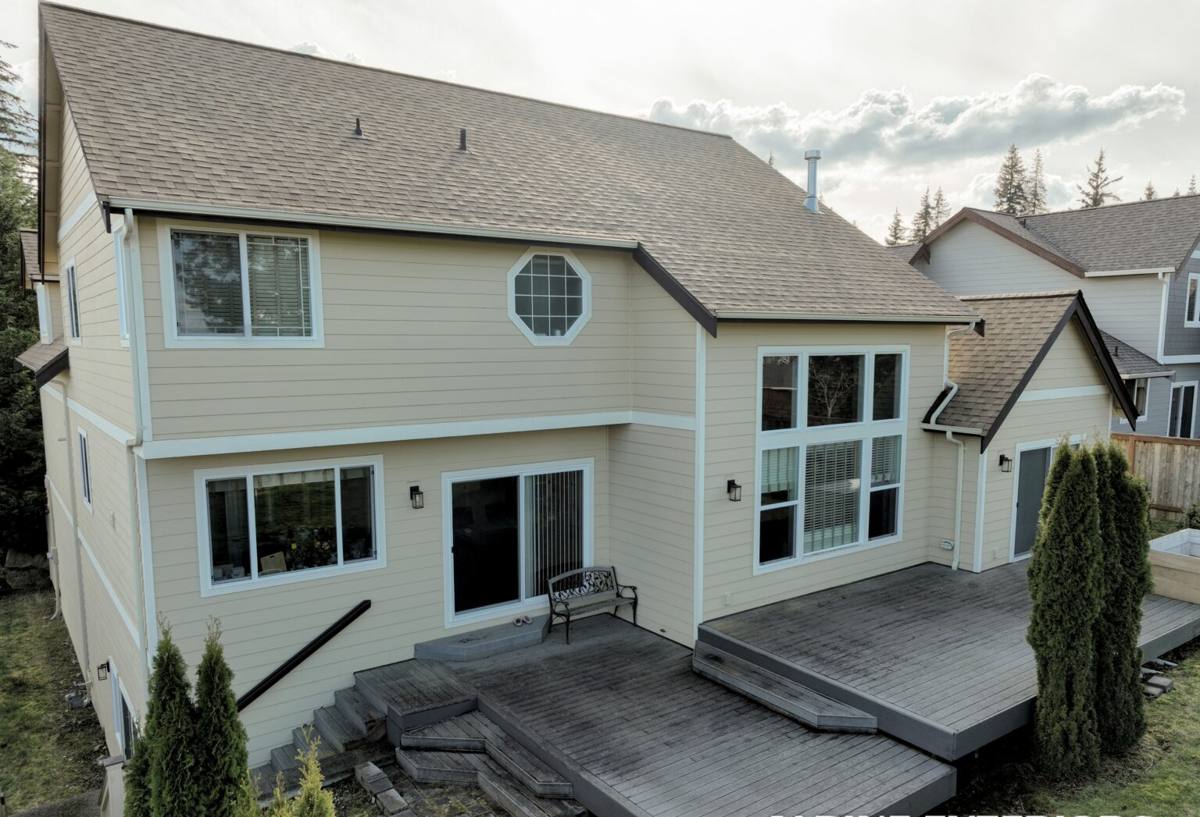
Signs Your Deck Needs Repair — and What They Actually Mean
Most deck problems don't show up as one dramatic failure. They show up as small signals that get ignored until they're structural.
Surface-Level Signs
- Boards that feel spongy or flex more than they used to when you walk across them
- Persistent green or black staining that comes back within weeks of cleaning
- Fasteners backing out, or dark streaking running down from screw heads (a sign moisture is getting into the wood around the fastener)
- Gaps or cupping in boards that weren't there when the deck was newer
Structural Signs — Don't Wait on These
- Any movement or bounce at the point where the deck attaches to the house (the ledger board)
- Railings or posts that wiggle at the base
- Stairs that feel less solid than the rest of the deck
- Visible rot, soft wood you can push a screwdriver into, or discoloration at post bases and around footings
Surface issues are often a maintenance or partial-repair job. Structural signs mean the deck's ability to safely hold weight is in question, and that's not something to wait on through another wet season.
What a Correct Deck Repair Actually Involves
A repair that just replaces the boards you can see is a cosmetic fix, not a structural one. Done right, a deck repair starts underneath and works outward.
The Ledger Board Connection
This is the board that ties the deck to the house, and it's the single most common place we find hidden damage — usually because flashing was missing, undersized, or installed incorrectly when the deck was built. If water has been tracking behind the ledger for years, the framing lumber and even the house's rim joist can be compromised long before it shows on the surface.
Framing and Support
Joists, beams, posts, and footings all need to be checked for rot, cracking, and correct spacing — not just the pieces that are easiest to reach. Undersized or overspanned framing is a common shortcut on older or budget-built decks, and it only becomes obvious when something finally gives.
Fasteners and Hardware
Old nails, undersized screws, or hardware that isn't rated for exterior/coastal-adjacent exposure are a frequent source of slow failure. Corroding fasteners don't just look bad — they lose holding strength, which is how a deck that "seemed fine" ends up with a loose railing or a board that lifts in a windstorm.
Decking Surface and Drainage
Board spacing, slope away from the house, and gaps between boards all affect how fast water sheds off the deck instead of sitting on it. A repair that reinstalls boards tight and flat, with no attention to drainage, sets the deck up to fail again in the same spots.
Common Failure Points We See on Mount Vernon Decks
| Area | What Typically Goes Wrong | Why It Happens Here |
|---|---|---|
| Ledger board | Hidden rot behind the board, loose connection to the house | Missing or failed flashing, prolonged damp conditions |
| Posts and footings | Softening at the base, settling, cracked concrete | Constant ground moisture, freeze-thaw cycling in colder stretches |
| Fasteners and hardware | Rust streaking, backed-out screws, weakened joist hangers | Salt air acceleration of corrosion near the water |
| Decking surface | Persistent moss/algae, splintering, cupped boards | Shade, limited drying time, extended wet season |
| Stairs and railings | Loose posts, wobble at connection points | High-use, high-stress connections that loosen over time |
Repair or Replace? How We Help You Decide
Not every problem deck needs to come down. But there's a point where patching costs more, over time, than doing it right once. A few honest factors we weigh with homeowners:
| Factor | Favors Repair | Favors Replacement |
|---|---|---|
| Framing condition | Solid, dry, correctly sized | Rot or damage at multiple structural points |
| Ledger board | Sound, properly flashed | Compromised connection to the house |
| Age of decking surface | Under roughly 10-15 years, isolated wear | Widespread cupping, splintering, or repeated moss return |
| Scope of damage | Localized to one or two areas | Spread across the deck or recurring in the same spots |
| Budget goals | Extend usable life affordably | Reset the clock and avoid repeat repair costs |
We'll tell you plainly if a repair is a reasonable, cost-effective fix or if you're better off putting that money toward a rebuild instead of chasing the same problem every year.
Our Deck Repair Process
- Inspection. We check the ledger connection, framing, posts, footings, fasteners, and decking surface — not just the areas you flagged, since problems in one spot often start elsewhere.
- Straight answer. You get a clear explanation of what's actually wrong, what's cosmetic versus structural, and what your realistic options are.
- Repair plan. We scope the work to match the actual damage — full framing repair where needed, targeted board and hardware replacement where that's sufficient.
- The repair itself. Proper flashing at the ledger, correctly rated fasteners, sound framing, and attention to drainage so water sheds instead of sitting.
- Finish and follow-through. We leave you with a deck that's structurally sound and a clear idea of what maintenance will keep it that way.
Materials: What We Use and Why
Framing repairs get pressure-treated lumber rated for ground contact where applicable, paired with fasteners and hardware rated for exterior and higher-moisture exposure — standard hardware corrodes faster this close to the water, and that corrosion is exactly what causes the loose railings and popped screws we get called out for.
For decking surfaces, both wood and composite have a place, and we'll walk you through the honest trade-offs rather than pushing one over the other. Wood decking is more affordable up front and easier to spot-repair, but it needs regular cleaning and sealing to hold up against moss and moisture here. Composite decking costs more initially and resists moss and rot better, but it still needs proper ventilation and drainage underneath — composite over poorly built framing just hides the same underlying problems longer. The right choice depends on your budget, how much upkeep you want to do, and the condition of what's already there.
Maintenance That Actually Extends Deck Life
Most of the repairs we get called for start as maintenance that got skipped for a season or two. A little regular attention goes a long way in this climate.
- Clear leaves and debris out of board gaps so water can drain instead of pooling
- Clean moss and algae off the surface before it gets a foothold, especially in shaded areas
- Check for soft spots, loose fasteners, or wobble at railings and stairs once or twice a year
- Reseal or refinish wood decking on the schedule the product calls for — don't stretch it because it "still looks okay"
- Keep an eye on the ledger board area and any spot where the deck meets the house siding
- Trim back vegetation that keeps sections of the deck shaded and slow to dry
Why Hiring a Crew That Already Works Mount Vernon Matters
A contractor who works this area regularly has already seen how local conditions play out on real decks over real years — which ledger connections tend to fail first, how fast moss comes back on a north-facing section, which hardware holds up and which corrodes early. That's not something you get from a general contractor passing through on a one-off job. It shows up in fewer callbacks, fewer surprises once boards come off, and repairs that are built to hold up against Skagit County's weather rather than a generic set of assumptions.
If your deck is showing any of the signs above — or you just want an honest read on its condition — we're happy to take a look. Reach out for a free, no-pressure estimate using the form below.