 Anacortes Roofing
 Roofing in Edison: A Different Kind of Climate Test
Edison sits low in the Samish flats, close enough to Padilla Bay and Samish Bay that the air off the water is part of daily life. That's good for the scenery and hard on a roof. Salt-laden marine air, near-constant humidity, driving rain off the Sound, and a moss season that seems to run longer every year all work on a roof at once, not one at a time. A new roof installed for this stretch of Skagit County needs to be built with that combination in mind from the first course of shingles to the last piece of flashing.
This page covers what a correct new roof installation looks like specifically for homes in and around Edison — not a generic overview of roofing in general, but the details that matter for this location: material choices that hold up to salt and moisture, ventilation that actually slows moss growth instead of just delaying it, and a process built around how weather moves through this part of the county.
What Edison's Climate Actually Does to a Roof
Salt Air and Metal Fatigue
Airborne salt from the bays doesn't just sit on the surface of a roof — it works into exposed metal fasteners, flashing seams, and vent housings over time. Standard electro-galvanized fasteners and lower-grade flashing can start showing surface corrosion years before the shingles themselves are due for replacement. In a coastal-influenced area like Edison, that means fastener and flashing material selection matters more than it would fifteen or twenty miles inland.
Driving Rain and Wind-Driven Water
Rain in this part of Skagit County rarely falls straight down. Wind off the water pushes it sideways, which means water finds its way under shingle tabs, around chimney flashing, and into valleys that a calmer climate might tolerate with looser detailing. A roof built for Edison has to assume rain will hit it from an angle, not just from above.
Moss, Shade, and Standing Moisture
Between tree cover, persistent damp, and long stretches of overcast weather, moss has ideal growing conditions for a large part of the year. Moss isn't just cosmetic — its root structure lifts shingle edges, holds moisture against the roof deck, and accelerates granule loss. A roof that fights moss passively, through ventilation and material choice, will outlast one that relies only on periodic cleaning.
Signs an Edison Home Needs Replacement, Not Another Repair
Homeowners often ask us to patch a problem that's really a sign the roof has reached the end of its useful life. A few patterns we look for before recommending full replacement over repair:
- Granule loss heavy enough that shingles look bald or gutters are consistently full of grit
- Moss established at the ridge or in valleys, not just on shaded slopes
- Soft or spongy decking felt underfoot during an inspection walk
- Multiple past repairs in different areas of the same roof within a few years
- Daylight visible through the attic at roof boards, or water staining spread across several rafter bays
- Shingles curling, cracking, or losing their seal in more than one section of the roof
One or two of these on their own might mean a targeted repair is still the right call. Several together, especially on a roof already past its expected lifespan, usually means a new roof will cost less over the next decade than continuing to chase leaks.
What a Correct New Roof Installation Actually Involves
A new roof is more than laying down shingles. In a climate like Edison's, the parts most homeowners never see matter as much as the material on top.
Tear-Off and Deck Inspection
We remove the old roofing down to the deck rather than layering over it. That's the only way to see what the years of salt air and moisture have actually done to the sheathing — soft spots, delaminated plywood, or rot around penetrations don't show up until the old roofing is gone. Any compromised decking gets replaced before anything new goes down.
Underlayment Built for Wind-Driven Rain
Given how often rain here comes in sideways, we treat underlayment as a real second line of defense, not a formality. That means synthetic underlayment across the field and self-adhered ice-and-water barrier at the eaves, valleys, and around every roof penetration — the spots where wind-driven water is most likely to find a way in.
Flashing That Won't Corrode Early
Flashing around chimneys, skylights, sidewalls, and vent pipes is where most roof leaks actually start, not in the open field of shingles. We use flashing and fastener materials chosen for the corrosion resistance this coastal-influenced air demands, not just whatever meets minimum code in a drier inland climate.
Ventilation Sized for This Roof, Not a Standard Formula
Balanced intake and exhaust ventilation keeps the underside of the deck dry and slows the conditions moss needs to establish. We calculate net free ventilation area based on the actual attic square footage rather than assuming a one-size-fits-all vent count — under-ventilating is common on older Skagit County homes and it's one of the quieter causes of early deck rot.
Choosing Materials for Edison's Conditions
There's no single "best" roofing material for every home — the right choice depends on budget, roof pitch, and how much moss and moisture resistance you want to pay for up front versus manage over time.
| Material | Moss/Moisture Behavior | Typical Lifespan Here | Trade-Offs |
|---|---|---|---|
| Architectural asphalt shingles | Good with proper ventilation; algae-resistant granule options recommended | 25-30 years | Best value; needs periodic moss maintenance on shaded slopes |
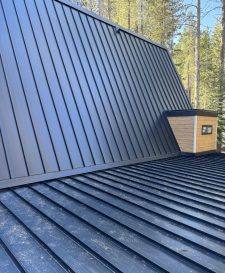
| Standing seam metal | Excellent — moss struggles to grip smooth metal panels | 40-50+ years | Higher upfront cost; fastener quality matters more in salt air |
| Synthetic/composite shingles | Very good; resists moisture absorption better than wood | 30-40 years | Higher material cost than asphalt; installation sensitivity to detailing |
| Cedar shake | Poor without diligent upkeep — absorbs moisture, feeds moss | 20-25 years with upkeep | High maintenance burden in this climate; we're honest about that trade-off upfront |
We'll walk through these options against your budget and roof design during the estimate rather than pushing one product. What matters most is that whatever material you choose is installed with the ventilation and flashing detail this climate requires — the material choice matters less than the installation quality behind it.
Our Process, Start to Finish
- On-site inspection. We look at the current roof, attic ventilation, and any trouble spots you've noticed, and take measurements for an accurate estimate.
- Written estimate and material walkthrough. You get a clear breakdown of scope, materials, and cost — no vague allowances that turn into surprises later.
- Scheduling around the weather. We plan installs with realistic weather windows in mind rather than rushing a job into a forecast that doesn't hold.
- Tear-off and deck repair. Old roofing comes off, the deck is inspected, and any damaged sheathing is replaced before anything new goes down.
- Underlayment, flashing, and ventilation installed to spec. This is where the climate-specific work happens — ice-and-water barrier, corrosion-resistant flashing, and correctly sized intake/exhaust venting.
- Roofing material installed per manufacturer specification. Proper nailing patterns and exposure are what keep a warranty valid and a roof performing as designed.
- Final walkthrough and cleanup. We check the completed roof with you and make sure the property is cleared of debris and old material.
Cost Factors Homeowners Should Understand
Every roof is priced individually, but the variables that move the number are consistent. Rather than quote a figure that won't reflect your actual home, here's what drives cost up or down:
| Factor | Effect on Cost |
|---|---|
| Roof pitch and accessibility | Steeper or harder-to-access roofs require more labor and safety setup |
| Deck condition | Rotted or soft sheathing found during tear-off adds material and labor |
| Material selection | Ranges from standard asphalt to premium metal or synthetic products |
| Number of penetrations | Chimneys, skylights, and vents each require additional flashing work |
| Ventilation upgrades needed | Adding intake/exhaust venting where an older roof was under-ventilated |
| Layers of existing roofing | Multiple existing layers add tear-off time and disposal cost |
We'd rather walk your specific roof and give you real numbers than quote a broad range that doesn't mean much for your situation. That's what the free estimate is for.
Why Local Experience in Edison Matters
A crew that already works this part of Skagit County has already dealt with the specific combination of conditions your roof is up against — the salt exposure off the bays, the shade patterns that keep certain slopes damp longer, and the drainage patterns typical of low-lying properties near the flats. That experience shows up in small decisions: which flashing grade to spec, how much ventilation an older attic actually needs, and where moss is likely to return if it isn't addressed at the source during installation.
It also matters for scheduling and permitting. Knowing the realistic weather windows for this area, and having already worked within Skagit County's permitting process, keeps a project moving instead of stalling on avoidable delays.
Questions Worth Asking Any Roofer Before You Hire
- Do you tear off down to the deck, or install over existing layers?
- What underlayment and ice-and-water barrier do you use, and where is it applied?
- How do you calculate attic ventilation for my specific roof?
- What flashing material and fastener grade do you use, and why?
- What warranty is on the workmanship, separate from the manufacturer's material warranty?
- Can you provide proof of licensing and insurance before work begins?
A contractor who answers these clearly, without hedging, is telling you something about how they build a roof — not just what they charge for one.
Ready to Talk About Your Roof?
If your roof is showing its age or you just want an honest read on how much life it has left, we're happy to come take a look. The estimate is free, there's no pressure attached to it, and you'll get a straight answer about whether you need a new roof now, in a few years, or not at all. Use the form below to get started.