 Anacortes Roofing
 Skyline sits up on the bluff on the west side of Anacortes, with open views out toward the water — and that exposure is exactly what makes a new roof up there a different job than a roof replacement a few streets inland. Homes here take wind and salt air straight off the Salish Sea, and combined with Skagit County's long stretch of driving rain and a moss season that can run most of the year in shaded spots, a Skyline roof works harder than most in this area. When it's time to replace one, getting the underlying details right matters more here than it does on a sheltered lot in town.
What Salt Air, Rain, and Moss Actually Do to a Roof Up Here
Three things wear out a roof faster on a bluff lot like Skyline than almost anywhere else nearby: salt-laden air, wind-driven rain, and shade-driven moss growth. Salt air is corrosive to exposed metal — fasteners, flashing, drip edge, and any hardware that isn't rated for coastal exposure will show rust and deterioration well before an equivalent roof would inland. Wind-driven rain doesn't just fall straight down; it gets pushed sideways and upward under shingle edges, into valleys, and around anything that penetrates the roof deck, which means flashing and underlayment details that would be adequate elsewhere can fall short on an exposed lot. And moss, fed by shade from mature trees and a climate that rarely dries out completely, takes hold on north- and east-facing slopes and gradually lifts shingles as it grows, trapping moisture underneath.
None of that means a Skyline roof is doomed to fail early. It means the installation has to account for all three factors from the start, rather than relying on a standard spec that assumes average exposure.
Signs a Skyline Roof Has Reached the End of Its Service Life
- Granule loss heavy enough that you're finding grit in gutters or downspouts regularly
- Shingles that are cupping, curling, or cracking, especially on wind-exposed slopes
- Moss mats thick enough that they're holding water against the shingle surface rather than just staining it
- Rusted or failing flashing at valleys, chimneys, skylights, or wall intersections
- Soft spots in the decking, or staining on interior ceilings that suggests water has already gotten past the roofing system
- A roof that's due on age alone — most asphalt roofing in this climate is realistically in replacement territory well before its rated lifespan on paper
What a Correct New Roof Installation Actually Involves
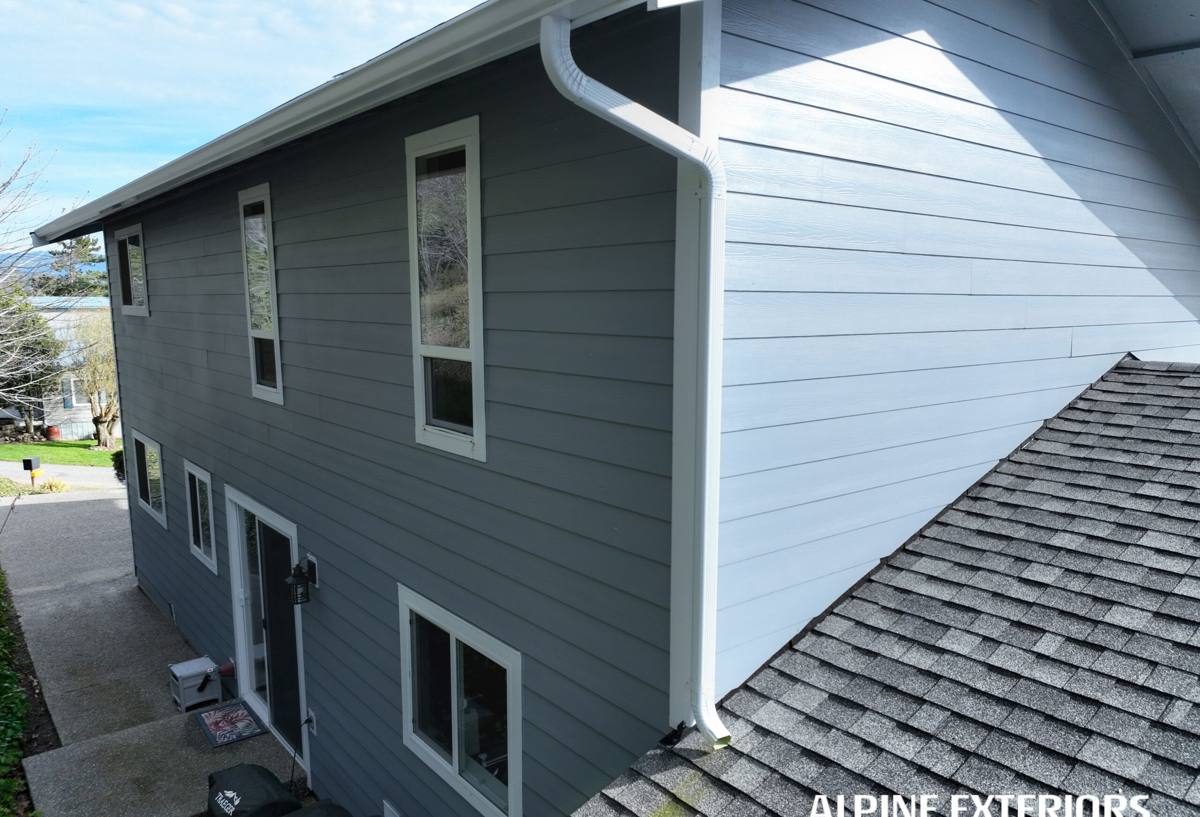
A roof replacement on a Skyline home isn't just stripping off old shingles and laying down new ones. Once the old roofing is torn off, the deck itself needs to be inspected — any plywood or sheathing that's soft, delaminated, or water-stained gets replaced before anything new goes down, because installing a new roof over a compromised deck just hides a problem instead of fixing it. From there, the sequence of layers underneath the visible roofing is what actually determines how the roof performs through a wet Pacific Northwest winter.
The Layers That Do the Real Work in This Climate
Ice-and-water shield membrane at eaves, valleys, and around every roof penetration gives the system a self-sealing backup where wind-driven rain is most likely to find a way in. Synthetic underlayment across the rest of the deck adds a water-resistant layer beneath the shingles that ordinary felt doesn't match, and it holds up better to the repeated wet-dry cycling this climate puts it through during construction and over the life of the roof. Flashing at every valley, chimney, skylight, and wall intersection has to be formed and lapped correctly — this is where most roof leaks in this area actually originate, not from the shingles themselves failing outright. Drip edge and fastener choice matter too; components rated for coastal or marine exposure resist the corrosion that plain galvanized hardware succumbs to faster on a bluff lot than it would a few miles inland.
Choosing Roofing Materials for a Wind- and Moisture-Exposed Lot
There isn't one "correct" roofing material for every Skyline home — the right choice depends on the home's exposure, roof pitch, budget, and how much shade the roof sits under. What we focus on with homeowners is matching the material to the actual conditions the roof will face, not just what's cheapest up front.
| Material | Wind & Rain Performance | Moss Resistance | Typical Lifespan Here |
|---|---|---|---|
| Standard 3-tab asphalt shingles | Adequate on sheltered slopes, more vulnerable to wind uplift on exposed ones | Low without added protection; moss takes hold readily | Shorter end of the range in coastal exposure |
| Architectural (dimensional) asphalt shingles | Heavier profile and stronger wind ratings, better suited to open, exposed roofs | Better than 3-tab, still benefits from moss-resistant granules or treatment | Mid-to-long range with correct installation |
| Metal roofing | Strong wind and rain performance; sheds water quickly off steep slopes | High — moss struggles to gain a foothold on a smooth metal surface | Long range, with higher upfront cost |
For most Skyline homes, architectural shingles rated for higher wind exposure hit the right balance of performance and cost. Metal roofing is worth a serious look on steeply pitched or heavily shaded sections where moss has been a recurring problem, since it removes a lot of the surface texture moss needs to establish itself.
Ventilation: The Part of the System Nobody Sees
A new roof is only as good as the airflow underneath it. Ridge and soffit ventilation keep the attic space at a temperature and humidity level that doesn't trap moisture against the underside of the deck — and in a climate as damp as this one, poor ventilation shortens the life of a roof from the inside out, regardless of how good the shingles on top are. When we replace a roof, we check existing ventilation and correct it if it's undersized or blocked, because installing new roofing over an attic that can't breathe just delays the same moisture problems that likely contributed to the old roof's condition.
Our New Roof Installation Process
- Inspection and estimate: we walk the roof and attic where accessible, note the condition of decking, flashing, and ventilation, and give you a written scope before any work starts
- Tear-off and deck check: old roofing comes off down to the deck, and any damaged sheathing is identified and replaced
- Underlayment and flashing: ice-and-water membrane at vulnerable areas, synthetic underlayment across the field, and new flashing formed and installed at every penetration and intersection
- Roofing installation: shingles or metal panels installed to manufacturer spec, with fastening patterns appropriate for the wind exposure of the site
- Ventilation check: ridge and soffit venting confirmed or corrected as part of the job, not treated as an afterthought
- Cleanup and walkthrough: site cleared of debris and nails, and we walk the finished roof with you and go over warranty coverage
Why a Crew That Already Works Skyline Matters
Skagit County's coastal microclimates aren't uniform, and Skyline's particular combination of elevation, open water exposure, and pockets of heavy tree shade is something a crew learns from working on homes here repeatedly — not from a generic spec sheet. We know which slopes on a Skyline roof take the worst of a winter storm off the water, which sections stay shaded and damp long enough to grow moss no matter what material is used, and which flashing details are worth extra attention versus which are just code minimums. That shapes how we scope a job before a single shingle comes off.
It also matters for the practical side of the work. Bluff lots often mean narrower access, staging considerations around mature trees, and site conditions that differ from a flat, open lot elsewhere in Anacortes. A crew that's worked Skyline before isn't guessing at any of that on your job.
What Affects the Cost of a New Roof on a Skyline Home
| Cost Factor | Why It Matters |
|---|---|
| Roof size and pitch | More surface area and steeper slopes mean more material, labor, and safety setup |
| Number of tear-off layers | Removing multiple layers of old roofing adds labor and disposal cost |
| Deck condition | Rotten or delaminated sheathing found during tear-off adds repair cost, but skipping it isn't an option |
| Material choice | Standard shingles, architectural shingles, and metal roofing carry different material and labor costs |
| Roof complexity | Valleys, dormers, skylights, and chimneys all add flashing work and time |
| Access and site conditions | Bluff lots, tree cover, and driveway or staging constraints can affect labor time |
We don't quote a price without seeing the roof first — anyone who does is guessing. A proper estimate accounts for what your specific roof needs, not a generic square-footage number.
What to Expect From Your Estimate
- A hands-on inspection of the roof surface, flashing, and attic ventilation where accessible
- An honest read on what's failing from age versus what's failing from exposure or a past installation shortcut
- A clear explanation of material options suited to your roof's specific exposure and shade conditions
- A written scope and estimate, with no pressure to sign on the spot
If you own a home in Skyline and your roof is showing moss buildup, curling or missing shingles, or staining that suggests water has already worked its way in, we're glad to take a look. Reach out for a free, no-pressure estimate — we'll give you a straight read on what your roof actually needs and why.