 Anacortes Roofing
 Board & Batten Siding Built for Oak Harbor's Marine Climate
Board and batten is one of the most requested siding styles we see in Oak Harbor, and it's easy to understand why. The vertical lines suit the mix of farmhouse, craftsman, and modern homes common in this part of Skagit and Island County, and the deep shadow lines the battens create hold up visually in the flat, overcast light this region gets for much of the year. But board and batten is also a style that punishes the wrong material choice. The same reveal and joint pattern that looks sharp on day one becomes a maintenance headache within a few years if the underlying product can't handle what Puget Sound weather throws at it.
We install board and batten siding on Oak Harbor homes as part of our standard service area, and this page walks through what actually matters here: the climate factors specific to this stretch of coastline, what a correctly built board and batten wall assembly looks like, and why we only use James Hardie fiber cement to do it.
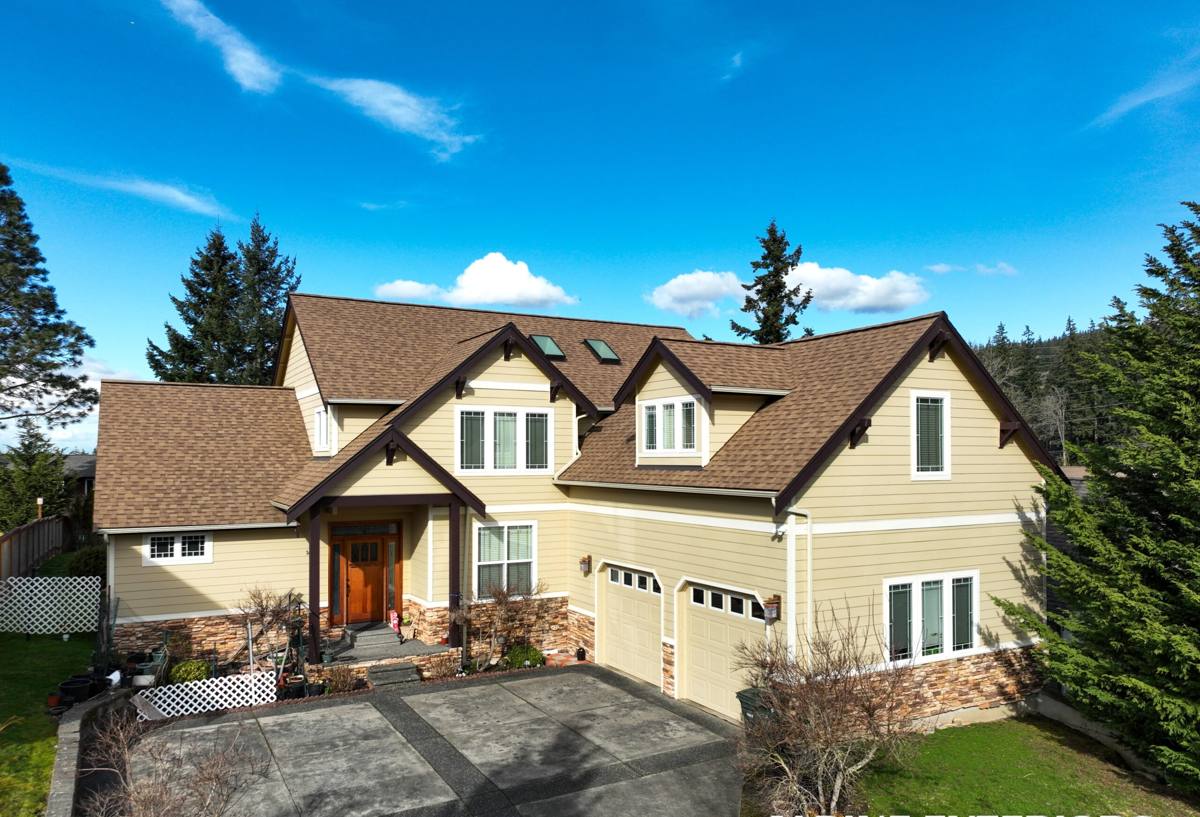
What Salt Air, Driving Rain, and Moss Season Do to a Board & Batten Wall
Oak Harbor sits close enough to Puget Sound that salt-laden air is a real factor on exterior materials, not a theoretical one. Combine that with wind-driven rain off the water and a long, damp moss season that can stretch from fall through spring, and you have three separate stressors working on a home's siding at the same time.
Salt Air and Corrosion
Salt air accelerates corrosion on fasteners, flashing, and any metal trim tied into the siding system. Board and batten depends on consistent, well-fastened battens running the full height of the wall — if the fastener corrodes before the board does, the batten loosens, water gets behind it, and the whole point of the style (a tight, clean vertical line) is lost.
Driving Rain and Wind-Driven Moisture
Because board and batten relies on overlapping vertical boards and battens rather than a lapped horizontal profile, the joints and reveals are more exposed to wind-driven rain pushed sideways off the Sound. A wall assembly here needs a real water-resistive barrier and correctly lapped flashing behind every joint, not just a good-looking face.
Moss and Sustained Dampness
Anacortes and the surrounding islands get long stretches of low sun and high humidity, which is exactly what moss and algae need to take hold. On a board and batten wall, moss tends to establish first in the batten shadow lines and inside corners where airflow is lowest — those are the spots that stay damp longest after a storm.
Material Options for Board & Batten Siding
Board and batten can be built from several materials. Homeowners in Oak Harbor often ask us to compare them honestly, so here's how they stack up against the specific conditions this area sees.
| Material | Moisture Behavior | Maintenance | Typical Lifespan Here |
|---|---|---|---|
| Cedar board & batten | Absorbs moisture, swells and shrinks with weather cycles | Regular refinishing/sealing, more frequent in salt air | Shorter without diligent upkeep |
| Primed spruce/pine | Prone to moisture wicking at cut ends and joints | Repainting on a tight cycle | Shorter, especially near the water |
| Vinyl board & batten | Doesn't absorb water but can trap it behind panels; distorts in heat/cold cycling | Low, but limited repair options if damaged | Moderate, cosmetic fading over time |
| James Hardie fiber cement | Engineered to resist moisture absorption and swelling | Occasional wash-down, factory finish holds color | Long-term, backed by a strong transferable warranty |
Every material on that list can be installed correctly or incorrectly. But some materials give you far less margin for error in a climate like this one, which is why we've standardized on one.
Why We Install Only James Hardie Fiber Cement for Board & Batten
We don't install cedar, primed spruce, vinyl, LP SmartSide, Cemplank, or Allura on board and batten jobs, and we want to be upfront about why. It's not that these products are junk — it's that we've made a professional decision about what holds up best, with the least callback risk, in this specific coastal environment.
James Hardie's fiber cement is non-combustible, which matters given the wildfire smoke and ember exposure that has become a more regular concern across Western Washington summers. It doesn't absorb moisture the way wood-based products do, which directly addresses the driving-rain and sustained-dampness problems specific to Oak Harbor. And the ColorPlus factory finish is baked on under controlled conditions, which means the color holds up better against salt air and UV exposure than a field-applied paint job ever will, and it doesn't require the repainting cycle that cedar or primed wood demands.
Hardie also builds engineered product lines (HZ5 and similar) specifically for high-moisture, harsher climates, which is exactly the profile this stretch of coastline fits. Combined with a strong transferable warranty, that gives homeowners something wood and vinyl alternatives generally can't match: a documented, manufacturer-backed expectation for how the product performs over decades, not just years.
What a Correct Board & Batten Installation Actually Involves
The material is only half the equation. Board and batten fails prematurely almost as often from bad installation as from bad material choice. A correct installation on an Oak Harbor home includes:
- A continuous water-resistive barrier installed before any siding goes up, with no gaps at penetrations
- Properly lapped flashing at every window, door, and roof-to-wall transition, shingled so water sheds outward, not into the wall
- Correct fastener type and spacing for fiber cement, driven to manufacturer spec — not overdriven, not underdriven
- Battens spaced and fastened to allow the wall to manage moisture rather than trap it behind the boards
- Rain screen or drainage gap detailing where the wall assembly calls for it, especially on sides exposed to prevailing wind and rain
- Factory-cut and factory-primed edges kept intact wherever possible, with field cuts properly sealed per Hardie's installation instructions
- Consistent caulking and sealant at joints, using products rated for the movement and exposure this style sees
Skip any one of these steps and you can end up with a wall that looks right for a season or two before moisture finds the shortcut.
Our Process, Start to Finish
When we take on a board and batten project in Oak Harbor, the process is straightforward:
- On-site assessment. We look at the existing wall assembly, note any rot, moisture damage, or flashing issues that need to be addressed before new siding goes on — not after.
- Material and color selection. We walk through Hardie's board and batten profiles and ColorPlus options so the finished look fits the home and the neighborhood.
- Written estimate. Scope, materials, and timeline in writing, no pressure to sign on the spot.
- Prep and removal. Old siding comes off, sheathing gets inspected, and any water-resistive barrier or flashing repairs happen before a single new board goes up.
- Installation to spec. Battens, fasteners, and flashing installed per Hardie's published instructions, not shortcuts.
- Final walkthrough. We go over the finished job with the homeowner before calling it complete.
Living With Board & Batten After Installation
One of the practical advantages of a correctly installed fiber cement board and batten wall is how little it asks of the homeowner afterward. An occasional gentle wash-down to keep salt residue and early moss growth from taking hold is usually all that's needed — there's no repainting cycle, no annual sealing, and no swelling and shrinking to watch for. If moss does start to establish in shaded, low-airflow spots, addressing it early with a soft wash keeps it from becoming a bigger problem, since Oak Harbor's damp season gives moss a long runway if it's left alone.
Why It Matters That We Already Work in Oak Harbor
Board and batten detailing that works fine in a drier inland climate isn't automatically right for a home exposed to Puget Sound wind and salt air. Flashing details, drainage planning, and even fastener choice need to account for what this specific coastline does to a wall over time. A crew that already works in Oak Harbor and the surrounding Anacortes area has seen how these walls actually perform through a few wet seasons — not just how they look on installation day. That local track record is part of what you're hiring when you bring in a crew, not just the material itself.
If you're weighing board and batten for a home in Oak Harbor, we're happy to walk the exterior with you, talk through the specific exposure your walls face, and put together a straightforward, no-pressure estimate using the form below.