 Anacortes Roofing
 Why Decks Wear Out Faster Near Oak Harbor
Oak Harbor sits close enough to the water that every deck in the area is dealing with the same slow, steady pressure: salt-laden air, wind-driven rain that gets under railings and ledger boards, and a moss season that can stretch from fall through spring. None of that is unusual for this part of Washington, but it does mean a deck built the way you'd build one inland won't hold up the same way here. Fasteners corrode faster near the water. Wood stays damp longer between dry spells. And moss doesn't just grow on the surface of decking boards - it holds moisture against the wood and finds its way into seams, screw heads, and anywhere two boards meet.
When we're called out to look at a deck in Oak Harbor, the failure pattern is almost always the same: it's not the decking boards on top that failed first, it's what's underneath - the framing, the ledger connection to the house, or the fasteners holding it all together. A deck that looks rough on the surface might have years of life left in the structure. One that looks fine on top can be hiding rot or corroded hardware that makes it unsafe to load. That's why deck replacement here is a structural job first and a cosmetic job second.
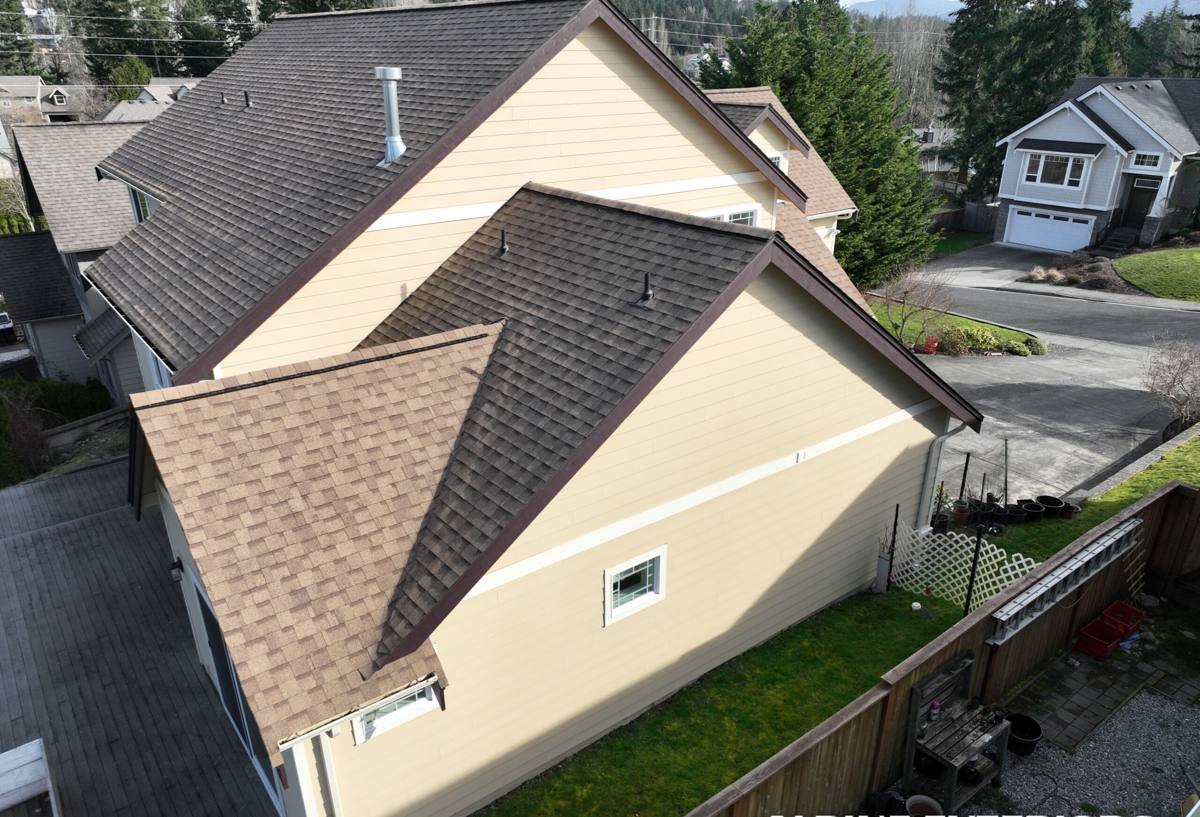
Repair or Full Replacement?
Not every deck needs to come out entirely. Sometimes a deck's frame is sound and only the surface boards or railings need attention. But there's a point where patching individual boards costs more over time than doing the job right once, and it stops making sense to keep chasing problems one board at a time. Signs we look for when deciding between repair and replacement include:
- Soft, spongy, or bouncy spots when you walk across the deck
- Visible rot or dark staining around post bases, ledger boards, or joists
- Rust streaks running down from fasteners or connectors
- Railings that wiggle or feel loose when pushed
- Persistent moss or algae growth that returns within weeks of cleaning
- Gaps opening up between the house and the deck's ledger board
- A deck more than 20-25 years old that has never been re-fastened or resealed
If more than one or two of these show up, especially anything involving the frame or the ledger connection, replacement is usually the more honest recommendation. A deck that's structurally compromised isn't something we'll patch and send you on your way with - your family's safety on that deck matters more than a quick save on the estimate.
What "Correct" Framing Looks Like Here
A deck built for this climate needs a few things a fair-weather deck doesn't:
- Proper flashing at the ledger board where the deck attaches to the house, so wind-driven rain can't work its way behind it
- Joist tape or a moisture barrier over the tops of joists, so standing water doesn't sit directly against exposed end grain
- Corrosion-resistant fasteners and structural connectors rated for the coastal environment, not standard interior-grade hardware
- Adequate spacing between decking boards for drainage and airflow underneath, so moss and mildew have less to hold onto
- Post bases set above grade and, where possible, off direct soil contact, so ground moisture isn't wicking straight into the post
Decking Material Options: A Straight Comparison
There's no single "best" decking material - the right choice depends on your budget, how much maintenance you're willing to do, and how close your deck sits to salt spray and shade. Here's how the common options compare for a home in this area:
| Material | Maintenance | Moisture Behavior | Typical Lifespan Here |
|---|---|---|---|
| Pressure-treated wood | Needs re-sealing every 1-3 years | Prone to splitting/checking if neglected; moss-prone in shade | 10-15 years with upkeep |
| Cedar | Regular sealing or staining to hold color and resist rot | Naturally rot-resistant but still absorbs moisture over time | 15-20 years with upkeep |
| Composite decking | Occasional washing, no sealing or staining | Doesn't rot or splinter; some early-generation boards can trap surface moisture and grow mildew if not cleaned | 25-30+ years, warranty-backed |
| PVC/capped polymer | Lowest maintenance; wash as needed | Fully moisture-resistant surface; best resistance to salt air and mildew | 25-30+ years, warranty-backed |
We're not going to tell you composite or PVC is the only "right" answer - plenty of homeowners like the look and feel of real wood and are willing to keep up with sealing on a schedule. What we will say is that if low maintenance matters to you and your deck gets regular salt air or heavy shade, a capped composite or polymer product will save you real time and money over a 20-year span. The trade-off is upfront cost and, for some products, a more particular installation process - board spacing and fastening have to be done to the manufacturer's spec or the warranty doesn't hold up.
Railings and Hardware: Where Coastal Air Does the Most Damage
Railings and fasteners take the brunt of salt air exposure because they're often the thinnest, most exposed metal on the whole structure. Standard zinc-coated screws and brackets can start showing surface rust within a few years this close to the water. On a replacement, we spec stainless or coated fasteners rated for coastal use, and we pay close attention to railing post connections - that's the spot most likely to loosen up over time and the spot you really don't want failing under load. Cable railing systems and aluminum railing systems both hold up well here as long as the hardware connecting them is rated for the environment; we'll walk you through the option that fits your deck's style and your budget.
How Our Deck Replacement Process Works
- On-site assessment. We look at the existing structure from the ground up - framing, ledger connection, post footings, and any visible rot or corrosion - and give you an honest read on what's salvageable and what isn't.
- Written estimate. You get a clear breakdown of materials, labor, and timeline before any work starts. No surprise change orders for things we should have caught upfront.
- Permitting. Deck replacements of most sizes require a building permit locally. We handle that paperwork and coordinate any required inspections so you don't have to chase it down yourself.
- Demo and structural rebuild. Old decking, railings, and any compromised framing come out. We rebuild the frame to current code with proper flashing, moisture barriers, and coastal-rated fasteners.
- Decking and railing installation. Boards and railings go in per manufacturer spec, with attention to drainage gaps and secure post connections.
- Final walkthrough. We check the deck with you before calling the job done - looking for level, secure railings, clean fastener lines, and proper drainage.
Timing the Job Around Local Weather
Deck replacement is doable most of the year here, but scheduling around the wettest stretches makes for a cleaner job and better curing conditions for sealants and adhesives. We plan installations to avoid pouring rain whenever possible, and when a project has to happen during a wetter part of the year, we adjust the schedule and materials handling so moisture doesn't get trapped in framing before it's closed in. This is one of the reasons an outside crew unfamiliar with this stretch of coastline can end up cutting corners they don't even realize matter - they're used to a different rain pattern.
Why a Local Crew Matters for This Job
Deck framing details that are optional in a drier inland climate are not optional here. A crew that regularly works Oak Harbor and the surrounding Anacortes area already knows which fastener grades hold up, which decking products handle salt air without early mildew problems, and where moss tends to collect on a typical deck layout in this region. That's the difference between a deck that needs attention again in five years and one that holds up for two or three decades.
Before you hire anyone for a deck replacement, it's worth asking a few direct questions:
- Will you pull the required building permit, or is that on me?
- What fastener and connector grade do you use, and is it rated for coastal exposure?
- What moisture barrier or flashing do you install at the ledger board?
- Can you show me examples of the decking or railing material's manufacturer warranty?
- How do you handle drainage and spacing to reduce moss buildup?
- What's the expected timeline, and how do you plan around wet weather?
A contractor who answers these clearly and specifically, without dodging into vague reassurance, is one who's done this kind of job in this kind of climate before.
Maintenance After Replacement
Whatever material you choose, a little seasonal attention goes a long way toward getting the full lifespan out of a new deck:
- Sweep leaves and debris off the deck regularly, especially under trees, to keep moisture and moss from settling in
- Rinse or wash the surface a few times a year to clear salt residue and organic buildup
- Check railing posts and stair connections annually for any looseness
- If you chose wood, keep up with the sealing schedule - skipping a year is often when problems start
- Keep gutters and downspouts near the deck clear so runoff isn't dumping extra water onto or under it
If you're weighing whether your current deck needs a repair or a full replacement, or you're ready to plan a new one built for what this stretch of coastline actually throws at it, we're happy to take a look and give you a straight answer. Fill out the form below for a free, no-pressure estimate.