 Anacortes Roofing
 Old Town Anacortes Homes Face a Specific Kind of Weather
Old Town Anacortes is one of the city's older, established residential pockets, sitting close to the water on Fidalgo Island. Homes here tend to be older than the average Skagit County build, which means original siding, additions from different decades, and exterior details that have absorbed a lot of Pacific Northwest weather over the years. That combination — age, proximity to the water, and a marine climate — is exactly why siding decisions in this neighborhood deserve more thought than a generic "match what's there" replacement.
Three things do most of the damage to siding in this part of Anacortes: salt-laden air coming off the water, wind-driven rain that gets pushed sideways into walls instead of falling straight down, and a moss and algae season that runs long because the wood siding and trim in this climate rarely get enough consecutive dry days to fully shed moisture. None of these are unique to Old Town, but the neighborhood's age and its exposure to the water make the effects show up sooner and more visibly than in newer, more sheltered parts of Anacortes.
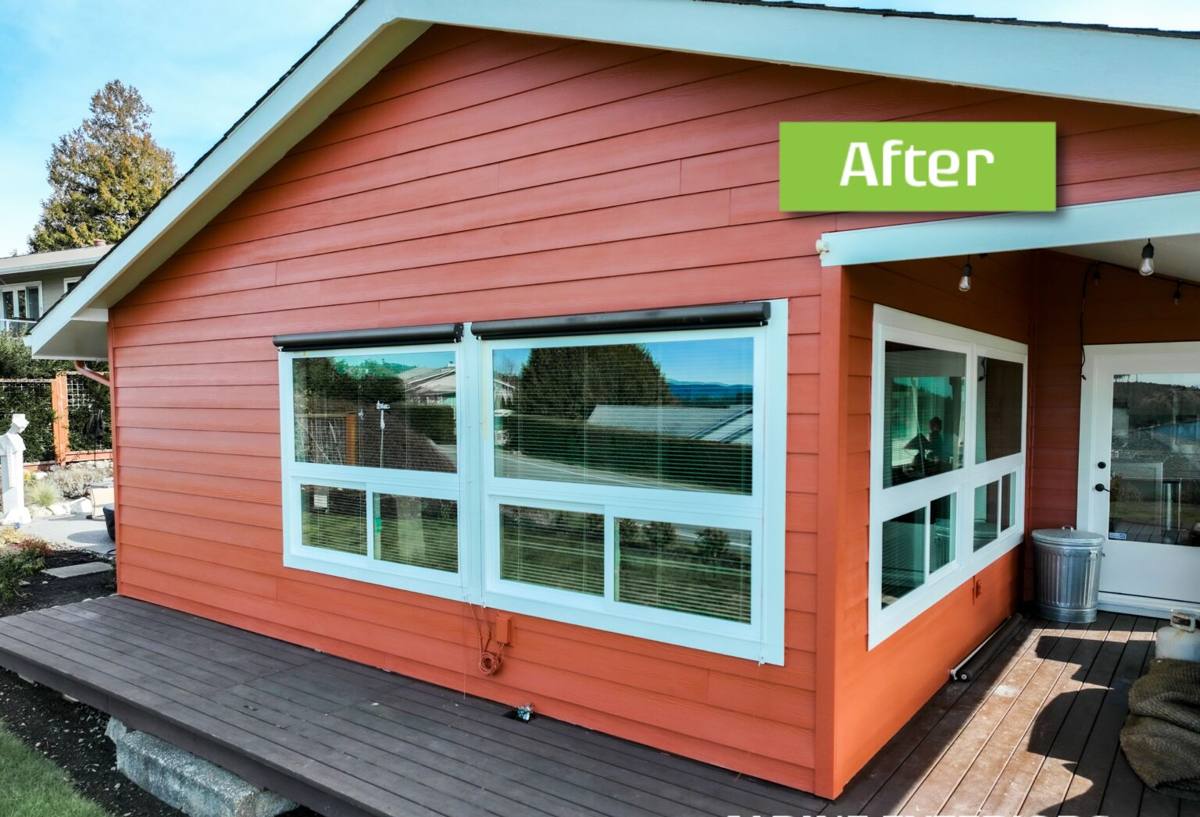
What Salt Air, Driving Rain, and Moss Actually Do to a Wall
Salt Air
Airborne salt is corrosive to exposed metal — fasteners, flashing, and hardware that aren't rated or installed for a marine environment will pit and rust faster here than they would ten or fifteen miles inland. On older homes, this often shows up first at nail heads bleeding rust through paint, at corroded flashing above windows and doors, and at trim fasteners that have backed out or failed. It's a slow process, but it's constant, and it doesn't stop because a house is a few blocks from open water rather than directly on it.
Driving Rain
Anacortes gets weather off the Strait and the Sound that doesn't fall straight down — wind pushes it sideways, which means it gets forced into laps, seams, and any gap in the siding's water management rather than just running off the surface. On an older home, that's often where the real vulnerability is: original flashing details, or repairs done over the decades, that were never built to handle sustained wind-driven rain. Water that gets behind the siding and can't get back out is what causes rot, not water hitting the face of the wall.
The Long Moss and Algae Season
Skagit County's wet season stretches long, and Old Town's tree cover and proximity to the water keep humidity and shade high on north- and east-facing walls for much of the year. Wood siding, in particular, holds moisture in its grain, and that's exactly what moss and algae need to establish. Once growth takes hold, it holds even more water against the wall surface, which accelerates rot underneath it — a cycle that gets harder to break the longer it's left alone.
Why James Hardie Fits This Kind of Climate
We install James Hardie fiber cement siding exclusively, and coastal, older neighborhoods like Old Town Anacortes are a big part of why. Fiber cement doesn't have the grain structure that lets wood absorb and hold water, it doesn't feed moss and algae growth the way bare or aging wood does, and it's non-combustible — a real consideration on older, closely-spaced lots. James Hardie's ColorPlus factory finish is also baked on and warranted separately from the substrate, which matters in a salt-air environment where field-applied paint tends to fail at trim and cut edges first.
| Factor | Older Wood / Aging Original Siding | James Hardie Fiber Cement |
|---|---|---|
| Moisture absorption | Absorbs into the grain, swells and checks over time | Doesn't absorb like wood; engineered to resist moisture-driven damage |
| Moss and algae resistance | Textured, moisture-holding surface feeds growth | Denser surface and factory finish resist growth better |
| Salt air / corrosion exposure | Relies entirely on fastener and flashing condition | Same fastener/flashing rules apply, but the cladding itself doesn't corrode |
| Finish life | Field paint typically needs recoating every 5-8 years in this climate | ColorPlus finish is factory-applied and separately warranted |
| Fire exposure | Combustible | Non-combustible fiber cement |
This isn't a knock on wood as a historic material — older homes in Old Town often have wood siding because that's what was available when they were built. It's an honest comparison of what each material asks of a homeowner going forward, in this specific climate.
What a Correct James Hardie Installation Actually Involves
James Hardie makes several siding lines engineered for different climate zones, and the Pacific Northwest falls under their wetter-climate specification. Using the right product line matters, but it's only part of a correct install. The details that actually keep water out over the long run are in the workmanship:
- A drainage plane and, where called for, a rainscreen gap behind the siding so any moisture that gets past the cladding has a path to drain and dry out
- Correct flashing at every window, door, and roof-to-wall intersection — the places wind-driven rain is most likely to find a way in
- Proper fastener type, spacing, and penetration depth per Hardie's installation specification, not generic siding nailing patterns
- Gapping and caulking at butt joints and trim per manufacturer spec, rather than relying on caulk to make up for tight, incorrect fits
- Correct clearance between the bottom of the siding and grade, decks, and roof lines so splash-back and standing moisture don't sit against the material
- Sheathing and framing inspected and repaired before any new siding goes up — covering rot instead of fixing it is the single most common source of "new siding, same old problem"
Skip any one of these and you can end up with a wall that looks like a proper Hardie install but performs like a poor one. This is where a lot of siding jobs go wrong — not in the material choice, but in the installation details that don't show up until years later.
Our Process on an Old Town Anacortes Home
- Walk the exterior with you — we look at siding condition, trim, flashing, and any visible moss, staining, or soft spots, and talk through what we're seeing in plain terms.
- Check what's underneath — once siding comes off, we inspect the sheathing and framing for water damage before anything new goes up. On an older home this is often where the real story is.
- Address water management first — house wrap, flashing, and drainage details get corrected or upgraded to current standards before siding installation starts, not treated as an afterthought.
- Install to manufacturer spec — the correct HardieZone product for our climate, installed with the fastening, gapping, and flashing details James Hardie requires for the warranty to hold.
- Final walkthrough — we go over the finished exterior with you and address anything on your punch list before we consider the job done.
Why a Crew That Already Works Old Town Anacortes Matters
Older neighborhoods close to the water have quirks that don't show up on newer builds — original framing that's out of square, layered repairs from previous decades, tight lot lines, and mature trees that affect drying time and access. A crew that's already worked on homes in this part of Anacortes has seen these issues before and doesn't have to relearn them on your project. That familiarity also means fewer surprises mid-job and faster, more realistic answers when you ask what a repair is actually going to involve.
Being local also matters after the job is finished. Fasteners, trim, and caulk joints are all things worth a look a year or two after installation, especially in a marine climate — and it's a lot easier to get that kind of follow-up from a crew based in Skagit County than from an outfit that was only ever passing through.
Cost Factors Specific to This Kind of Project
| Factor | Why It Affects Cost |
|---|---|
| Condition of existing sheathing | Rot or water damage found during tear-off requires repair before new siding can go on |
| Number of stories and access | Older, narrower lots and multi-story sections can require more scaffolding or staging |
| Amount of trim and detail work | Older homes often have more window and trim detail than newer builds, which adds labor |
| Current water management | Homes with inadequate or missing flashing/drainage details need that corrected as part of the job |
| Siding profile and finish selection | Lap width, texture, and ColorPlus finish color all factor into material cost |
We give straightforward estimates based on what we actually find on your home, not a generic per-square-foot number that ignores condition.
Living With James Hardie Siding in This Climate
Once it's installed correctly, James Hardie is a low-maintenance product, but "low-maintenance" doesn't mean "no attention needed" in a place with this much moisture. An occasional rinse to keep organic buildup from establishing on shaded, north-facing walls, a visual check of caulk joints and trim after the wettest months, and prompt attention to anything that looks off around windows or roof lines will keep the siding performing the way it's designed to for decades. That's a fairly small ask compared to what wood siding requires in the same conditions.
If you're weighing a siding replacement or repair on a home in Old Town Anacortes, we're glad to take a look and give you a straightforward, no-pressure estimate — just fill out the form below.