 Anacortes Roofing
 Storm Damage in a Salt Air Climate
Old Town Anacortes sits close enough to the water that every roof in the neighborhood lives with salt-laden air on top of the usual Pacific Northwest weather. That combination is harder on roofing than most homeowners realize. Wind-driven rain off Rosario Strait and Guemes Channel doesn't just fall straight down — it gets pushed sideways under shingle tabs, into flashing laps, and along ridge lines that were never designed to handle horizontal water pressure. Add in the salt content in the air, which accelerates corrosion on fasteners, flashing, and any exposed metal, and you get a roof that ages faster here than it would twenty miles inland.
Storm damage repair in this neighborhood isn't just about patching what broke in the last windstorm. It's about recognizing that Old Town's older housing stock, mature tree canopy, and shoreline exposure all stack the deck against a roof's normal lifespan. A repair that doesn't account for that context tends to fail again within a season or two.
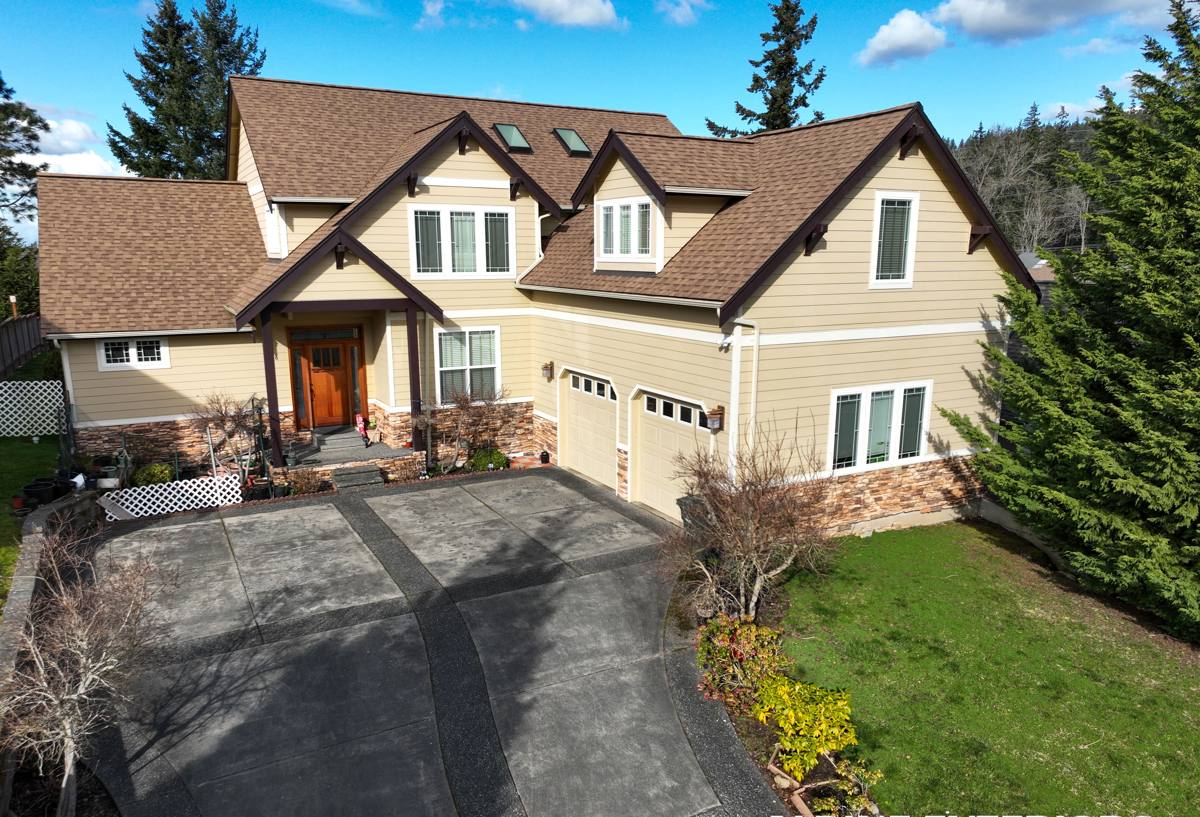
What Old Town Anacortes Roofs Are Actually Up Against
Wind and Driving Rain
Storms coming through the Strait of Juan de Fuca and across Fidalgo Island regularly bring sustained wind combined with heavy rain. That's the exact combination that lifts shingle edges, drives water under improperly sealed flashing, and works loose any fastener that wasn't set correctly the first time. A roof can look intact from the ground after a storm and still have compromised seals that won't show a leak until the next heavy rain.
Long Moss Season
Skagit County's wet season runs long, and Old Town's tree cover and marine humidity give moss and algae plenty of time to establish on north-facing slopes and shaded valleys. Moss holds moisture against the roofing material, works its way under shingle tabs as it grows, and can lift material enough that a moderate wind event turns a healthy-looking roof into one with dozens of exposed nail heads and open seams.
Salt Air Corrosion
Bare or poorly coated fasteners, flashing, and vent components corrode faster in this neighborhood than they would further from the water. Corroded flashing doesn't fail dramatically — it fails quietly, as pinholes and thinned metal that let water through during exactly the kind of storm that also strains everything else on the roof.
What a Correct Storm Damage Repair Actually Involves
A lot of storm repair work in this area is done poorly because it's rushed — tarps go up, a few shingles get swapped, and the underlying cause never gets addressed. A correct repair works through the roof in order, not just at the visible damage point.
- Full-roof inspection, not just the area where the leak or damage showed up — wind and moss damage rarely stay isolated to one spot
- Assessment of underlayment condition anywhere water intrusion is suspected, since surface shingles can look fine while the layer underneath is already compromised
- Flashing check at every penetration and transition — chimneys, vents, valleys, and wall-to-roof intersections are where storm damage concentrates
- Fastener condition review, especially on older sections where salt air corrosion may have already weakened nail or screw holding power
- Moss and debris clearing before any repair work, so new material isn't sealed down over material that's already trapping moisture
- Matching replacement materials as closely as possible to existing roofing, both for appearance and to avoid mixing incompatible products
Skipping any of these steps is how a "repaired" roof ends up leaking again in the next storm — often in a slightly different spot, which makes homeowners think it's a new problem rather than an incomplete first repair.
How We Approach Storm Damage Calls in Old Town Anacortes
1. Prompt Assessment
After a storm, we prioritize getting eyes on the roof quickly, both from the ground and, where it's safe to do so, up close. Timing matters — the longer a compromised roof sits exposed, especially with more rain in the forecast, the more likely a small problem becomes a bigger one.
2. Honest Damage Documentation
We document what we find in plain terms: what's storm-related, what's pre-existing wear that the storm exposed, and what's cosmetic versus functional. This matters most if you're filing an insurance claim — adjusters want a clear, accurate record, not an inflated one.
3. Temporary Protection When Needed
If a section of roof is actively letting water in, our first move is stopping that intrusion, even if the full repair has to wait a day or two for materials or weather. Protecting the interior of the home comes before anything else.
4. Repair Scoped to the Actual Damage
We repair what's damaged and flag what's aging but not yet failed, so you can make an informed decision about timing rather than being surprised by it later. We don't pad a storm repair into a full re-roof recommendation unless the roof's condition genuinely calls for it.
Repair vs. Replacement: How to Think About the Decision
Not every storm-damaged roof needs to be replaced, and not every roof that "just needs a patch" should be patched. The right call depends on a few honest factors.
| Factor | Favors Repair | Favors Replacement |
|---|---|---|
| Roof age | Under roughly 12-15 years, in otherwise sound condition | Near or past expected material lifespan |
| Extent of damage | Isolated to one section, valley, or penetration | Spread across multiple slopes or recurring in different spots |
| Underlayment condition | Dry and intact where inspected | Saturated, deteriorated, or unknown due to age |
| Prior repair history | First significant storm event on this roof | Multiple past patches, especially in the same areas |
| Moss/algae condition | Light, recently cleared | Heavy, longstanding growth with material lift |
When a roof is on the edge, we'll tell you it's on the edge rather than pushing hard in either direction. A repair that's likely to need another repair within a year isn't actually saving you money.
Why It Matters to Hire a Crew That Already Works in Old Town Anacortes
Roofing in this neighborhood isn't identical to roofing in drier, inland parts of Skagit County. A crew that regularly works here already understands the exposure differences between shoreline-adjacent lots and more sheltered inland streets, knows which roof orientations tend to hold moss longest given the tree cover here, and has a feel for how salt air affects fastener and flashing choices over time. That local pattern recognition shows up in small but important decisions — which underlayment and fastener specs make sense for this exposure, where to expect hidden damage even when the visible shingles look fine, and how urgently a given issue needs attention before the next system moves through.
It also matters for insurance claims. A contractor familiar with storm patterns in this area can document damage in a way that's specific and credible, which tends to move claims along faster than generic damage reports.
What Homeowners Can Check After a Storm
You don't need to get on the roof yourself, but there are things worth checking from the ground or from inside the house after a significant wind or rain event.
- Granules collecting in gutters or at downspout outlets, which can indicate accelerated shingle wear
- Visible shingle tabs that look lifted, curled, or missing from the ground or a nearby vantage point
- New or worsening water stains on interior ceilings, especially near chimneys, skylights, or roof valleys
- Debris — branches, moss clumps — that's accumulated in valleys or against roof-to-wall transitions
- Any sagging or unevenness along the roofline that wasn't there before
If you notice any of these, it's worth having it looked at sooner rather than later. Water intrusion problems compound quickly once they start, especially heading into another wet stretch.
Maintenance Between Storms
The single biggest thing Old Town Anacortes homeowners can do to reduce storm damage risk is stay ahead of moss growth. A roof that's kept reasonably clear of moss and debris sheds wind-driven rain the way it's designed to. A roof with established moss growth is already compromised before the storm even arrives, because the material underneath has been lifted and weakened. Periodic gutter clearing matters too — a gutter backed up with debris sends water where it shouldn't go during exactly the kind of heavy rain events this area gets regularly.
If your roof has taken storm damage, or you just want an honest read on its condition before the next system rolls through, we're happy to come take a look. The estimate is free, there's no pressure, and you'll get a straight answer about what actually needs attention.