 Anacortes Roofing
 Roof Repair for Ship Harbor Homes
Ship Harbor sits right where Fidalgo Island meets open water, close to the ferry terminal and the shoreline trails that give this part of Anacortes its character. That waterfront position is also what makes roofing here different from a repair job ten miles inland. Homes in this area take a steady combination of salt-laden marine air, wind-driven rain that doesn't fall straight down so much as get pushed sideways and up under roof edges, and a moss season that runs long on shaded, north-facing slopes through the wet Skagit County winter. A roof repair that doesn't account for all three tends to fail again within a season or two, even if it looks fine the day the crew leaves.
This page covers roof repair specifically — not full tear-off replacement — for Ship Harbor homes: what the local climate actually does to a roof over time, what a correct repair involves, how we approach the work, and why it matters that the crew doing it already works this stretch of Anacortes regularly.
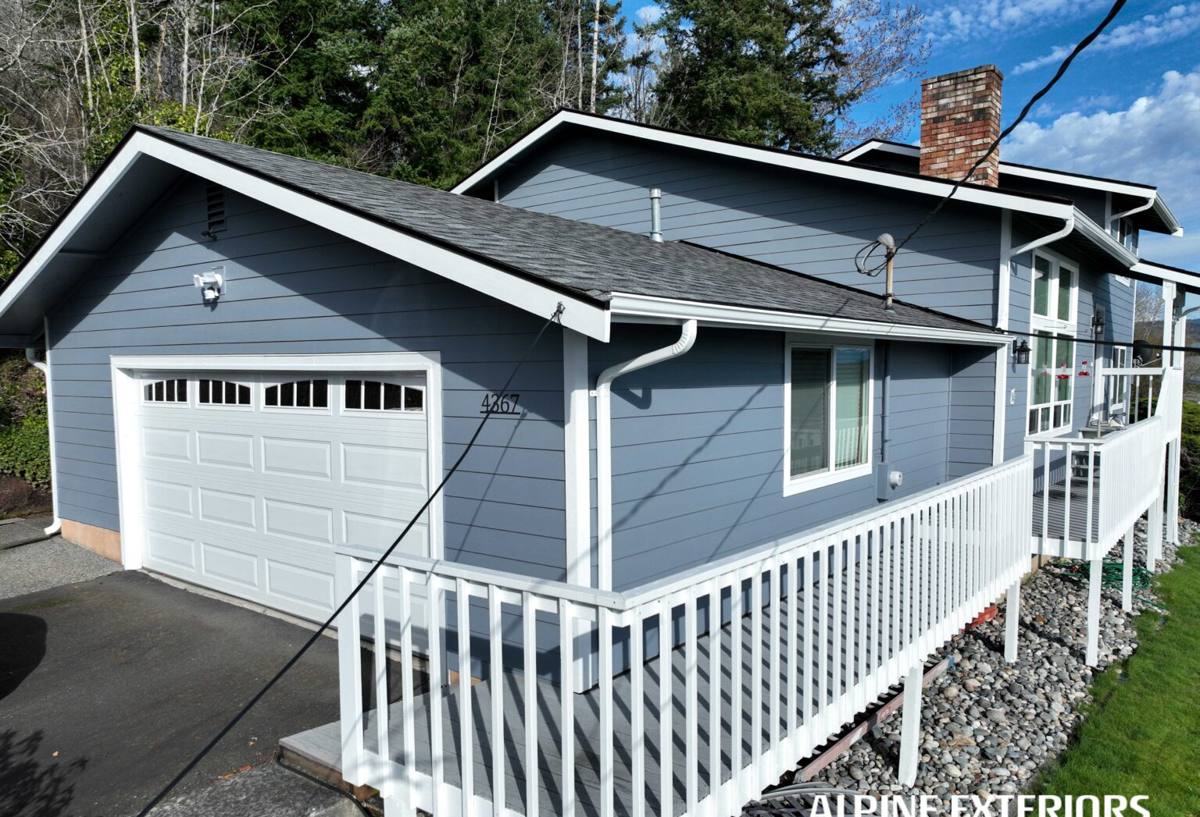
What Marine Exposure Does to a Ship Harbor Roof
Salt Air and Metal Corrosion
Salt in the air accelerates corrosion on any exposed metal component of a roof — nail heads, flashing, gutter fasteners, vent caps. A roof a few miles inland can go years without visible fastener corrosion; a roof exposed to Ship Harbor's marine air shows it much sooner if the wrong metals or coatings were used. This is one of the most common root causes we find behind a "mystery leak" that a homeowner assumed was a shingle problem — it's actually a corroded fastener or flashing seam that opened up quietly over a few winters.
Wind-Driven Rain
Straight-down rain is easy for any roof to shed. Wind-driven rain off open water behaves differently — it gets forced sideways and even slightly upward at roof edges, valleys, and anywhere two roof planes or a wall and a roof plane meet. Standard shingle lap alone doesn't always stop water moving in that direction; it's the underlayment and flashing detail underneath that actually does the work. A repair that only addresses the visible shingle damage on the surface, without checking what's happening at the flashing and underlayment level, often leaves the real entry point untouched.
A Long Moss Season
Shaded, north-facing roof slopes near the water stay damp longer through the fall and winter than sun-exposed slopes, and that moisture is exactly what moss needs to establish. Once moss takes hold, it lifts shingle edges as it grows, holds water against the roof surface, and shortens the life of the section it's covering. A repair on a mossy roof isn't complete if the moss itself isn't addressed as part of the job — otherwise the same damage returns to the same spot.
Signs a Ship Harbor Roof Needs Repair
Most roof repairs get more expensive the longer they're left alone, because water intrusion rarely stays contained to where it first enters. These are the signs worth acting on:
- Water stains or discoloration on interior ceilings or upper walls, even faint ones
- Missing, cracked, curling, or granule-bare shingles, especially after a windstorm
- Visible moss or dark streaking concentrated on shaded roof slopes
- Rusted or lifted flashing around chimneys, skylights, or roof-wall intersections
- Sagging or soft-feeling spots on the roof deck when walked, viewed from a ladder, or noted from the attic
- Granules collecting in gutters or at the base of downspouts
- Daylight visible through the roof deck from inside the attic
- A noticeable rise in attic humidity or a musty smell after wet weather
Any one of these on its own doesn't necessarily mean a full replacement — most are addressable with a targeted repair if caught before the damage spreads to the deck or framing underneath.
What a Correct Repair Actually Involves
Diagnosis Before Anything Gets Touched
Water rarely enters a roof exactly where the stain or damage shows up inside. It travels along the underlayment, framing, or deck before finding a path down, so a repair that starts by patching the spot that looks damaged — without tracing where the water is actually coming from — often misses the real source entirely. A proper diagnosis means getting on the roof, checking the suspect area and everything upslope of it, and confirming the actual entry point before any material comes off.
Flashing Work, Not Just Shingle Work
Because most leaks in this climate originate at flashing rather than in the open field of the roof, a repair crew needs to be comfortable pulling and resetting flashing at valleys, chimneys, skylights, and wall intersections — not just swapping out damaged shingles and leaving the flashing underneath as-is. Reusing old, corroded flashing to save time is one of the most common shortcuts that leads to a repeat call within a year or two.
Matching Materials Correctly
A patch that doesn't match the surrounding shingle in type, weight, and often color creates both a cosmetic mismatch and a functional one — different shingle products can have different profiles and nailing patterns that don't lap cleanly with what's already on the roof. On older roofs where the exact original product is no longer available, a competent repair uses the closest reasonable match and blends the transition rather than creating an obvious patch that also performs poorly.
Checking Ventilation and Deck Condition
Any time a repair opens up a section of roof, it's worth checking the deck underneath for soft spots, staining, or rot, and confirming attic ventilation is adequate. Poor ventilation traps moisture from inside the house against the underside of the roof deck, which accelerates rot and feeds moss growth from below — a problem that has nothing to do with the shingles themselves but will keep causing damage if it's ignored during a repair.
Repair or Replace: How We Help You Decide
Not every roof problem calls for a full replacement, and a straightforward repair is often the honest, correct answer. The table below covers the factors that actually drive that decision.
| Factor | Favors Repair | Favors Full Replacement |
|---|---|---|
| Roof age | Well within the material's expected lifespan | Near or past the shingle manufacturer's rated life |
| Extent of damage | Isolated to one section, slope, or flashing point | Spread across multiple slopes or recurring in several spots |
| Deck condition | Solid, no soft spots or widespread staining | Soft, delaminated, or rotted decking found under the surface |
| Shingle availability | A reasonable match for the existing product still exists | Original product discontinued and no acceptable match available |
| Repair history | First or infrequent repair on this roof | Repeated repairs to the same areas over recent years |
| Underlayment condition | Underlayment intact where accessible | Underlayment failing broadly, not just at the repair site |
We'll tell you plainly which side of this table your roof falls on, including when a repair is genuinely the better financial decision — a roof doesn't need to be replaced just because it has a problem.
Our Repair Process, Start to Finish
1. In-Person Inspection
We get on the roof, not just look at it from the ground, and check both the reported problem area and the sections upslope of it. Interior signs — attic moisture, ceiling stains, insulation condition — get checked too, since they often tell us more about the real extent of the problem than the exterior alone.
2. A Written, Itemized Estimate
You get a clear explanation of what we found, what caused it, and what the repair involves, along with a written estimate before any work starts. If a full replacement genuinely makes more sense than a repair, we'll say so and explain why, rather than defaulting to the more expensive option.
3. Scheduling Around Weather
Roof repair work depends on dry conditions, and this part of Skagit County gets a real wet season. We build reasonable weather flexibility into scheduling rather than promising a fixed date we can't guarantee, and we'll communicate proactively if conditions push a start date.
4. The Repair Itself
Work is done to the standard described above — proper diagnosis, correct flashing detail, matched materials, and a deck and ventilation check where the roof is opened up. We use corrosion-resistant fasteners and flashing appropriate for marine air exposure as a matter of standard practice on Ship Harbor jobs, not as an upcharge.
5. Cleanup and Walkthrough
The site gets cleaned up, including a magnetic sweep for stray nails, and we walk the completed repair with you before considering the job finished.
Materials Chosen for a Marine Climate
The specific products used in a repair matter more here than they would inland, since the wrong choice corrodes or fails faster under salt exposure. This is what we default to on roof repairs in this area:
| Component | Our Standard Approach | Why It Matters Here |
|---|---|---|
| Fasteners | Corrosion-resistant roofing nails rated for coastal exposure | Standard fasteners corrode visibly faster in salt-laden air |
| Flashing metal | Materials selected for corrosion resistance over bare or low-grade metal | Flashing is where most leaks start, so its longevity matters most |
| Underlayment | Synthetic or self-adhered underlayment at vulnerable zones | Handles wind-driven rain intrusion far better than older felt products |
| Shingles | Algae-resistant products where a repair allows for a full slope match | Slows the moss and organic staining that a long damp season encourages |
Why a Crew That Already Works Ship Harbor Matters
A roofer who spends most of their time on drier, inland jobs can still do competent, honest work — but they haven't necessarily seen how quickly cheap fasteners corrode a few blocks from the water, or which slopes hold moss longest through an Anacortes winter, or how far wind-driven rain off the harbor actually travels under a shingle edge. Those are things you learn by doing the work here repeatedly, not by reading a spec sheet.
There's also a practical side to hiring local: a crew based in and around Anacortes can respond faster if a repair needs a follow-up visit, is easier to reach if a warranty question comes up years later, and has a real reputation in the community to protect — which matters more than any sales pitch when you're trusting someone to get on your roof.
Maintenance That Extends a Repair's Life
A well-done repair still benefits from basic upkeep, especially in a climate this damp. A few habits go a long way between service visits:
- Keep gutters and downspouts clear so water isn't backing up under roof edges
- Trim back tree limbs that keep a roof slope shaded and slow to dry
- Have moss treated before it spreads widely, rather than after it's established
- Walk the attic after major windstorms and check for new light leaks or staining
- Schedule a roof check-up every couple of years, not just after a problem appears
Talk to a Local Roof Repair Crew
If you're dealing with a leak, missing shingles, or a roof that's showing its age near Ship Harbor, we're glad to come take a look, explain honestly what we find, and put together a written estimate — no pressure, no obligation to move forward. Use the form below to get started.