 Anacortes Roofing
 Why Cap Sante's Position Above the Water Changes What a Roof Needs
Cap Sante sits high and exposed, with many homes catching wind and salt spray off the water below almost year-round. That's a great view to live with, but it's a demanding environment for a roof. Salt-laden air accelerates corrosion on exposed metal fasteners, flashing, and vents. Wind-driven rain off the Sound doesn't just fall straight down — it gets pushed sideways and upward under eaves and around penetrations, which is exactly where a marginal roofing job fails first. Add in Skagit County's long, damp shoulder seasons and the moss and algae growth that comes with them, and a roof up on Cap Sante is working harder than one a few miles inland.
None of this means a roof replacement here needs to be exotic or overbuilt. It means the details that are easy to shortcut — flashing laps, fastener choice, underlayment coverage, ventilation balance — actually matter and need to be done right the first time, because this location doesn't give a poorly installed roof much room for error.
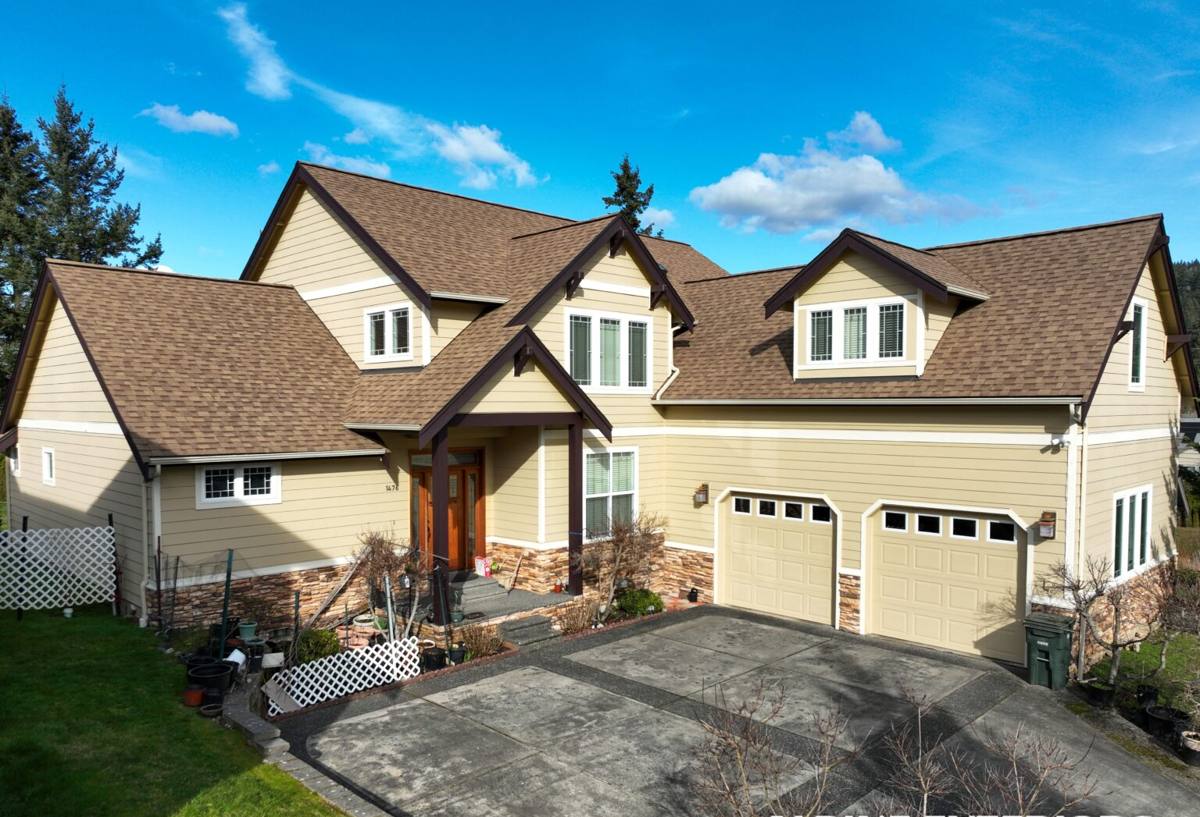
Signs a Cap Sante Roof Has Reached the End of Its Service Life
Roofs in this exposure tend to show wear a bit earlier than the same product would inland, particularly on north- and west-facing slopes that stay shaded and damp longer after storms. Worth a closer look if you're seeing:
- Granule loss showing up in gutters or at downspout outlets, or shingles that look thin and glassy in spots
- Moss establishing in shaded valleys or along the lower courses, not just a light green tint but raised, matted growth
- Curling, cupping, or lifted shingle edges, especially on slopes that catch the prevailing wind
- Rust streaking at flashing, vents, or exposed fasteners — an early sign of salt-air corrosion
- Soft spots in the decking felt underfoot, or staining on interior ceilings near exterior walls
- A roof that's simply past the manufacturer's expected service life for its material and exposure
One or two of these usually point to a repair. Several at once, or any sign of decking failure, is a good indicator that replacement is the more honest recommendation than another round of patching.
What a Correct Roof Replacement Actually Involves
Tear-Off and Deck Inspection
A proper replacement starts with a full tear-off down to the deck, not a layover. That's the only way to actually see the condition of the sheathing — soft, delaminated, or water-stained plywood needs to be replaced before anything new goes down, and skipping this step is how a new roof ends up with old problems underneath it.
Underlayment and Ice/Water Protection
Given how much wind-driven rain this location sees, underlayment coverage matters more here than in a sheltered inland lot. Self-adhering waterproof membrane at eaves, valleys, and around penetrations gives the roof a real second line of defense if wind pushes water past the shingle layer — which it will, eventually, in any long-lived roof near the water.
Flashing and Penetrations
Chimneys, skylights, plumbing vents, and wall-to-roof transitions are where roofs actually fail, not in the open field of shingles. Flashing should be new, correctly lapped, and sealed at every one of these points — reusing old flashing to save time is a common shortcut that shows up as a leak a year or two later.
Fasteners and Material Compatibility
In a salt-air environment, fastener choice is a real decision, not an afterthought. Corrosion-resistant nails and screws, and metal flashing that won't react badly with adjacent materials, cost a little more up front and save a lot of grief in a decade.
Choosing a Roofing Material for Salt Air and Moss Exposure
There's no single "best" material for every Cap Sante home — the right choice depends on roof pitch, budget, and how much long-term maintenance you want to take on. Here's how the common options generally compare in this specific exposure:
| Material | Typical Lifespan | Moss/Algae Resistance | Salt Air Performance | Relative Upfront Cost |
|---|---|---|---|---|
| Architectural asphalt shingle | 25–30 years | Good with algae-resistant granules; needs periodic cleaning | Good; use corrosion-resistant flashing/fasteners | Lowest |
| Standing seam metal | 40–50+ years | Excellent; sheds moss and debris well due to steep panel profile | Very good with marine-grade coatings and fasteners | Highest |
| Synthetic/composite shingle | 30–50 years | Good; resists moisture absorption better than organic materials | Good | Mid to high |
For most Cap Sante homes, the honest tradeoff is upfront cost versus long-term maintenance. Asphalt shingle roofs cost less to install but ask more of you over time — periodic moss treatment and gutter attention. Metal costs more but largely shrugs off the moss problem and holds up exceptionally well to salt exposure, which is worth factoring in if you're planning to stay in the home long-term.
Ventilation and Moisture: The Part Homeowners Don't See
A new roof surface is only half the job. Attic ventilation controls how much moisture and heat build up underneath the roof deck, and it has a direct effect on how long the new roofing lasts. In a damp coastal climate like Anacortes', an unbalanced or blocked ventilation system traps moisture against the underside of the deck, which accelerates rot and can void a shingle warranty even when the shingles themselves are installed correctly.
Part of a correct replacement is checking intake at the soffits and exhaust at the ridge, confirming they're actually balanced, and correcting baffles or vents that have been painted over, insulated shut, or undersized for the attic volume. This is easy to skip because it doesn't show from the ground — but it's one of the biggest factors in whether a roof reaches its full expected lifespan out here.
Our Roof Replacement Process
- On-site inspection. We look at the whole system — shingles, decking, flashing, ventilation, and gutters — not just the surface, and walk you through what we find.
- Written estimate. A clear scope of work and price, with material options explained honestly, including why we'd recommend one over another for your specific roof and exposure.
- Scheduling and material staging. We plan around weather windows, since a rushed tear-off ahead of an incoming front is how roofs get water damage before the new roofing even goes on.
- Tear-off and deck repair. Full removal, deck inspection, and replacement of any compromised sheathing before we move forward.
- Underlayment, flashing, and roofing installation. Installed to manufacturer specification, with extra attention at eaves, valleys, and penetrations.
- Ventilation check and cleanup. We confirm intake and exhaust are balanced, then do a full site and gutter cleanup before we consider the job done.
- Final walkthrough. We go over the finished roof with you directly and answer any questions before we leave.
Why Local Experience in Cap Sante Matters
A roof replacement on an elevated, exposed lot near the water is logistically different from one on a sheltered inland street — access, staging, and wind conditions all factor into scheduling and safety. A crew that already works this part of Anacortes knows to plan tear-off around wind and incoming weather off the water, understands which flashing and fastener upgrades are worth the extra cost in this exposure, and isn't guessing at how Skagit County's moss season affects material choice and maintenance timing.
That local familiarity also means fewer surprises during permitting and inspection, and a more realistic timeline from the start — because we've done this work on this kind of site before, not just roofs in general.
After the Install: Keeping a New Roof Performing
A correctly installed roof still benefits from basic upkeep, especially in a moss- and salt-prone location. A simple annual routine goes a long way:
- Clear gutters and downspouts each fall before the heavy rains set in
- Remove moss buildup gently — no pressure washing directly on shingles, which strips granules
- Trim back overhanging branches that keep shaded areas of the roof damp longer
- Check flashing and sealant at penetrations every year or two for early signs of wear
- Have the roof looked at after any unusually severe windstorm
None of this replaces a correctly installed roof, but it protects the investment you've made in one — and it's a lot less work than dealing with a preventable leak.
If your roof on Cap Sante is showing its age or you just want an honest read on where it stands, we're happy to take a look. Use the form below to request a free, no-pressure estimate — we'll tell you straight what we find and what your real options are.