 Anacortes Roofing
 Roofing in West Anacortes: A Different Set of Conditions
West Anacortes sits close enough to the water that salt-laden air is a daily fact of life for anything on a roof — fasteners, flashing, vents, and the granules on your shingles. Add Skagit County's long wet season, driving rain off Rosario Strait and Guemes Channel, and a moss season that can run eight months or more in shaded, north-facing sections, and you've got a climate that is genuinely harder on a roof than most inland parts of Washington. None of this means a roof here has to fail early. It means the replacement has to be done with these specific stresses in mind, not treated like a generic reroof.
This page covers what a correct roof replacement looks like for a West Anacortes home, what materials and details actually matter in this climate, and how we run the job from first estimate to final cleanup.
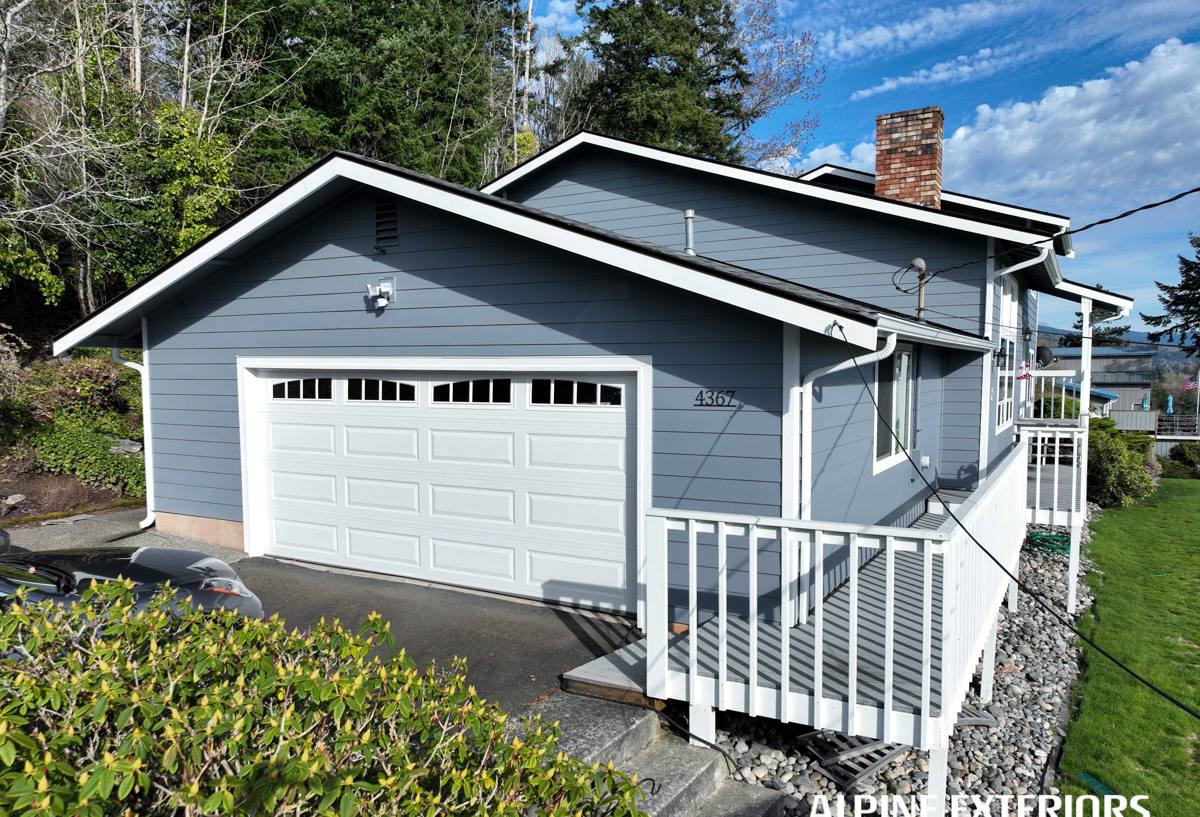
What Salt Air, Rain, and Moss Actually Do to a Roof
It helps to understand the failure modes before talking about the fix.
- Salt air accelerates corrosion on exposed metal — nail heads, flashing, vent stacks, and any fastener not rated for coastal exposure. Standard electro-galvanized fasteners can start showing rust streaks years before a comparable roof further inland.
- Driving rain off the water doesn't fall straight down — it hits roofs at an angle, which puts extra stress on flashing details around chimneys, skylights, dormers, and wall-to-roof transitions. A detail that would hold up fine in calmer weather can leak here if it's not built with wind-driven rain in mind.
- Moss and moisture go together. Moss holds water against the roof surface, keeps shaded sections from drying out between storms, and over time lifts shingle edges as it grows. Left unchecked, it shortens the life of the roofing material and can work moisture down into the deck.
A roof replacement that doesn't account for these three things will look fine on installation day and start showing problems within a few winters.
Signs a West Anacortes Roof Needs Replacement, Not Just Repair
Not every roof problem calls for a full replacement, and we'll tell you honestly when a repair is the right call. Replacement generally makes more sense when you're seeing more than one of the following:
- Granule loss heavy enough that you're finding grit in gutters every season, not just after a big storm
- Curling, cracking, or missing shingles spread across multiple roof sections, not one isolated spot
- Moss coverage that comes back within a year or two of cleaning, especially on north- and west-facing slopes
- Soft spots, sagging, or staining on the underside of the roof deck visible from the attic
- A roof already past 20–25 years old (for standard asphalt composition) that's now needed repairs more than once in recent years
- Flashing that's rusted, separated, or was never properly integrated with the roofing in the first place
If your roof shows one or two of these in isolation, a targeted repair may buy you real years. If it's several at once, patch-and-repeat repairs usually end up costing more over time than doing the replacement correctly once.
What a Correct Roof Replacement Actually Involves
Tear-Off and Deck Inspection
We remove the old roofing down to the deck rather than layering over it. This is the only way to actually see what's underneath — and in a marine climate, what's underneath matters. Soft, delaminating, or water-stained decking gets replaced before anything new goes down. Skipping this step is one of the most common shortcuts in the trade, and it's the one that causes the most expensive problems later.
Underlayment
Underlayment is your roof's backup layer if wind-driven rain gets under the shingles, and given how often that happens here, it's not a place to cut corners. We use synthetic or ice-and-water underlayment at vulnerable areas — eaves, valleys, and low-slope transitions — rather than relying on felt alone across the board.
Flashing
Flashing is where the majority of roof leaks actually start, not in the field of the roofing material itself. Chimneys, skylights, dormers, sidewalls, and any roof-to-wall transition get new step flashing, counter-flashing, or kickout flashing as needed — not caulked-over old flashing reused to save time. In a driving-rain climate, this detail work is what separates a roof that holds up from one that doesn't.
Ventilation
Proper intake and exhaust ventilation keeps the attic dry and temperature-balanced, which does two things: it protects the roof deck from moisture damage from the inside, and it helps prevent the ice-dam and condensation issues that come with our wet, mild winters. We check existing ventilation as part of every replacement and correct it where it's inadequate — a beautiful new roof over a poorly vented attic will fail from the inside out.
Fasteners and Metal Components
Given the salt exposure here, we use corrosion-resistant fasteners and flashing metals rather than the cheapest standard-grade hardware. It costs a little more up front and saves you from premature rust staining and fastener failure down the line.
Choosing the Right Roofing Material for This Climate
There's no single "best" roofing material — it depends on your home, your budget, and how much long-term maintenance you want to take on. Here's how the common options stack up specifically against West Anacortes conditions:
| Material | Salt Air Resistance | Moss Resistance | Typical Lifespan Here | Maintenance Load |
|---|---|---|---|---|
| Standard 3-tab asphalt shingle | Moderate | Low — needs regular cleaning | 15–20 years | Higher — moss and granule loss show earlier |
| Architectural (laminate) asphalt shingle | Good | Moderate; better with algae-resistant granules | 25–30 years | Moderate |
| Standing seam metal | Very good with coastal-rated coatings | Very good — sheds moisture, little for moss to hold onto | 40–50+ years | Low, but coating quality matters |
| Composite / synthetic shake | Good | Moderate to good depending on product | 30–40 years | Low to moderate |
Algae-resistant (AR) shingles, which include copper- or zinc-infused granules, are worth the modest upcharge on most West Anacortes homes — they meaningfully slow moss and algae regrowth on the shaded sides of a roof. For homeowners who want the longest interval between roof projects and don't mind the higher upfront cost, standing seam metal is the strongest performer against both salt air and moss in this specific climate.
How Our Process Works
- Free on-site estimate. We walk the roof (or inspect via drone/ladder where access is limited), check the attic for ventilation and moisture signs, and give you a written scope and price — no pressure, no gimmicks.
- Material selection. We go over the options above in the context of your home's exposure, roofline, and budget, and help you land on what actually makes sense rather than upselling the most expensive option.
- Scheduling around the weather. Skagit County weather doesn't cooperate on demand. We plan installation windows with realistic weather buffers and protect the open roof deck if conditions turn.
- Tear-off, deck repair, and installation. Full removal of the old roofing, deck inspection and repair, new underlayment, flashing, and roofing material installed to manufacturer specs.
- Ventilation check and correction. Intake and exhaust ventilation verified and corrected as part of the job, not treated as an optional add-on.
- Cleanup and magnetic sweep. Full site cleanup including a magnetic nail sweep of the yard and driveway.
- Final walkthrough. We go over the finished roof with you before calling the job done.
Why Local Experience in West Anacortes Matters
A roofing crew that regularly works this specific area already knows which rooflines catch the worst of the wind-driven rain off the water, which north-facing slopes hold moss the longest, and how the local building department handles permitting for reroof jobs in Skagit County. That local knowledge shows up in small decisions — where to add extra flashing, which slopes get algae-resistant shingles even if the rest of the roof doesn't need them, how ventilation gets balanced for a home a few blocks from the water versus one further inland. A crew unfamiliar with the area is learning these lessons on your roof instead of bringing them with them.
Questions Worth Asking Before You Hire
Whoever you choose for a roof replacement, these are reasonable things to ask and expect a straight answer to:
- Is the bid based on a full tear-off, or does it assume overlaying the existing roof?
- Does the estimate include deck repair as a contingency, or is that a separate surprise cost later?
- What underlayment and flashing materials are specified, not just the shingle brand?
- Is attic ventilation being assessed and corrected as part of the job?
- Are the fasteners and flashing metals rated for coastal/salt-air exposure?
- What's the manufacturer's warranty, and is the installer certified to offer an enhanced warranty on it?
- Is the contractor licensed and insured in Washington, with proof available on request?
A vague answer to any of these is worth pausing on before you sign.
Get a Free, No-Pressure Estimate
If your roof is showing its age or you just want an honest read on where it stands, we're happy to take a look. No pressure, no scare tactics — just a clear picture of what your West Anacortes roof needs and what it would take to do the job right. Fill out the form below to get started.