 Anacortes Roofing
 A deck in Sedro-Woolley works harder than it looks like it should. Between the driving rain that rolls up the valley, the humid stretches where moisture just sits on every horizontal surface, and the moss season that seems to start earlier and last longer every year, an aging deck doesn't fail all at once — it fails one soft board, one rusted fastener, and one hidden rot pocket at a time. By the time it's obviously unsafe, the damage is usually well past a patch job. This page is about what a proper deck replacement looks like for homes in this area, what it should include, and why the details matter more here than they would in a drier climate.
Why Deck Replacement Looks Different Here Than in a Dry Climate
Anywhere in western Skagit County, decks sit under a near-constant cycle of wet-then-dry that's harder on wood and fasteners than a single big storm ever would be. Moist, salt-influenced marine air moves in off the water and pushes up the valley, and it doesn't take a downpour to keep a deck damp — heavy dew, fog, and long overcast stretches do the job just as well. Add moss and algae that thrive in shaded, north-facing spots for a good part of the year, and you've got a surface that's rarely bone dry for long.
That matters because most deck failures aren't dramatic — they're slow. Water works into end grain, fastener holes, and the underside of boards where it can't evaporate quickly. A deck built or maintained without that reality in mind will look fine on top while the framing underneath quietly loses integrity. A correct replacement plans for that cycle from the ground up instead of just swapping old boards for new ones.
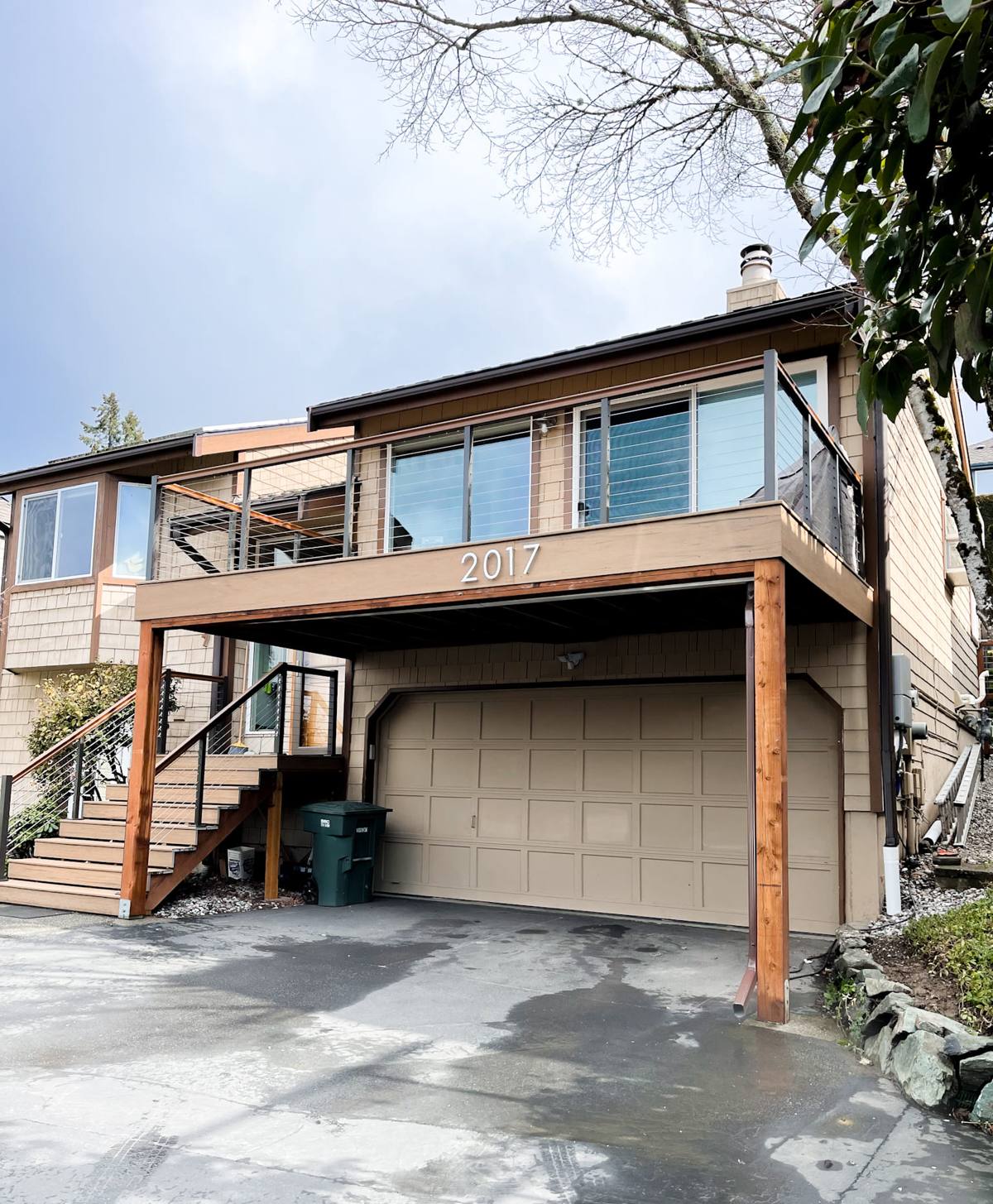
Signs Your Deck Has Crossed the Line Into Replacement Territory
Repair makes sense when the problem is isolated — a few boards, one bad connection, a railing that's come loose. Replacement makes sense when the problems are systemic. Here's how to tell which situation you're in:
- Soft or spongy spots when you walk across the deck, especially near the house or in shaded corners
- Ledger board (where the deck attaches to the house) shows staining, gaps, or soft wood — this is the single most common structural failure point in our region
- Support posts or beams show rot at ground contact or where they meet the joists
- Persistent black or green staining that pressure washing won't fully clear, especially on the underside
- Fasteners that are rusted, popped up, or leaving black streaks down the boards
- Railings that flex or feel loose under load — a code and safety issue, not just cosmetic
- The deck is more than 15-20 years old and has never had the framing inspected
If you're seeing two or more of these, especially anything involving the ledger or the framing, it's worth having someone look underneath before deciding what the project actually needs to be.
Why the Ledger Board Deserves Special Attention
The ledger connects the deck directly to the house, and it's the one spot where a leak doesn't just damage the deck — it can work its way into the home's rim joist and wall framing. In a climate where that connection stays damp more often than it dries out completely, proper flashing at the ledger isn't optional. It's one of the first things we check on every replacement, because a deck built on a poorly flashed ledger will eventually cause damage well beyond the deck itself.
What a Correct Deck Replacement Actually Involves
A deck replacement isn't just new decking boards screwed onto old joists. Done right, it's a full evaluation of everything from the house connection down to the footings, with each layer addressing how water moves through and off the structure.
Structure First
Posts, beams, and joists get inspected and, where needed, replaced with properly rated lumber sized for the actual span and load — not just matched to what was there before. Hardware connectors (joist hangers, post bases, hold-downs) should be corrosion-resistant rated, not standard galvanized, given how much moisture this framing sits in over a typical year.
Flashing and Water Management
Self-adhered flashing membrane at the ledger, proper step flashing where the deck meets siding, and joist tape across the top of every joist to keep fastener penetrations from becoming water entry points. This layer is invisible once the deck is finished, but it's the difference between a deck that lasts and one that rots from the inside out.
Decking Surface
Whatever material you choose, it needs to be installed with the right gap spacing for drainage and expansion, fastened with a system rated for the material, and detailed at the edges and around posts so water doesn't pool or wick into end grain.
Railings and Guards
Railings get rebuilt to current code height and baluster spacing requirements, with attachment points that won't loosen over time under normal use.
Decking Material Options: How They Actually Perform Here
There's no single "best" decking material — there's the best material for your budget, your maintenance appetite, and how much shade and moss exposure your specific deck gets. Here's how the common options stack up under our conditions:
| Material | Moss/Moisture Behavior | Maintenance | Typical Lifespan Here |
|---|---|---|---|
| Pressure-treated wood | Absorbs moisture, needs sealing to shed water and resist moss | Annual cleaning, re-seal every 2-3 years | 15-20 years with upkeep |
| Cedar | Naturally rot-resistant but still needs finish to prevent graying and moss buildup | Re-stain/seal every 2-3 years | 15-25 years with upkeep |
| Capped composite | Sheds water well, resists staining, some moss growth possible in constant shade | Occasional wash, no sealing needed | 25-30+ years |
| Uncapped composite | Can absorb moisture at cut edges and fastener holes over time | Periodic cleaning, watch cut edges | 15-20 years |
For a shaded, north-facing deck that stays damp most of the year, we lean toward capped composite or a well-detailed cedar install over uncapped composite or bare pressure-treated — the moisture-shedding behavior at the surface matters as much as the framing underneath. For decks that get more sun and airflow, pressure-treated with a solid sealing routine can still make sense on a tighter budget.
Our Deck Replacement Process
Every deck is different, but the process stays consistent:
- On-site evaluation — we get underneath the deck, check the ledger, posts, and footings, and identify what's structurally sound versus what needs to go
- Honest scope and estimate — you get a clear picture of what full replacement involves and what it costs, with material options explained rather than pushed
- Permit and code check — we confirm what Skagit County or the local jurisdiction requires for your specific project before work starts
- Demolition and disposal — old decking, framing, and hardware removed and hauled off, with footings and posts assessed once everything's exposed
- Structural rebuild — framing, ledger flashing, and hardware installed to current code, sized for your deck's actual footprint and use
- Decking and railing install — surface material and railings installed per manufacturer spec, with drainage gaps and fastening done correctly
- Final walkthrough — we go over the finished deck with you, including what maintenance it needs and when
Permits and Code Requirements
Most full deck replacements in Skagit County require a building permit, especially when the deck attaches to the house or sits above a certain height. Requirements can vary depending on the specific jurisdiction and the deck's size, height, and location relative to property lines. We handle the permit process as part of the job rather than leaving it for the homeowner to sort out, and we build to the code requirements that apply — not just what was acceptable when the original deck went up years ago. Skipping this step is a common shortcut that shows up later as a problem at resale or insurance time.
What Drives the Cost of a Deck Replacement
Deck replacement pricing varies more than most homeowners expect, and material choice is only part of it. The main cost factors:
- Size and footprint — square footage is the baseline driver, but complex shapes and multiple levels add labor
- Decking material — pressure-treated costs the least upfront; capped composite costs more but reduces maintenance over the deck's life
- Structural condition — how much of the existing framing, posts, and footings can be reused versus needs replacing
- Height and access — elevated decks and difficult site access add complexity
- Railings and stairs — style, material, and code requirements for height and baluster spacing all affect cost
- Flashing and water management detailing — a small line item that has an outsized effect on how long the structure lasts here
We'd rather walk you through these factors on-site and give you a number based on your actual deck than quote a per-square-foot figure that doesn't hold up once we're underneath it.
Living With Your New Deck: Moss and Moisture Maintenance
Even a well-built deck needs some seasonal attention in this climate. A basic routine — clearing debris from gaps and against the house before it holds moisture, keeping gutters clear so runoff isn't dumping onto the deck surface, and a yearly wash to knock back moss and algae before it gets established — goes a long way toward getting the full lifespan out of whatever material you choose. Composite decking cuts down on this workload significantly; wood decking rewards a homeowner who stays on top of it and punishes one who doesn't.
Why Hiring a Crew That Already Works in Sedro-Woolley Matters
Deck framing and flashing details that work fine in a drier region can fall short here, and a crew that hasn't spent real time working in Skagit County's damp, moss-prone conditions may not think to over-build the water management layer the way this climate demands. We work in this area regularly, which means we're not guessing at how a north-facing deck behaves under a wet Sedro-Woolley winter, or which detailing actually holds up through a full moss season rather than just looking good on installation day. That familiarity shows up in the parts of the job you won't see once it's finished — the flashing, the hardware choice, the fastening — which is exactly where a deck's real lifespan gets decided.
If your deck is showing its age, or you're just not sure whether it needs a full replacement or a targeted repair, we're happy to take a look. Reach out for a free, no-pressure estimate using the form below, and we'll give you a straight read on what your deck actually needs.