 Anacortes Roofing
 Windows Built for Sedro-Woolley's Side of Skagit County
Sedro-Woolley sits inland from Anacortes along the Skagit River valley, and while it doesn't get the direct salt air that coastal Skagit County homes deal with, it gets its own version of the same problem: long, wet winters, fog that sits in the valley for days, and a moss season that runs longer than most homeowners realize. Older windows in this area don't usually fail all at once. They fail slowly — a little more condensation on the glass each winter, a draft near the sash that wasn't there five years ago, a bottom corner that stays damp longer after every rain.
We're an Anacortes-based crew, and we bring the same install standards we use on salt-air-exposed coastal jobs to the windows we put in around Sedro-Woolley. That matters more than it sounds like it should, because moisture doesn't care whether it came off Puget Sound or off the river valley — a poorly flashed window will let it in either way.
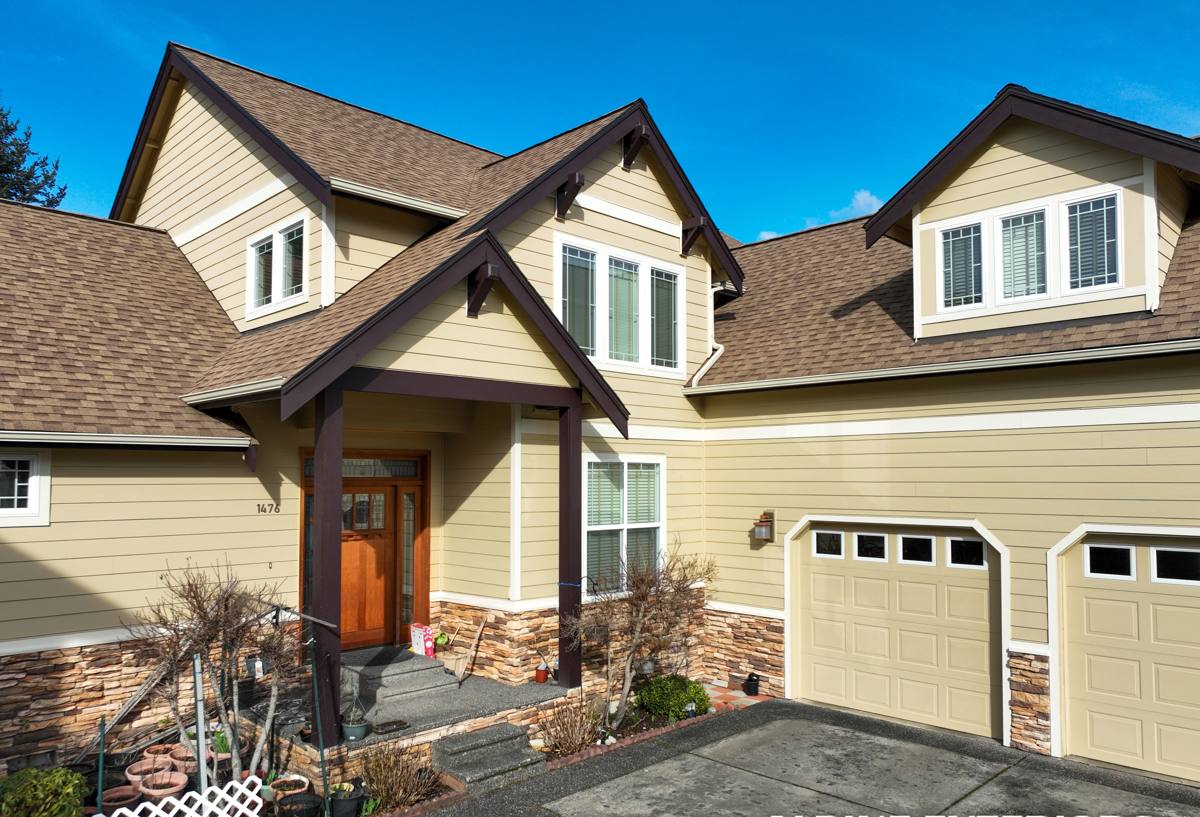
What "Energy-Efficient" Actually Means for This Climate
Energy-efficient windows get marketed around summer heat gain in a lot of the country. That's not the main story in Skagit County. Here, the bigger cost drivers are:
- Heat loss during long heating seasons — Sedro-Woolley winters are mild but long, so a window that leaks warm air runs up the heating bill for months, not weeks.
- Condensation control — high humidity and cool interior surfaces cause moisture to collect on glass and sills, which feeds mold and rots wood trim over time.
- Air infiltration around the frame — driving rain pushed by wind finds gaps that never show up on a calm, dry day.
A window's energy performance is really a combination of the glass package (how many panes, what gas fill, what coatings), the frame material, and — just as important — how well it's installed and sealed to the wall. A high-performance window installed with a poor seal will underperform a mid-grade window installed correctly.
The Numbers Worth Knowing
You'll see U-factor and Solar Heat Gain Coefficient (SHGC) on every window's energy label. For this climate, a lower U-factor (better insulation) matters more than a low SHGC, since Sedro-Woolley homes generally want to keep heat in rather than block it out. We size glass packages to the house and its exposure rather than defaulting to one spec for every job.
Signs Your Current Windows Are Working Against You
Homeowners often wait longer than they should to replace windows because the symptoms show up gradually. Before you call anyone for an estimate, it's worth checking for these:
- Condensation or fogging between the panes of a double-pane window (a sign the seal has failed)
- Visible moss or dark staining building up on the sill or the siding just below the window
- A noticeable draft near the frame edges, especially during windy, wet weather
- Wood trim around the window that feels soft, or paint that's peeling in a pattern that follows the frame
- Difficulty opening, closing, or latching — frames swell and warp as they take on moisture
- Rooms near older windows that are noticeably colder or harder to heat evenly
Any one of these is worth a look. Several at once usually means the window and the surrounding wall assembly both need attention, not just the glass.
What a Correct Window Installation Actually Involves
Replacing a window is not just removing an old unit and screwing in a new one. In a climate that pushes rain sideways for months at a time, the installation details matter more than the window brand.
Before the New Window Goes In
We check the rough opening for hidden rot, confirm it's square and properly sized, and address any water damage we find before anything new is installed. Installing a good window into a compromised opening just hides the problem for a while.
Flashing and Weatherproofing
Proper flashing — sill pan, side flashing, and head flashing integrated with the house wrap — is what actually keeps driving rain out. This is the step that's easiest to rush and the one that causes the most callbacks industry-wide when it's skipped or done poorly.
Sealing and Insulation
The gap between the window frame and the rough opening gets insulated (not just caulked shut), and exterior sealant is applied at the joints most exposed to wind-driven rain. Interior air sealing matters too, since warm, moist indoor air finds its way to cold surfaces if it isn't stopped.
Finish Work
Trim, casing, and any siding disturbed during the swap get reinstalled and sealed to match the original weatherproofing, not left as an afterthought.
Frame and Glass Options We Install
There's no single "best" window for every house — the right choice depends on the home's exposure, the existing trim, and the homeowner's maintenance preferences. Here's how the common options compare for this climate:
| Frame Material | Moisture Resistance | Maintenance | Notes for This Climate |
|---|---|---|---|
| Vinyl | Very good — won't rot or corrode | Low — no painting or sealing needed | Solid value option; quality varies a lot by manufacturer and reinforcement |
| Fiberglass | Excellent — very stable in temperature and moisture swings | Low | Holds paint well if a custom color is wanted; higher upfront cost |
| Wood-clad | Good on the exterior clad side, but the interior wood needs care | Higher — interior wood needs periodic attention | Best suited to homes where interior wood trim is a priority; more sensitive to installation quality |
| Aluminum | Fair — prone to condensation without a thermal break | Low | We typically steer away from non-thermally-broken aluminum here due to condensation risk |
On glass, double-pane with a low-E coating and argon fill is the practical standard for this area. Triple-pane adds cost and weight for a marginal efficiency gain in our mild climate — it's worth considering for a north-facing room with a real comfort complaint, but it's rarely the default we'd recommend.
Cost Factors Worth Understanding
We don't quote sight-unseen, because the honest price depends on details a phone call can't capture. But these are the factors that move the number up or down on most Sedro-Woolley jobs:
| Factor | Why It Affects Price |
|---|---|
| Frame material chosen | Vinyl, fiberglass, and wood-clad sit at different price tiers, as shown above |
| Number and size of openings | Larger and custom-sized windows cost more than standard sizes |
| Condition of the existing opening | Hidden rot or water damage adds repair work before the new window goes in |
| Trim and siding work | Matching existing trim or siding after the swap adds labor |
| Access and building height | Second-story or hard-to-reach windows take more setup time |
| Glass package upgrades | Better coatings and gas fills raise material cost modestly for meaningfully better performance |
As a general range, homeowners in this region should expect single-window replacement costs to run from a few hundred dollars on the low end for a straightforward vinyl swap, up into four figures per window for larger openings, premium frame materials, or jobs that uncover rot needing repair. A written estimate after we've actually seen the openings is the only number worth planning around.
Our Process, Start to Finish
- Free on-site estimate — we look at each window, check for hidden damage, and talk through frame and glass options that fit the house and your budget.
- Written proposal — a clear scope of work and price, no pressure to decide on the spot.
- Scheduling — we plan around weather where possible, since opening up a wall to wind-driven rain is never the goal.
- Removal and inspection — old windows come out, and we check the opening before anything new goes in.
- Installation — proper flashing, insulation, and sealing, not just a quick swap.
- Finish and walkthrough — trim reinstalled, site cleaned up, and every window operated and checked with you before we consider the job done.
Why a Crew That Already Works Sedro-Woolley Matters
Window performance in Skagit County isn't theoretical — it's tested every winter by driving rain and long stretches of damp weather. A crew that regularly works both the coastal side near Anacortes and inland communities like Sedro-Woolley has seen how the same window detail behaves in slightly different exposures, and that experience shows up in the small decisions: how much flashing overlap is enough, which sealant actually holds up through a full wet season, and where moss and organic buildup tend to collect and trap moisture against a frame.
It also means we're not guessing about permit requirements, typical house construction in the area, or what's realistic for scheduling around Skagit County's weather patterns. Local experience shortens the learning curve on your job — you're not paying for it.
Getting the Most Life Out of New Windows Here
A few habits go a long way toward protecting the investment once new windows are in:
- Clear moss and debris from sills and nearby siding a couple of times a year, before it holds moisture against the frame
- Check exterior caulking annually, especially after a hard winter, and have gaps resealed before they let water in
- Keep gutters and downspouts clear so water isn't sheeting down over window heads
- Wipe down interior sills if condensation collects, and run bathroom or kitchen exhaust fans to cut indoor humidity
- Operate every window at least occasionally, even in winter, so seals and hardware don't seize up from disuse
None of this is complicated, but skipping it is how a 20-plus-year window turns into a 10-year window in this climate.
If your Sedro-Woolley home has drafty, foggy, or hard-to-operate windows, we're happy to take a look and give you a straightforward, no-pressure estimate — just fill out the form below and we'll get in touch.