 Anacortes Roofing
 Roof Repair Built for Sedro-Woolley's Climate
Sedro-Woolley sits in the Skagit Valley, close enough to the water to feel the salt air moving in off the Sound and far enough inland to catch the heavier, sustained rain that piles up against the foothills of the Cascades. That combination is hard on roofs. Homes here deal with driving rain that finds every weak seam, humidity that never fully clears out from under shaded eaves, and a moss season that can run most of the year in the shadier lots. A roof repair here isn't the same job as a roof repair in a dry inland climate — the materials, the flashing details, and the order of operations all need to account for what this valley actually does to a roof.
We repair roofs in Sedro-Woolley regularly, alongside our work throughout Skagit County and the greater Anacortes area. That regularity matters. A crew that only shows up once and never comes back doesn't build a feel for how a specific neighborhood's roofs age, where the moss tends to establish first, or which older subdivisions were built with roofing details that need extra attention decades later. We do.
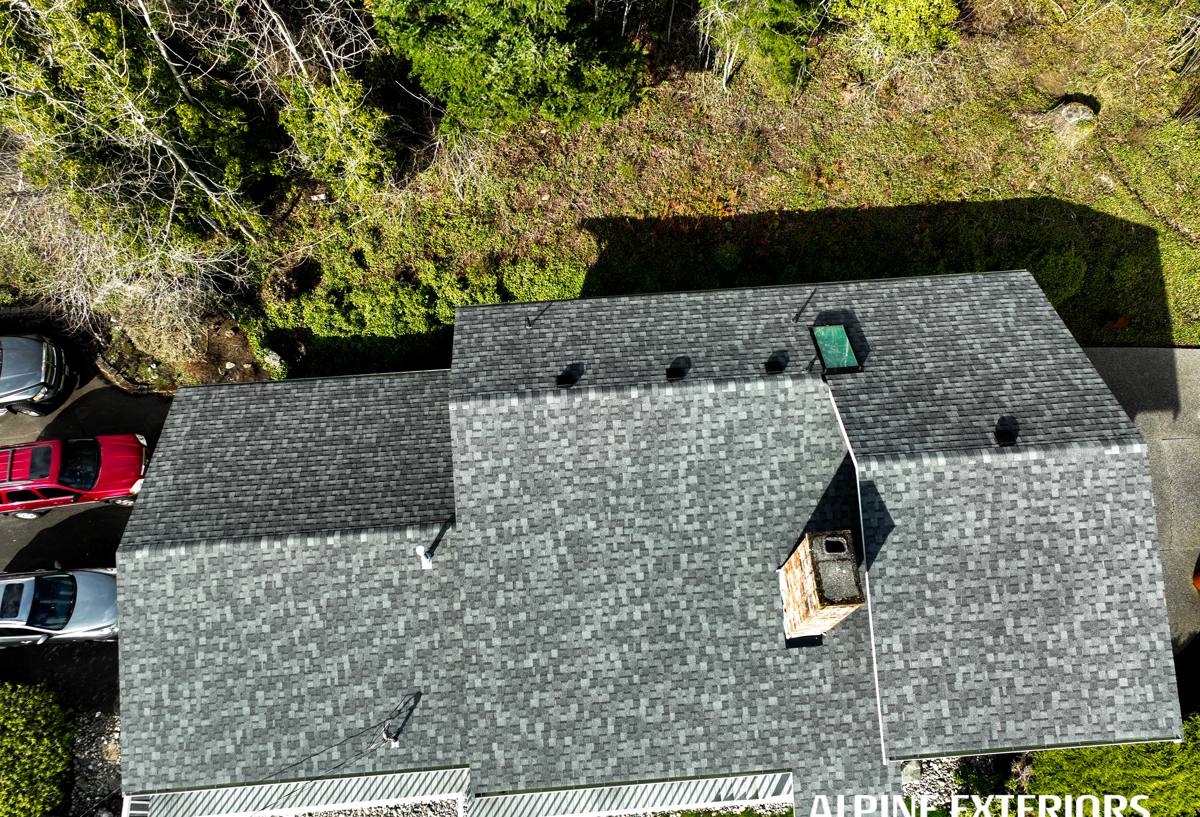
What Local Homes Actually Need From a Repair
Most of the repair calls we get in this area fall into a handful of categories, and they're almost always tied back to moisture in one form or another.
Moss and Organic Growth Damage
Moss doesn't just sit on top of a roof looking bad — it holds moisture against the shingle or shake surface around the clock, which accelerates granule loss on composition roofing and speeds up rot on wood. In shaded yards with mature trees, moss can re-establish within a year or two of a cleaning if the underlying cause (shade, debris buildup, poor drainage) isn't addressed alongside the repair.
Flashing and Seal Failures
Flashing around chimneys, skylights, vent pipes, and roof-to-wall transitions is the single most common source of leaks we find. It's not usually the field of the roof that fails first — it's a metal joint, a dried-out sealant bead, or a nail that's backed out and left a path for water. Driving rain, the kind that comes in sideways during a real Puget Sound storm, will find these gaps faster than a light, straight-down rain would.
Wind and Storm Damage
Winter windstorms in this part of Washington can lift shingle tabs, crack ridge caps, and knock branches loose from nearby trees. Damage from a single storm event is often localized — a few courses of shingles, one section of ridge — and doesn't require replacing the whole roof, but it does need to be addressed before the next rain event turns a small opening into water intrusion in the attic.
Gutter and Drainage-Related Rot
When gutters back up or pitch incorrectly, water backs up under the shingle edge or behind fascia boards. Over a wet Skagit County winter, that slow, repeated soaking rots sheathing and fascia in a way that's easy to miss from the ground until the damage is already significant.
How We Diagnose Before We Touch Anything
A repair is only as good as the diagnosis behind it. Patching the spot where water is visibly coming through the ceiling without finding where it's actually entering the roof is one of the most common ways homeowners end up paying for the same repair twice. Water travels along rafters and sheathing before it shows up as a stain, so the leak point and the stain point are frequently several feet apart.
Our process starts with a full roof walk, not just a look at the trouble spot. We check flashing, penetrations, valleys, ridge lines, and the condition of the shingles or shakes generally, because a roof old enough to need one repair is often close to needing others. In the attic, we look for water staining, darkened sheathing, and any signs of active moisture — that tells us whether we're dealing with a fresh leak or a slow, ongoing one that's been running for a season or more.
- Exterior roof walk: flashing, seals, shingle or shake condition, moss and debris buildup
- Attic inspection: sheathing condition, insulation staining, ventilation adequacy
- Gutter and drainage check: pitch, blockages, downspout function
- Photo documentation of the affected area before repair begins
- Written scope of work with the cause of the problem explained, not just the fix
What a Correct Repair Involves
Once we know what's actually failing, the repair itself follows a fairly consistent set of steps, adjusted for the specific roofing material and the location of the damage.
Remove and Assess
We pull the damaged material back far enough to see the sheathing underneath. If the sheathing has softened or delaminated from prolonged moisture — which we do see on older Sedro-Woolley homes with a history of slow leaks — that gets replaced before anything new goes back on top. Covering rotten sheathing with new shingles is a shortcut that fails again within a year or two.
Rebuild Flashing Details Correctly
Flashing gets replaced rather than re-sealed wherever possible. Sealant is a maintenance item, not a permanent fix — it dries out, cracks, and needs to be reapplied. Properly lapped metal flashing sheds water by design and doesn't depend on a bead of caulk staying intact through years of freeze-thaw and UV exposure.
Match Materials and Tie In Cleanly
New shingles or shakes are matched as closely as possible to the existing roof and woven into the surrounding courses so the repair sheds water the same way the rest of the roof does — not just patched over the top. A repair that isn't properly tied into the surrounding material can actually create a new place for water to collect.
Address the Root Cause
If moss caused the damage, we talk through options for managing regrowth. If poor ventilation contributed to sheathing moisture, we flag it. If gutters or drainage played a role, we address that too. A repair that fixes the symptom but ignores the cause is a repair you'll be paying for again.
Repair vs. Replacement: How We Help You Decide
Not every roofing problem needs a full replacement, and not every roof is a good candidate for another round of patching. We give homeowners a straight answer based on the roof's overall condition and age, not on which option is more profitable for us.
| Factor | Favors Repair | Favors Replacement |
|---|---|---|
| Roof age | Under 15-20 years, or well within material lifespan | At or beyond expected service life |
| Extent of damage | Localized — one section, valley, or penetration | Widespread granule loss, multiple failure points |
| Sheathing condition | Solid, no rot found during inspection | Soft or delaminated sheathing in multiple areas |
| Leak history | First occurrence or isolated incident | Repeated leaks in different spots over time |
| Material availability | Matching shingles/shakes still available | Discontinued product, poor color/style match |
When a repair is the right call, we'll say so plainly. When it isn't — when a roof has enough underlying issues that another patch is just delaying an inevitable replacement — we'll explain why, in plain terms, before you spend money on a fix that won't hold.
Why Hiring a Crew That Already Works Sedro-Woolley Matters
Roofing crews that work a region regularly develop a working knowledge of it that's hard to replicate on a one-off job. We've seen how homes in this part of Skagit County tend to be built, what roofing materials were common in different eras of local construction, and how moss, moisture, and wind exposure play out differently from lot to lot depending on tree cover and orientation. That context shortens the diagnosis phase and reduces the odds of a repair that misses the actual cause.
There's also a practical, logistical side to it. A local crew can respond faster when a storm knocks something loose and you need a temporary tarp before the next system rolls through. We're not driving in from out of the area for a single job — Sedro-Woolley is part of our regular service footprint alongside Anacortes and the rest of Skagit County.
A Few Warning Signs Worth Calling About
- A ceiling stain that appears or grows after a storm, even a small one
- Visible moss buildup, especially in valleys or on north-facing slopes
- Shingle tabs that look lifted, curled, or missing after high wind
- Granules collecting in gutters or at the base of downspouts
- Daylight visible through the roof deck from inside an unfinished attic
- A musty smell in an upstairs room or closet with no obvious source
Catching any of these early almost always means a smaller, cheaper repair. Waiting until there's an active drip inside the house usually means sheathing or insulation has already absorbed water, which turns a roofing repair into a roofing-plus-interior repair.
What to Expect When You Call Us
We start with a phone conversation about what you're seeing — where the stain or damage is, how long it's been there, whether it changes with weather. From there we schedule an on-site inspection, walk the roof and the attic, and put together a written scope that explains what we found and what we recommend, including the reasoning behind it. There's no pressure to sign anything on the spot, and if the honest answer is "this is a small fix," that's what we'll tell you.
Pricing for roof repairs varies quite a bit depending on the scope — a single flashing repair is a very different job from replacing a section of rotten sheathing and re-roofing a valley — so we don't quote broad numbers sight unseen. What we can tell you is that our estimates are itemized and explained, not a single lump figure with no breakdown.
Get a Free, No-Pressure Estimate
If you're dealing with a leak, storm damage, or moss buildup on a Sedro-Woolley roof, we're happy to take a look and give you an honest read on what's going on and what it'll take to fix it. Use the form below to request a free estimate — no obligation, no pressure, just a straight answer from a crew that knows this area's roofs.