 Anacortes Roofing
 Sedro-Woolley's Climate Is Harder on Siding Than It Looks
Sedro-Woolley sits in the Skagit River valley, tucked between the Cascade foothills and the marine air that moves in off Puget Sound. That combination gives the area a lot of rain, a lot of humidity, and long stretches of gray, still weather where moisture just sits against a house instead of drying off quickly. Add in the driving, wind-pushed rain that comes through Skagit County several months a year, and siding here has to do more than look good — it has to manage water constantly.
Homeowners in Sedro-Woolley often notice the same pattern: siding that looked fine for years starts showing dark streaking, soft spots, or a green-black film of moss and algae, especially on north-facing walls and anywhere shaded by trees or a neighboring structure. That's not bad luck. It's what happens when a siding material or an installation detail wasn't built for a long, wet moss season. The marine-influenced air that reaches inland through the valley keeps humidity higher than a lot of homeowners expect for a town that isn't right on the water, and it's a big part of why siding choice and installation quality matter more here than in a drier climate.
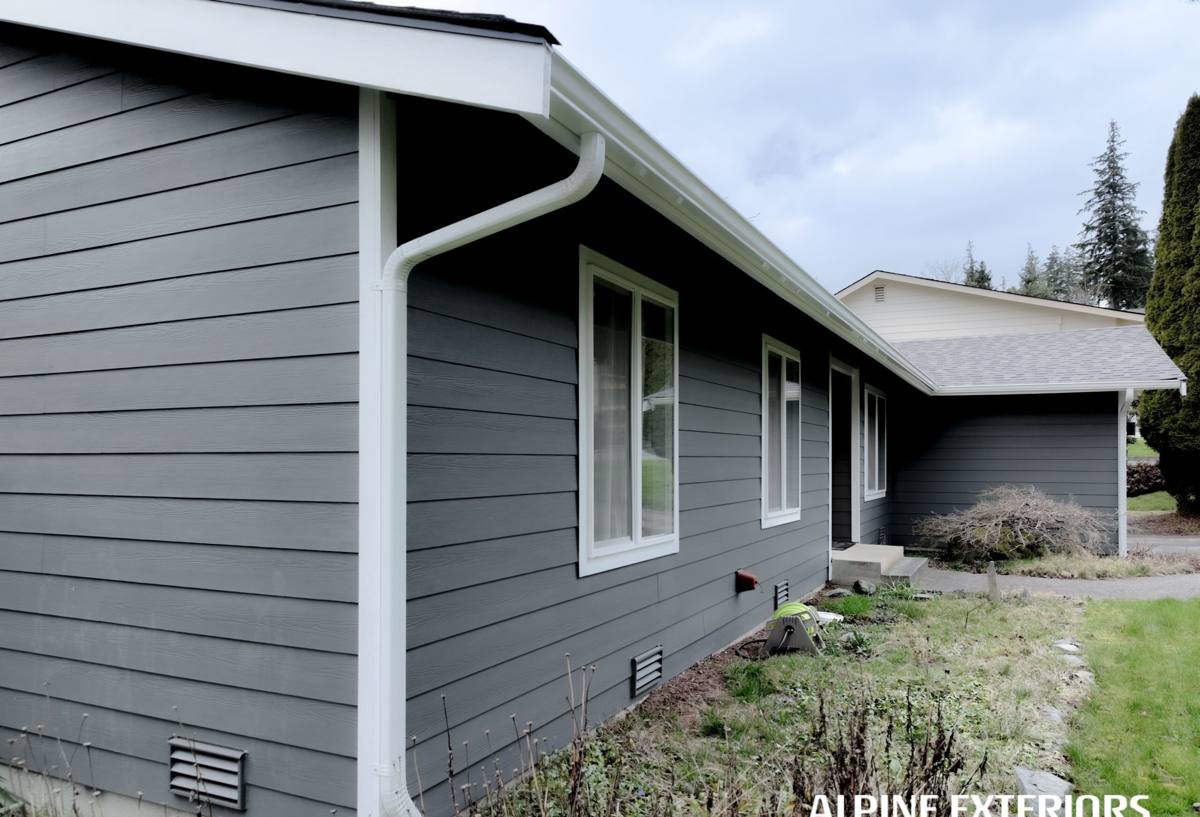
What "Correct" Siding Installation Actually Means
A lot of siding problems aren't caused by the siding material at all — they're caused by installation shortcuts that don't show up until years later. In a climate like Sedro-Woolley's, those shortcuts fail faster because there's more water pressure testing every seam, joint, and fastener.
Water Management Behind the Siding
Correct installation starts before the siding ever goes up. That means a properly lapped weather-resistant barrier, correctly flashed windows and doors, and a drainage plane that gives any moisture that does get behind the siding a way to escape instead of sitting against the sheathing. Skip this layer, or install it out of order, and you've built a house that looks fine for a while and then rots from the inside out.
Fastening and Spacing
Fiber cement siding has specific fastener placement, nailing patterns, and gap requirements at joints, corners, and penetrations. Fasten it wrong — too tight, too loose, wrong spacing — and you get buckling, cracking, or water intrusion at the seams. This is where manufacturer installation instructions exist for a reason, not as a formality.
Trim, Flashing, and Clearances
Every point where siding meets a window, door, roofline, or the ground is a place water wants to get in. Proper trim details and flashing at these transitions, plus keeping siding at the right clearance above grade, decks, and roof lines, are what actually keep a wet climate from finding its way behind the wall.
Why We Only Install James Hardie Fiber Cement Siding
We made a decision as a company to install one siding system — James Hardie fiber cement — instead of offering a menu of vinyl, wood, engineered wood, or other fiber cement brands. That's not because those products don't have their place. It's because in a climate like Skagit County's, where wet weather and moss pressure are a year-round reality, we wanted to stand behind one product we trust completely rather than install several and hope each one holds up.
James Hardie fiber cement is non-combustible, which matters in Washington's wildfire-exposed summers as well as for everyday fire safety. It's engineered specifically for climate zones — Hardie's HZ5 product line is built for regions like the Pacific Northwest that see sustained moisture, freeze-thaw cycling, and humidity rather than dry heat. The factory-applied ColorPlus finish is baked on and warranted separately from the substrate, which means the color layer is engineered to resist the fading and cracking that field-applied paint struggles with over time in a climate this wet. And because it's fiber cement rather than wood-based, it doesn't feed moss and mildew the way organic materials do, which is a real factor for shaded, damp lots common around Sedro-Woolley.
None of that replaces good installation — even the best siding fails if it's put on wrong. But starting with a product engineered for this exact climate gives every installation a better foundation.
How Siding Materials Compare in a Wet, Moss-Prone Climate
| Material | Moisture Behavior | Moss/Algae Resistance | Maintenance | Typical Lifespan |
|---|---|---|---|---|
| James Hardie Fiber Cement | Engineered HZ5 formulation for wet climates; resists warping | Non-organic surface; doesn't feed moss growth | Occasional wash; factory finish reduces repainting | Multiple decades when installed to spec |
| Vinyl | Can warp or buckle with heat/cold cycling; seams are moisture entry points | Surface can hold moss/algae in shaded areas | Low, but cracks and fading aren't repairable | Varies widely by product grade |
| Cedar/Wood | Absorbs moisture; prone to rot without diligent upkeep | Organic material feeds moss and mildew readily | High — regular sealing/staining required | Shorter without consistent maintenance |
| Engineered Wood (e.g. LP SmartSide) | Treated to resist moisture but still wood-based at the core | Better than raw wood, still more susceptible than fiber cement | Moderate — edge sealing and touch-up matter | Depends heavily on installation and upkeep |
This is a general comparison, not a claim that every other product will fail — installation quality and maintenance habits change outcomes across all of them. But it's why, for a climate that stays wet as long as Skagit County's does, we standardized on fiber cement rather than wood-based or vinyl systems.
Our Siding Installation Process for Sedro-Woolley Homes
- On-site assessment. We look at your home's exposure — shaded sides, drainage patterns, existing moisture damage — before recommending anything.
- Tear-off and sheathing inspection. We remove existing siding and check the sheathing underneath for rot or soft spots before anything new goes up. Problems found here get addressed, not covered over.
- Weather barrier and flashing installation. This is the layer that does the real water management work, installed in the correct lapped order at every seam, window, and door.
- Hardie siding installation. Installed to James Hardie's fastening, spacing, and clearance specifications, board by board.
- Trim, caulking, and detail work. Corners, transitions, and penetrations get sealed and finished correctly, since these are the spots most likely to leak if rushed.
- Final walkthrough. We go over the finished job with you before considering it done.
What Affects the Cost of a Siding Installation
Every home is different, so we don't quote broad numbers without seeing the job, but a few factors consistently drive cost up or down:
- Home size and complexity — more corners, dormers, and trim details mean more labor and material cuts.
- Condition of the sheathing — hidden rot found during tear-off adds repair work before new siding can go on.
- Siding profile and finish — lap width, texture, and ColorPlus color selection affect material cost.
- Accessibility — multi-story sections, steep grading, or tight lot access can add time.
- Removal and disposal — what's being torn off and how it needs to be hauled away.
Signs Your Sedro-Woolley Home May Need New Siding
- Persistent moss, algae, or dark streaking that returns shortly after cleaning
- Soft or spongy spots when you press on the siding, especially near the bottom edges
- Visible warping, buckling, or gaps at seams and corners
- Peeling or bubbling paint that keeps coming back despite repainting
- Rising energy bills that suggest the wall assembly is no longer insulating or sealing well
- Visible rot at trim, window, or door transitions
Any one of these on its own might just need a repair. Several at once, especially on a home that's had multiple wet seasons to accumulate damage, usually points to a full replacement being the more honest recommendation.
Why It Matters to Hire a Crew That Already Works in Sedro-Woolley
Siding installation isn't a one-size-fits-all job. A crew that regularly works Skagit County homes already knows how the region's rain patterns, humidity, and moss pressure show up in real installations — which walls tend to take the worst of it, where water tends to find its way in on older homes, and what it takes to get a weather barrier and flashing detail right the first time in this climate. That's different from a crew that installs siding occasionally or mostly works in a drier part of the state.
It also matters for accountability. A local company is answerable to the same community it works in, which tends to keep workmanship honest — call-backs and reputations both travel fast in a town the size of Sedro-Woolley.
Get a Straightforward Estimate
If your siding is showing wear, or you're planning ahead for a replacement, we're glad to take a look and give you a straightforward assessment — no pressure, no upsell to a product we don't stand behind. Use the form below to request a free estimate for your Sedro-Woolley home.