 Anacortes Roofing
 West Anacortes Sits Right in the Path of the Weather
West Anacortes catches the full brunt of what Fidalgo Island's marine climate has to offer. Homes here sit close enough to the water to pick up salt-laden air off the Salish Sea, and the same westerly weather systems that bring driving, wind-pushed rain also keep this side of town shaded and damp longer than inland neighborhoods. Add in tree cover common to the older residential streets, and you get the ingredients for a long moss season that starts earlier and lasts longer than most homeowners expect.
Siding on a West Anacortes home isn't decorative trim — it's the first and, in many cases, the only line of defense against that combination. Salt air accelerates corrosion on fasteners and trim metal. Wind-driven rain finds gaps that would never leak in a calmer climate. And moss doesn't just look bad; it holds moisture against the wall assembly and, on the wrong material, works its way into seams and butt joints over time. A siding job that isn't built for this specific exposure will show problems faster here than it would twenty miles inland.
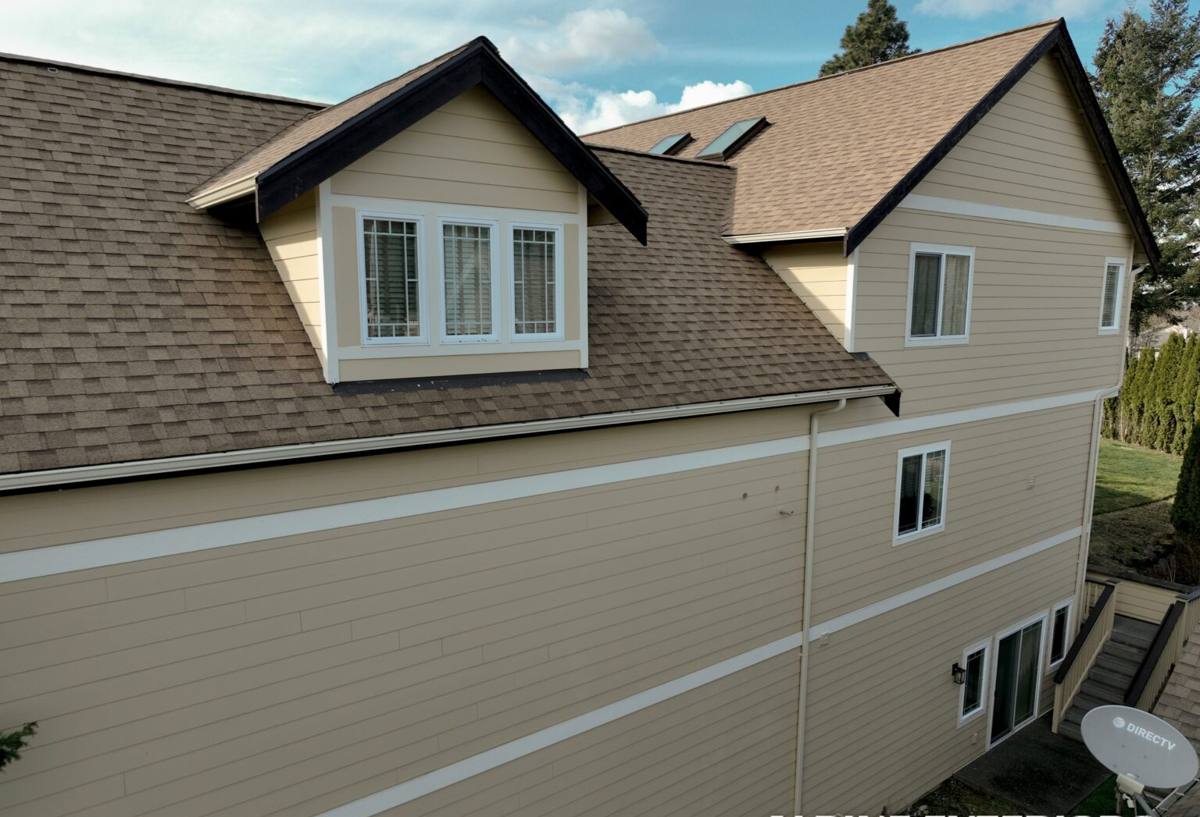
What Correct Siding Installation Actually Requires
Most siding failures aren't material failures — they're installation failures. The product on the wall matters, but how it's installed determines whether that product performs for twenty years or five.
Moisture Management Behind the Cladding
Siding is the visible layer, but the water-resistive barrier and flashing details underneath it do the real work of keeping a house dry. That means correctly lapped house wrap, proper flashing at every window, door, and penetration, and a drainage plane that lets any moisture that does get behind the siding find its way back out instead of sitting against the sheathing. Skip this layer, or install it carelessly, and the siding itself becomes irrelevant.
Fastening and Fit
Fiber cement siding has specific fastening requirements — nail placement, spacing, and depth all affect how the panel performs in wind and how it holds paint or factory finish over time. Blind-nailing where called for, avoiding over-driven fasteners that crack the material, and maintaining correct gaps at butt joints and trim all matter more in a high-wind, high-moisture environment than they would somewhere drier.
Trim, Caulking, and Joint Detail
Every seam is a potential entry point for wind-driven rain. Correct clearances above rooflines, decks, and grade; proper caulking at trim boards (using a sealant rated for the movement fiber cement trim will see); and keeping siding off the ground by the manufacturer's minimum clearance all reduce the chances of moss and moisture gaining a foothold at the vulnerable spots first.
Why We Install Only James Hardie Fiber Cement
We don't install vinyl, LP SmartSide, primed wood, or other fiber cement brands. That's a deliberate standard, not a lack of options. James Hardie's fiber cement is non-combustible, dimensionally stable in wet-dry cycling, and available in HZ product lines engineered for specific climate zones — which matters directly for a marine environment like West Anacortes, where humidity and rain exposure are constant rather than occasional. The ColorPlus factory finish is baked on under controlled conditions, which gives it more consistent, longer-lasting color retention than field-applied paint, and it comes with a real transferable warranty backing both the product and the finish.
None of that replaces good installation — a Hardie product put on badly will still fail early. But starting with a material engineered for wet, salt-exposed climates and backing it with a warranty that holds up gives West Anacortes homeowners a foundation the installation work can actually build on.
Signs Your Siding Is Losing the Fight
Skagit County's climate doesn't announce siding failure with a single dramatic event — it's usually a slow accumulation of small signs that add up over a few seasons.
- Persistent moss or dark streaking on north- and west-facing walls that comes back within weeks of cleaning
- Soft spots, bubbling, or visible warping, especially near the bottom courses or around window trim
- Paint that's peeling or chalking faster than expected, particularly on sun-exposed south walls
- Visible gaps opening up at butt joints or where trim meets siding
- Rust streaking from fasteners or trim hardware
- Rooms near exterior walls that feel damp or musty, which can point to moisture getting behind the siding rather than just sitting on top of it
Any one of these is worth a look. Several together usually mean the siding assembly, not just the surface, needs attention.
Our Siding Installation Process
Assessment and Measurement
We start by walking the exterior to check the condition of the existing siding, sheathing, and trim, and to identify problem areas — shaded walls with moss buildup, low-clearance spots near grade or decks, and any signs of moisture already behind the current siding. We take accurate measurements and note anything the wall assembly will need addressed before new siding goes on.
Tear-Off and Prep
Old siding comes off, and we inspect the sheathing underneath for rot or damage before anything new goes up — covering a compromised wall with new siding just hides the problem. Any needed sheathing repairs happen here, followed by a correctly lapped water-resistive barrier and flashing at every window, door, and penetration.
Installation
James Hardie panels or lap siding go on to manufacturer fastening specifications, with attention to gaps, clearances, and trim details built for wind-driven rain rather than fair-weather installation shortcuts. Where the home's exposure calls for it, we pay extra attention to butt joint sealing and clearance above grade and rooflines.
Final Walkthrough
We walk the finished job with the homeowner, check caulking and trim lines, and confirm everything meets both the manufacturer's installation requirements and our own standard before calling it done.
Comparing Materials for a Marine Exposure Like West Anacortes
| Factor | James Hardie Fiber Cement | Vinyl | Untreated Wood / Primed Spruce |
|---|---|---|---|
| Moisture behavior in constant damp/shade | Dimensionally stable, resists moisture-driven warping | Can warp or buckle with heat/cold cycling; seams can loosen over time | Prone to swelling, rot, and moss retention without diligent upkeep |
| Salt air / corrosion exposure | Material itself doesn't corrode; fastener quality still matters | Material resists corrosion but hardware and trim can still suffer | Wood itself unaffected by salt, but finish breaks down faster near water |
| Moss and algae resistance | Factory finish resists staining better than field-applied paint | Resists moss growth on the surface but seams can trap moisture | Most susceptible; moss holds moisture directly against the wood |
| Fire performance | Non-combustible | Combustible, can melt or deform in nearby fire exposure | Combustible |
| Typical maintenance | Occasional wash; factory finish holds color for years | Low maintenance but limited repair options if damaged or discolored | Regular repainting, sealing, and moss/mildew treatment |
Choosing a Crew That Already Works West Anacortes
Siding installation isn't a one-size-fits-all trade. A crew that mostly works drier, inland areas doesn't always carry the same instincts around flashing details, clearance, and joint sealing that a marine-exposed West Anacortes home actually needs. Contractors who work this side of town regularly know which walls take the worst weather, which spots tend to hold moss, and where past installations in the area have failed — and they build around those lessons instead of learning them on your house.
Local, consistent work also means accountability. A contractor who plans to keep working in West Anacortes has every reason to stand behind the installation, because a bad job doesn't stay quiet in a neighborhood — it gets talked about.
Caring for Your New Siding
James Hardie siding installed correctly needs relatively little upkeep, but a few habits extend its life in this climate:
- Rinse the exterior periodically, especially shaded and north-facing walls where moss tends to establish first
- Trim back vegetation and tree limbs that keep walls damp and shaded longer than necessary
- Check caulking at trim and joints every year or two and touch up as needed
- Keep gutters and downspouts clear so runoff isn't washing directly down the siding face
- Address any small paint or finish issues early, before moisture has a chance to get underneath
Questions Worth Asking Before You Sign
- Will you tear off the old siding and inspect the sheathing, or install over what's there?
- What water-resistive barrier and flashing details will you use at windows and doors?
- What fastening spec will you follow, and how do you handle butt joints and clearances?
- What warranty covers the material, and separately, what warranty covers your labor?
- Do you have experience installing on homes with similar sun/shade and wind exposure nearby?
If you're weighing a siding replacement in West Anacortes, we're happy to take a look and give you a straightforward, no-pressure estimate — no obligation, just an honest read on what your home actually needs.