 Anacortes Roofing
 Old Town Anacortes Puts Siding Through More Than Most Neighborhoods
Old Town Anacortes sits close to the water, and that proximity shapes what siding on these homes has to survive. Salt-laden marine air works on fasteners, trim, and finish coatings year-round. Driving rain off Rosario Strait and the Sound doesn't just wet the surface of a wall — on older homes without a modern drainage gap behind the cladding, it can work its way behind panels and boards over time. And Skagit County's long, wet, low-light stretch from fall through spring means moss and algae get a real foothold on north- and west-facing walls, siding under eaves, and anywhere sun doesn't reach for weeks at a time.
None of that is unusual for coastal Washington. But it adds up faster in Old Town than it does in newer subdivisions inland, simply because the homes are older, the lots are tighter to the shoreline influence, and a lot of the original siding and trim work wasn't built with today's moisture-management details in mind. That's the backdrop for almost every repair call we get in this neighborhood — the damage is rarely random. It's the predictable result of a specific climate acting on specific weak points.
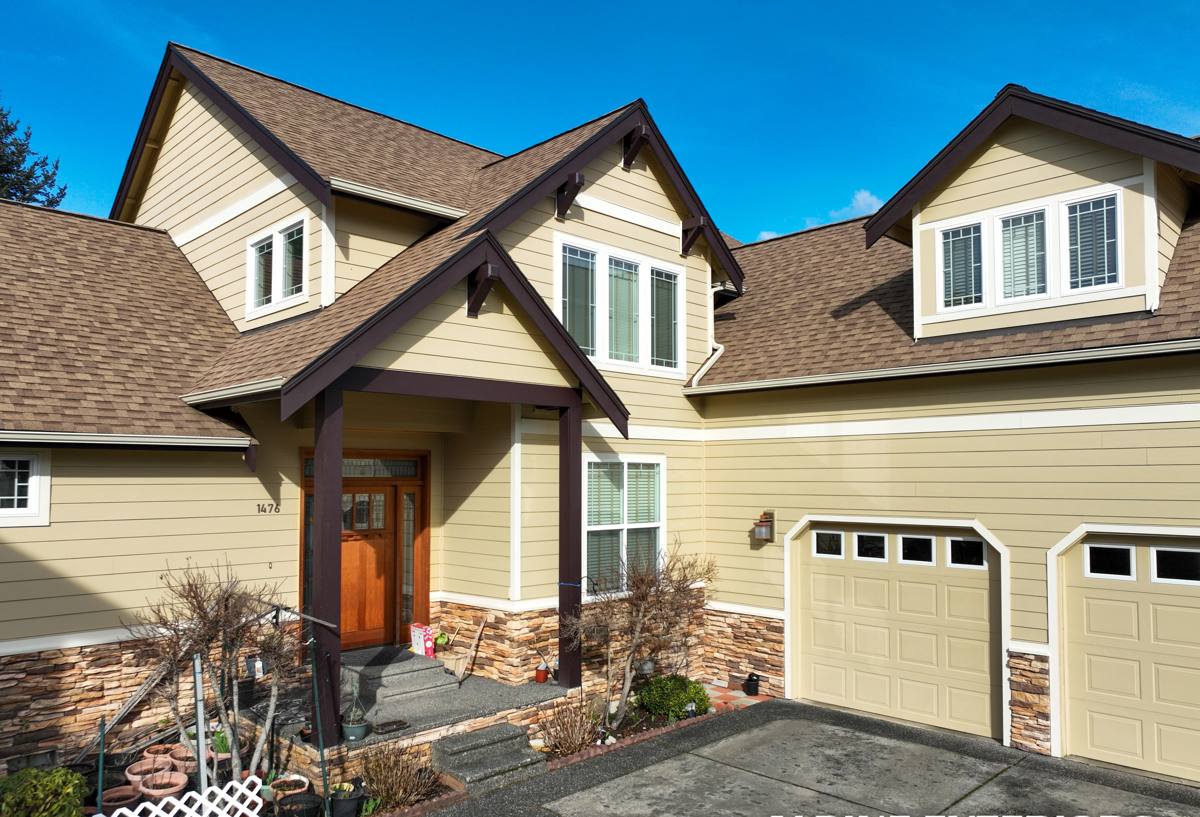
Signs Your Siding Needs Repair, Not Just a Repaint
A lot of homeowners reach for paint first because it's the visible fix. Paint can hide a problem for a season or two, but it doesn't address what's happening underneath. Before you repaint, walk the exterior and look for these:
- Soft, spongy, or slightly bulging spots when you press on the siding, especially near the bottom courses or below windows
- Paint that's peeling, bubbling, or alligatoring in patches rather than evenly across the wall
- Visible cracks or splits along board edges, corners, or butt joints
- Persistent moss, algae, or dark streaking that comes back within a season of cleaning
- Gaps opening up at trim boards, window casings, or corner boards
- Discoloration or staining that tracks downward from a specific point, which usually means water is entering above and running behind the siding
- A musty smell or visible mold on the interior wall directly behind an exterior spot showing damage
Any one of these on its own might be minor. Several together, especially clustered in one area, usually points to a moisture problem that's been building for a while.
Why Cosmetic Fixes Don't Hold Up Here
Caulk-and-paint repairs are common because they're fast and cheap, but in a climate with this much driving rain and salt exposure, they tend to fail again within a year or two if the underlying cause — a bad seam, missing flashing, a gap in the weather barrier — isn't corrected first. We see this a lot on homes that have had a series of quick patches over the years: each one looked fine when finished, but none of them addressed why the damage happened in the first place.
What a Correct Siding Repair Actually Involves
A repair that actually holds starts with figuring out why the siding failed, not just where. That means:
Diagnosing the Cause
We look past the visible damage to check what's behind it — whether water is getting in through a failed seam, a gap at trim, a missing or improperly lapped flashing detail, or simple age and UV breakdown of the material itself. On older Old Town homes, we're also checking whether there's any drainage plane or gap behind the original siding at all, since a lot of construction from decades back nailed siding directly to sheathing with no way for moisture that does get in to dry out or drain.
Checking for Hidden Moisture
Surface damage is often smaller than what's happening behind it. We check surrounding sheathing and framing for softness or elevated moisture before closing anything back up, because repairing over rot that's still spreading just buys a year or two before the same spot fails again, usually worse.
Matching Material and Fasteners
Patch repairs need to match the existing siding's profile, reveal, and finish closely enough that the repair doesn't stand out — and the fasteners matter as much as the board. In a marine-air environment, standard fasteners corrode faster than they would inland; we use corrosion-resistant fasteners rated for the exposure, not whatever happens to be fastest to grab.
Correcting Flashing and Sealant Details
Most repeat siding failures trace back to a flashing detail that was missing or done wrong the first time — at window heads, trim intersections, or wherever two materials meet. A repair that doesn't fix the flashing is a repair that's going to fail again.
Repair or Full Re-Side: How to Tell Which You Need
Not every damaged section means the whole house needs new siding, but a house with widespread, older siding and repeated damage usually isn't a good candidate for endless spot repairs either. Here's how we walk homeowners through that decision:
| Factor | Points Toward Repair | Points Toward Full Re-Side |
|---|---|---|
| Extent of damage | Isolated to one or two areas | Scattered across multiple walls or elevations |
| Age of existing siding | Relatively recent, otherwise sound | Original to an older home, near or past typical service life |
| Moisture behind cladding | Localized, source identified and fixable | Widespread wetness or no drainage plane behind siding at all |
| Material match | Existing material and color still available or closely matchable | Discontinued profile, faded finish, or repeated patchwork already visible |
| Budget and timeline | Smaller near-term cost, defers larger project | Larger upfront cost, resets the clock on maintenance and warranty |
We'll tell you honestly which side of that table your home falls on. There's no benefit to us talking a homeowner into a full re-side when a targeted repair will genuinely hold — and no benefit to patching a wall that's going to keep failing every wet season.
Our Repair Process
- Inspection. We look at the damaged area and the surrounding siding, trim, and flashing, not just the spot you called about.
- Diagnosis. We identify the actual cause of the failure — moisture path, fastener corrosion, missing flashing, material age — before quoting a fix.
- Scope and estimate. You get a clear explanation of what needs to happen, why, and what it costs, including whether repair or partial replacement makes more sense for that section.
- Repair. Damaged material comes out, any hidden moisture or minor rot gets addressed, flashing and drainage details get corrected, and new material goes in matched as closely as possible to what's there.
- Finish and check. Seams, caulk lines, and paint or factory finish are checked for a clean match before we call it done.
Why We Use James Hardie Fiber Cement for Repair Work
When a repair calls for replacing a section of siding rather than just resealing it, we install James Hardie fiber cement — it's the only siding product we install, on repairs or full projects. In a climate like this one, that choice is deliberate. Fiber cement doesn't rot, and it isn't a food source for the moss and mildew that thrive in Skagit County's damp, low-sun months the way wood siding can be. It stands up to salt air and driving rain without the swelling, cupping, or fastener pull-through that wears on wood and some engineered wood products over time.
HardieZone HZ5
James Hardie engineers its products by climate zone, and the HZ5 line is built for regions with freeze-thaw cycles and sustained wet weather — a good match for the Pacific Northwest. It's manufactured to resist moisture-related damage in exactly the conditions Old Town Anacortes sees for a good part of the year.
ColorPlus Factory Finish
Where repairs involve larger sections, ColorPlus finish is baked on at the factory under controlled conditions, rather than field-painted. That finish holds color and resists fading and moisture intrusion at the surface longer than most site-applied paint jobs, which matters on a home that's going to see this much sun exposure variation and salt air over the years.
We know that means a repair sometimes involves matching a new fiber cement section against older wood, vinyl, or a different siding product elsewhere on the house. We're upfront about that from the estimate — we'll walk you through how a close visual match is achievable, and where a full re-side down the road might make more sense for a fully uniform result.
Why a Crew That Already Works Old Town Anacortes Matters
Older neighborhoods like this one have their own quirks — a mix of home ages and construction styles, tighter lots, siding profiles that aren't always common anymore, and a specific set of weather stresses that don't show up the same way even a few miles inland. A crew that regularly works this neighborhood already has a sense of where water tends to collect on these homes, which older construction details are prone to moisture issues, and what it takes to get a repair to actually blend with siding that's been through years of Anacortes weather. That local familiarity shortens the diagnosis part of the job and reduces the chance of a repair that looks right on day one but fails again the following winter.
Keeping Repaired Siding Sound After the Fix
A good repair should last, but a little upkeep extends that considerably in this climate:
- Rinse moss and algae off shaded or north-facing walls before it gets a deep foothold — soft washing rather than high pressure protects the siding and finish
- Keep gutters clear so overflow doesn't run down the wall face repeatedly in the same spot
- Trim back vegetation that keeps siding shaded and damp longer than the rest of the house
- Walk the exterior once or twice a year and check trim, caulk lines, and low courses for the early signs listed above
- Address small issues while they're small — it's a lot less work than waiting for a soft spot to become a rot repair
If you're seeing damage on your Old Town Anacortes home, or you just want an honest opinion on whether it's a repair or something bigger, we're happy to take a look. We offer free, no-pressure estimates and will tell you straight what your siding actually needs.