 Anacortes Roofing
 Siding Repair Built for the Ship Harbor Waterfront
Ship Harbor sits right where Fidalgo Island meets the water, close to the ferry terminal that shares its name, and that location comes with a specific kind of weather load. Homes here take wind straight off the water, salt-laden air that settles on every exterior surface, and long stretches of the year where surfaces simply don't dry out between storms. Siding in this pocket of Anacortes works harder than siding a few miles inland in Skagit County, and it shows up first as small, fixable problems — if someone catches them in time.
This page is about siding repair specifically, not full replacement. A lot of damage we see on Ship Harbor homes doesn't require tearing a wall down to the sheathing. It requires knowing exactly what's failing, why it's failing in this particular environment, and how to fix it so the repair holds instead of becoming next year's callback.
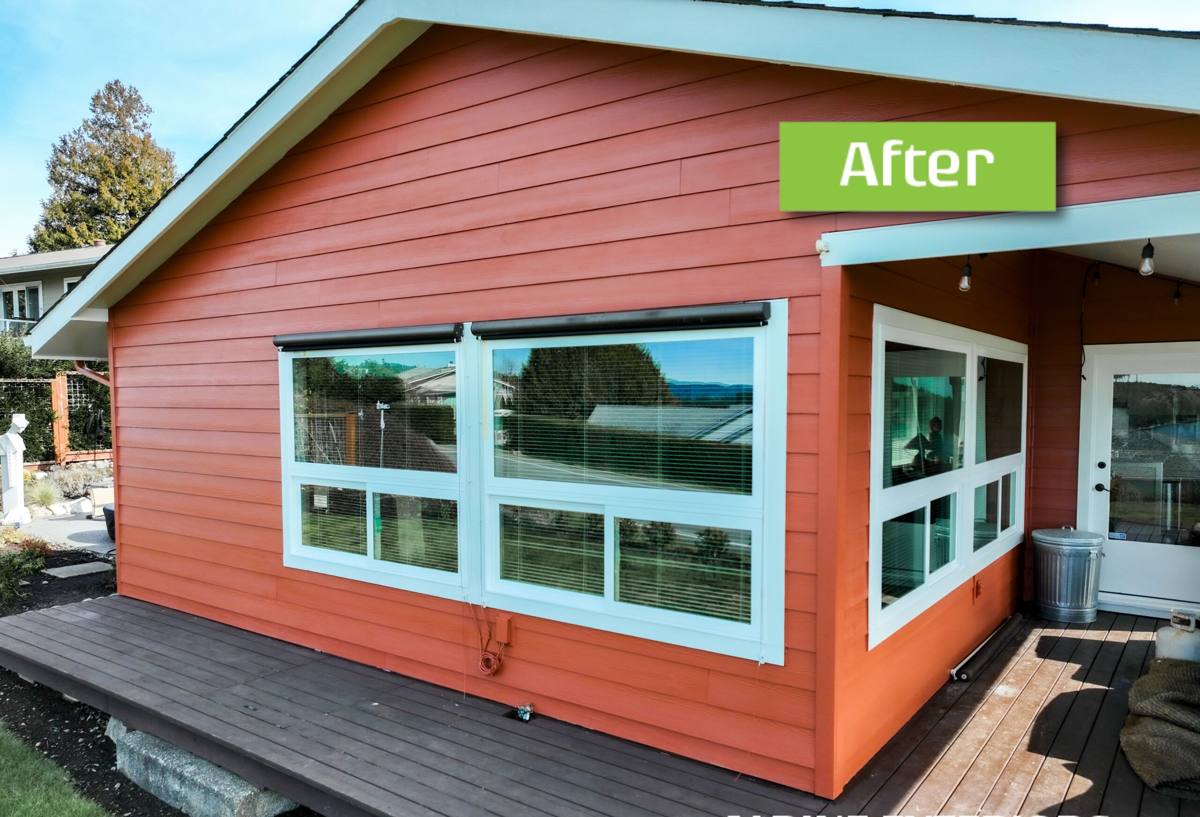
Why Siding Fails Faster This Close to the Water
Every coastal-adjacent area deals with moisture, but Ship Harbor's combination of exposure and orientation creates a few specific failure patterns worth understanding before you decide how to handle a repair.
Salt Air and Fasteners
Salt-laden air accelerates corrosion on anything metal — nail heads, flashing, trim fasteners, even the small gaps around window and door casings. Corroding fasteners loosen their grip on siding panels, which opens tiny gaps that wind-driven rain finds and exploits. It's rarely dramatic at first; it's a nail head rusting through its coating, then a hairline gap, then a soft spot months later.
Wind-Driven Rain
Rain that comes in sideways off the water doesn't behave like rain falling straight down. It gets pushed up under laps, into butt joints, and behind trim boards that would stay dry on a more sheltered lot. Siding systems are designed with laps and clearances that assume gravity is doing most of the work — driving rain changes that equation, especially on the water-facing sides of a house.
Moss and Algae Season
Skagit County's long wet season gives moss and algae months to establish themselves on north-facing walls, under eaves, and anywhere air doesn't move much. Moss holds moisture against the siding surface far longer than open air would, which is what turns a cosmetic staining issue into a moisture problem if it's left alone through a few wet seasons in a row.
Signs Your Siding Needs a Repair Call
Most homeowners notice something is off well before they can name what it is. These are the specific signs worth acting on rather than watching:
- Soft or spongy spots when you press on the siding, especially near the bottom courses or around window trim
- Visible gaps or separation at butt joints, corners, or where siding meets trim
- Streaking, dark staining, or moss growth concentrated on shaded or water-facing walls
- Paint or factory finish that's peeling, bubbling, or chalking in isolated patches rather than evenly across the whole house
- Rust trails below nail heads or metal trim pieces
- Cracked or dented panels from impact, storm debris, or a fallen branch
- Caulk joints that have shrunk, cracked, or pulled away from the siding edge
Any one of these on its own might be minor. Several of them clustered in one area, especially on a wall that faces the water or prevailing wind, usually means moisture has been working behind the siding for a while.
Common Repair Scenarios We See in This Area
Moisture Intrusion at Trim and Butt Joints
This is the most frequent call in waterfront-adjacent neighborhoods. Water finds its way behind a butt joint or trim board, and by the time it's visible on the surface, there's often been months of slow saturation underneath. The fix isn't just sealing the surface — it's pulling the affected pieces, checking the water-resistive barrier and flashing behind them, and replacing anything that's compromised before closing it back up.
Fastener and Panel Failure
Corroded fasteners that have loosened their grip need to come out, not just get re-driven. Re-nailing over a corroding fastener just delays the same failure. A proper repair means removing the compromised fastener, checking the panel for damage, and re-fastening with corrosion-resistant hardware suited to the exposure.
Impact Damage
Storm debris, a ladder mishap, a delivery cart — impact damage is usually the easiest repair to diagnose and the most satisfying to fix, because it's contained. The key is matching the replacement piece's profile and exposure exactly so the repair doesn't create a visible seam or a new water path.
Moss and Algae Staining
Sometimes this is purely cosmetic and a careful cleaning solves it. Other times, moss has been sitting against the siding long enough that the surface underneath needs inspection before anyone recommends just power-washing it and calling it done. We check before we clean, not after.
Repair or Replace? How We Make That Call
Not every damaged section needs replacing, and not every repair is worth doing instead of replacing. The honest answer depends on a few factors we walk through on every inspection.
| Factor | Favors Repair | Favors Replacement |
|---|---|---|
| Extent of damage | Isolated to one or two panels/sections | Spread across multiple walls or elevations |
| Underlying structure | Sheathing and framing are dry and sound | Sheathing shows rot or sustained water damage |
| Age and material | Newer material still under warranty, in good condition elsewhere | Original siding is old, discontinued, or already failing broadly |
| Cause | One-time event (impact, isolated fastener failure) | Ongoing exposure issue with no fix but a different approach |
| Cost over time | Repair cost is a small fraction of full replacement | Repeated repairs are adding up faster than replacement would cost |
When the siding involved is an older wood or vinyl product that's already showing widespread wear, we'll say so plainly. Trying to patch failing wood or aging vinyl with new material of the same kind often just buys a year or two before the next call. In those cases we'll talk through what a James Hardie fiber cement replacement of the affected section — or the whole elevation — would look like, because matching decades-old material is often impossible anyway, and Hardie's factory-applied ColorPlus finish and non-combustible composition hold up to this exact climate better than what's failing.
What a Correct Repair Actually Involves
Matching Profile and Exposure
Fiber cement siding comes in specific plank widths, exposures, and textures. A repair that uses the wrong exposure or profile will show as a visible line even after painting, so the first step is confirming exactly what's installed before ordering replacement material.
Color Matching Realities
James Hardie's ColorPlus finish is baked on at the factory and holds color extremely well, but it's not always possible to get a brand-new piece to disappear perfectly next to years of weathering and UV exposure on the existing siding, especially on a sun-facing or salt-exposed wall. We're upfront about this before starting a repair — sometimes the better call is repainting or refinishing the whole elevation once the repair is in, rather than promising an invisible patch that weathering will make more visible over the following year.
Flashing and Water Management
Any repair that touches a butt joint, window, door, or trim intersection is also a chance to correct the flashing and water-resistive barrier detailing behind it. Putting new siding back over bad flashing just resets the clock on the same failure. We treat the water management layer as part of the repair, not an afterthought.
Fasteners and Hardware
Given the salt exposure this close to the water, we use fasteners and hardware rated for corrosion resistance, not whatever's fastest to grab. It costs a little more upfront and saves the callback in a few years.
Our Repair Process
- Inspection: We look at the damaged area and the surrounding wall, not just the spot you called about — hidden moisture rarely stays confined to one panel.
- Diagnosis: We identify the actual cause (fastener corrosion, flashing failure, impact, moisture from a separate source like a gutter or roof issue) so we're not just treating a symptom.
- Scope and honest options: We explain what repair involves, what it costs, and whether replacement of that section or elevation would serve you better long-term.
- Material matching: We source the correct profile, exposure, and color match, and set expectations on how closely it will blend.
- Repair execution: Remove compromised material, correct any flashing or water barrier issues underneath, install new material to spec, and re-seal correctly.
- Cleanup and check: We clean up debris and walk the repair with you before we consider the job done.
Why Hire a Crew That Already Works This Area
Ship Harbor and the waterfront-adjacent parts of Anacortes have a different exposure profile than a sheltered lot a few miles into Skagit County, and that matters when you're deciding who touches your siding. A crew that regularly works this stretch of coastline already knows which walls take the worst of the wind-driven rain, how fast moss season sets in without maintenance, and which fastener and flashing shortcuts fail early out here even though they'd hold up fine somewhere more sheltered.
It also matters for scheduling and material access. Local familiarity means fewer surprises mid-repair — we're not guessing at what's behind your siding or how the local weather pattern will affect the timeline for finishing a repair before the next system rolls in off the water.
After the Repair: Keeping It From Happening Again
A good repair addresses the immediate problem. Keeping it from recurring usually comes down to a short list of maintenance habits suited to this environment:
- Rinse siding periodically, particularly shaded or north-facing walls where moss and algae take hold fastest
- Keep gutters and downspouts clear so overflow doesn't run down the siding face
- Trim back vegetation that keeps a wall shaded and damp longer than it needs to be
- Do a visual walk-around once or twice a year, especially after major windstorms, checking for new gaps, soft spots, or loosened trim
- Address small caulk or fastener issues promptly rather than waiting for a full wet season to pass
If you're seeing any of the warning signs above on a Ship Harbor home, or you just want a second opinion on whether something is worth repairing versus replacing, we're happy to come take a look. The estimate is free, there's no pressure either way, and you'll get a straight answer about what your siding actually needs.