 Anacortes Roofing
 Edison's Climate: Salt Air, Driving Rain, and a Long Moss Season
Edison sits in the farmland along Samish Bay, close enough to the water that salt-laden air is a fact of life, not an occasional nuisance. That air carries moisture and fine salt particles that settle on exterior surfaces year-round, and over time it works on siding in ways that inland Skagit County homes don't have to deal with nearly as much. Add in driving rain that comes sideways off the water during winter storms, and a shoulder season that stretches long and damp, and you have a climate that is genuinely harder on a house's exterior than most people realize.
Then there's moss. Between the tree cover common around Edison properties and the sheer number of gray, drizzly days Skagit County gets, north-facing walls and anything shaded by trees or eaves stay damp far longer than they would in a drier climate. Moss and algae take hold on siding that can't shed water fast or dry out between rain events, and once established they hold moisture directly against the siding surface — which is exactly the wrong thing for wood-based or moisture-sensitive products.
None of this means siding fails quickly in Edison. It means the margin for error is smaller. A siding product and installation that would perform fine in a drier part of the state can start showing problems here years earlier — swelling seams, peeling paint, soft spots at the bottom courses, moss staining that won't scrub off. The right material and the right installation details matter more here than almost anywhere else in the county.
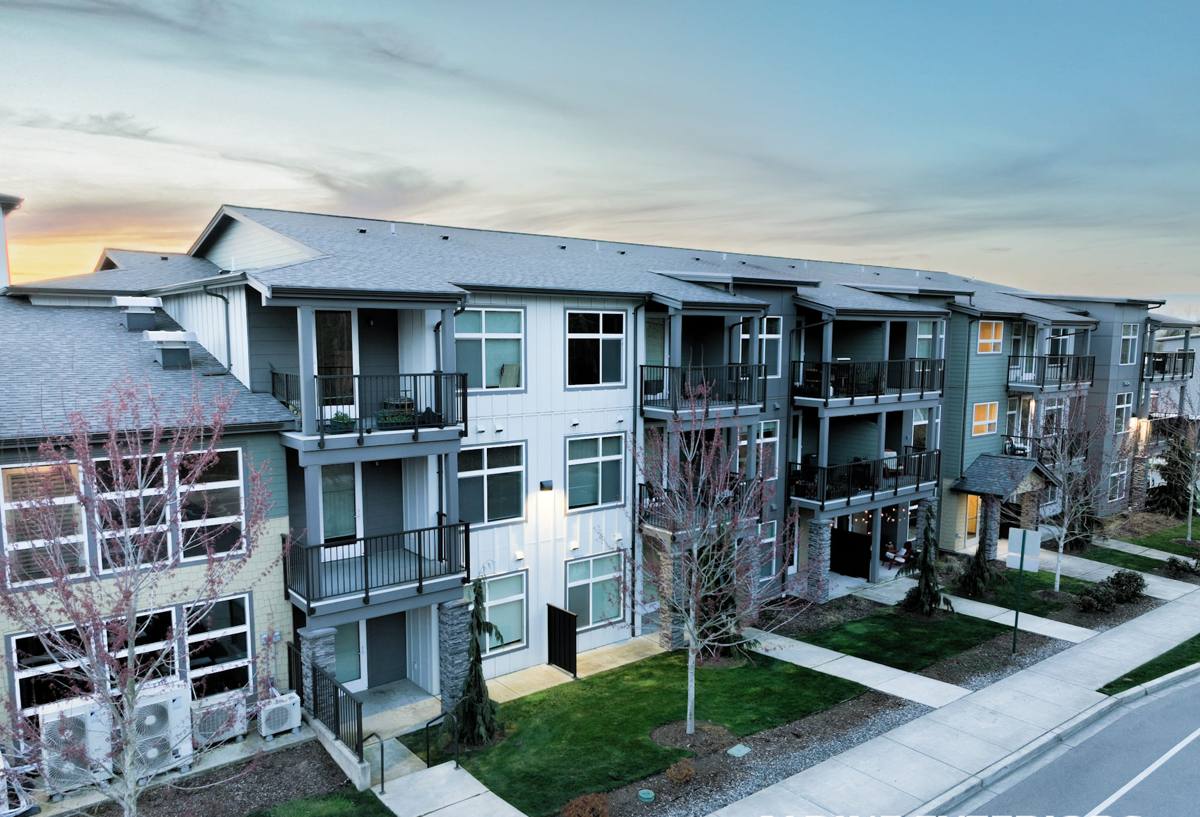
Why Siding Material Choice Matters More in Edison Than Most Places
Every siding material handles moisture differently, and in a salt-air, high-rainfall environment those differences show up faster. Vinyl siding can warp or fade under UV exposure and doesn't hold paint if you ever want to change the color, but its bigger issue near the water is that it's not a water barrier itself — it relies entirely on what's behind it, and any gap or loose panel lets wind-driven rain track behind the cladding. Wood and primed spruce siding look great going in, but they're organic material in a climate built for moss and rot; keeping up with the caulking, painting, and moisture inspection they require is a real, ongoing commitment. LP SmartSide is an engineered wood product with a resin-treated strand core — better than raw wood, but still wood-based, and any breach in its factory coating exposes it to the kind of sustained dampness Edison specializes in.
This is why we standardized on James Hardie fiber cement siding for every home we side, full stop. It's not wood, so it doesn't rot, swell, or feed moss the way organic siding does. It's not vinyl, so it doesn't rely on a thin plastic shell to keep its shape and color through decades of salt air and UV. Fiber cement is sand, cement, and cellulose fiber — inert, dimensionally stable, and engineered specifically for climates like this one.
Non-Combustible, Not Just Weather-Resistant
Fiber cement's non-combustible rating is a separate benefit from its moisture performance, but it's worth mentioning: it doesn't contribute fuel to a fire the way wood-based sidings do. For homeowners weighing long-term exterior decisions, that's one more point in the material's favor alongside its climate performance.
What a Correct Siding Replacement Involves
Replacing siding is not just pulling off old boards and nailing up new ones. In a climate like Edison's, the details underneath the visible siding determine whether the job holds up for decades or starts leaking in five years.
Tear-Off and Sheathing Inspection
Once the old siding comes off, we inspect the sheathing underneath for water damage, soft spots, or rot — this is often the only point in a home's life where that layer is fully exposed. Any compromised sheathing gets addressed before anything new goes back on. Skipping this step and re-siding over hidden damage is one of the most common corners cut in this trade, and it's the kind of shortcut that only shows up years later as a much bigger repair.
Water-Resistive Barrier and Flashing
A new weather-resistive barrier goes on correctly lapped, and flashing gets installed at every window, door, and horizontal trim transition — the places where wind-driven rain actually finds its way in. This layer does the real waterproofing work; the siding itself is the second line of defense, not the only one. Given how much driving rain this area sees, getting the flashing details right is not optional.
Fastening, Clearances, and Joints
James Hardie siding has specific installation requirements — fastener spacing and type, minimum clearance from grade, roof lines, and decks, and correctly sealed or shiplap joints — all spelled out by the manufacturer to keep the warranty valid and the product performing as designed. Installed to spec, it sheds Edison's rain and resists moss buildup far better than siding hung with generic techniques borrowed from other materials.
Comparing Siding Materials in Edison's Climate
| Material | Moisture Behavior Near Salt Water | Moss/Algae Resistance | Long-Term Maintenance |
|---|---|---|---|
| James Hardie fiber cement | Dimensionally stable; doesn't swell or rot | Factory finish resists staining better than organic sidings | Occasional wash; ColorPlus finish holds color for years |
| Vinyl | Panel itself is inert but relies fully on barrier behind it; can warp under heat/UV | Can trap moisture behind loose or gapped panels | Low, but fading and brittleness increase over time |
| Primed spruce/cedar | Absorbs moisture; prone to swelling and rot at joints and bottom courses | Susceptible, especially on shaded walls | Regular repainting and caulk inspection required |
| LP SmartSide | Engineered wood; resin-treated core is more resistant than raw wood but still moisture-sensitive if coating is breached | Better than raw wood, still organic-based | Coating and joint sealant need periodic inspection |
Signs an Edison Home Needs Siding Replacement
Because of the local climate, siding problems in Edison often show up in specific, recognizable ways. Worth checking for:
- Soft or spongy spots when you press on siding, especially near the bottom courses or under windows
- Persistent moss or dark staining on north- or shade-facing walls that returns quickly after cleaning
- Paint that's peeling, bubbling, or chalking heavily rather than just fading evenly
- Visible gaps, warping, or buckling in panels, especially after a windy winter storm
- Rising energy bills that suggest the wall assembly behind the siding is no longer performing
- Cracked or delaminating boards at seams and corners
Our Process, Start to Finish
We start with an on-site look at the home — not a quick drive-by estimate, but an actual assessment of wall orientation, existing damage, trim and flashing condition, and how exposed the home is to prevailing wind and rain off Samish Bay. From there we walk through James Hardie's HardiePlank, HardiePanel, and HardieShingle options and factory ColorPlus finishes so you're choosing based on how the home actually sits on its lot, not a generic recommendation.
Once a plan is set, we handle tear-off, sheathing repair where needed, water-resistive barrier and flashing installation, and the Hardie install itself to manufacturer spec — including the fastening and clearance details that keep the product performing the way it's engineered to. We clean up thoroughly at the end of each work day and do a final walkthrough with you before calling the job done, not just when the last board goes up.
Why a Local Crew That Already Works Edison Matters
A crew that regularly works Skagit County's coastal-adjacent communities already understands things a crew from farther inland has to learn on your job: how much wind exposure a given wall orientation actually gets, how long moss takes to re-establish on a shaded elevation here, and what flashing details actually hold up against sideways rain instead of just textbook rain. That local pattern recognition shows up in fewer surprises during tear-off and a finished job that's built for the weather it will actually face, not generic weather.
It also matters for scheduling and follow-up. A crew based in the area can respond quickly if a question comes up after the job is done, and isn't disappearing to a job three counties away the week after your install wraps up.
Caring for Your New Hardie Siding
James Hardie siding is low-maintenance, not no-maintenance. A rinse with a garden hose once or twice a year keeps salt residue and early moss growth from building up, especially on shaded or north-facing walls. Keep an eye on caulking at trim and window transitions over the years, since caulk is the one component that does age faster than the siding itself. Beyond that, the ColorPlus factory finish is engineered to hold its color far longer than a field-applied paint job would, which means far less repainting than wood or primed siding demands over the same span of years.
If you're weighing a siding replacement on your Edison home and want an honest look at what your walls actually need, we're happy to come out, walk the property with you, and give you a straightforward assessment and estimate — no pressure, no hard sell. Use the form below to get started.