 Anacortes Roofing
 Skyline sits close enough to the water that every roof up here deals with the same combination of problems: salt-laden air moving in off the Sound, wind-driven rain that finds any weak seam, and a moss season that can run eight months or longer in a wet year. Asphalt shingle roofing is still the right choice for most homes in this neighborhood — it's proven, repairable, and reasonably priced — but only when it's specified and installed for these exact conditions. A shingle system built for a dry inland climate will not hold up the same way here, and the difference shows up as granule loss, moss intrusion, and premature leaks within a handful of years instead of decades.
Why Skyline Roofs Wear Differently
Three things stack up against a roof in this part of Skagit County. First, salt air is mildly corrosive to exposed metal — nails, flashing, and fastener heads that aren't properly rated or protected will oxidize faster here than they would twenty miles inland. Second, driving rain doesn't fall straight down; wind pushes it sideways and up under laps, valleys, and around penetrations, which means flashing details and underlayment matter more than they would in a calmer climate. Third, the long stretch of cool, damp weather from fall through spring is exactly what moss and algae need to establish themselves. Once moss gets a foothold under shingle tabs, it holds moisture against the roof deck and lifts shingles from underneath, which is a slower but more damaging problem than most homeowners expect.
None of this means asphalt shingles are a poor fit for Skyline. It means the installation has to account for these conditions from the first layer up, not just the shingle color on top.
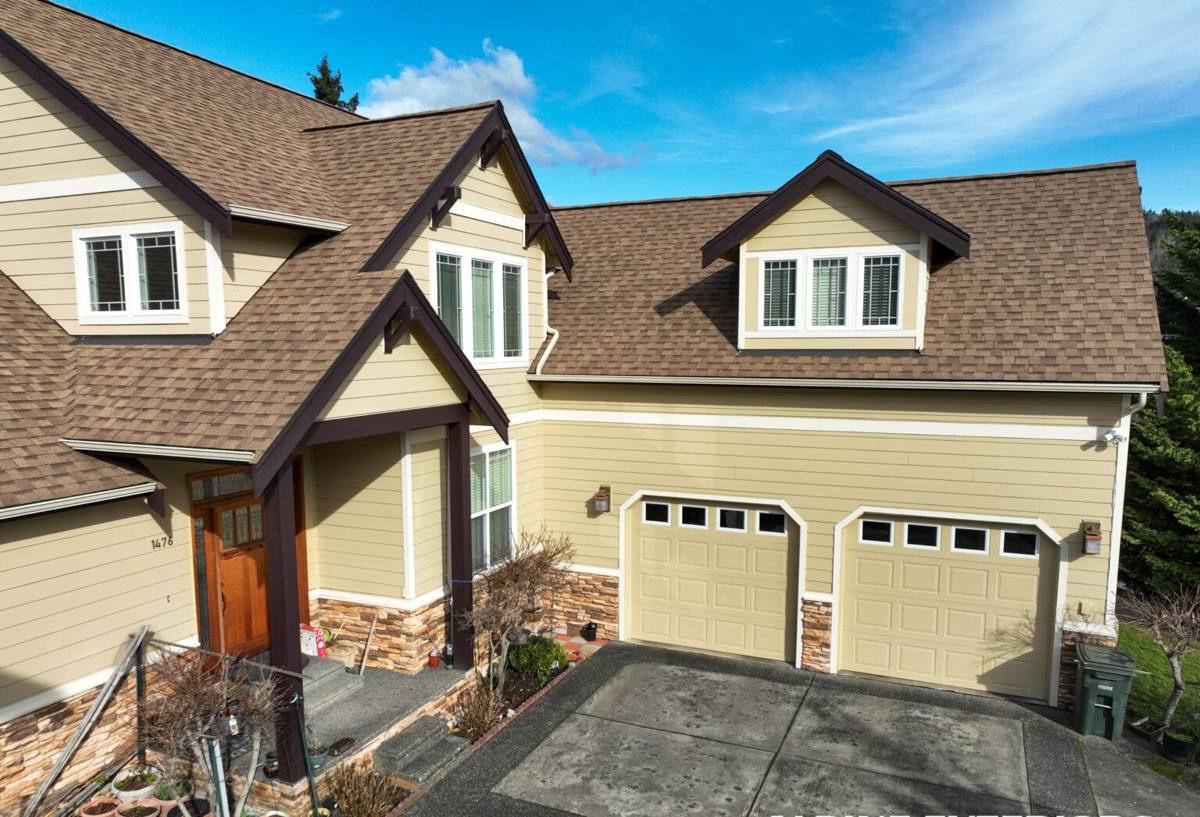
What a Correct Installation Actually Includes
A shingle roof is a system, not a single product. Skipping or shortcutting any one layer is where most premature failures start.
Deck and Underlayment
The roof deck gets inspected for soft spots, delamination, and proper fastening before anything new goes down. Over that, we use a synthetic underlayment rather than old-style felt in most cases — it holds up better to the freeze-thaw and wet-dry cycling common here, and it resists tearing during install in wind. Ice-and-water shield goes at eaves, valleys, and around penetrations, where wind-driven rain is most likely to work its way backward under a standard lap.
Flashing
Step flashing at walls and chimneys, counter-flashing where required, and properly sized flashing at valleys and skylights are non-negotiable in a marine climate. Reused or reglued old flashing is one of the most common causes of "mystery leaks" we get called out to fix on roofs that otherwise look fine.
Fastening and Wind Exposure
Skyline's exposure to wind off the water means shingles get nailed with the manufacturer's high-wind pattern (typically six nails per shingle rather than four), placed in the correct nailing zone. Overdriven or underdriven nails are a leading cause of shingle blow-off and early granule loss, and it's a detail that's easy to shortcut on a fast job.
Ventilation
Balanced intake and exhaust ventilation keeps the underside of the deck dry and lets the attic breathe. Without it, moisture gets trapped, shingles cook from underneath in summer, and condensation can form in winter — all of which shorten the life of an otherwise well-installed roof.
Choosing a Shingle for This Climate
Not every asphalt shingle line performs the same way under salt air, moss pressure, and coastal wind. The table below is a general guide to how the common tiers compare — exact specs vary by manufacturer and product line, so we walk through actual samples and warranty documents with you before you decide.
| Shingle Type | Typical Wind Rating | Algae Resistance | Expected Service Life |
|---|---|---|---|
| 3-tab (economy) | Lower end of standard range | Limited unless upgraded | Shorter end of typical range |
| Architectural / dimensional | Mid to high standard range | Algae-resistant granules common | Mid-range, better in wet climates |
| Premium / designer | High end of standard range | Algae-resistant granules standard | Longer end of typical range |
For most Skyline homes, we recommend at least an architectural-grade shingle with algae-resistant (copper- or zinc-infused) granules. The upgrade cost over a basic 3-tab is modest relative to the roof's overall price, and the payoff in reduced moss and algae staining is one of the more noticeable differences a homeowner sees a few years down the road.
Our Process, Start to Finish
Every job follows the same sequence, whether it's a full replacement or a targeted repair section.
- On-site inspection of the deck, existing flashing, ventilation, and any interior signs of past moisture
- Written scope and material recommendation, with samples and warranty details reviewed together
- Full tear-off to bare deck (patch-over installs trap moisture and hide problems — we don't do them)
- Deck repair or replacement of any damaged sheathing found during tear-off
- New underlayment, ice-and-water shield at vulnerable areas, and drip edge
- New flashing at all walls, chimneys, valleys, and penetrations
- Shingle installation with correct nailing pattern for wind exposure
- Ventilation check and correction if intake/exhaust is unbalanced
- Full site cleanup, including a magnetic sweep for stray nails
- Final walkthrough so you know exactly what was done and what to watch for
Moss, Algae, and Ongoing Maintenance
Even a well-installed roof needs some upkeep in a climate where moss season runs most of the year. Zinc or copper strips near the ridge help suppress regrowth over time as rain washes trace metal down the roof surface. Keeping overhanging tree limbs trimmed back reduces shade and debris buildup, both of which encourage moss. Gutters need to stay clear so water isn't backing up under the shingle edge, and we recommend a simple annual look at the roof — from the ground or during a service visit — to catch small issues before they become interior leaks.
We don't recommend pressure washing shingle roofs. It strips granules and shortens the shingle's life faster than the moss it's removing. Soft washing or manual removal with proper technique is the safer route when moss buildup needs to come off.
Repair or Replace? Reading the Signs
Homeowners often ask whether a problem area can be patched or whether it's a sign the whole roof needs to go. A few honest guidelines:
- Isolated damage — a torn shingle, a failed boot around a vent pipe, a section lifted by wind — is usually a straightforward repair
- Granule loss showing up broadly across the roof, not just in one spot, points to a roof nearing the end of its service life
- Curling or cupping shingles across multiple slopes usually means the underlayment and shingles are both past their useful window
- Soft or spongy spots underfoot indicate deck damage, which changes the scope regardless of how the shingles look
- Repeated leaks in different locations after past patch jobs usually mean it's time to address the whole system rather than keep chasing individual spots
We'll tell you honestly which category your roof falls into. A roof with useful life left doesn't need to be replaced just because it's convenient to sell a bigger job.
Warranty Basics Worth Understanding
Roofing warranties come in more than one form, and the differences matter more than most homeowners realize until there's a problem.
| Warranty Type | What It Covers | Typical Duration |
|---|---|---|
| Manufacturer material warranty | Defects in the shingle product itself | Often long-term, prorated after early years |
| Workmanship warranty (from your contractor) | Installation errors — flashing, nailing, sealing | Set by the contractor, varies by company |
| Enhanced/system warranty (some manufacturers) | Broader coverage when a full certified system is installed | Requires certified installer and full system materials |
We explain which warranty applies to your job in writing before work starts, including what voids it — mixing manufacturers' components or skipping required accessories is a common way homeowners unknowingly weaken their own coverage.
Why It Matters to Hire a Crew That Already Works Skyline
A roof crew that works this specific area regularly understands things a traveling or out-of-region contractor doesn't: how exposed a given slope is to wind off the water, how long moss season realistically runs here versus a marketing brochure's generic estimate, and what permitting looks like locally so the job isn't held up by paperwork surprises. It also means faster response if a storm damages something and you need someone out quickly rather than waiting on a crew that has to drive in from out of the county. Local experience shows up in details — flashing choices, ventilation corrections, material recommendations — that a one-size-fits-all installation misses.
Get an Honest Look at Your Roof
If your Skyline home's roof is showing granule loss, moss buildup, or you're just not sure how much life it has left, we're glad to take a look and give you a straight answer — no pressure, no inflated scope. Use the form below to request a free estimate.