 Anacortes Roofing
 Siding That Has to Work in Skyline's Marine Climate
Skyline sits close enough to the water that homes here take a steady beating from salt-laden air, wind-driven rain, and a moss season that can stretch from October through May. Siding in this part of Skagit County isn't just a cosmetic layer — it's the thing standing between your framing and a climate that never really dries out for long. Wood-based siding products soften, delaminate, or rot when they're wet more often than they're dry. Vinyl flexes and gaps in the temperature swings and wind gusts that come off the water. Fiber cement, specifically James Hardie fiber cement, is engineered to handle exactly this kind of exposure without the maintenance spiral that comes with softer materials.
We install exclusively James Hardie siding. We don't install LP SmartSide, vinyl, Cemplank, Allura, or bare cedar or primed spruce. That's not a marketing position — it's a standard we hold because we've seen what marine exposure does to homes over a full ownership cycle, and we'd rather put one product on a house and stand behind it than offer a menu of options with different failure modes.
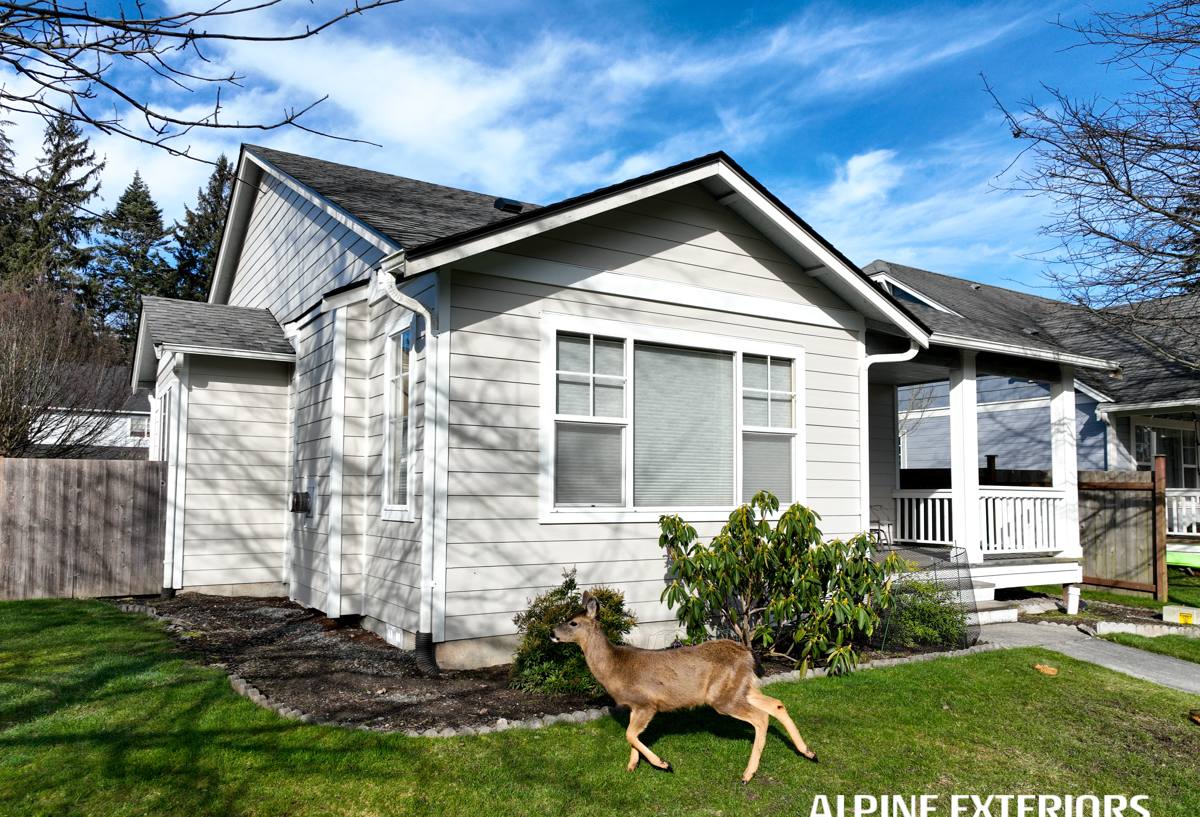
What Salt Air and Moss Actually Do to a House
Homeowners in Skyline deal with a specific combination of stressors that inland Skagit County homes don't see nearly as much:
- Salt-laden air accelerates corrosion on fasteners, flashing, and any exposed metal trim — which is why fastener choice and flashing detail matter as much as the siding material itself.
- Driving rain off the water pushes moisture sideways into laps, seams, and butt joints, not just straight down. Siding systems that rely on face-sealed caulk joints tend to fail here faster than in calmer inland areas.
- Extended moss and algae season keeps north- and west-facing walls damp for long stretches, which is exactly the condition that lets rot, mildew staining, and paint failure take hold on wood-based products.
- Wind exposure from open water views means siding has to hold its fastening and stay flat — not bow, cup, or work loose over time.
None of this is unique to any one street or subdivision in Skyline — it's the nature of siding a home this close to the water in Anacortes. But it's a meaningfully different climate load than what a product spec sheet written for a national market assumes.
Why We Standardized on James Hardie
James Hardie fiber cement is cement, sand, and cellulose fiber, factory-cured — it doesn't have the organic wood content that gives moss, algae, and rot something to feed on. It's non-combustible, which matters for insurance conversations and wildfire-adjacent building codes even in a wet climate like ours. And Hardie's HZ5 product line is specifically engineered for climates with freeze-thaw cycling and sustained moisture exposure, which describes a Skagit County winter reasonably well.
The other piece is the factory finish. Hardie's ColorPlus finish is baked on in a controlled factory environment, not brushed or sprayed on site. That matters in a place where you might get a two-day weather window to paint in November. A factory finish means the color and the moisture barrier are consistent across every board, and it comes with its own finish warranty separate from the substrate warranty — so you're not relying on job-site paint application to hold up against salt air for the next fifteen years.
What We Give Up by Not Offering Alternatives
We're upfront that this means we can't be the cheapest bid on every job. LP SmartSide and vinyl both have lower material costs, and there are legitimate applications for both elsewhere. But for a Skyline home sitting in this specific combination of salt exposure, rain, and moss, we'd rather turn down a job than install something we don't believe will hold up to the standard we want our name attached to.
What a Correct Fiber Cement Install Actually Involves
Fiber cement siding fails almost exclusively at the install level, not the material level. The board itself is the easy part. The details that separate a 30-year performing wall from a callback in year five are:
| Install Detail | Why It Matters in Skyline |
|---|---|
| Weather-resistive barrier + rainscreen gap | Lets any moisture that gets past the cladding drain and dry instead of sitting against the sheathing |
| Flashing at every window, door, and penetration | Driving rain finds every unflashed seam — this is the single most common source of hidden rot |
| Correct fastener type and placement | Salt air corrodes the wrong fastener in years, not decades; Hardie specifies fastener type by exposure zone |
| Proper clearance from grade, decks, and roof lines | Keeps board bottoms out of standing water and splash-back zones common near the water |
| Factory-cut and factory-primed edges maintained | Field cuts need sealed edges or they become a moisture entry point despite the ColorPlus finish |
| Caulking limited to what Hardie actually specifies | Over-reliance on caulk instead of proper flashing is a common shortcut that fails first in wet climates |
Every one of these is invisible once the wall is closed up. It's also exactly where a crew that hasn't installed a lot of fiber cement in a marine climate tends to cut corners — not out of dishonesty, usually just inexperience with what this specific climate demands.
Our Process for a Skyline Siding Job
1. On-Site Assessment
We walk the exterior and look at what's actually happening on your walls right now — moisture staining, moss growth patterns, existing flashing condition, and any soft spots in the current siding or trim. This tells us if there's hidden damage behind the current cladding that needs to be addressed before new siding goes up.
2. Scope and Product Selection
We spec the right Hardie product line and profile for your home's exposure — which sides of the house face the water and prevailing wind matter for both material choice and detailing. We'll walk you through the ColorPlus color options and lap profiles that fit the house.
3. Tear-Off and Sheathing Check
Old siding comes off and we inspect the sheathing underneath. Any rot or compromised sheathing gets addressed before anything new goes on — covering up a wet wall with new siding just delays the problem.
4. Weather Barrier and Rainscreen Installation
We install a proper weather-resistive barrier and rainscreen system so the wall assembly can shed and dry moisture, not just resist it at the surface.
5. Fiber Cement Installation to Spec
Boards go up per Hardie's installation guidelines — correct fastener schedule, flashing at every penetration, and proper clearances. This is where experience with this exact product in this exact climate shows.
6. Final Walkthrough
We walk the finished job with you, checking sightlines, joints, and trim details before we call it done.
Why Hiring a Crew That Already Works Skyline Matters
A siding crew that mostly works inland or in drier parts of Washington may install Hardie correctly by the book and still miss the extra margin that a marine-exposed Skyline wall needs — a slightly more aggressive rainscreen gap, closer attention to west-facing flashing, or fastener choices suited to salt exposure. Crews that regularly work this part of Anacortes see the same failure patterns repeatedly on other people's past jobs — moss-blackened north walls, caulk-only joints that have failed, corroded fasteners bleeding rust streaks down a wall — and build around avoiding them from the start rather than learning it on your house.
Local presence also means faster response if something needs a look after a big wind and rain event, and a crew that already understands Skagit County permitting and inspection expectations for exterior work.
A Practical Checklist Before You Choose a Siding Contractor
- Ask specifically what weather-resistive barrier and rainscreen approach they use — not just "we use house wrap"
- Ask which Hardie product line (HZ5 vs. HZ10) they're specifying and why for your exposure
- Ask how they flash windows, doors, and any deck ledger or roof-to-wall intersections
- Ask what fastener type they use and whether it's rated for coastal/marine exposure
- Get the warranty terms in writing — both Hardie's product/finish warranty and the contractor's labor warranty
- Ask how they handle field-cut board edges
- Ask for a written scope that names the product, profile, and color — not just "Hardie siding"
Maintenance After Installation
Fiber cement is low-maintenance, not no-maintenance. In Skyline's climate, that means periodically rinsing off moss and algae growth on shaded walls, keeping gutters clear so overflow doesn't run down the siding face, and doing a visual check after major storms for any loose trim or caulk that's pulled away. None of this compares to the sanding, re-caulking, and repainting cycle that wood-based sidings need out here — but it's not zero upkeep either, and we'll walk you through what to watch for.
Get a Straight Answer on Your Skyline Siding Project
If you're dealing with moss staining, soft spots, or aging siding on a Skyline home, we're happy to come take a look and give you an honest read on what's going on — no pressure, no upsell to a product we don't believe in. Reach out for a free estimate and we'll walk the exterior with you and talk through what correct James Hardie installation would look like for your specific house.