 Anacortes Roofing
 Roofing for West Anacortes' Marine Climate
West Anacortes sits close enough to the water that homes here take a different kind of weathering than roofs a few miles inland in Skagit County. Salt-laden air accelerates corrosion on exposed metal fasteners and flashing. Driving rain, pushed sideways by wind off Fidalgo Bay and the Guemes Channel, finds its way into laps and seams that would stay dry in a calmer climate. And the long, damp shoulder seasons here give moss and moisture a running start most of the year. A new roof installed without those three factors in mind will look fine at the walkthrough and start showing problems within a few winters.
When we install a new roof in West Anacortes, we're not just laying material to code minimums — we're building in the extra margin that this specific stretch of coastline demands. That means corrosion-resistant fasteners and flashing, underlayment and lap details sized for wind-driven rain rather than straight-down rain, and a ventilation plan that keeps the deck dry enough that moss and rot don't get a foothold.
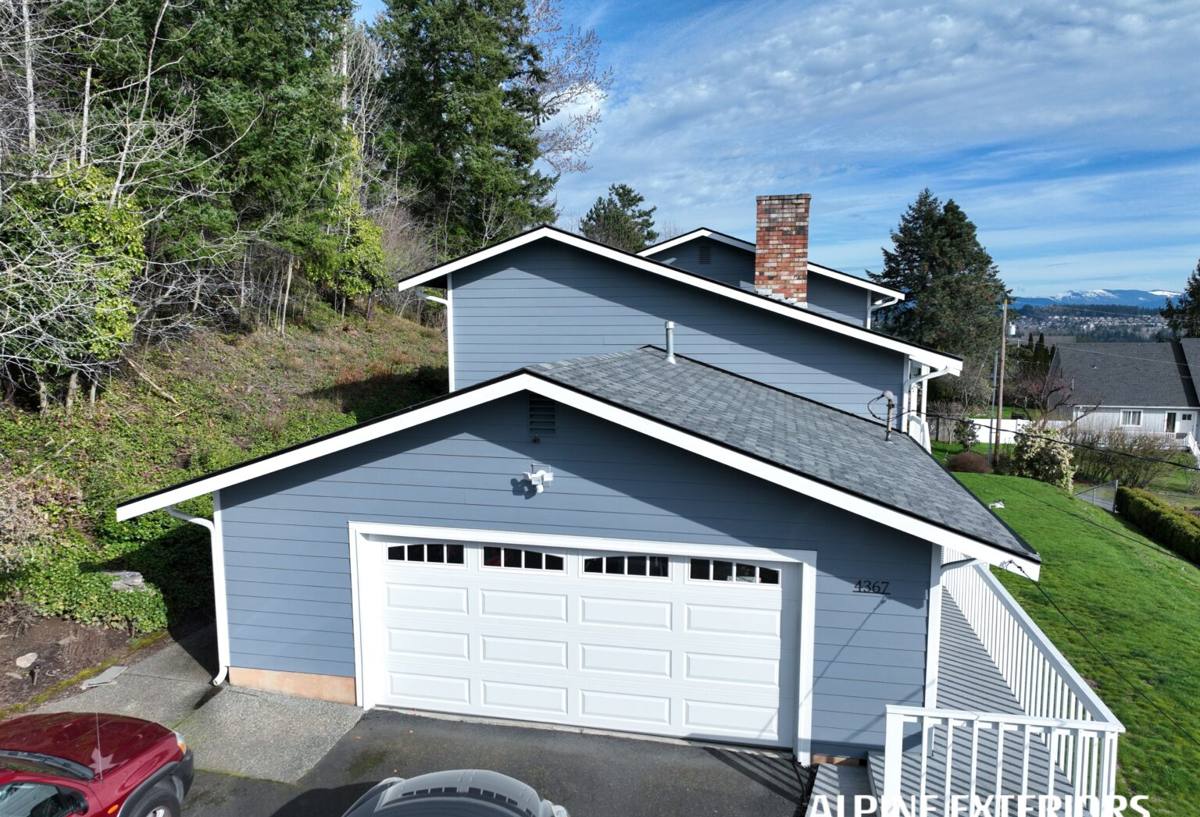
What a Correct New Roof Installation Actually Involves
"New roof" covers a wide range of workmanship, and the difference between a roof that lasts its full rated life and one that needs attention in year eight almost always comes down to what's happening under the shingles or panels, not what's visible from the street.
Full Tear-Off and Deck Inspection
We remove the old roofing down to the deck on every full replacement. Covering over an existing layer hides deck damage and voids most manufacturer warranties outright. Once the deck is exposed, we check for soft spots, delamination, and old leak staining — common in older West Anacortes homes where a slow flashing leak went unnoticed for years. Any damaged sheathing gets replaced before anything new goes down.
Underlayment Built for Wind-Driven Rain
Standard felt underlayment is not enough for a site with regular wind-driven rain. We use synthetic or self-adhered underlayment at eaves, valleys, and other vulnerable areas, with lap directions and fastening patterns set to shed water sideways as well as down.
Flashing at Every Transition
Chimneys, skylights, dormers, and roof-to-wall intersections are where the overwhelming majority of roof leaks actually start — not in the open field of shingles or panels. Correct new roof installation means new flashing at every one of these points, not reused flashing bent back into place.
Ventilation Sized to the House
Intake and exhaust ventilation have to balance. Too little airflow traps moisture against the deck; too much can pull conditioned air out of the attic in winter. We calculate net free ventilation area for the actual attic volume rather than guessing.
Material Options for West Anacortes Homes
There's no single "best" roofing material — the right choice depends on your home's exposure, roof pitch, budget, and how much moss and moisture resistance matters to you. Here's how the common options compare for a marine, moss-prone climate like this one.
| Material | Moss & Moisture Resistance | Salt Air / Coastal Wind | Typical Lifespan Here |
|---|---|---|---|
| Architectural asphalt shingle | Good with proper ventilation; algae-resistant granules help | Performs well with correct fastening and flashing | 20-30 years |
| Standing seam metal | Excellent — sheds moisture, little surface for moss to grip | Needs coastal-rated coatings and stainless or coated fasteners | 40-50+ years |
| Synthetic/composite shake | Very good; won't absorb moisture like wood shake | Performs well; check manufacturer wind rating | 30-50 years |
| Cedar shake | Requires diligent maintenance to resist moss and rot in this climate | Vulnerable to splitting from salt and wind exposure over time | 20-30 years with upkeep |
We install asphalt, metal, and synthetic systems and will walk through the honest trade-offs for your specific roof rather than pushing whatever's easiest to install. Cedar shake can still be the right look for some homes, but we're upfront that it asks more of the homeowner in a climate like Anacortes' — more frequent moss treatment, more careful re-nailing over time, and closer attention to ventilation than composite or metal alternatives.
Moss Season: Designing It Out, Not Just Treating It
Anacortes' long damp season gives moss a head start most other parts of the state don't deal with. A new roof installation is the best opportunity to reduce future moss pressure rather than just planning to treat it every year or two.
- Zinc or copper strips near the ridge, which release trace metal ions that inhibit moss and algae growth as rain washes over the roof
- Algae-resistant shingle granules on asphalt roofing, which resist the dark streaking common on shaded, north-facing slopes
- Full-height attic ventilation to keep deck temperature and moisture from creating the damp, shaded microclimate moss favors
- Trimming back overhanging branches where practical, since moss establishes fastest in shaded, slow-drying areas
None of this makes a roof moss-proof forever, but it meaningfully extends the time between treatments and reduces the risk of moss holding moisture against the shingle surface long-term.
Flashing Details That Matter Most in West Anacortes
Because wind-driven rain is a regular feature of this location rather than an occasional storm event, flashing and edge details deserve more attention here than they would in a drier, calmer climate.
Roof-to-Wall Step Flashing
Where a roof meets a sidewall — common on additions and dormers throughout West Anacortes — step flashing needs to be individually woven with each course, not run as a single continuous piece. Continuous flashing at these transitions is a common shortcut that fails under sideways rain.
Valleys
Open metal valleys or properly woven closed valleys, sized for higher water volume, handle the runoff from a heavy West Anacortes downpour better than undersized or improperly lapped valley work.
Eave and Rake Edges
Drip edge and starter course details matter more where wind can drive rain up under an edge rather than straight down it. We fasten and lap these edges specifically with that wind direction in mind.
Our Installation Process
- On-site evaluation. We inspect the existing roof, deck condition, ventilation, and any problem areas specific to your home's exposure.
- Written estimate. Material options, scope, and pricing laid out clearly, with the reasoning behind our recommendation for your roof.
- Permitting. We handle the permit process with the City of Anacortes so you don't have to manage that paperwork.
- Tear-off and deck repair. Full removal of old roofing, deck inspection, and replacement of any damaged sheathing.
- Underlayment, flashing, and ventilation installation. The details that determine how the roof performs in wind-driven rain over the long run.
- Final roofing material installation. Installed to manufacturer specification to keep warranty coverage intact.
- Cleanup and walkthrough. Site cleared of debris and nails, with a final walkthrough so you know exactly what was done.
Signs a West Anacortes Roof Needs Replacement, Not Repair
- Granule loss heavy enough to see bare fiberglass mat on asphalt shingles
- Curling, cracking, or cupping shingles across large sections rather than isolated spots
- Persistent moss growth that returns quickly after cleaning, especially on shaded slopes
- Daylight visible through the roof deck from inside the attic
- Multiple past repairs to different areas within a few years of each other
- Roof age approaching or past the manufacturer's rated lifespan for its material
- Soft or spongy spots underfoot during inspection, indicating deck damage
One or two of these on their own might still be repairable. Several together usually mean the roof system as a whole is past the point where repair is the better value.
Cost Factors for New Roof Installation
Roofing quotes vary widely because they depend on more than square footage. These are the factors that actually move the number for a West Anacortes home.
| Factor | Why It Matters |
|---|---|
| Roof pitch and complexity | Steep pitches and multiple valleys/dormers take more labor and material than a simple gable |
| Material choice | Asphalt, metal, and synthetic systems carry different material and installation costs |
| Deck condition | Rot or damage found at tear-off adds sheathing replacement to the scope |
| Layers to remove | Multiple existing layers add tear-off time and disposal cost |
| Ventilation upgrades | Bringing older attics up to correct intake/exhaust balance |
| Access and site conditions | Steep lots or limited staging area near the water can affect labor time |
We give a written, itemized estimate before any work starts so you know what's driving the price on your specific roof — no vague lump-sum numbers.
Why Local Experience in West Anacortes Matters
A crew that already works this specific area knows how the wind comes off the water, which neighborhoods see the heaviest moss pressure, and how Skagit County's permitting and inspection process actually runs — not just in general, but for Anacortes specifically. That local familiarity shows up in fewer surprises during the project and a roof detailed correctly for the conditions it will actually face, rather than generic installation practices borrowed from a drier inland climate.
If you're weighing a new roof for a West Anacortes home, we're happy to take a look and give you a straightforward, no-pressure estimate — what we'd recommend, why, and what it would cost. Use the form below to get started.