 Anacortes Roofing
 West Anacortes Siding Faces a Tougher Climate Than Most of Skagit County
Homes on the west side of Anacortes sit closer to open water than almost anywhere else in Skagit County, and that location changes what siding has to survive. Salt-laden air moves off the strait and settles on exterior walls, wind-driven rain finds its way into seams and laps that would stay dry a few miles inland, and the long Pacific Northwest wet season keeps north- and west-facing walls damp for weeks at a time. Siding here isn't just decorative — it's the first line of defense against a climate that works on a house year-round, not just during a few storms.
We've replaced siding on enough West Anacortes homes to know which failure patterns show up here specifically: fastener corrosion near the water, moss and algae staking a claim on shaded walls, and water intrusion at corners and trim that get hit hardest by driving rain. A siding replacement that doesn't account for these conditions is a siding replacement that will need to happen again sooner than it should.
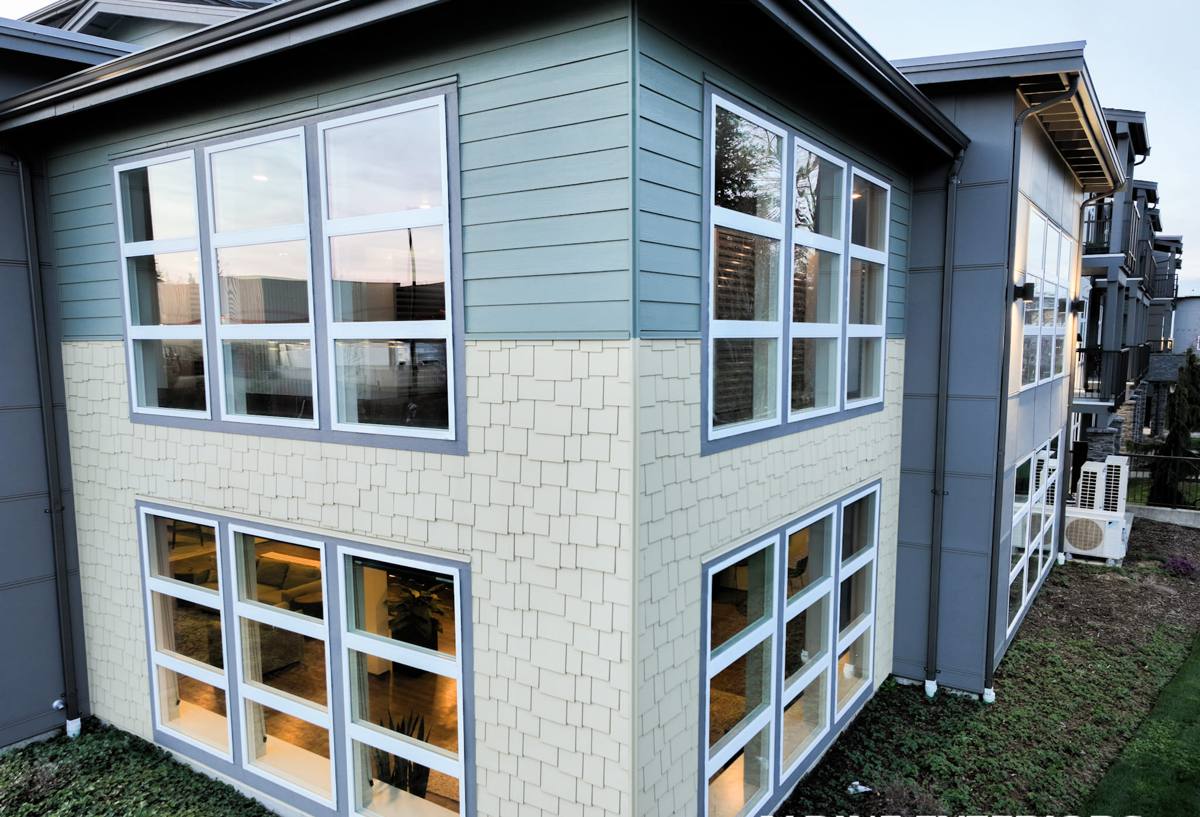
Why Salt Air, Driving Rain, and Moss Season Wear Down Siding Faster Here
Salt Air
Airborne salt is corrosive to metal fasteners, flashing, and trim, and it accelerates the breakdown of paint and coatings on wood-based and engineered wood siding products. Over time, salt exposure shows up as premature chalking, fastener bleed-through (rust streaks running down from nail heads), and coatings that fail years ahead of their rated lifespan.
Driving Rain
West Anacortes catches wind-driven rain from storms moving in off the water, which pushes moisture sideways into siding laps, seams, and penetrations that would only see rain falling straight down elsewhere. This kind of exposure punishes any siding system with weak overlaps, undersized flashing, or gaps around windows and doors.
Moss Season
Skagit County's wet season stretches from fall through late spring, and shaded or north-facing walls can stay damp for extended stretches without much drying time in between. Moss and algae take hold in that environment, and on wood-based products, sustained dampness behind a moss mat is exactly the condition that leads to rot.
Signs Your West Anacortes Home Needs Siding Replacement, Not Just Repair
Not every siding problem calls for a full replacement, but certain signs point to a system that's failed at the level of the material itself rather than a single damaged board. If you're seeing more than one or two of these, it's worth having the siding evaluated before it turns into a bigger repair.
- Soft, spongy, or crumbling siding when pressed, especially near the bottom of walls or around windows
- Persistent moss or algae growth that returns within a season or two of cleaning
- Paint that's peeling, bubbling, or failing across large sections rather than isolated spots
- Visible gaps, warping, or buckling in siding panels or boards
- Rust streaking below fastener heads or corroded trim and flashing
- Rising energy bills alongside drafts or cold spots near exterior walls
- Interior signs of moisture — musty smells, staining, or soft drywall near exterior walls
What a Correct Siding Replacement Job Actually Involves
Siding replacement is often sold as a cosmetic upgrade, but the parts of the job that matter most for a house in this climate happen before a single new board goes up. A correct installation is a system, not just a covering.
Full Tear-Off and Inspection
We remove the old siding down to the sheathing so we can see what's actually there. This is where hidden rot, failed flashing, or old water damage gets found and addressed — problems that get sealed in and made worse if a crew sides directly over the existing material.
Water-Resistive Barrier and Flashing
A properly lapped weather-resistive barrier, correctly integrated flashing at windows, doors, and penetrations, and attention to drainage behind the siding are what actually keep wind-driven rain out of the wall assembly. This layer does more to protect a West Anacortes home than the siding material itself.
Correct Fastening and Clearances
Fastener type, spacing, and depth all affect how well siding holds up to salt air and moisture cycling. Proper ground clearance and gaps at decks, patios, and roof lines keep siding from sitting in standing moisture, which matters even more on shaded or low-lying sections of a lot.
Trim, Caulking, and Finish Details
The seams around trim, corners, and penetrations are where driving rain finds its way in if they're not detailed correctly. Factory-finished products reduce how much of this protection depends on field-applied paint or caulk holding up over time.
Why We Install James Hardie Fiber Cement — And Nothing Else
We standardized on James Hardie fiber cement siding, and we don't install vinyl, LP SmartSide, primed spruce, cedar, or other fiber cement brands. That's a deliberate professional standard, not a sales pitch, and it comes directly from what holds up in a climate like Anacortes'.
Fiber cement is non-combustible and doesn't rot, warp, or provide a food source for moss and algae the way wood-based products can. James Hardie's factory-applied ColorPlus finish is baked on under controlled conditions, which gives it more consistent, longer-lasting protection against salt air and UV exposure than field-applied paint. Hardie also engineers specific product lines, including HZ5 formulations, for regions that see sustained moisture and humidity — which describes Skagit County's wet season well. Backed by a strong transferable warranty when installed to spec, it's the product we're willing to put our name behind on homes exposed to this much salt air, rain, and dampness.
Other products have real strengths — vinyl is inexpensive and low-maintenance in mild climates, and wood-based siding has a traditional look many homeowners like. But for the specific combination of conditions West Anacortes homes face, we've found fiber cement holds its finish, resists moisture damage, and needs less intervention over the life of the siding.
How Siding Materials Compare for a West Anacortes Home
| Factor | James Hardie Fiber Cement | Vinyl | Wood/LP SmartSide |
|---|---|---|---|
| Moisture & rot resistance | Does not rot; engineered HZ lines for wet climates | Doesn't rot but can warp or crack; water can get trapped behind panels | Vulnerable to rot if moisture gets behind or under the finish |
| Salt air performance | Factory finish resists chalking and fading | Can chalk and become brittle with UV and salt exposure over time | Field-applied finishes need more frequent maintenance near water |
| Moss/algae resistance | Non-organic material; nothing for moss to feed on | Moss grows on surface but doesn't damage the panel itself | Organic material can sustain rot under trapped moss |
| Fire resistance | Non-combustible | Combustible; can melt or deform near heat | Combustible |
| Typical upfront cost | Mid-to-higher | Lower | Lower-to-mid |
| Long-term maintenance cost | Lower — less repainting, less repair | Low, but replacement needed if cracked or faded | Higher — repainting and moisture repair over time |
Our Process for a West Anacortes Siding Replacement
- On-site assessment. We walk the exterior, check for hidden moisture or rot, and note which walls take the most weather exposure based on the home's orientation to the water.
- Written estimate and product selection. We go over James Hardie product lines, profiles, and ColorPlus color options that fit the home and the climate demands of that specific elevation.
- Full tear-off. Old siding comes off completely so we can inspect and repair the sheathing and framing underneath before anything new goes up.
- Water-resistive barrier and flashing installation. This is the step that protects the home from driving rain, and we don't shortcut it.
- Hardie siding installation to manufacturer spec. Correct fastening, clearances, and joint treatment, done to the standard that keeps the warranty valid.
- Trim, caulking, and final detailing. Every seam and penetration gets sealed correctly the first time.
- Final walkthrough. We review the finished work with you before calling the job done.
Why Hiring a Crew That Already Works in West Anacortes Matters
Siding installation done to a generic standard doesn't necessarily hold up to Anacortes-specific conditions. A crew that already works in this area understands which walls on a given lot are going to take the brunt of wind-driven rain, where moss tends to establish itself first, and how much salt exposure a given elevation is realistically dealing with based on its distance from and orientation to the water. That local knowledge shapes real decisions — flashing details, fastener choices, product line selection — not just talking points.
It also means faster, more accurate estimates, because we're not guessing at how Skagit County weather behaves — we're working from what we've already seen hold up and what hasn't. When something needs attention under warranty, you're working with a crew that's local and familiar with your home's history, not chasing down a contractor from out of the area.
What to Expect After Installation: Living With Hardie Siding Through Moss Season
One of the practical benefits of switching to fiber cement is how little upkeep it demands compared to wood-based siding, but "low-maintenance" doesn't mean "no maintenance," especially with a long wet season ahead every year.
- Rinse siding periodically to keep salt residue and organic buildup from accumulating, particularly on shaded or north-facing walls
- Keep gutters clear so water isn't running down the face of the siding during heavy rain
- Trim back vegetation that keeps siding shaded and damp longer than it needs to be
- Address any caulking or trim wear promptly, even though Hardie's factory finish reduces how often this comes up
- Watch for moss establishing on adjacent surfaces like roofs or fences, since it can spread toward siding over time
Compared to the repainting and rot repair that wood-based siding often needs on this side of the island, this is a manageable routine — and it's a big part of why the total cost of ownership on fiber cement tends to be lower over time, even though the upfront investment is higher than vinyl.
Get a Straightforward Look at What Your Home Needs
If your West Anacortes home is showing signs of siding wear, or you just want an honest read on what a replacement would involve, we're happy to take a look and walk you through it. Fill out the form below for a free, no-pressure estimate — no obligation, just a clear picture of your options.