 Anacortes Roofing
 West Anacortes Roofs Take a Different Kind of Beating
West Anacortes sits close enough to the water that its roofs deal with a mix of stresses most inland Skagit County homes don't see in the same combination. Salt-laden air corrodes fasteners and flashing faster than it would ten or fifteen miles inland. Storms coming off the water tend to arrive with sideways, driving rain rather than straight-down rain, which pushes water into laps and seams that were never designed to handle horizontal pressure. And the shade, humidity, and mild winters that make this part of Washington pleasant to live in also make it excellent growing conditions for moss — which, left alone, becomes its own slow-motion storm problem by holding water against the roof deck year-round.
None of that means West Anacortes roofs are doomed to fail early. It means storm damage repair here has to account for factors a generic repair checklist doesn't cover. A patch that would hold up fine in a drier, less coastal climate can fail within a season here if it doesn't account for salt exposure and moisture retention.
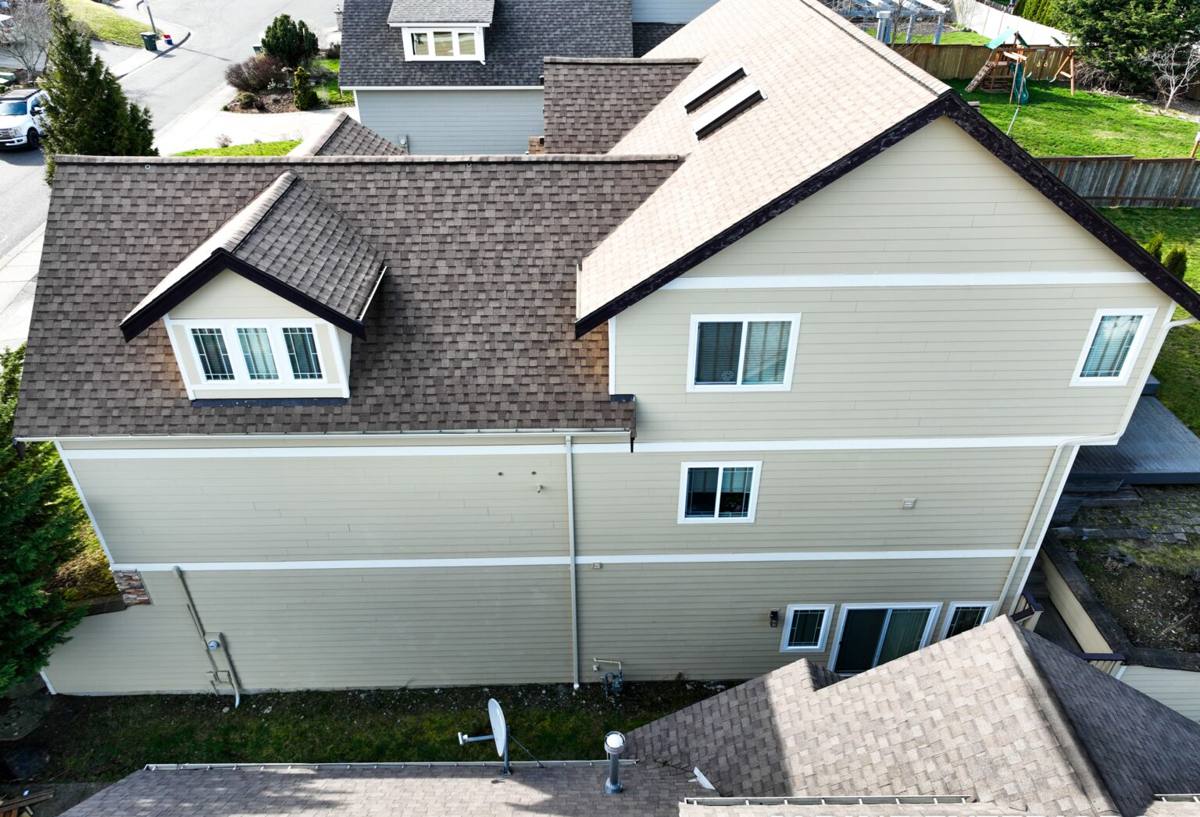
What Storm Damage Actually Looks Like on Local Homes
Wind-Driven Rain Intrusion
The most common call we get after a storm isn't a hole in the roof — it's a stain on a ceiling or a damp spot in an attic that shows up a day or two after the wind dies down. Driving rain off the water gets forced up under shingle tabs, around flashing edges, and into vent boots that have started to crack. The roof covering itself can look almost untouched from the ground while water is already working its way into the deck.
Physical Damage from Wind and Debris
Straight wind damage shows up as lifted, torn, or missing shingles, bent or dented metal flashing, and cracked ridge caps. Falling branches and wind-blown debris are also common contributors, especially on properties with mature trees nearby. This kind of damage is usually more visible and more straightforward to diagnose than intrusion damage, but it still needs a full inspection — a missing shingle is rarely an isolated problem.
Moss as a Storm Damage Multiplier
Moss doesn't cause storms, but it changes how a roof handles them. A moss mat holds moisture against shingles and underlayment long after a storm has passed, softening the material and giving wind-driven rain an easier path underneath. Roofs with heavy moss buildup, especially on north-facing or shaded slopes common in this neighborhood, tend to show storm damage sooner and worse than roofs that have been kept clear.
Why a Surface Patch Isn't Always the Right Fix
It's tempting to treat storm damage as a spot repair: replace the shingles that are obviously torn, caulk the visible gap, call it done. Sometimes that's genuinely the correct scope. Other times it just covers the problem for a season. A repair that's done right starts with figuring out where the water actually got in, not just where the damage is visible, because wind-driven rain can travel several feet under the roofing before it finds a way through the deck.
A correct storm damage repair generally includes checking the underlayment condition around the affected area, not just the shingles on top of it, confirming flashing at any nearby penetrations (chimneys, vents, valleys) is still sealing properly, and inspecting the attic side for signs the deck itself has taken on moisture. Skipping any of these steps is how homeowners end up calling back six months later for the same leak in a slightly different spot.
Our Storm Damage Repair Process
1. Inspection and Documentation
We start with a full roof and attic inspection, not just a look at the obviously damaged area. If the damage is likely to involve an insurance claim, we document conditions with enough detail to support that process — dates, affected areas, and photos of both the exterior and any interior water intrusion.
2. A Clear, Honest Scope
We tell you what actually needs to be repaired and why, including whether the damage is isolated or a sign of broader wear (age, prior moss damage, undersized ventilation) that a patch alone won't fix. If a full section replacement is the more honest long-term answer instead of a repeated patch, we'll say so.
3. The Repair Itself
Work is sequenced to protect the home first — temporary tarping or sealing if weather is still a risk — then permanent repair: deck repair if needed, correct underlayment, proper flashing detail, and matching roofing material installed to manufacturer spec, not just nailed down to look right from the ground.
4. Final Check
Before we call a job finished, we recheck the repaired area and the surrounding roof for anything that could turn into the next service call — loose fasteners nearby, marginal flashing a few feet away, moss starting to establish on adjacent shingles.
Repair or Replace: What Actually Drives That Decision
Storm damage repair cost varies a lot depending on what's actually wrong, and homeowners are often surprised the number isn't just about square footage. The table below covers the main factors that push a job toward a simple patch versus a larger repair or partial replacement.
| Factor | Leans Toward Simple Repair | Leans Toward Larger Repair/Replacement |
|---|---|---|
| Roof age | Under 10-12 years, otherwise in good condition | Nearing or past expected shingle lifespan |
| Extent of moisture intrusion | Isolated, caught early, deck still dry | Deck has absorbed water, signs of rot present |
| Moss/organic growth | Light, not yet holding moisture against deck | Heavy moss mats, granule loss underneath |
| Flashing condition | Localized failure at one point | Corroded or failing flashing across multiple areas |
| Ventilation | Attic ventilation adequate | Poor ventilation contributing to repeated moisture problems |
None of these factors decide anything on their own — they're read together during the inspection. A roof that's otherwise young and healthy but has one storm-torn section is a very different job than an older roof with the same visible damage plus years of moss buildup underneath it.
Materials and Details That Matter in This Climate
- Corrosion-resistant fasteners and flashing metal, given the salt-air exposure this close to the water
- Properly lapped and sealed underlayment at repair edges, not just tucked in loosely
- Flashing details at valleys, chimneys, and vent penetrations checked even outside the immediate repair area
- Attic ventilation assessed as part of the repair, since trapped moisture is what turns a small leak into a bigger one
Insurance Claims After a Storm
Many storm damage repairs in this area involve a homeowner's insurance claim, especially when a specific wind event or falling debris caused clear, datable damage. We're not the adjuster and we don't make coverage decisions, but we can provide the kind of documentation — photos, a written scope, and an honest description of cause and extent — that makes the claims process smoother on the homeowner's end. If you're not sure whether a repair is worth filing a claim over, that's a reasonable first question to ask us before any work starts.
Why It Matters That We Already Work West Anacortes
A crew that works this neighborhood regularly already knows which roof styles and ages are common here, how exposed a given slope typically is to wind off the water, and what moss pressure looks like on shaded lots in this part of Anacortes. That familiarity shortens the inspection, sharpens the diagnosis, and means less guesswork about whether a repair needs to account for salt exposure or heavier-than-average moisture retention. It also means we're a known, reachable local business if a repaired area needs a follow-up look after the next storm season — not a crew that did one job and moved on.
What to Do Right After a Storm
- Check the attic (if accessible) for damp insulation, water stains, or daylight coming through anywhere it shouldn't
- Look at ceilings and upper walls inside the home for new stains or soft spots
- From the ground, note any obviously missing, torn, or lifted shingles, bent flashing, or debris on the roof
- Avoid climbing onto the roof yourself, especially right after a storm when surfaces are wet and footing is unreliable
- Get a professional inspection promptly — the gap between a storm and a repair is when small intrusion problems turn into deck damage
- Take photos of visible exterior damage as soon as it's safe to do so, in case an insurance claim is needed
Get an Honest Look Before Small Damage Becomes Big Damage
If your West Anacortes home has been through a recent storm, or you've noticed a stain, soft spot, or missing shingle you're not sure about, it's worth having it looked at before the next round of driving rain finds the same weak spot. We offer free, no-pressure estimates — you'll get a clear explanation of what we find and what it would take to fix it correctly, with no obligation to move forward. Use the form below to get started.