 Anacortes Roofing
 Roofing a Home on Guemes Island Is Not the Same as Roofing One in Town
Guemes Island sits just across the water from Anacortes, but the roofs over there age differently than roofs a few miles inland. The island gets fuller exposure to salt-laden air coming off the water, more sustained wind-driven rain during winter storms, and — because so many lots are shaded by fir and cedar cover — a longer, more stubborn moss season than most of Skagit County. None of that means asphalt shingles are the wrong choice for an island home. It means the shingle system, the details underneath it, and the way the job is planned and executed all have to account for that exposure. A roof that would hold up fine in a sheltered Anacortes neighborhood can wear out faster on Guemes if it's installed the same way, with the same materials, and no adjustment for the site.
This page is about doing that job correctly for Guemes Island specifically — what the climate does to a shingle roof out there, what a properly built system looks like, and why the logistics of working on the island matter as much as the materials do.
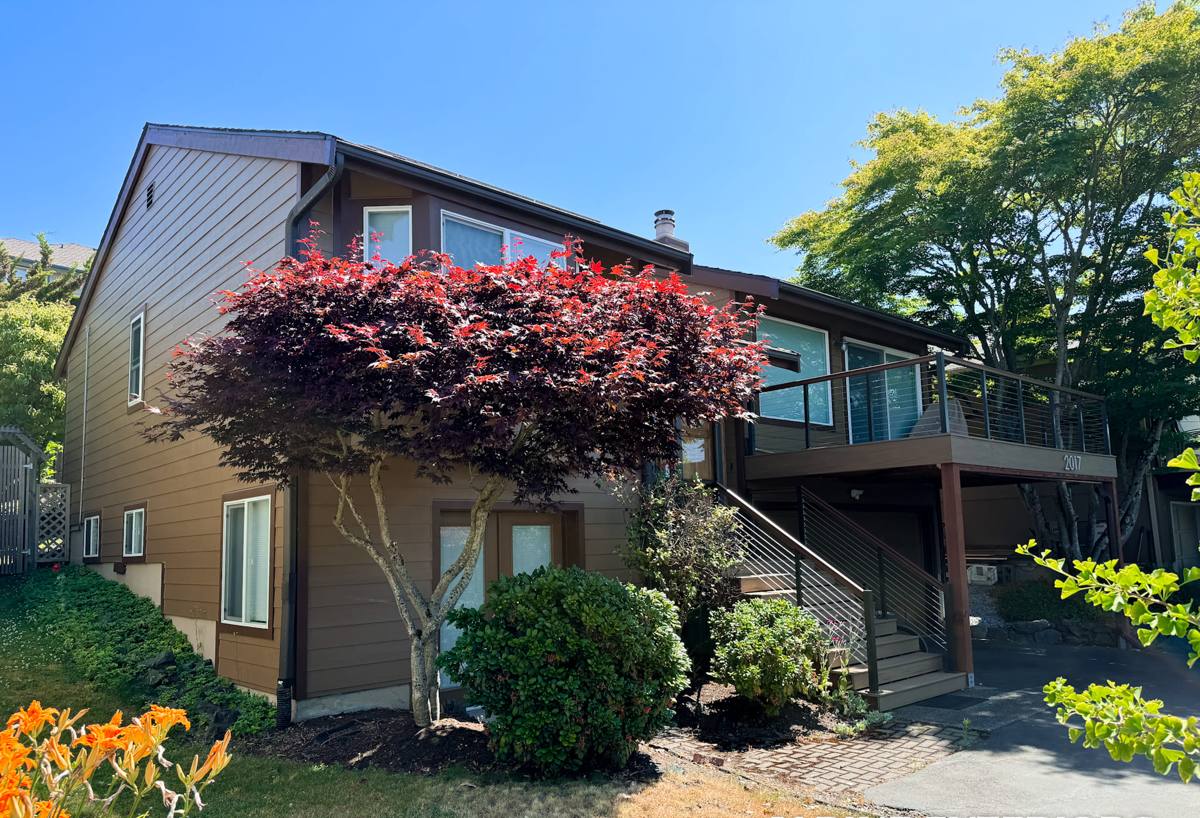
What Salt Air, Rain, and Moss Actually Do to a Shingle Roof
Each of these three factors attacks a roof in a different way, and understanding the mechanism helps explain why certain details matter more here than on a typical mainland job.
Salt Air
Airborne salt doesn't damage the shingle mat itself much, but it accelerates corrosion on every metal component of the roof — nails, flashing, vent stacks, and gutter hardware. Once a fastener starts to corrode, it loses holding power, and a flashing joint that rusts through stops shedding water the way it's supposed to. On a waterfront or near-waterfront lot, corrosion-resistant metal isn't an upgrade, it's a requirement.
Wind-Driven Rain
Rain that comes in sideways during a winter blow doesn't just run off the shingles — it gets pushed up under laps, into valleys, and around penetrations from the wrong direction. A roof that's watertight in a straight-down rain can still leak in a driving storm if the underlayment, valley metal, and flashing weren't detailed with that wind direction in mind.
Moss and Shade
Moss needs moisture and shade to establish, and a lot of Guemes Island homes have both — tree cover that keeps north-facing slopes damp well after the rest of the roof has dried out. Moss holds water against the shingle surface, works its way under tabs as it grows, and can lift shingle edges enough to let wind and rain get underneath. Left untreated for years, it shortens the life of an otherwise sound roof.
Why Asphalt Shingles Still Make Sense Out Here
Asphalt shingles remain the most practical choice for the large majority of Guemes Island homes, and that's true even with the added exposure. They're proven in wet, windy Pacific Northwest climates, they're available in wind ratings that suit an exposed island lot, and they don't require the specialized installation skill or higher material cost of a standing-seam metal or cedar shake system to perform well. The key is not swapping to a different roofing category — it's choosing the right shingle product and installing it with island conditions built into every detail, rather than treating it as a standard in-town re-roof.
What to Look for in a Shingle Product for This Exposure
- A wind rating that matches or exceeds the exposure of the specific lot — waterfront and open, elevated sites need a higher rating than a sheltered, tree-lined one
- Algae-resistant (AR) granules, which slow the growth of the algae and moss that thrive in shaded, damp conditions
- A sealant strip designed to bond fully in cooler, damper installation conditions common to fall and winter work
- A manufacturer warranty that isn't voided by coastal or high-wind exposure — some product lines have exclusions worth checking before they're chosen
What a Correct Installation Involves Below the Shingle Line
The shingles themselves get all the attention, but most roof leaks on island and coastal homes actually start in the layers underneath them, or at the transitions where the roof meets a wall, chimney, or valley. For a Guemes Island home, these details deserve extra attention:
Underlayment
A synthetic underlayment holds up better than old-style felt in a damp, marine environment — it resists tearing during a wet install and doesn't absorb and hold moisture the way felt can. On a roof that's going to sit under tree cover and salt air for the next couple of decades, that difference matters.
Ice-and-Water Membrane at Eaves and Valleys
A self-adhering waterproof membrane at the eaves, in valleys, and around penetrations gives the roof a second line of defense exactly where wind-driven rain is most likely to get pushed backward under the shingles. This isn't optional detailing for an exposed island roof — it's the difference between a nuisance leak and a dry attic during the next big southwesterly storm.
Flashing and Fasteners
Step flashing at walls and chimneys, valley metal, and drip edge should all be corrosion-resistant material, not the cheapest stock available. The same goes for fasteners — ring-shank, corrosion-resistant nails hold better over time in a salt-air environment than standard smooth nails, which can back out as they corrode.
Ventilation
Balanced intake and exhaust ventilation keeps the underside of the roof deck at a stable temperature and moisture level. On a tree-shaded lot, good ventilation also helps the roof deck dry out faster after a wet stretch, which reduces the conditions moss and algae need to get started in the first place.
Shingle Options Compared for Island Exposure
Not every shingle line is built the same way, and the differences matter more on an exposed or shaded island lot than they would on a sheltered in-town roof. Here's a general comparison of the tiers most homeowners choose between:
| Shingle Tier | Typical Wind Rating | Algae Resistance | Best Fit on Guemes Island |
|---|---|---|---|
| Standard 3-tab | Lower end of the range | Often none or minimal | Budget-driven projects on sheltered, low-exposure lots |
| Architectural (laminate) | Mid to high | Usually available with AR granules | Most island homes — the standard recommendation |
| Impact-rated architectural | High | Usually available with AR granules | Open, waterfront, or storm-exposed lots |
For most Guemes Island properties, a mid-to-upper-tier architectural shingle with algae-resistant granules and a wind rating suited to the specific site strikes the right balance of durability, appearance, and cost. Waterfront and fully exposed lots are usually worth the step up to an impact-rated product.
Our Process for a Guemes Island Roofing Project
Working on the island adds logistics that don't apply to an in-town job, and we plan around them rather than treating the project the same as a mainland re-roof.
- On-site assessment. We look at the existing roof, the deck condition underneath, the amount of shade and moss buildup, and the specific wind exposure of the lot before recommending a product.
- Written estimate. Material tier, underlayment, flashing details, and ventilation plan are all spelled out, so there's no ambiguity about what's included.
- Logistics and scheduling. Material delivery, dump trailer staging, and crew transport all have to work around ferry schedules and loading capacity, so we build that into the timeline up front rather than discovering it mid-project.
- Weather-window planning. Tear-off and dry-in are scheduled around the clearest stretch of weather available, since a partially opened roof on an exposed island lot is more vulnerable to a sudden wind-driven rain event than one in a sheltered spot.
- Tear-off and deck inspection. Old roofing comes off down to the deck, and any soft, water-damaged sheathing is identified and replaced before anything new goes down.
- Installation. Underlayment, ice-and-water membrane, flashing, shingles, and ventilation go in following the manufacturer's specifications and the added detailing this exposure calls for.
- Cleanup and magnetic nail sweep. The site and surrounding ground get swept for stray fasteners and debris before we consider the job finished.
- Final walkthrough. We go over the completed roof with the homeowner, along with a straightforward maintenance plan for the years ahead.
Why Hiring a Crew That Already Works Guemes Island Matters
A contractor who hasn't worked on the island before is learning its quirks on your project. A crew that already works Guemes Island knows the ferry schedule and plans material deliveries around it instead of losing a day to a missed sailing. They know that a roof on an open, water-facing lot needs a different wind rating than one tucked into the trees a quarter mile away, and they've already seen how moss builds up differently on a shaded north slope than a sun-exposed one. That familiarity shows up in fewer surprises during the project and a roof system that's actually matched to the specific lot, not a generic in-town spec.
It also matters for anything that comes up after the install. Warranty questions, a storm-damage inspection, or a maintenance visit are all simpler when the crew already knows the island, the ferry logistics, and the property.
Maintenance That Actually Extends the Life of an Island Roof
A correctly installed shingle roof still needs some ongoing attention on Guemes Island, mostly because of the moss and debris load from surrounding tree cover. This is not a heavy maintenance burden, but skipping it does shorten the roof's life.
- Have moss and algae growth treated before it spreads across a slope, rather than after shingles have already started lifting
- Keep gutters clear of needles and debris so water isn't backing up under the eaves during heavy rain
- Trim back overhanging branches where practical, to reduce shade and debris buildup on the roof
- After any significant windstorm, have the roof looked at for lifted shingles or damaged flashing before the next rain arrives
- Schedule a periodic inspection every few years, even if nothing looks obviously wrong, since flashing and sealant wear is often not visible from the ground
Signs an Island Roof Needs Attention Sooner Rather Than Later
Because Guemes Island roofs face heavier moss and moisture exposure, problems can develop a bit earlier than the shingle's rated lifespan would suggest. Worth having looked at:
- Thick moss mats on shaded slopes, especially where tabs are starting to lift at the edges
- Granules collecting in gutters or at downspout outlets in noticeably larger amounts
- Rust staining running down from flashing, vent stacks, or fasteners
- Any staining or damp spots on interior ceilings following a wind-driven rain event
- Shingles that look curled, cupped, or brittle when viewed up close
Catching any of these early is usually the difference between a repair and a full replacement.
If you own a home on Guemes Island and want an honest look at what your roof actually needs, we're glad to come out for a free, no-pressure estimate — the form below gets you started.