 Anacortes Roofing
 Why Decks in Bow Wear Out Faster Than the Manuals Say
Bow sits close enough to the water and open farmland that decks here take a different kind of beating than decks fifty miles inland. Salt-laden air off Samish Bay and the Sound works its way into fastener heads, joist hangers, and any exposed end grain. Add Skagit County's long wet season, where rain doesn't fall hard so much as it sits and soaks, and you get a slow, steady breakdown of wood fiber and metal hardware that a lot of homeowners don't notice until a board flexes underfoot or a railing post wiggles.
Moss is the other half of the story. Anacortes and the surrounding communities, including Bow, get enough shade, moisture, and mild temperatures to keep moss and algae established on deck surfaces for much of the year. Moss holds water against the wood surface longer than open air ever would, which accelerates rot in a way that's easy to underestimate from the surface. A deck that looks mossy but "solid" can have soft framing underneath by the time anyone climbs beneath it to check.
None of this means Bow is a bad place to have a deck. It means a deck built or replaced here needs details that a generic build in a dry climate skips — better flashing, better fastener selection, and material choices that actually hold up to years of damp exposure rather than just looking good on install day.
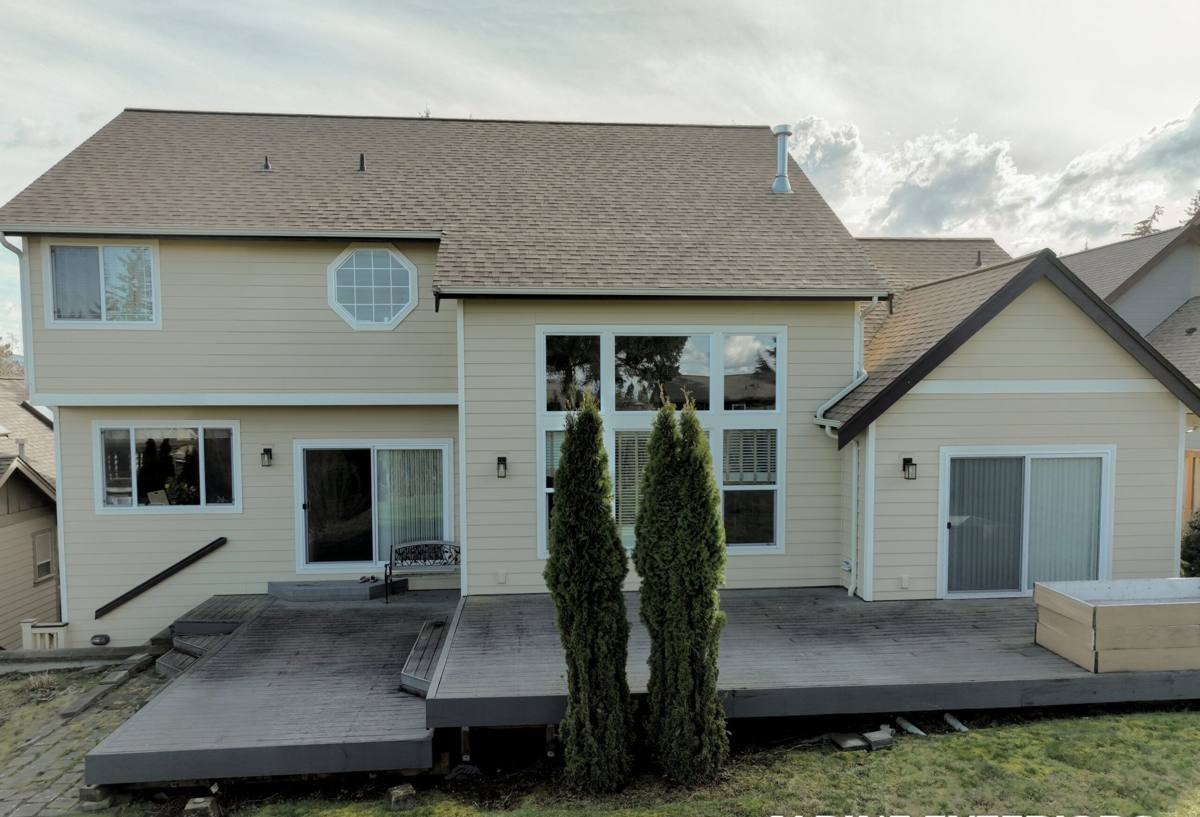
Signs a Bow Deck Needs Replacement, Not Just Repair
Not every tired-looking deck needs to come out entirely. But there's a point where patching individual boards is throwing money at a structure that's already compromised. Some signs worth taking seriously:
- Soft or spongy spots in the decking, especially near the house or around post bases
- Rust streaking from fasteners or visibly corroded joist hangers
- Gaps or separation at the ledger board where the deck meets the house
- Persistent moss or dark staining that returns within weeks of cleaning
- Railing posts that move or feel loose when pushed
- Visible sagging between joists when you stand in the middle of a span
- Wood that's gone gray and fibrous, or that a screwdriver sinks into with light pressure
The ledger board and post bases are usually where trouble starts, since that's where water collects and lingers longest. If we find rot in those areas during an inspection, it's rarely isolated — it's usually a sign the whole substructure has been absorbing moisture for years.
What a Correct Deck Replacement Actually Involves
Framing and Footings
A deck is only as good as what's underneath it. In this climate, footings need to be sized and set below frost depth per Skagit County building code, and posts need proper standoff hardware that keeps end grain off concrete and out of standing water. We don't set posts directly into concrete or bury wood-to-concrete contact points — that's one of the fastest ways to invite rot into a brand-new structure.
Ledger Board Flashing
This is the single most important detail on any deck attached to a house, and it's the detail most likely to be done wrong or skipped by crews in a hurry. The ledger board connects the deck to your home's rim joist, and without proper flashing — metal flashing under the siding, a water-resistant barrier behind the ledger, and correct fastening — water finds its way behind the board and into your home's framing. Given how much rain Skagit County sees over a typical winter, a poorly flashed ledger isn't a someday problem. It's usually a two-to-three winter problem.
Decking Material Selection
What goes on top matters, but it matters less than people assume compared to what's underneath. Still, material choice affects how much maintenance you'll be doing every year and how the deck looks five and ten years out.
Decking Material Comparison for Coastal Skagit County Conditions
| Material | Moisture Performance Here | Maintenance | Typical Lifespan |
|---|---|---|---|
| Pressure-treated lumber | Good if properly sealed and re-coated regularly | Annual cleaning, re-sealing every 1-2 years | 15-20 years with upkeep |
| Cedar | Naturally rot-resistant but still needs sealing in wet climates | Regular cleaning and periodic sealing | 15-20 years with upkeep |
| Composite decking | Strong resistance to moisture and moss staining | Occasional washing, no sealing needed | 25-30+ years |
| PVC decking | Excellent, essentially non-absorbent | Very low, occasional washing | 25-30+ years |
We don't push one material on every homeowner. Cedar and treated lumber have a natural look a lot of Bow homeowners want, and they perform fine as long as someone stays on top of sealing. Composite and PVC cost more upfront but trade that maintenance schedule for consistency, which matters if a deck sits under trees or gets shaded most of the day, since that's exactly where moss takes hold fastest.
Our Deck Replacement Process
- On-site inspection — we check framing, footings, ledger condition, and drainage before quoting anything, since the substructure often tells us more than the visible decking does
- Full removal — old decking, railings, and any compromised framing come out completely; we don't build new decking over questionable framing
- Structural correction — footings, posts, joists, and the ledger connection get brought up to current code, with proper flashing at every water-entry point
- Decking and railing installation — installed to manufacturer spacing and fastening specs, which matters more in a wet climate than in dry ones, since incorrect gapping traps moisture
- Final walkthrough — we go over maintenance expectations specific to your material choice and site conditions before we consider the job done
Permits and Code Requirements in Skagit County
Deck replacements that involve structural work — new footings, ledger reattachment, or height changes — typically require a permit through Skagit County or the applicable local jurisdiction, depending on exactly where a Bow property falls. Permitted work gets inspected at the framing stage, which is actually a good thing for the homeowner: it means an independent inspector is confirming the footings, ledger attachment, and structural connections meet code before anything gets covered up. We handle the permitting process as part of the job rather than leaving homeowners to navigate it alone.
Protecting Your New Deck: Maintenance That Actually Matters Here
A correctly built deck still needs some seasonal attention in this climate. The good news is that the routine isn't complicated — it's just easy to forget until moss or water damage forces the issue.
- Clean moss and algae off the surface at least once a year, ideally before the wettest months set in
- Keep gutters and downspouts clear so runoff isn't dumping directly onto or near the deck
- Trim back overhanging branches to cut down on shade and leaf litter that hold moisture
- Check the ledger flashing area annually for gaps, cracks, or signs of water staining on the siding above it
- Re-seal wood decking on the schedule appropriate to the product — don't wait until it looks dry and gray
- Inspect fasteners and hardware periodically for rust, especially closer to the water
Cost Factors for a Bow Deck Replacement
| Factor | Why It Affects Cost |
|---|---|
| Deck size and shape | More square footage and complex layouts (multiple levels, angles) mean more material and labor |
| Framing condition | Rotted joists, posts, or footings found during removal add repair scope |
| Decking material | Composite and PVC cost more per square foot than treated lumber or cedar |
| Railing style | Cable, glass, or custom railing systems cost more than standard wood balusters |
| Height and access | Elevated decks or difficult site access can add labor time |
| Permit and inspection needs | Structural replacements requiring permits add a modest fixed cost and timeline |
We give honest, itemized estimates rather than a single round number, so homeowners can see exactly where their money is going and where there's room to adjust scope if needed.
Why It Matters to Hire a Crew That Already Works in Bow
A lot of deck problems we get called out to fix started with a build that would have been fine somewhere drier. Correct flashing details, proper fastener selection, and footing depth aren't optional extras in this climate — they're the difference between a deck that lasts two decades and one that needs structural repair in five years. A crew that regularly works Bow, Anacortes, and the rest of Skagit County has already seen how salt air corrodes the wrong hardware, how moss establishes itself on shaded decks, and how driving rain finds the one flashing detail that got skipped. That's knowledge you don't get from a spec sheet — it comes from doing the work here, repeatedly, and seeing what actually holds up.
If your deck is showing its age or you're planning ahead for a replacement, we're happy to come take a look and give you a straightforward, no-pressure estimate. There's no obligation — just an honest read on what your deck needs and what a proper replacement would involve.