 Anacortes Roofing
 Why Bow Homes Take a Beating on Their Siding
Bow sits low in Skagit County, close enough to Samish Bay and the Salish Sea that salt-laden air is a constant presence on anything left outdoors. Add in the amount of driving rain that comes off the water through fall and winter, plus a moss season that can stretch for months in the shaded, damp pockets common around Bow's farmland and tree lines, and you have three separate stresses working on your siding at once. Most siding products are engineered and rated for a generic climate. Bow's climate is not generic — it's coastal, agricultural, and wet for a large part of the year, and siding that isn't built or installed with that in mind shows it early.
We see the same failure patterns on Bow homes again and again: paint chalking and fading faster than it should on the weather-facing walls, moss and algae staking a claim in shaded corners and under eaves, and moisture finding its way behind siding through gaps, poor flashing, or caulked joints that were never meant to flex through a Northwest winter. None of that is inevitable. It's a product and installation problem, and it's solvable.
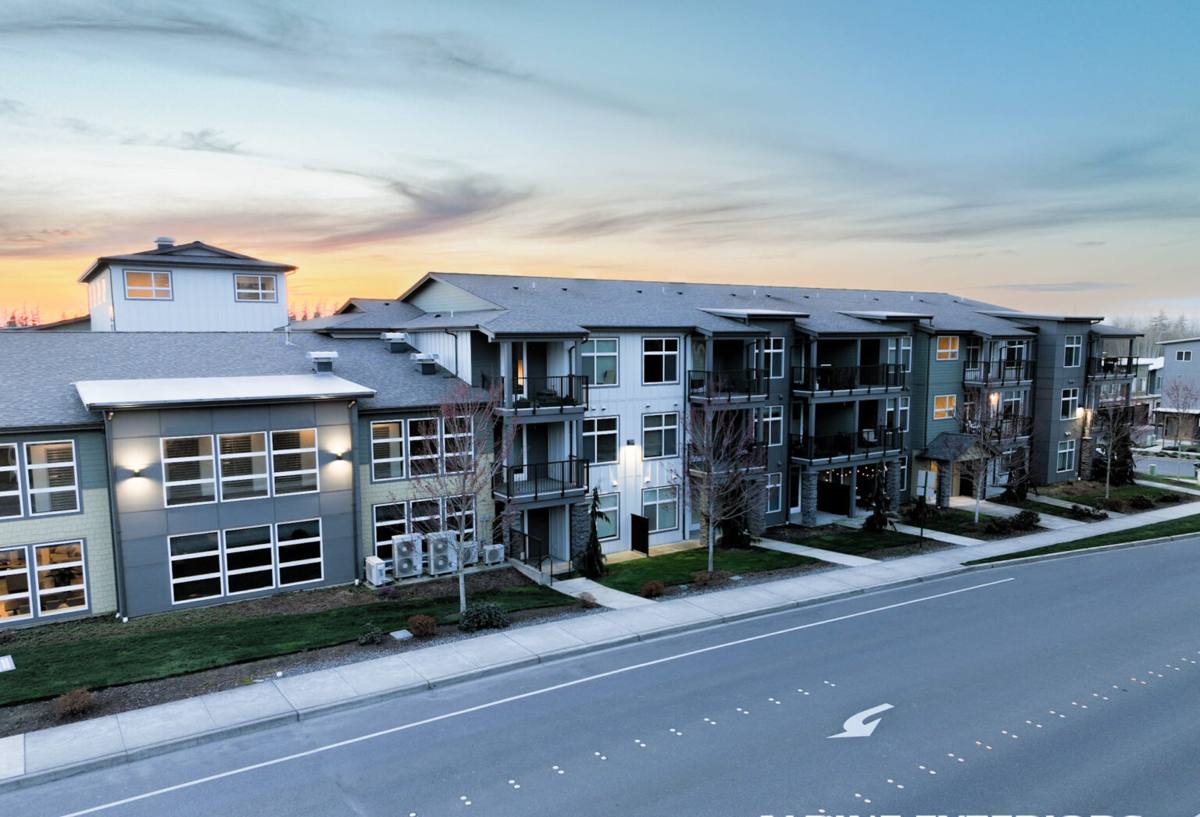
What "Correct" Fiber Cement Installation Actually Means Here
Fiber cement siding is only as good as the details behind it. In a climate like Bow's, those details matter more than they would somewhere drier and calmer. A correct installation addresses moisture management first, appearance second — even though the two end up looking the same when done right.
Moisture Management
- A drainage plane and weather-resistant barrier installed behind the siding, not just under it, so any water that gets past the surface has somewhere to go
- Proper flashing at every horizontal surface — window heads, doors, decks, and roof-to-wall transitions — so water is directed out and away from the wall assembly
- Correct clearances between the bottom of the siding and grade, decks, roofs, and walkways, so splash-back and standing moisture don't sit against the board
- Butt joints installed per manufacturer spec, not just caulked and hoped for — caulk is a maintenance item, not a moisture barrier
Fastening and Fit
Fiber cement needs to be fastened correctly to handle the expansion and contraction that comes with temperature and humidity swings. Over-driven or under-driven fasteners, wrong fastener spacing, or hanging boards too tight against trim are common shortcuts that cause cracking, popped nails, and gaps within a few years — problems that are expensive to fix once the siding is up and finished.
Why the Product Line Matters as Much as the Installer
We install James Hardie fiber cement exclusively, and in a coastal, high-moisture area like Bow that's not a brand preference — it's a practical decision. Hardie engineers its siding by climate zone, with product formulations designed for the moisture and humidity conditions of the Pacific Northwest rather than a one-size-fits-all mix. That matters because fiber cement is a cement-based product at its core, and how it's formulated affects how it handles years of damp exposure, freeze-thaw cycling, and constant humidity.
Hardie's factory-applied ColorPlus finish is baked on and cured under controlled conditions, which gives it better adhesion and color retention than field-applied paint — a real advantage on a coastal wall that's fighting salt air and UV exposure at the same time. The company also backs its siding with a strong, transferable limited warranty, which carries weight if you ever sell the home. We don't install LP SmartSide, vinyl, Cemplank, Allura, or bare wood siding, not because those products can't do a job somewhere, but because we've standardized on the system we trust to hold up to Bow's specific conditions and to back it with a warranty that means something.
How Fiber Cement Compares in This Climate
| Material | Salt Air / Moisture Resistance | Moss & Algae Susceptibility | Typical Maintenance | Fire Resistance |
|---|---|---|---|---|
| James Hardie Fiber Cement | Strong — engineered for PNW moisture | Low with proper install and cleaning | Occasional wash, repaint on your schedule (decades out) | Non-combustible |
| Vinyl Siding | Moderate — can warp or fade in coastal sun/salt | Moderate — seams and laps trap moisture and debris | Periodic cleaning; cannot be repainted easily if faded | Combustible, can melt/deform |
| Cedar or Primed Wood | Poor to moderate — absorbs moisture, needs sealing | High in shaded, damp areas | Frequent repainting/staining, rot inspection | Combustible |
This isn't a case of one product being universally better — it's about matching the product to the environment. Bow's combination of salt exposure, rainfall, and shaded moss-prone areas is exactly the scenario fiber cement was developed to handle, and exactly where vinyl and wood tend to show their limits fastest.
Moss, Algae, and Salt Air: What You Can Actually Do
No siding product is moss-proof if it's installed against a shaded, damp wall with no airflow. What correct installation and product choice can do is reduce how much moss and algae take hold and how much damage they cause when they do. A properly ventilated wall assembly, correct clearances, and a hard, dense fiber cement surface (rather than a porous wood surface algae can root into) all make a real difference. On the salt air side, the factory-cured ColorPlus finish resists the chalking and fading that field-applied paint tends to show first in a coastal environment. We still recommend a gentle wash — never pressure-washed directly into seams — once or twice a year for homes in the Bow area, especially on north- and west-facing walls that stay shaded and damp longest.
Our Process for a Bow Siding Project
1. On-Site Assessment
We walk the whole exterior, not just the section that looks obviously worn, checking for hidden moisture damage, existing flashing problems, and any structural issues that need addressing before new siding goes on. Covering up a moisture problem with new siding just delays a bigger repair.
2. Product and Color Selection
We help you choose the right Hardie board profile and ColorPlus color for your home, factoring in how the house sits relative to sun, shade, and prevailing weather.
3. Tear-Off and Substrate Check
Old siding comes off and we inspect the sheathing underneath for rot or water damage before anything new goes up. Any compromised substrate gets repaired first — installing over a bad substrate guarantees a shorter lifespan no matter how good the siding is.
4. Weather Barrier and Flashing
We install the drainage plane, weather-resistant barrier, and all flashing details before a single board of siding goes up. This is the step that determines whether the wall stays dry for the next several decades.
5. Installation to Manufacturer Spec
Boards are fastened, spaced, and finished according to James Hardie's installation guidelines — not shortcuts that happen to look fine from the ground.
6. Final Walkthrough
We review the finished job with you, cover basic care, and make sure you know what normal weathering looks like versus something that should get a call.
What to Ask Before Hiring a Siding Contractor in Bow
- Are they James Hardie certified or factory-trained, and can they explain their flashing and moisture-barrier approach in detail?
- Do they inspect and repair substrate before installing new siding, or just cover what's there?
- Do they have experience with the specific challenges of coastal Skagit County — salt exposure, moss, and heavy seasonal rain?
- Will they put the scope of work, product line, and warranty terms in writing before starting?
- Are they familiar with the access and permitting realities of rural and semi-rural properties around Bow?
Why a Crew That Already Works in Bow Matters
Bow isn't downtown Anacortes. Properties here tend to be more spread out, often with longer driveways, mixed agricultural and residential surroundings, and exposure that varies a lot from one side of a property to another depending on tree cover and proximity to the water. A crew that's used to working in Skagit County's rural pockets knows to check things a city-only contractor might not think about — how shaded, moss-heavy areas near tree lines behave differently than open, wind-exposed walls facing the bay, and how material staging and access work on properties that aren't set up like a standard subdivision lot. That local familiarity translates into fewer surprises and a job that accounts for your specific site rather than a generic assumption about what "Skagit County weather" means.
Let's Look at Your Home
If your siding is showing chalking, moss, gaps at the joints, or you're just planning ahead for a home in Bow's salt air and rain, we're happy to take a look and give you a straightforward, no-pressure estimate. Use the form below to get started.