 Anacortes Roofing
 Roofing in Bow Has Its Own Set of Problems
Bow sits in that stretch of Skagit County where farmland, tree cover, and saltwater all meet. If your house is anywhere near Samish Bay or Padilla Bay, your roof is dealing with salt-laden air on top of everything else the Pacific Northwest throws at it. If you're tucked back under fir and cedar on a rural lot, you're dealing with shade, needle drop, and moss that never really gets a chance to dry out. Either way, a roof in Bow ages differently than one in a dry, open suburb, and repairing it right means understanding which of those forces is doing the damage.
We work Bow regularly as part of our Anacortes and Skagit County service area, and most of the repair calls we get here fall into a short list of recurring problems: moss and organic buildup breaking down roofing material, driving rain finding its way through aging flashing, and fasteners or metal components corroding faster than they would a few miles inland. None of that is unusual for this area — it's just what the climate does, and a repair that doesn't account for it won't hold.
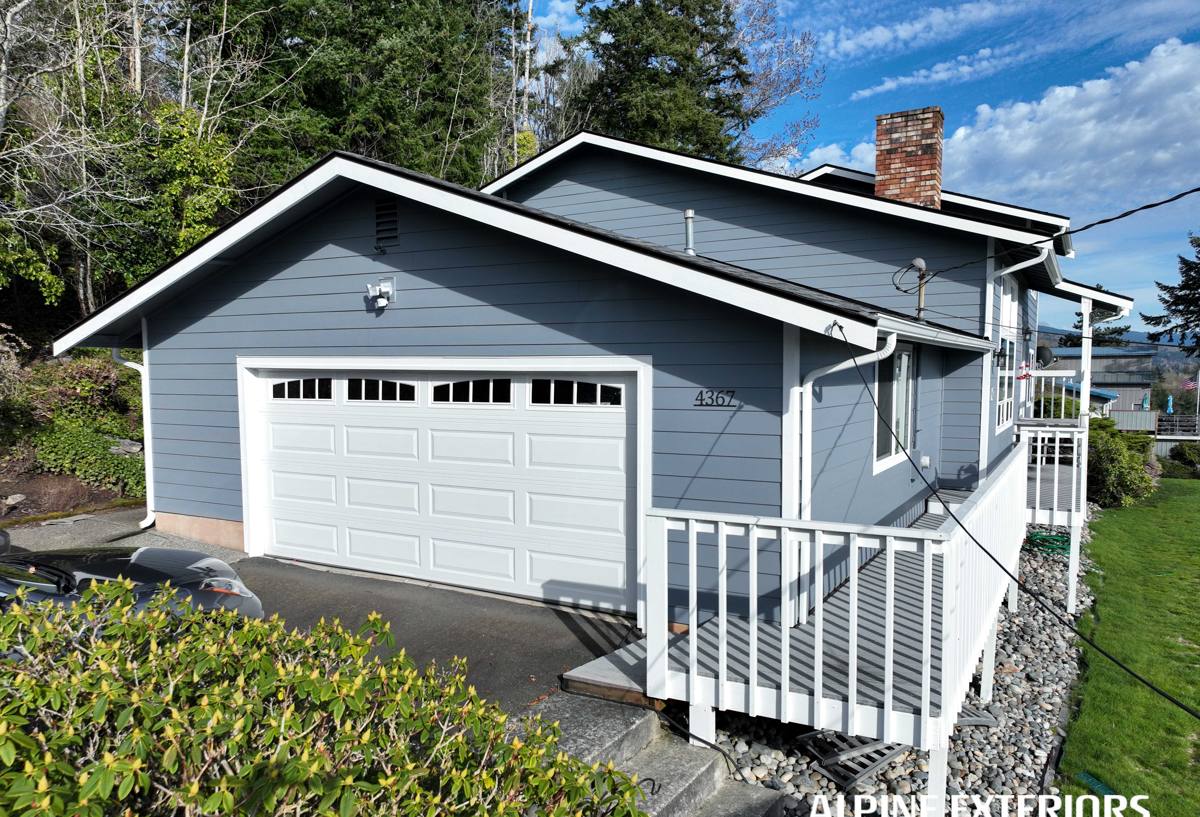
Why the Local Climate Matters for a Repair, Not Just a Roof
A lot of roofers will patch a leak without asking why it happened. In Bow, that's a mistake, because the "why" almost always traces back to one of a few local conditions.
Salt Air and Corrosion
Properties closer to the water see accelerated corrosion on exposed fasteners, flashing, gutters, and any metal roofing components. A repair that reuses corroded fasteners or unprotected flashing is a repair that fails again in a year or two. We spec corrosion-resistant materials for anything near the bay, even on jobs that are technically just a spot repair.
Driving Rain
Storms coming off the Sound don't just fall straight down — wind-driven rain gets pushed sideways under shingles, around valleys, and into any flashing gap that a calmer climate could get away with ignoring. Repairs here need to account for wind-driven moisture, not just standing water.
A Long Moss Season
Tree-shaded lots and the region's damp, mild winters give moss a long runway to establish itself — often close to year-round on north-facing slopes or roofs under conifers. Moss doesn't just look bad. It holds moisture against the roofing surface, lifts shingle edges, and works its way into fastener lines, which is where a lot of the leaks we get called out for actually start.
What a Correct Roof Repair Actually Involves
"Repair" can mean a lot of things, and the difference between a repair that lasts and one that doesn't usually comes down to whether the contractor addressed the cause, not just the symptom.
Diagnosis Before Patching
A leak inside the house rarely shows up directly above the actual entry point on the roof. Water travels along the underlayment, framing, and insulation before it finds a spot to drip through. We trace the path back to the real source — a lifted shingle, a failed flashing seam, a cracked pipe boot — instead of just sealing wherever the ceiling stain is.
Matching Materials, Not Just Covering the Hole
Mismatched shingles, incompatible flashing metals, or the wrong sealant for the substrate all create new weak points. We match materials to what's already on the roof where possible, and use flashing and fasteners rated for coastal exposure when the site calls for it.
Addressing the Contributing Condition
If moss caused the failure, the repair includes moss and debris removal, not just a patch laid on top of the problem. If corrosion caused the failure, we're not reusing corroded hardware. A repair that ignores the underlying cause is a repair you'll pay for twice.
Common Repair Issues We See on Bow Roofs
- Moss-lifted shingles — moss colonies growing under shingle tabs, breaking the seal and allowing wind-driven rain in
- Failed valley flashing — one of the highest-volume water paths on any roof, and a common failure point in driving rain
- Deteriorated pipe boots and vent flashing — rubber boots crack from age and UV exposure well before the shingles around them wear out
- Corroded fasteners and metal trim — more common on properties with direct or indirect saltwater exposure
- Clogged or damaged gutters contributing to fascia and roof-edge rot — especially under tree cover where debris load is heavier
- Wind-lifted or missing shingles after storm events off the Sound
Repair or Replace? What We Weigh
Not every roofing problem in Bow needs a full replacement, but not every leak should be patched forever either. We look at the roof's age, the extent of the damage, and how much of the underlying deck and structure is still sound.
| Factor | Favors Repair | Favors Replacement |
|---|---|---|
| Roof age | Under 15–20 years, material still has service life | Nearing or past expected lifespan for its material |
| Extent of damage | Isolated to one section, flashing, or a few shingles | Widespread moss damage, multiple failure points, or deck rot |
| Cause of failure | Single storm event or isolated flashing failure | Chronic moisture exposure across large roof areas |
| Underlying deck condition | Sound, dry sheathing | Soft spots, rot, or repeated water staining |
| Budget timeline | Need to extend roof life a few more years | Planning to stay long-term and want to stop recurring repair costs |
An honest inspection will tell you which side of that table your roof falls on. We'd rather tell a Bow homeowner they need a $400 flashing repair than talk them into a replacement they don't need yet — and we'll also tell you plainly when a repair is just delaying the inevitable.
Our Roof Repair Process
- On-site inspection. We walk the roof (not just look from the ground) and check attic space where accessible, since interior signs often point to the real source of a leak.
- Written explanation of the problem. You get a clear description of what's failing and why, in plain language, before any work starts.
- Repair scope and estimate. We outline exactly what's being fixed, what materials we're using, and what it costs — no vague line items.
- The repair itself. This includes removing any moss or debris contributing to the failure, replacing damaged material, and correcting flashing or fastening issues at the source.
- Site cleanup. Old materials, debris, and moss removed from the roof and gutters, not left to wash into your landscaping.
- Follow-up. If something isn't right after the repair, we come back and make it right.
Materials and Why We Use Them Here
Repair materials matter as much as installation technique, especially in a coastal-adjacent, high-moisture area like Bow.
| Component | Standard Choice | Why It Matters in Bow |
|---|---|---|
| Fasteners | Corrosion-resistant coated or stainless | Reduces rust streaking and fastener failure near salt air |
| Flashing | Properly lapped metal flashing, sized for the valley or penetration | Handles wind-driven rain better than sealant-dependent patches |
| Underlayment (repair sections) | Synthetic, water-resistant underlayment | Extra margin of protection under a heavy, prolonged rain season |
| Pipe boots | UV- and weather-rated replacement boots | Standard rubber boots crack early in this climate; better boots last longer |
We don't upsell exotic materials for a simple repair. But we won't use hardware that's going to corrode within a couple of seasons just to save a few dollars on a job near the water — that's a repair that costs you more in the long run.
Why It Matters That We Already Work in Bow
A roofer who's never worked a coastal-adjacent, moss-prone property in Skagit County will often underestimate how fast moss returns, how far wind-driven rain travels under a shingle edge, or how quickly unprotected metal corrodes near the bay. We've done enough of these repairs in this specific area to know what tends to fail first on a Bow roof and to build the repair so that cause doesn't just resurface next winter.
It also means we're not guessing at permitting, disposal, or access logistics for rural Skagit County properties — long driveways, tree-covered roof access, or septic and well setups that need to be worked around. Local experience shows up in small decisions throughout the job, not just in the final result.
Before You Call for a Repair — A Quick Checklist
- Note where the leak shows up inside and when it happens (during heavy wind-driven rain vs. steady rain vs. after moss buildup) — this helps us diagnose faster
- Check gutters for overflow or standing debris, since clogged gutters mimic roof leaks
- Look for visible moss patches, especially on north-facing or shaded slopes
- Avoid pressure-washing the roof yourself — it can strip granules and force water under shingles
- Don't ignore a small stain — in this climate, moisture problems compound quickly through a long wet season
- Have your roof's approximate age handy if you know it — it changes the repair-vs-replace conversation
If you're seeing a leak, moss buildup, or storm damage on a roof in Bow, we're happy to take a look and give you a straight answer about what it needs. Reach out for a free, no-pressure estimate using the form below.