 Anacortes Roofing
 Cap Sante Sits Where the Weather Meets the Water
Homes on and around Cap Sante get a version of Anacortes weather that's a step harder on siding than a few miles inland. The elevation and exposure toward the marina, the channel, and open water mean more direct salt-laden air, more wind-driven rain hitting walls at an angle instead of falling straight down, and — thanks to the tree cover and shade pockets common on this part of Fidalgo Island — a moss and algae season that runs long into what other regions would call summer. None of that is exotic. It's just Skagit County marine climate concentrated by geography, and it's exactly the set of conditions siding either handles for decades or starts failing against within a few years.
We install James Hardie fiber cement siding exclusively, on every job, in every neighborhood we work — including Cap Sante. This page is about what that means specifically for a home in this location: what the siding needs to do here, what a correct installation looks like, and why the details matter more on an exposed, shaded, salt-air lot than they do on a sheltered one across town.
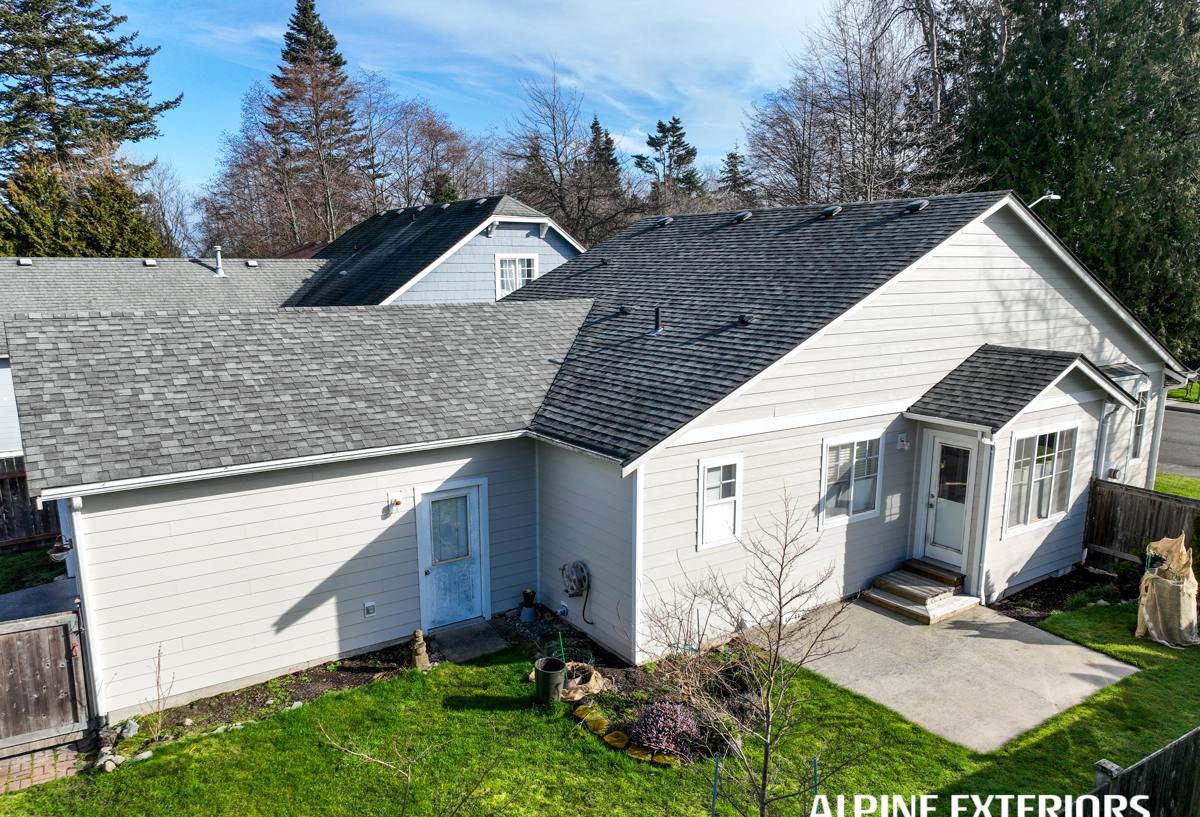
What Salt Air, Driving Rain, and Moss Actually Do to Siding
It helps to be specific about the failure modes, because "harsh climate" is vague and homeowners deserve better than vague.
Salt air
Airborne salt is corrosive to exposed metal fasteners, flashing, and trim hardware, and it accelerates the breakdown of some paint films and coatings over time. Siding materials and finishes that aren't formulated to resist it will chalk, fade, or degrade faster near open water than the same product would inland.
Wind-driven rain
On an exposed elevation, rain doesn't just fall on a wall — it's pushed into every seam, lap, and penetration under pressure. Siding systems depend on gravity and simple overlap to shed water in calm conditions; wind-driven rain finds every shortcut in flashing, caulking, and lap spacing that a fair-weather install would never expose.
Extended moss and algae season
Shade, moisture, and mild temperatures are a moss factory. Moss and algae hold water against the siding surface far longer than open sun would allow, which matters most at the bottom of laps, behind trim, and anywhere water is already slow to drain. A siding material that absorbs moisture in that environment is fighting a losing, years-long battle against soft spots and coating failure.
Why We Standardized on James Hardie for Homes Like This
James Hardie fiber cement is engineered from cement, sand, and cellulose fiber — a composition that does not absorb and swell the way wood-based or wood-derived products can, and does not degrade under UV and moisture exposure the way vinyl can over a long service life. For a site with Cap Sante's combination of salt air and constant moisture, that composition is the whole reason it holds up.
Hardie's ColorPlus factory finish is baked on and cured under controlled conditions before the boards ever leave the plant, which gives it better fade and chip resistance than field-applied paint managed on a jobsite. And Hardie engineers its HZ5 product line specifically for wetter, harsher climate zones — which the Pacific Northwest, and Cap Sante's exposed position in particular, qualifies as.
We don't install LP SmartSide, vinyl, Cemplank, Allura, primed spruce, or cedar. Each of those has legitimate uses somewhere, but each also carries a real-world trade-off — moisture sensitivity, coating maintenance, impact durability, or long-term warranty structure — that we're not willing to put our name behind on a home in this climate. Hardie fiber cement, installed correctly, is what we've seen hold its line, its color, and its water-tightness longest in exactly these conditions.
Choosing the Right Hardie System for the Site
Not every Hardie product fits every house the same way, and the right combination depends on the home's exposure, architecture, and existing trim.
- HardiePlank lap siding — the standard horizontal lap look, available in several textures and exposure widths; the most common choice for full re-sides in this area.
- HardiePanel vertical siding — used for board-and-batten sections, gable accents, or a more contemporary look, often mixed with lap siding on the same home.
- HardieTrim — corner boards, window and door trim, and fascia in a material that matches the siding's moisture and fade resistance instead of undermining it.
- HardieSoffit — vented or non-vented panel options for eave and overhang protection, which matters on a home fighting constant damp shade.
On an exposed or elevated Cap Sante lot, we also pay close attention to fastener selection and flashing material — corrosion-resistant hardware isn't optional this close to salt air, and it's one of the first things a lower-bid crew tends to cut.
Product Comparison at a Glance
| Factor | James Hardie Fiber Cement | Vinyl / Wood-Based Alternatives |
|---|---|---|
| Moisture behavior in constant damp/shade | Does not absorb and swell; resists rot | Can absorb, swell, or trap moisture behind panels |
| Salt air / coastal exposure | Engineered HZ5 line for harsher climate zones | Coatings and seams often degrade faster near salt air |
| Finish stability | Factory-cured ColorPlus finish resists fading and chipping | Field-applied or thinner factory finishes vary widely |
| Fire resistance | Non-combustible cement composition | Combustible (wood) or heat-sensitive (vinyl) |
| Warranty structure | Strong transferable manufacturer warranty when installed to spec | Varies; often shorter or non-transferable |
What a Correct Installation Actually Involves
Fiber cement siding performs to its rated lifespan only when it's installed to Hardie's published specifications — the material isn't forgiving of shortcuts the way some people assume, and a wet-climate site like Cap Sante has zero margin for sloppy detailing. A correct install includes:
- Proper starter strip and first-course alignment so the bottom edge sheds water instead of wicking it
- Correct lap overlap and butt-joint treatment, sealed and flashed rather than just caulked over
- Rain-screen or drainage gap behind the siding where the wall assembly calls for it, so incidental moisture can drain and dry
- Corrosion-resistant fasteners driven to Hardie's specified pattern and depth — not overdriven, not underdriven
- Flashing at every window, door, and roof-to-wall intersection, installed to shed water outward and downward
- Correct clearance between the siding's bottom edge and grade, decks, patios, or roof lines to avoid constant wicking
- Factory-finished cut edges sealed with Hardie-approved touch-up, not left raw
Every one of those items is invisible once the job is finished and the trim is painted. That's exactly why it matters who does the work — a good-looking install and a correct install can look identical from the sidewalk for the first year or two, and only diverge later when the incorrect one starts letting water in.
Our Process for a Cap Sante Job
We start with a walk-around assessment of the specific exposure the house faces — which walls take the most wind-driven rain, where moss and shade are already a problem, and where the existing siding or trim shows signs of past moisture damage. That assessment drives the product selection (lap widths, panel use, trim details) and the flashing plan before any material is ordered.
During tear-off, we check the sheathing and framing underneath for hidden rot or past water intrusion — common on older homes in this climate where a failing siding system has been quietly letting moisture in behind it. Any damaged sheathing gets addressed before new siding goes up; covering a wet wall assembly with new siding just delays a bigger problem. Installation follows Hardie's fastening, spacing, and flashing specifications for the HZ5 zone, and we finish with a full site cleanup, since fiber cement offcuts and dust need proper handling, not a quick sweep.
Living With Hardie Siding in a Salt Air, Moss-Prone Spot
Correctly installed Hardie siding is genuinely low-maintenance, but "low-maintenance" doesn't mean "no maintenance" on an exposed, shaded lot. A little routine attention keeps it looking and performing the way it's supposed to for decades:
- Rinse the siding with a garden hose once or twice a year to clear salt residue and organic buildup, especially on walls that face open water or sit under tree cover
- Keep gutters and downspouts clear so roof runoff isn't sheeting down the siding face
- Trim back vegetation and tree limbs that keep a wall shaded and damp longer than necessary
- Check caulking at trim joints and penetrations every couple of years and re-seal if it's cracked or pulling away
- Address any moss or algae growth early with a gentle wash rather than letting it establish and hold moisture against the surface
- Have any impact damage — from a ladder, branch, or debris — touched up promptly so the substrate underneath stays protected
Why a Crew Familiar With This Neighborhood Matters
A crew that regularly works Cap Sante and the surrounding Anacortes waterfront already knows the exposure patterns, the moss cycle, and the access realities of hillside and view lots before they show up — that's fewer surprises during tear-off and a flashing plan that's right the first time instead of adjusted mid-job. It also means we're not guessing at which walls need the extra attention; we've seen how identical siding systems age differently a few blocks apart depending on wind and shade exposure, and we plan accordingly.
Cost Factors Specific to a Cap Sante Siding Job
Every home is different, so we don't publish blanket pricing, but the factors that tend to move a Cap Sante estimate up or down from a generic quote are worth knowing in advance:
| Factor | Why It Matters Here |
|---|---|
| Elevation and site access | Hillside lots and limited staging space can affect scaffolding, material handling, and crew time |
| Existing siding removal and disposal | Tear-off scope depends on the current material and how much sheathing repair it reveals |
| Hidden moisture damage | Homes with a history of moss or water intrusion may need sheathing or framing repair before re-siding |
| Trim and architectural detail | Gables, dormers, and multiple roof-to-wall intersections add flashing and labor time |
| Fastener and flashing hardware | Corrosion-resistant hardware for salt air exposure costs more than standard-grade material |
| Color and finish selection | ColorPlus factory finishes vary in price by line and color depth |
Warranty and Long-Term Value
James Hardie backs its siding with a strong, transferable manufacturer warranty when it's installed to specification — which is one more reason correct installation isn't optional. A warranty is only as good as the install behind it, and improperly flashed or fastened siding can void coverage on the very failures it's meant to protect against. We install to spec specifically so that warranty means something if it's ever needed, and so the siding is still doing its job on this house in twenty years, not just five.
If you own a home on Cap Sante and want a straight assessment of what your siding needs given its exposure, we're happy to take a look. Reach out for a free, no-pressure estimate using the form below.