 Anacortes Roofing
 New Roof Installation Built for Cap Sante's Waterfront Climate
Cap Sante sits close enough to the water that its homes take a different kind of beating than roofs a few miles inland. Salt-laden air off Fidalgo Bay works into fasteners, flashing, and vent boots. Wind-driven rain off Rosario Strait doesn't just fall on a roof — it gets pushed sideways under shingle tabs and around poorly lapped flashing. And the tree cover that makes this part of Anacortes so pleasant to live in also means shaded, damp roof sections that grow moss for a good chunk of the year. A new roof installation here needs to account for all three factors from the first course of underlayment to the final ridge cap, not just meet minimum code.
We install roofs across Skagit County, and Cap Sante jobs get planned with the neighborhood's specific exposure in mind — proximity to salt water, wind direction off the bay, and the tree canopy that shades many lots. That's a different set of decisions than a roof going on a sun-exposed, inland property.
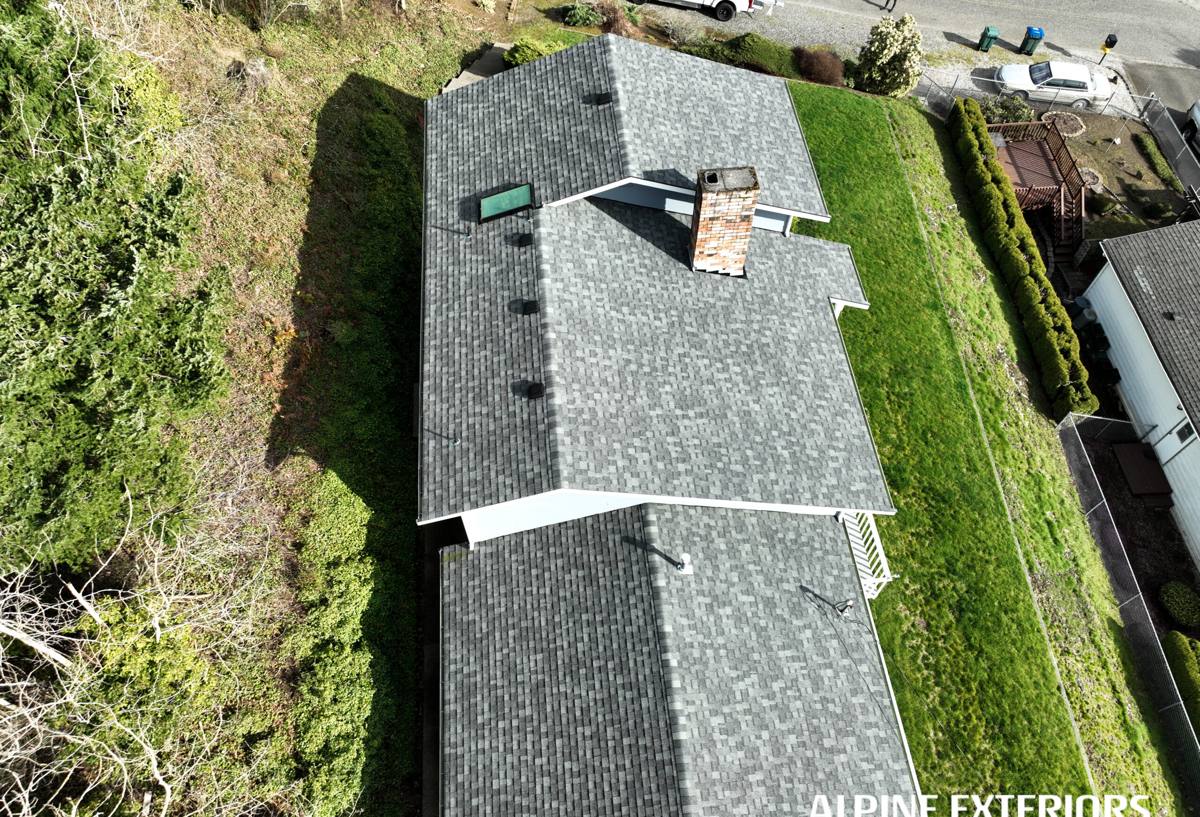
What Salt Air, Driving Rain, and Moss Actually Do to a Roof
Salt Air
Airborne salt accelerates corrosion on anything metal — nail heads, flashing, drip edge, and the fasteners holding down ridge vents. A roof installed with standard-grade fasteners in a waterfront neighborhood can show rust streaking and early fastener failure years before an identical roof would inland. We spec corrosion-resistant fasteners and flashing for Cap Sante installs for this reason, not because it's required everywhere in the county.
Driving Rain
Anacortes doesn't get the heaviest rainfall totals in Western Washington, but wind off the water turns ordinary rain into wind-driven rain that finds gaps a calm-weather roof would never expose. Underlayment laps, valley construction, and flashing details around chimneys and dormers matter more here than in sheltered locations — water gets pushed uphill under shingle edges if those details aren't done correctly.
Moss
Shaded, north-facing roof sections in Cap Sante's tree-covered lots stay damp long after sun-exposed sections have dried out. Moss doesn't just look bad — it lifts shingle edges as it grows, holds moisture against the roof deck, and works its way into laps and fastener penetrations over time. A roof designed with moss in mind uses proper ventilation and, where appropriate, zinc or copper strips to slow regrowth.
Signs a Cap Sante Roof Needs Replacing, Not Patching
- Granule loss heavy enough to see bare asphalt on shingles, especially on shaded slopes
- Moss growth that keeps returning within a season of cleaning, even after treatment
- Soft or spongy spots underfoot on the roof deck, usually a sign of trapped moisture
- Rust streaking at flashing, vent boots, or fastener heads
- Curling, cracking, or cupping shingles, particularly on the side facing the water
- Daylight visible through the roof deck from inside the attic
- Multiple isolated leak repairs over the past few years instead of one clear cause
- A roof approaching or past its material's expected service life, especially if the original install used minimal underlayment or flashing
Any one of these alone doesn't automatically mean full replacement — but two or three together, especially on an older roof, usually mean patching is buying time rather than solving the problem.
What a Correct New Roof Installation Involves
A new roof is only as good as what's underneath the visible material. For Cap Sante homes, we treat the following as non-negotiable, not upsells:
Tear-Off and Deck Inspection
We remove the existing roofing down to the deck rather than layering over it. This lets us check the sheathing for rot or soft spots — common where moss has held moisture against the deck for years — and replace only what's actually damaged, not the whole deck unnecessarily.
Underlayment
Given the wind-driven rain this area sees, we use synthetic or ice-and-water-shield underlayment at eaves, valleys, and other vulnerable areas rather than the bare minimum felt some builders still use. This is the layer doing the real waterproofing work if wind ever pushes water under the shingle surface.
Flashing
Chimneys, skylights, dormers, and sidewalls all need step and counter-flashing installed correctly, not caulked-over shortcuts. Caulk fails; properly lapped metal flashing doesn't need to rely on sealant to stay watertight.
Ventilation
Balanced intake and exhaust ventilation keeps the attic and roof deck dry from underneath, which matters as much for moss and rot resistance as anything happening on the surface. A roof that looks great but traps moisture in the attic will fail from the inside.
Fasteners and Metal Components
Corrosion-resistant nails, drip edge, and flashing on any roof within reach of salt air — this is where a lot of the difference between a roof that lasts and one that shows problems in five years actually comes from.
Roofing Material Comparison for Cap Sante Homes
| Material | Salt Air Resistance | Moss Resistance | Typical Lifespan | Maintenance Notes |
|---|---|---|---|---|
| Architectural asphalt shingle | Good with corrosion-resistant fasteners/flashing | Moderate — benefits from zinc strips on shaded slopes | 25–30 years | Periodic moss and debris cleaning on shaded sections |
| Standing seam metal | Very good, with proper coating/fastener spec | Good — sheds moisture, little surface for moss to grip | 40–50+ years | Low; check fastener and sealant points periodically |
| Composite/synthetic shingle | Good | Good — resists moisture absorption | 30–50 years, varies by product | Low; verify manufacturer warranty terms on coastal use |
| Cedar shake | Requires careful detailing near salt air | Poor without regular treatment | 20–30 years with upkeep | Higher — regular treatment and moss management needed |
We'll talk through which material fits your home's exposure, the amount of shade on your lot, and your budget rather than defaulting to one product for every job. A heavily shaded, water-facing roof and a sunny, sheltered one in the same neighborhood can reasonably end up with different recommendations.
Our Installation Process
- On-site assessment — We look at your current roof's condition, deck, ventilation, tree exposure, and orientation to the water before recommending anything.
- Written estimate — Material options, scope of work, and a clear price, so you know what you're getting before any work starts.
- Permitting — We handle the City of Anacortes permit for the reroof so you don't have to navigate that process yourself.
- Tear-off and deck check — Full removal of old roofing, deck inspected and repaired where needed.
- Underlayment and flashing — Installed to the standard the site's exposure calls for, not the bare code minimum.
- Roofing material installation — Installed to manufacturer specification, which is also what keeps material warranties valid.
- Ventilation check — Intake and exhaust confirmed balanced before we call the job done.
- Final walkthrough — We go over the finished roof with you and answer any questions before closing out the job.
Cost Factors for a Cap Sante Reroof
| Factor | Why It Matters Here |
|---|---|
| Roof size and pitch | Steeper, larger roofs take more material and labor time |
| Material choice | Metal and composite carry a higher upfront cost but longer lifespan and less coastal maintenance |
| Deck condition | Moisture-damaged sheathing found during tear-off adds repair cost not always visible beforehand |
| Flashing complexity | Chimneys, skylights, and multiple roof planes mean more detail work |
| Fastener and flashing grade | Corrosion-resistant hardware costs more but is the right call this close to the water |
| Access and tree removal needs | Tree-heavy lots sometimes need limbs cleared to protect the roof and give crews safe access |
We give exact numbers only after seeing the roof — anyone quoting a firm price over the phone without an inspection is guessing.
Why a Crew That Already Works Cap Sante Matters
Roofing crews who work this specific stretch of Anacortes regularly already know which slopes tend to hold moss, how wind off the bay behaves against different roof orientations, and which flashing details actually hold up to salt air over time — because they've seen it play out on roofs nearby, not just in a manual. That local pattern recognition shows up in small decisions during install: where to add an extra course of underlayment, which vents to specify, where zinc strips are worth the small added cost. It also means a crew that understands Anacortes' permitting process and can be back quickly if you ever have a question after the job is done.
Ready for a Straightforward Estimate?
If your Cap Sante home's roof is showing moss buildup, granule loss, or age, we're glad to take a look and give you an honest read on repair versus replacement — no pressure either way. Fill out the form below for a free estimate and we'll walk the roof with you and talk through what actually makes sense for your home.