 Anacortes Roofing
 Roof Repair in Cap Sante: Built for a Waterfront Climate
Cap Sante sits on the elevated, tree-lined hillside above the marina on the north side of Anacortes, and that position comes with a roofing climate all its own. Homes up here catch salt-laden air rolling off the water, take wind-driven rain straight off Fidalgo Bay on stormy days, and sit under enough tree cover that moss has a long, comfortable growing season most of the year. None of that is unusual for Skagit County waterfront property — but it does mean a roof repair here needs to account for conditions that a generic inland job wouldn't have to think about. This page covers what roof repair actually looks like for a Cap Sante home: what typically fails first, what a correct repair involves, and how we approach the work.
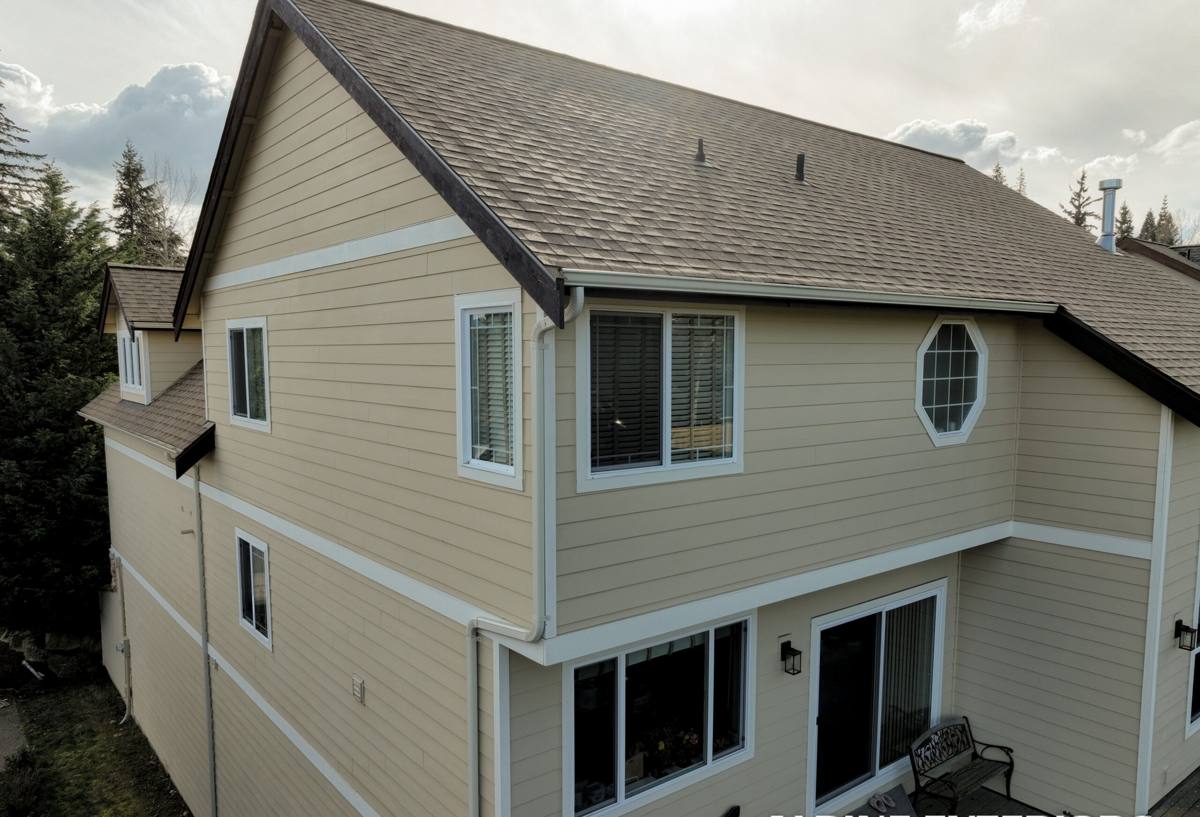
Why Cap Sante Roofs Take a Different Kind of Beating
Three things combine on this hillside to age a roof faster than you'd expect from its calendar age alone: salt exposure, wind-driven rain, and shade.
Salt Air and Metal Fatigue
Roofs close to Fidalgo Bay and the marina are exposed to a steady, low-grade dose of salt in the air. That accelerates corrosion on exposed metal — flashing, fasteners, drip edge, and any exposed nail heads — well before it would fail on a roof further inland. A repair that reuses corroded flashing or fasteners because "they still hold" is a repair that fails again within a couple of years.
Wind-Driven Rain and Water Intrusion
Because Cap Sante sits up and open toward the water, storms don't just drop rain straight down — they push it sideways, up under shingle tabs and lap joints that were never designed to shed water moving in that direction. This is exactly the kind of exposure where undersized or poorly lapped flashing at valleys, chimneys, and skylights turns into a slow leak instead of showing up as an obvious one.
Moss, Shade, and Trapped Moisture
The same tree cover that makes Cap Sante a pleasant place to live also means a lot of roofs sit in partial shade for large parts of the day. Combined with the Pacific Northwest's damp shoulder seasons, that's ideal moss and algae growing conditions. Moss doesn't just look bad — it holds moisture directly against the shingle surface, lifts tabs as it grows under the edges, and traps debris that keeps the roof deck wetter, longer, than it should ever be.
Common Roof Repair Problems We Find in Cap Sante Homes
The specific repairs vary by roof age and orientation, but the same handful of issues come up again and again on homes in this area:
- Moss-lifted shingles — tabs pried up at the edges by moss growth, breaking the shingle's seal
- Corroded or undersized flashing — around chimneys, skylights, and in valleys, especially on older homes
- Nail pops and fastener failure — from wind cycling and temperature swings, working shingles loose over time
- Failed pipe boots and vent flashing — the rubber collar around plumbing vents cracks and dries out faster in sun-and-salt exposure
- Gutter backup and eave rot — needles and moss debris clogging gutters, sending water back up under the first course of shingles
- Ridge cap wear — the most wind-exposed part of the roof, often the first place to show granule loss or lifted caps
Signs Your Roof Needs Repair Now
Most roof failures don't happen all at once — they show warning signs for months, sometimes years, before a leak actually shows up inside the house. Watch for:
- Visible moss mats or thick algae streaking, especially on north-facing or shaded slopes
- A buildup of granules collecting in gutters or at downspout outlets
- Ceiling stains or discoloration near exterior walls, chimneys, or skylights
- Daylight visible through the roof deck when you look up from the attic
- Curling, cracked, or missing shingles after a windstorm
- Soft or spongy spots when walking the roof, which usually means the decking underneath is wet
- Rust streaks or staining just below any metal flashing
Any one of these on its own doesn't necessarily mean a full roof is failing — but it does mean it's worth having someone look before the next storm season, not after.
What a Correct Roof Repair Actually Involves
A roof repair is only as good as the diagnosis behind it. Patching over a symptom — replacing a stained shingle without finding out why it stained, or caulking a flashing joint instead of resealing it properly — buys a little time and then fails again, usually at the worst moment. A repair done right starts by tracing water back to its actual entry point, which is sometimes several feet from where the stain or leak shows up inside.
From there, a proper repair means:
- Removing enough surrounding material to see the full extent of the damage, not just the visible spot
- Checking the roof decking underneath for soft or rotted plywood before anything gets replaced
- Replacing damaged underlayment, not just the shingles on top of it
- Using new flashing and fasteners in areas exposed to salt air, rather than reusing corroded metal
- Matching shingle type, color, and exposure so the repair blends in rather than standing out
- Resealing and reintegrating the repair with the surrounding roof so water sheds correctly across the transition
Our Roof Repair Process
- Inspection and diagnosis. We walk the roof (weather permitting) and check the attic from inside where possible, tracing any leak or damage back to its actual source rather than just the visible symptom.
- Honest scope and recommendation. We tell you plainly whether this is a repair, or whether the roof's age and condition mean a repair is just delaying a replacement you'll need soon anyway.
- Material matching. We source shingles, flashing, and accessories that match your existing roof as closely as possible, so the repair doesn't stand out as a patch.
- The repair. Damaged material comes off, decking is checked and replaced if needed, new underlayment and flashing go in, and the section is reshingled and properly sealed.
- Cleanup and haul-away. Old material, nails, and debris are cleared from the roof, gutters, and ground — we don't leave a job site worse than we found it.
- Walkthrough. We show you what was done and what to watch for going forward, especially if moss or debris was part of the original problem.
Repair or Replace? How We Help You Decide
Not every problem on a Cap Sante roof needs a full replacement, but some genuinely do. We'd rather tell you honestly which situation you're in than sell you more work than you need — or patch something that's past patching.
| Factor | Usually Favors Repair | Usually Favors Replacement |
|---|---|---|
| Roof age | Under roughly 15 years, or well-maintained | Near or past the material's expected service life |
| Extent of damage | Isolated to one section, valley, or penetration | Spread across multiple slopes or the whole roof |
| Moss and staining | Surface growth with no shingle degradation yet | Moss has been lifting shingles for years, damage compounding |
| Decking condition | Solid, dry plywood under the damaged area | Soft, delaminated, or rotted decking found during inspection |
| Repair history | First repair, or an isolated new issue | Same area repaired more than once already |
Cost Factors for Roof Repair in Cap Sante
We don't publish flat repair prices because the honest answer is "it depends," but the factors that actually drive the cost are consistent. A small, accessible flashing repair might run a few hundred dollars; a repair involving decking replacement, multiple penetrations, or difficult roof access runs higher. Here's what moves the number:
| Factor | Why It Matters |
|---|---|
| Size of the damaged area | More removal, more new material, more labor |
| Roof pitch and access | Many Cap Sante homes have steeper pitches for view lines, which slows work and adds safety setup |
| Decking condition | Rotted plywood found under shingles adds material and labor beyond the original scope |
| Flashing complexity | Chimneys, skylights, and valleys take more time to flash correctly than a flat run of shingles |
| Material match | Discontinued or specialty shingle profiles can be harder to source and match |
Why Hiring a Crew That Already Works Cap Sante Matters
A repair crew that's spent time on this hillside already knows what to expect before they climb up: which slopes are going to have the heaviest moss, where wind-driven rain tends to find its way in on this style of roof, and how salt exposure changes the timeline on flashing and fasteners. That's not a small thing — it's the difference between a repair that addresses the actual cause and one that just covers the symptom.
Local access matters too. Cap Sante's hillside streets and view-lot driveways aren't always simple to stage equipment on, and a crew that's worked the neighborhood before knows how to plan around that instead of improvising on the day. And when a windstorm off the water knocks something loose, a local Anacortes crew can typically get eyes on it faster than someone driving up from out of the area — which matters when the difference between "minor repair" and "replace the decking too" is often just how many more storms the roof sees before it gets fixed.
Maintenance That Extends the Life of a Repair
A well-done repair should last — but a few habits go a long way toward making sure it does, especially in a moss-and-salt environment like Cap Sante:
- Have moss treated or physically removed (not just chemically killed and left in place) on a regular schedule, particularly on shaded north-facing slopes
- Clean gutters more often than an inland home would need — tree debris here builds up faster and clogs drainage that the roof edge depends on
- Keep overhanging branches trimmed back to reduce both shade and debris load
- Have the roof looked at after any significant windstorm, even if nothing looks obviously wrong from the ground
- Address small issues — a lifted shingle tab, a small stain — while they're still small repairs
If you're seeing moss buildup, a stain that wasn't there last season, or storm damage on a Cap Sante roof, we're happy to take a look and give you a straight answer on what it needs. Reach out for a free, no-pressure estimate using the form below.