 Anacortes Roofing
 Why Conway's Siding Takes More Punishment Than People Expect
Conway sits low in the Skagit River delta, tucked between farmland, tidal sloughs, and wetlands just off I-5. That geography is part of what makes it a beautiful place to live — and part of why homes here go through siding faster than homeowners expect. The same marine air that moves through Skagit County off Puget Sound and the Salish Sea settles into these low-lying flats, and the moisture doesn't move on the way it does on a windier hillside. Add the region's long, wet winters and the humidity that lingers over the fields well into spring, and you've got a climate that's tough on any exterior material that isn't built for it.
Salt-laden air corrodes fasteners and finishes over time. Driving rain off Puget Sound weather systems finds every gap in flashing and every soft spot in a butt joint. And the moss and algae that thrive in Western Washington's damp shade season don't just look bad on siding — they hold moisture against the surface for weeks at a stretch, which is exactly the condition that rots wood-based products and delaminates poorly made composites. None of this is unique to Conway, but low, sheltered delta terrain tends to concentrate it. A siding job that would hold up fine on a breezy bluff in Anacortes proper can fail years earlier down in the flats if it wasn't built and installed with that in mind.
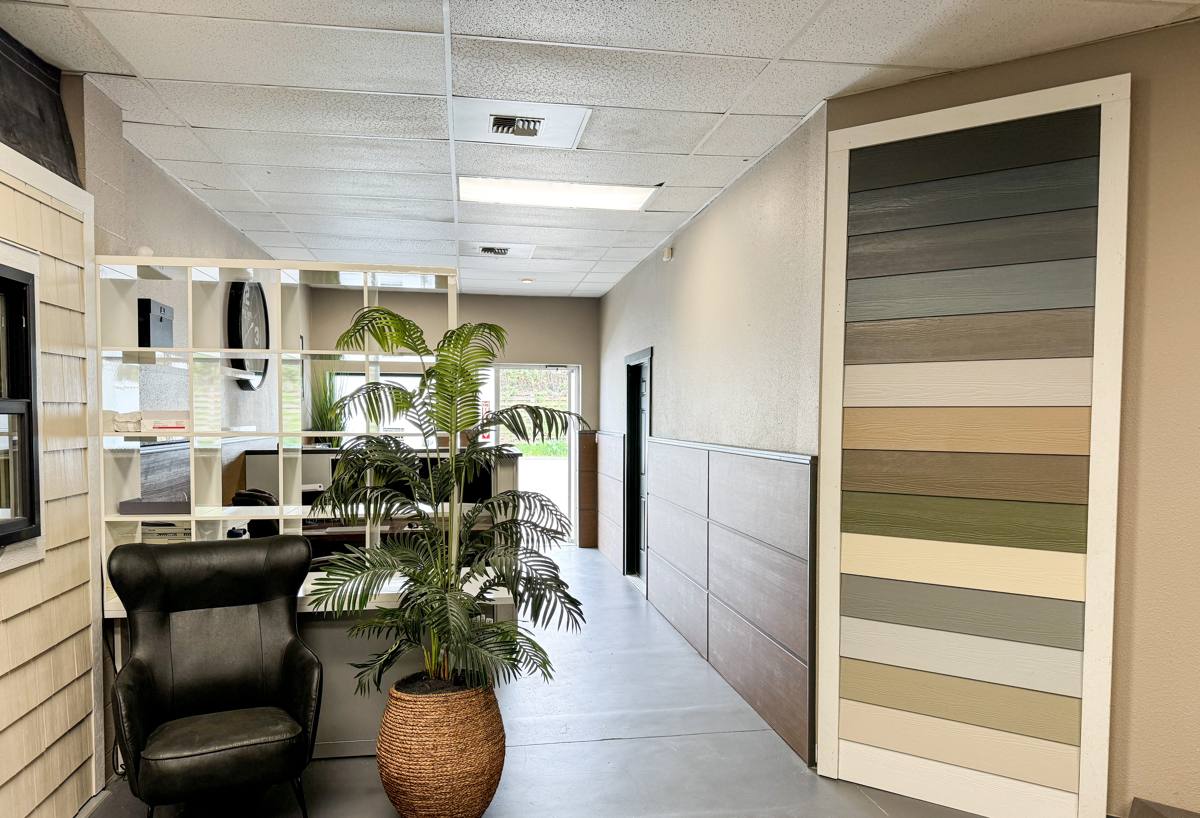
What a Correct Fiber Cement Job Actually Involves Here
"Correct" isn't just nailing boards to a wall. In a moisture-heavy environment like Conway, the installation details matter more than the product itself. A siding job can use the right material and still fail early if the water management underneath it is wrong.
The details that actually determine longevity
- Rain screen or drainage gap — a small air space behind the siding lets bulk water drain and the wall assembly dry, instead of trapping moisture against the sheathing.
- Weather-resistive barrier, lapped correctly — every layer needs to shed water downward, with proper overlaps at seams, not just stapled flat.
- Flashing at every penetration — windows, doors, hose bibs, light fixtures, and roof-to-wall intersections are where driving rain actually gets in. Flashing tape and proper head flashing aren't optional extras.
- Correct fastener spacing and type — corrosion-resistant fasteners, set to the manufacturer's nailing schedule, not overdriven or underdriven.
- Factory-cut and sealed edges — raw cut edges on fiber cement need to be sealed per the manufacturer's specification, especially at butt joints where two boards meet.
- Clearance from grade, decks, and roofs — siding that sits too close to soil, patios, or roof lines wicks moisture continuously, which is a fast track to failure in a wet climate.
Skip any one of these and you can still end up with a wall that looks fine for a year or two and then starts showing problems at the seams and corners — right where they're hardest to fix without pulling siding back off.
Why We Only Install James Hardie
We standardized on James Hardie fiber cement siding and don't install LP SmartSide, vinyl, cedar, or other composite panel products. That's a deliberate call, not a sales pitch, and it's worth explaining honestly.
Vinyl is inexpensive and low-maintenance, but it's a thin plastic product that can warp in temperature swings and doesn't hold paint if you ever want to change the color — it gets replaced, not refinished. Wood-based composite sidings like LP SmartSide use engineered wood strand substrates that perform well when kept dry, but they're more sensitive to sustained moisture exposure than cement-based products, which matters directly in a climate where moss and dampness sit on a wall for weeks at a time. Cedar is a genuinely attractive, time-tested material, but it demands ongoing maintenance — staining or sealing on a recurring cycle — to keep moisture and rot at bay, and that upkeep burden is easy to underestimate until you're the one paying for it every few years.
James Hardie fiber cement is cement, sand, and cellulose fiber — it's non-combustible, it doesn't swell or rot the way wood-based products can, and it holds its factory ColorPlus finish for years without the repainting cycle that wood and some composites require. Hardie also engineers regional product lines (HZ5 for wetter, harsher climates like ours) specifically to resist moisture intrusion and freeze-thaw stress. Installed correctly, it's a product built for exactly the conditions Skagit County throws at it. That's the whole reason we made it the only thing we put on a wall.
Our Installation Process
- On-site assessment — we look at your current siding, wall assembly, drainage, and any trouble spots (rot, moss buildup, failed caulking) before quoting anything.
- Tear-off and sheathing check — old siding comes off and we inspect the sheathing underneath for hidden water damage before it's covered back up.
- Water management install — weather-resistive barrier, drainage gap, and flashing at every window, door, and penetration, done before a single piece of siding goes up.
- Hardie installation to manufacturer spec — correct fastener schedule, sealed cut edges, proper clearances from grade and roof lines.
- Trim, caulking, and paint touch-up — finish details that keep water from finding its way behind the new siding at joints and corners.
- Final walkthrough — we go over the finished job with you before calling it done.
Signs Conway Homeowners Should Watch For
If your current siding is showing any of the following, it's worth a look before the next wet season makes it worse:
- Persistent moss or algae growth that returns quickly after cleaning
- Soft or spongy spots when you press on the siding, especially near the bottom courses
- Paint that's peeling or bubbling in patches rather than fading evenly
- Visible gaps or separation at butt joints and corners
- Staining or streaking below window sills and roof lines
- A musty smell or interior moisture signs on an exterior wall
What Drives the Cost of a Siding Job
| Factor | Why It Matters |
|---|---|
| Home size and wall complexity | More corners, dormers, and roof lines mean more flashing and cutting labor |
| Current siding removal | Tear-off and disposal of old material adds time and cost versus new construction |
| Sheathing condition | Hidden rot or water damage found during tear-off needs repair before new siding goes on |
| Hardie product line and profile | Lap siding, panel systems, and trim options vary in material cost |
| Access and site conditions | Tight lots, low-lying or wet ground, and staging access affect labor time |
| Color and finish | Factory ColorPlus finish versus field-painted affects both cost and long-term maintenance |
We won't throw out a number without seeing the house — every one of these factors changes the estimate, and a fair quote requires an actual walk-around.
Why a Crew That Already Works Conway Matters
Conway isn't a big town, and it doesn't get the attention that bigger jobs in Anacortes or Mount Vernon do from contractors who aren't local. A crew that's already worked the low-lying delta terrain around here knows what to check for that a general contractor might miss — where moisture tends to collect against a foundation, how drainage behaves on flat delta lots versus sloped ground, and which details on an older Skagit County home are most likely to have been done wrong the first time. That local pattern recognition is the difference between a quote that guesses and one that's based on having actually seen the problem before.
It also matters for the parts of the job that happen after installation — warranty questions, follow-up on a caulking line, or a look at a spot that's bothering you two winters later. A crew based in the area is one you can actually get back out to your house.
Simple Maintenance That Extends the Life of Your Siding
- Rinse siding annually to clear moss, pollen, and salt residue before it builds up
- Keep gutters clear so overflow doesn't run down the wall face
- Trim back vegetation and tree cover that keeps siding shaded and damp longer than necessary
- Re-caulk trim joints and penetrations if you see cracking or gaps forming
- Walk the exterior once a year and check low corners and butt joints where water tends to collect first
If you're weighing a siding replacement or just want an honest read on what your current siding is doing, we're happy to take a look. The estimate is free, there's no pressure, and you'll get a straight answer about what your home actually needs — use the form below to get started.