 Anacortes Roofing
 Conway's Siding Takes a Different Kind of Beating
Conway sits low in the Skagit River delta, close enough to Skagit Bay that salt-laden air is a regular visitor, and flat enough that fog and standing moisture linger longer than they do on higher ground. Add the driving, wind-pushed rain that comes off the water in fall and winter, and you have a climate that goes after siding from every angle at once: salt accelerates corrosion of fasteners and trim, wind-driven rain finds every gap in flashing and caulk, and the damp, shaded conditions that blanket this part of Skagit County for much of the year keep moss and algae growing on siding surfaces almost year-round.
None of that means your siding is doomed. It means siding repair in Conway has to account for causes, not just symptoms. A crack painted over without fixing the flashing behind it will fail again. A patch that doesn't match the panel's factory finish will look worse than the damage it covered. We've built our repair process around the actual conditions this part of the county throws at a house, not a generic checklist.
What Salt Air, Rain, and Moss Actually Do to Siding
Salt Air and Fasteners
Airborne salt from Skagit Bay settles on exterior surfaces and accelerates corrosion of exposed nail heads, staples, and any unprotected metal trim or flashing. Once a fastener starts to rust, it can streak the siding below it, lose its grip, or eventually let a panel work loose. This is a slow process, but it's constant, and it's one of the main reasons siding that looks fine from the street can have failing hardware underneath.
Driving Rain and Water Intrusion
Wind-driven rain doesn't just fall on siding — it gets pushed sideways into laps, seams, corners, and anywhere caulk has shrunk or cracked. Once water gets behind the siding, the damage usually isn't visible until it's already reached the sheathing or framing. That's why a proper repair assessment always includes checking what's happening behind the surface, not just patching what's visible on it.
Moss, Algae, and a Long Damp Season
Conway's low elevation, tree cover, and proximity to the river and bay mean surfaces stay damp longer than they would further inland or on higher ground. Moss and algae take hold especially on north-facing walls and anywhere siding stays shaded most of the day. Left alone, that growth holds moisture against the surface, which speeds up rot in wood-based products and can stain or degrade paint finishes on any siding type.
Signs Your Siding Needs Repair
Most siding problems give warning signs well before they become structural. Here's what we tell Conway homeowners to watch for:
- Soft or spongy spots when you press on the siding, especially near the bottom edge or around windows
- Visible cracks, splits, or buckling panels, particularly after a wind event
- Paint that's peeling, bubbling, or failing in patches rather than evenly across a wall
- Dark streaking below nail heads or metal trim — a sign of fastener corrosion
- Persistent moss or algae growth that keeps coming back even after cleaning
- Gaps opening up at seams, corners, or where siding meets trim, windows, or doors
- A musty smell or visible staining on interior walls that back up to exterior siding
- Warping or rippling, which often points to moisture trapped behind the panel
Any one of these on its own might be minor. Several together, especially on the same wall, usually means water has been getting behind the siding for a while and the repair needs to address the cause, not just the visible damage.
What a Correct Siding Repair Actually Involves
A repair that only addresses what's visible from the driveway tends to fail again within a season or two. A repair done right starts with finding out why the damage happened in the first place.
Assessment First
We look at the damaged area and the surrounding siding, check the flashing and moisture barrier where accessible, and look for a pattern — is this isolated impact damage, or is it part of a wider moisture problem tied to grading, gutters, or a flashing detail that's failing across the whole wall?
Fixing What's Behind the Siding, Not Just the Siding
If water has been getting behind the panel, the repair has to correct that path — reworking flashing, resealing a transition, or addressing a gutter or grading issue nearby — before any new siding goes back on. Installing a new panel over an unresolved moisture problem just delays the next failure.
Matching Material and Finish
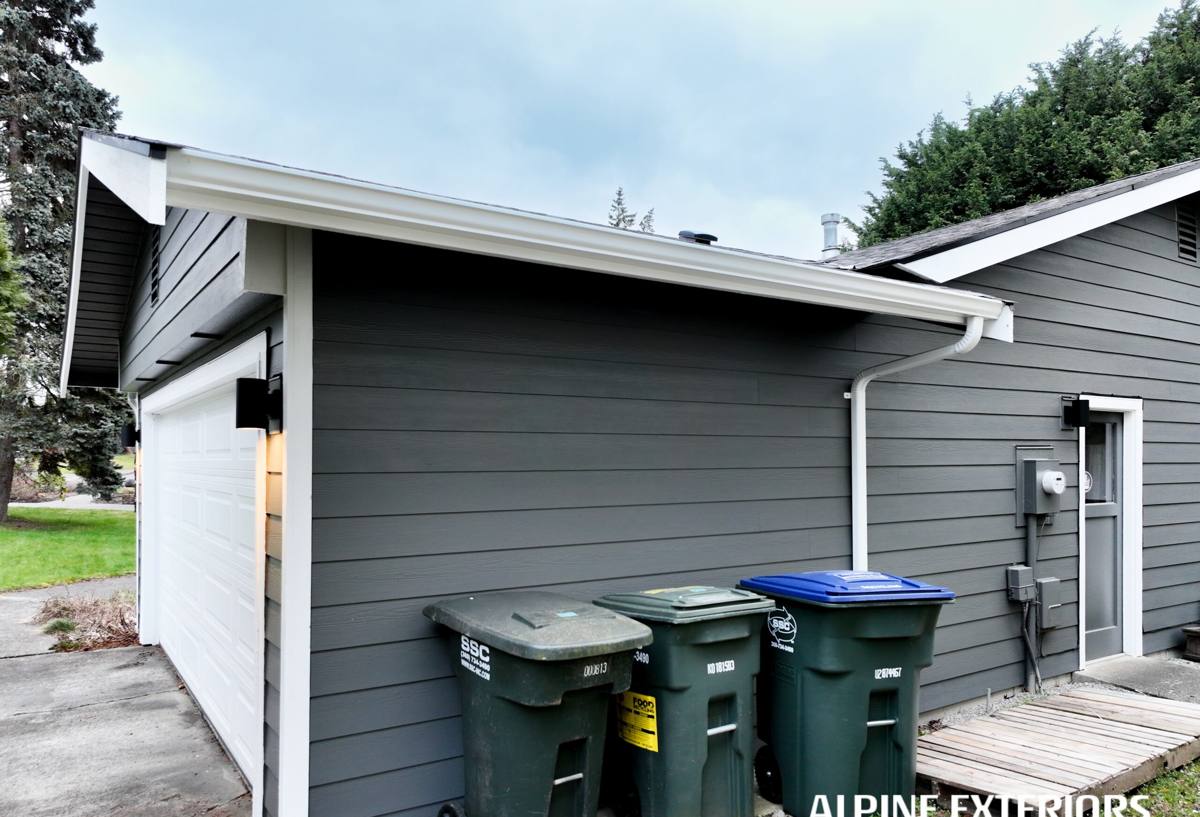
On James Hardie siding, we match the profile, exposure, and factory ColorPlus finish so a repaired section blends into the wall instead of standing out as an obvious patch. This is one of the real advantages of working exclusively with one product system: we know the plank sizes, textures, and color offerings well enough to get a close match rather than guessing.
Fasteners and Sealants Rated for This Climate
Given how hard salt air and driving rain are on hardware, we use corrosion-resistant fasteners and sealants suited for coastal exposure, not whatever happens to be standard inland.
Repair or Replace? How We Help You Decide
Not every damaged section needs a full re-side, and not every repair is worth doing if the underlying siding is near the end of its service life. Here's how we walk through that decision with homeowners:
| Situation | Usually Repair | Usually Replace |
|---|---|---|
| Isolated impact damage (one or two panels) | Yes | No |
| Localized moisture damage caught early | Yes | No |
| Widespread soft spots or rot across multiple walls | No | Yes |
| Siding is an older wood or composite product nearing end of life | Sometimes, short-term | Yes, long-term |
| Existing siding is James Hardie in good condition elsewhere | Yes | No |
| Chronic moss/algae staining with sound siding underneath | Yes (clean + repair as needed) | No |
We'll tell you honestly when a repair makes sense and when you'd be spending money to patch something that's going to need full replacement soon anyway. There's no benefit to us in talking you into more work than the house needs.
Why We Only Repair and Install James Hardie Fiber Cement
We don't work with vinyl, LP SmartSide, Cemplank, Allura, or primed wood siding — and that standard shapes how we approach repairs, too. Vinyl can crack in cold snaps and fade unevenly over time, making patch repairs visually obvious. Wood-based and OSB-core products like LP SmartSide are more vulnerable to the kind of moisture exposure Conway sees regularly, since any breach in the coating gives water a path into a wood-fiber core. Fiber cement products from other manufacturers exist, but we've standardized on James Hardie specifically because of its factory-applied ColorPlus finish, its non-combustible composition, and the consistency of its HZ5 product line, which is engineered for climates with heavy moisture exposure — a real fit for the Skagit County coast.
Standardizing on one product also means our repair crews know it inside and out: how it cuts, how it takes fasteners, how the ColorPlus finish behaves over time, and how to source a matching profile so a repair doesn't leave a visible seam. That familiarity is hard to get when a crew moves between five different siding systems.
What to Expect: Our Repair Process in Conway
- Free on-site assessment — we look at the damage, check for underlying moisture issues, and give you an honest read on repair versus replacement.
- Written scope and estimate — what we'll fix, what caused it, and what it costs, before any work starts.
- Address the cause — flashing, sealant, or drainage issues get corrected as part of the repair, not left for next time.
- Match and install — replacement panels matched to your existing Hardie siding's profile and ColorPlus color.
- Final walkthrough — we show you what was done and why, so you understand the fix, not just the finished wall.
Cost Factors for Siding Repair
Every repair is different, but the biggest cost drivers we see on Conway homes are consistent:
| Factor | Why It Matters |
|---|---|
| Extent of moisture damage behind the siding | Hidden rot or sheathing damage adds labor beyond the visible panel replacement |
| Number and location of affected panels | Scattered damage across multiple walls costs more than a single contained area |
| Access and wall height | Second-story or hard-to-reach sections take longer and may need staging |
| Color and profile matching | Older or discontinued colors can be harder to match exactly |
| Flashing or drainage corrections needed | Fixing the root cause adds work but prevents a repeat repair |
Why a Crew That Already Works Conway Matters
Conway is a small community, and its siding problems tend to follow a pattern — a lot of what we see here traces back to the same combination of salt air, wind-driven rain, and prolonged dampness from the river delta setting. A crew that's already worked on homes in this stretch of Skagit County isn't guessing at what's causing the damage; they've seen the pattern before and know what to check first. That saves you diagnostic time and, more importantly, means the fix addresses what's actually happening at your house rather than a generic assumption about siding failure.
If you're seeing cracked, soft, stained, or moss-covered siding on your Conway home, we're glad to take a look. The estimate is free, there's no pressure to do more work than the house needs, and we'll give you a straight answer on repair versus replacement before you spend a dollar.