 Anacortes Roofing
 Building Decks for Oak Harbor's Marine Climate
Oak Harbor sits on Whidbey Island, right up against the water, which means every outdoor structure here deals with conditions that inland decks never see. Salt-laden air moves through constantly, driving rain comes in sideways off the water for months at a time, and shaded or north-facing areas grow moss almost year-round. A deck built with generic materials and standard fastener choices will show corrosion, soft spots, and slick moss growth years before it should. A deck built for this specific environment won't.
This page covers what actually matters when you're putting a custom deck on a home in Oak Harbor: the materials that hold up, the construction details that keep water from doing damage, and what a correctly built deck involves from the ground up. We work this area regularly, so this isn't theory — it's what we've learned works and what doesn't.
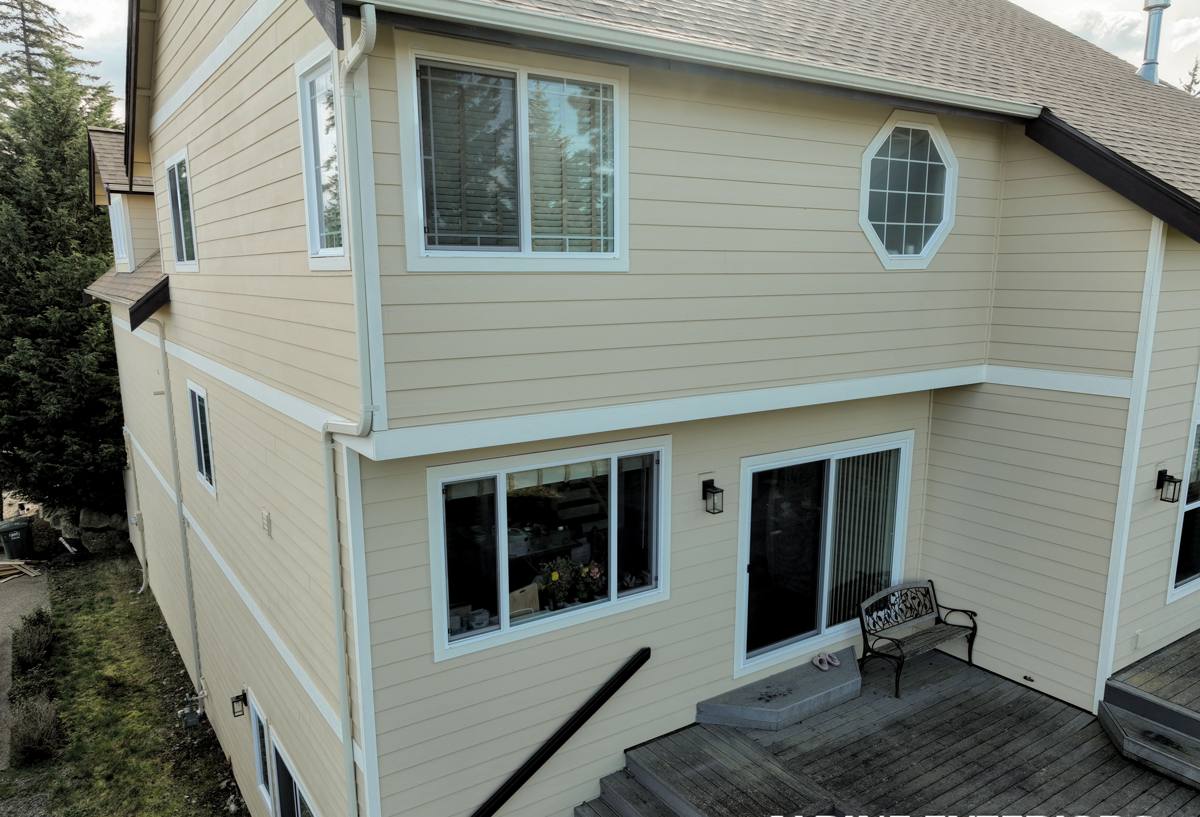
What Salt Air, Rain, and Moss Actually Do to a Deck
Corrosion from Salt Air
Airborne salt is an electrolyte. It speeds up oxidation on any exposed metal, and it doesn't need direct ocean spray to do it — it travels on the wind and settles on everything, including decks set back from the shoreline. Standard hot-dip galvanized fasteners and hangers will pit and rust in a salt-air environment far faster than they would twenty miles inland. Once a fastener starts corroding, it weakens, and a weakened fastener in a structural connection is a real safety issue, not a cosmetic one.
Moisture from Driving Rain
Rain that comes in at an angle behaves differently than rain that falls straight down. It gets pushed into ledger connections, under poorly flashed rim joists, and into any gap where two materials meet. Over time that moisture finds its way into framing lumber, and trapped moisture is what causes rot — not the rain itself, but rain with nowhere to drain or dry out.
Moss and Surface Growth
Shaded decks, north-facing decks, and decks under tree cover in this region grow moss because the surface stays damp for days at a time between rain events. Moss holds moisture against the decking material, which accelerates wood decay and turns composite or wood boards into a slip hazard, especially on stairs.
Choosing the Right Decking Material for This Climate
There's no single "best" decking material — there's a best material for your budget, your sun exposure, and how much upkeep you want to do. Here's an honest comparison for a marine, high-moisture climate like Oak Harbor's:
| Material | Salt Air Resistance | Moisture / Moss Resistance | Maintenance | Typical Lifespan |
|---|---|---|---|---|
| Pressure-treated fir/pine | Good with proper fasteners | Fair — needs sealing | Annual cleaning and re-sealing | 15-20 years with upkeep |
| Cedar | Good, naturally rot-resistant | Good, but greys and softens without care | Periodic oiling/staining | 15-20 years with upkeep |
| Capped composite | Excellent | Excellent — won't absorb moisture | Occasional washing | 25-30+ years |
| PVC decking | Excellent | Excellent, fully non-porous | Lowest — just washing | 25-30+ years |
For a deck that gets direct exposure to wind off the water or sits in a lot of shade, we usually steer clients toward capped composite or PVC. It costs more up front, but the maintenance burden and moss resistance make it the more honest recommendation for this specific climate. Wood is a perfectly good choice too — it just requires a real commitment to sealing and cleaning on a schedule, and we'll tell you that plainly rather than let you find out the hard way.
Design Considerations Specific to Oak Harbor Properties
Wind and Water Exposure
Properties closer to the shoreline see stronger, more consistent wind loads than a typical inland lot. That affects railing design, post spacing, and how a deck's framing is braced. A deck that looks fine on paper for an inland yard can need reinforcement here.
Drainage and Grading
With the amount of rain this area gets, where water goes after it leaves the deck surface matters as much as the deck itself. Poor grading under and around a deck creates standing water, which feeds both rot and moss. We look at drainage before we ever talk about board selection.
Sun and Shade Patterns
North-facing decks and decks shaded by mature trees or a home's own roofline dry out slower after rain. On those layouts we lean harder toward moisture-proof materials and design in more airflow underneath, since that shade is exactly where moss takes hold first.
What a Correctly Built Deck Involves
A deck that holds up in this climate is decided mostly by what you can't see once it's finished. The visible boards matter for looks; the framing and connections underneath decide whether it lasts.
- Footings set below frost depth and sized correctly for the soil conditions on your lot
- Ledger board properly flashed and fastened where it attaches to the house, so water is directed away from the connection instead of into it
- Corrosion-resistant fasteners and hangers rated for coastal or treated-lumber use, not standard interior-grade hardware
- Joist tape or flashing on top of framing members to keep water from sitting on cut lumber
- Adequate airflow and gap spacing underneath the deck so the structure can dry out between rain events
- Stair and railing hardware matched to the same corrosion-resistant standard as the rest of the frame
Skip any one of these and the deck may still look fine for a couple of seasons — the problems show up later, in the framing, where they're expensive to fix.
Our Process for a Custom Deck Build
Site Visit and Design
We start by walking the property, looking at sun exposure, drainage, prevailing wind direction, and how the deck will connect to the house. Design decisions — material, layout, railing style — get made with those conditions in mind, not just the homeowner's Pinterest board.
Permitting
Deck construction typically requires a permit, and requirements vary by jurisdiction and by the deck's height and attachment method. We handle the permit process as part of the job so the structure is built and signed off correctly, not just built fast.
Construction
Footings, framing, ledger attachment, and flashing get done first and get done right — that's the part that determines whether this deck is a ten-year deck or a thirty-year deck. Decking, railings, and finish details go on last.
Final Walkthrough
Before we call it done, we walk the finished deck with you, cover how the specific materials you chose should be cleaned and maintained, and make sure every railing and stair connection is solid.
Maintenance That Actually Matters Here
Maintenance needs differ by material, but in a climate like this, a little consistency prevents most problems. A simple seasonal routine:
- Sweep or blow off leaves and debris regularly — trapped organic matter holds moisture and feeds moss
- Rinse or gently pressure-wash the deck surface at least once or twice a year to knock down algae and moss before it establishes
- Check fastener heads and railing connections annually for early signs of corrosion or looseness
- Re-seal or re-stain wood decking on the schedule the product calls for — don't wait until it looks grey and dry
- Keep gutters and downspouts near the deck clear so roof runoff isn't dumping extra water onto or under the structure
- Trim back vegetation that's shading the deck and keeping it damp longer than it needs to be
Why Hire a Crew That Already Works in Oak Harbor
A contractor who mostly builds decks in drier, inland areas can still do competent framing — but they may not default to coastal-grade fasteners, may not think through drainage the same way, and may not have a feel for how moss behaves on a shaded, rain-heavy site until it's already a problem. Working this specific stretch of Skagit County and the surrounding Whidbey Island shoreline regularly means those decisions are already built into how we spec and build a deck, not add-ons we think of after something fails.
It also means we're not guessing at what holds up. We've seen which fastener finishes actually resist corrosion here, which decking materials handle shade and moss without babying, and which framing details keep water from getting into a ledger connection during a real driving rain, not just a light shower.
Get a Straight Answer for Your Property
Every lot in Oak Harbor is a little different — some get hammered by wind and salt spray, others deal more with shade and standing moisture. If you're thinking about a custom deck, we're happy to come take a look, walk you through what your specific site needs, and give you a clear, no-pressure estimate. Use the form below to get started.