 Anacortes Roofing
 Building a Deck That Holds Up in Flounder Bay
Flounder Bay sits right up against the water, and that changes what a deck has to deal with compared to a home a mile or two inland. Between the marina traffic, the open exposure to wind coming off the bay, and the damp shoulder seasons that define this part of Skagit County, a deck here is doing more work than the same structure would be doing in a dry, sheltered yard. We build decks all over Anacortes, but the ones in Flounder Bay get a different set of decisions from us on materials, fasteners, and drainage — because the environment demands it.
This page is about what actually matters when you're building or replacing a deck in this neighborhood: what the climate does to a deck over time, what a properly built one involves, and how we approach the job so it's still solid a decade or two from now.
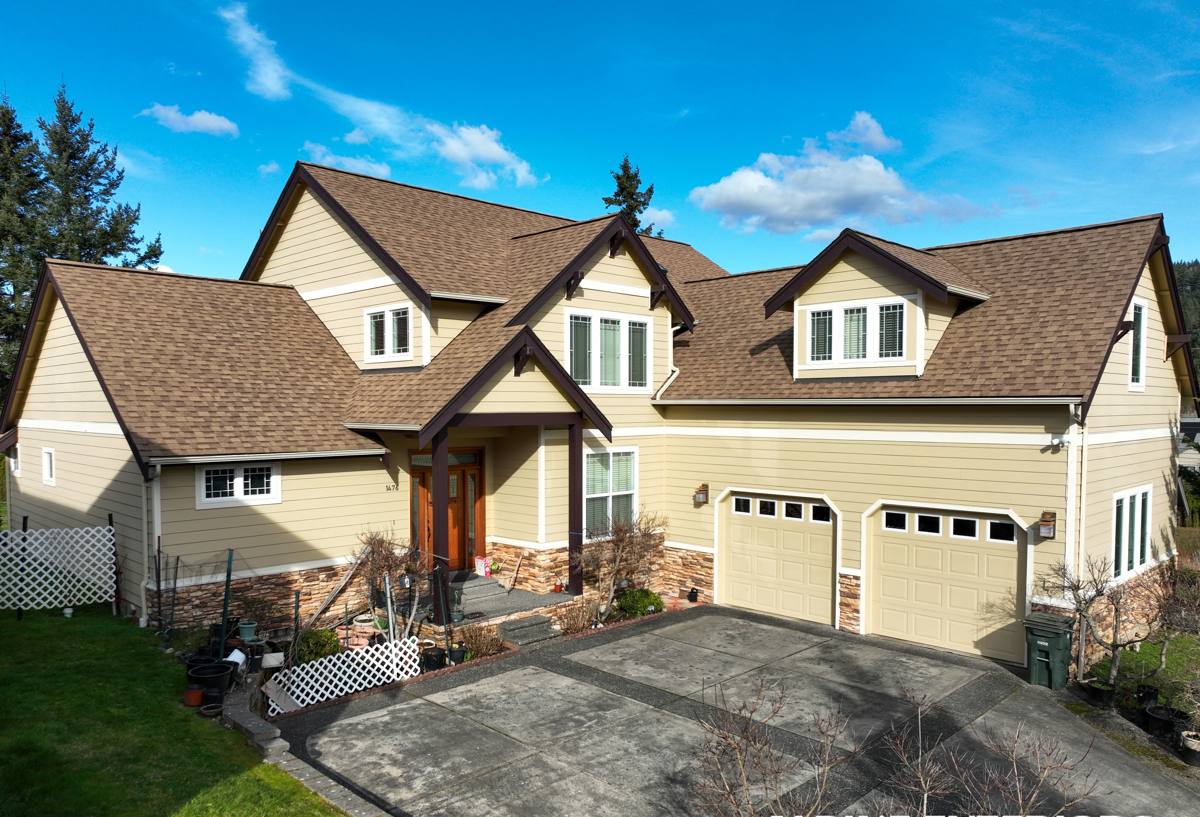
What Salt Air, Rain, and Moss Actually Do to a Deck
None of these are exotic problems — they're just constant. That's what makes waterfront exposure different from an occasional bad storm.
Salt air
Airborne salt is corrosive to metal, full stop. Fasteners, structural connectors, railing hardware, and any exposed screws are the first things to show it — surface rust, streaking on the decking around screw heads, and eventually weakened connections if the wrong hardware was used from the start. This is the single biggest difference between building a deck in Flounder Bay and building one a few miles inland.
Driving rain
Wind-driven rain off the water gets pushed sideways into places a calm rain never reaches — under railings, behind ledger boards, into end grain on cut boards. Standing water and trapped moisture are what actually rot a deck; the rain itself is just the delivery mechanism.
Moss and algae
Anacortes has a long wet season, and shaded or north-facing decks in Flounder Bay grow moss and green algae film readily. Beyond looking bad, moss holds moisture against the wood or composite surface and turns a deck's walking surface slick and genuinely dangerous on stairs.
None of these are reasons to avoid building a deck here — they're just the design inputs. A deck built without accounting for them will look fine for a couple of years and then start showing problems all at once.
Choosing Decking Material for a Waterfront Property
There's no single "right" material for every budget, but there are real trade-offs worth understanding before you decide. We'll walk through all of this in person, but here's the honest comparison:
| Material | Salt air behavior | Maintenance | Typical lifespan |
|---|---|---|---|
| Pressure-treated lumber | Holds up fine if fasteners are corrosion-rated; wood itself doesn't rust | Regular cleaning, periodic sealing/staining | 15-25 years with upkeep |
| Cedar | Naturally rot-resistant, but softer surface shows weathering and moss faster in shade | Sealing every couple years to hold color and resist moisture uptake | 15-20 years with upkeep |
| Capped composite | Won't rot or absorb moisture; surface resists algae better than bare wood | Occasional washing; no staining or sealing | 25-30+ years, manufacturer-dependent |
| PVC decking | Fully synthetic, no wood fiber to hold moisture or feed algae | Lowest maintenance of the group | 25-30+ years, manufacturer-dependent |
For homes directly exposed to bay wind and spray, we lean toward capped composite or PVC for the decking surface itself, simply because they don't give moss and moisture anything to hold onto. But plenty of Flounder Bay homeowners want the look of real wood, and that's a legitimate choice too — it just means committing to the maintenance schedule. Where we don't compromise, regardless of decking material, is the hardware and framing underneath — more on that below.
What Actually Makes a Deck Correct, Not Just Attractive
A deck can look great on install day and still be built wrong. The parts that matter most are the ones you stop noticing once the boards are down.
Footings and framing
Footings need to be sized and set below frost depth per code, and framing lumber should be rated for ground contact where it's close to grade or exposed to consistent moisture. In a wet climate like ours, skipping this is where slow rot starts — usually invisible until a board or joist gives way.
Ledger attachment and flashing
Where a deck attaches to the house, proper flashing is what keeps water from working its way behind the siding and into the wall framing. This is one of the most common shortcuts on older or poorly built decks, and it's expensive to fix after the fact because it usually means opening up siding.
Fasteners and connectors
This is the one place we don't cut corners for Flounder Bay projects. Coated or stainless structural screws and connectors cost more upfront than standard hardware, but in a salt air environment, standard hardware is exactly what leads to rust streaking and weakened joints years earlier than it should. We spec corrosion-resistant fasteners as standard for anything within reach of bay air, not as an upsell.
Drainage and airflow underneath
A deck built tight to the ground with no airflow underneath traps moisture and speeds up rot in the framing, even with good decking on top. Proper joist spacing, ventilation, and grading underneath the structure matter as much as anything visible from above.
Our Process for a Flounder Bay Deck Project
- Site visit and assessment — we look at sun exposure, wind direction, existing drainage, and how close the structure is to open water or shaded, moss-prone areas.
- Material and layout conversation — an honest walkthrough of decking material trade-offs based on your specific exposure, not a one-size-fits-all recommendation.
- Design and permitting — plans drawn to meet local building requirements, with permit submission handled as part of the job.
- Build — footings, framing, flashing, and corrosion-resistant hardware installed to spec, followed by decking and railing.
- Final walkthrough — we go over the finished deck together, including what maintenance will look like given your specific site conditions.
Permits and Building Requirements
New decks and significant deck replacements in Anacortes typically require a building permit, and waterfront or shoreline-adjacent properties can carry additional review depending on proximity to the water and existing setbacks. We handle the permit process as part of the job rather than leaving it to the homeowner, and we'll tell you upfront if your specific lot is likely to need extra review time so it doesn't catch you off guard on the schedule.
Living With a Deck in a Salt Air, High-Moss Environment
Good materials and correct building practices cut down on maintenance — they don't eliminate it. Here's a realistic seasonal checklist for a Flounder Bay deck:
- Rinse the surface periodically to clear salt residue, pollen, and organic debris before it builds up
- Sweep or brush shaded areas and stair treads regularly through the wet months to keep moss from establishing
- Check railing hardware and visible fasteners once or twice a year for early rust staining
- Keep gutters and downspouts near the deck clear so runoff isn't dumping extra water onto or under the structure
- For wood decking, plan on resealing or restaining on the schedule your specific product calls for — don't wait for visible graying to start
- Trim back vegetation that's shading the deck and keeping it damp longer than it needs to be
None of this is heavy work, but skipping it is exactly how a well-built deck ends up looking neglected years before it should.
Why a Local Crew Matters for This Kind of Project
Deck building isn't unique to Flounder Bay, but building one that's still solid after fifteen years of bay wind and Skagit County rain is a matter of local experience. A crew that works this neighborhood regularly already knows which corners of a property catch the worst of the wind-driven rain, which lots hold onto moss longest, and which hardware choices actually pay off here versus what's fine for a sheltered inland yard. That's not something you get from a general spec sheet — it comes from building and later revisiting decks in this exact environment.
We're based in Anacortes and work throughout Skagit County, but waterfront neighborhoods like Flounder Bay are where the difference between a generic deck build and one built for the actual site shows up fastest — sometimes within the first couple of wet winters.
Get a Straightforward Estimate
If you're planning a new deck or replacing one that's showing its age in Flounder Bay, we're happy to come take a look and give you a straightforward, no-pressure estimate based on your actual site conditions. Fill out the form below and we'll get in touch to schedule a visit.