 Anacortes Roofing
 Board & Batten Siding for the Edison Area
Edison sits in that stretch of Skagit County where farmland, tidal sloughs, and Samish Bay air all meet, and homes here take a specific kind of weathering that inland Skagit properties don't see as much of. If you're considering board and batten siding for a house in or near Edison, the profile itself is a good match for the area's older farmhouses, barns-turned-homes, and newer builds going for that same clean, vertical-line look. But board and batten is only as good as the material it's cut from and the crew installing it. We work this stretch of Skagit County regularly, and this page covers what actually matters for a board and batten job out here — not the generic version of this article.
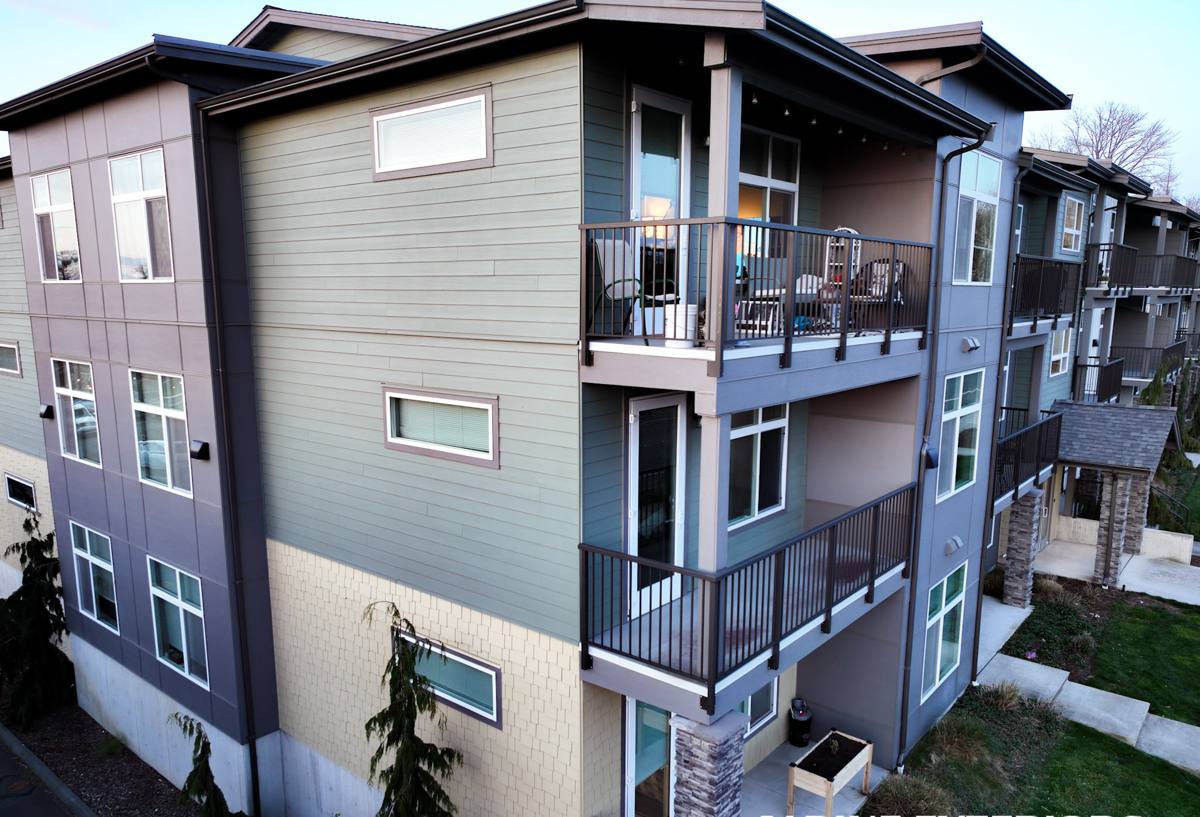
Why Board & Batten Fits This Corner of Skagit County
Board and batten is a vertical siding pattern — wide boards with narrow battens covering the seams between them. It's a classic look for this region's rural and semi-rural architecture, and it reads well on both a century-old farmhouse and a modern build. The strong vertical lines also do something practical: they shed water more directly than some horizontal profiles, which matters when you're this close to the water.
Edison's location near Samish Bay and the surrounding tidal flats means homes deal with salt-laden air on top of the standard Pacific Northwest rain load. Salt air accelerates corrosion on fasteners and metal flashing, and it's harder on any material that isn't dimensionally stable. Add in driving rain off the water during fall and winter storms, and a long moss season that runs from roughly October through May, and you've got a siding assignment that's tougher than what a house fifteen miles inland might face.
What "Coastal-Adjacent" Actually Means for Siding
- Salt air corrodes bare or poorly coated fasteners and metal trim over time
- Wind-driven rain pushes moisture into seams and butt joints that wouldn't see the same pressure inland
- Persistent damp conditions extend the season moss and algae have to establish themselves on north-facing and shaded walls
- Temperature swings between damp mornings and warm afternoons stress materials that expand and contract differently than wood or fiber cement
Why We Install James Hardie Fiber Cement — Not Wood, Not Vinyl
Board and batten shows up in a lot of materials — cedar, primed spruce, vinyl, LP SmartSide, and fiber cement among them. We install James Hardie fiber cement exclusively, and on a job like this, the reasoning isn't abstract.
Real wood board and batten looks great going up, but it's organic material sitting in a wet climate with a long moss season. It needs regular refinishing, it's vulnerable to rot at end grain and joints, and in a coastal-adjacent setting like Edison, that maintenance clock runs faster than it would somewhere drier. Primed spruce carries similar exposure risk if the paint film isn't kept up perfectly. Vinyl handles moisture fine on its own, but it's a thin material that can warp in temperature swings and doesn't hold the crisp, deep-shadow-line look that makes board and batten worth doing in the first place — the battens read as flat applied strips rather than true dimensional siding.
James Hardie fiber cement is cement, sand, and cellulose fiber — it doesn't rot, it isn't a food source for moss and algae the way bare wood can be, and it holds its shape in wet-to-dry cycling far better than wood or vinyl. It's also non-combustible, which matters given how many properties around Edison back up to fields, brush, or tree lines. The factory-applied ColorPlus finish means the color coat is baked on under controlled conditions rather than field-applied, so the finish holds up more consistently over years of salt air and rain than a site-painted surface. That's the whole reason we standardized on it — not because other materials are worthless, but because this is what performs correctly, with the least maintenance, in this specific climate.
What a Correct Board & Batten Installation Actually Involves
Board and batten looks simple from the street, but the installation details are where jobs succeed or fail over time — especially with the moisture load this area sees.
The Sequence That Matters
- Tear-off and inspection of the existing wall assembly, checking sheathing for hidden rot before anything new goes on
- Repair or replacement of any compromised sheathing — covering over damaged wood just traps the problem
- Installation of a weather-resistant barrier, properly lapped and sealed at every penetration
- Correct flashing at windows, doors, and any wall penetrations — this is the single most common failure point on any siding job we inspect
- Installation of the wide base boards, fastened per Hardie's engineering specs
- Installation of the vertical battens over the seams, with attention to consistent reveal and spacing
- Sealing and caulking at trim transitions, using products rated for the exposure
- Final inspection of fastener pattern, gaps, and clearances
Fiber cement board and batten has specific fastening and gapping requirements from the manufacturer — how far boards sit off grade, how much clearance is left at roof lines, and how joints are treated. Skipping or shortcutting these details is exactly how a well-chosen material ends up with a moisture problem five years down the road. It's not the product failing; it's the installation not respecting how the product is engineered to shed water.
Clearances and Details That Get Missed
- Minimum clearance between the bottom of the siding and grade, roofing, decks, and patios
- Proper flashing above windows and doors, not just caulk covering a gap
- Kick-out flashing where a roofline meets a wall, to direct water away from the siding rather than behind it
- Batten fastening pattern that allows for material movement without cracking the finish
- Touch-up of any field-cut edges with manufacturer-approved sealer
Cost Factors on an Edison Board & Batten Project
We don't publish fixed prices because every home is different, but these are the real factors that move the number, in rough order of impact:
| Factor | Why It Matters |
|---|---|
| Existing sheathing condition | Hidden rot found during tear-off adds repair scope before new siding goes on |
| Wall height and complexity | Two-story walls, dormers, and multiple gables all add labor and material cuts |
| Trim and window count | More openings mean more flashing detail work, which is where labor time concentrates |
| Access and site conditions | Tight lots, slopes, or landscaping close to the house can slow staging and scaffolding |
| Board width and reveal choice | Wider boards and battens change material takeoff and the finished look |
| Color and finish selection | Factory ColorPlus finishes vs. field-painted primed product affect both cost and long-term maintenance |
How Our Process Works
We start with an on-site walkthrough of the exterior, looking at the current siding condition, trim, flashing, and any problem areas — moss buildup, soft spots, staining below windows, that kind of thing. From there we put together a written scope covering tear-off, any sheathing repair contingency, the board and batten layout, trim details, and color selection from Hardie's ColorPlus lineup. We schedule around Skagit County's weather patterns, since a wet stretch off the water can push a start date, and we'd rather delay than install over wet sheathing. During the job we handle flashing and moisture management first, siding second — that order is non-negotiable on our crews. When it's done, we walk the finished exterior with you before calling it complete.
Why a Crew That Already Works Edison Matters
Edison isn't a huge community, but the properties here have real variety — old farmhouses with settled foundations, newer construction, outbuildings converted to living space, homes close to sloughs and tidal influence. A crew that's already worked this specific stretch of Skagit County has seen how moisture moves on these lots, where moss tends to establish first, and how salt air affects fastener choices differently than it would twenty miles inland in Sedro-Woolley or up in the hills above Anacortes proper. That's not something you get from a crew driving in from outside the region for a single job. We're not going to invent local landmarks or pretend to know every property out here — but we do know the climate pattern, and we build the installation around it.
Maintenance After Installation
One of the practical advantages of James Hardie fiber cement board and batten, especially in a moss-prone climate like this, is how little ongoing maintenance it asks for compared to wood. That said, no siding is maintenance-free:
- Rinse the exterior periodically to clear pollen, salt residue, and organic buildup, especially on north- and shade-facing walls
- Keep gutters clear so overflow doesn't run down the wall face and feed moss growth
- Trim back vegetation and tree branches that keep siding shaded and damp longer than necessary
- Inspect caulking at trim and penetrations every year or two and refresh where it's cracked or pulled away
- Address any impact damage promptly rather than letting a chip sit exposed through a wet season
None of that requires a specialist — it's the kind of upkeep any homeowner can manage, which is a large part of why fiber cement holds up better over the long run than a material that needs re-staining or repainting on a fixed schedule.
Get a Straight Answer for Your Edison Property
Every property along this stretch of Skagit County carries its own mix of sun exposure, tree cover, and proximity to the water, and that changes what your siding actually needs to hold up. If you're weighing board and batten for a home in or near Edison, we're glad to walk the exterior with you, look at what's there now, and give you a straightforward scope and estimate — no pressure, no upsell into a product we don't stand behind. Use the form below to request a free estimate and we'll get back to you.