 Anacortes Roofing
 Composite Decking for Edison's Marine Climate
Edison sits in the low, flat farmland along the Samish and Padilla Bay tideflats in Skagit County, close enough to salt water that homes here take a different kind of weathering than a deck built twenty miles inland. Salt-laden air off the bay, long stretches of driving rain, and a moss season that can run from October well into April put real stress on any exterior wood surface. A deck that looks fine going into fall can be soft, slick, or stained green by spring if it wasn't built and finished with this exact climate in mind.
Composite decking has become the practical answer for a lot of Edison homeowners, not because it's trendy, but because it holds up to the specific combination of moisture, salt, and shade that this area produces. This page covers what that actually means for your project — what the climate demands, what a correct installation looks like, and why the crew doing the work matters as much as the material itself.
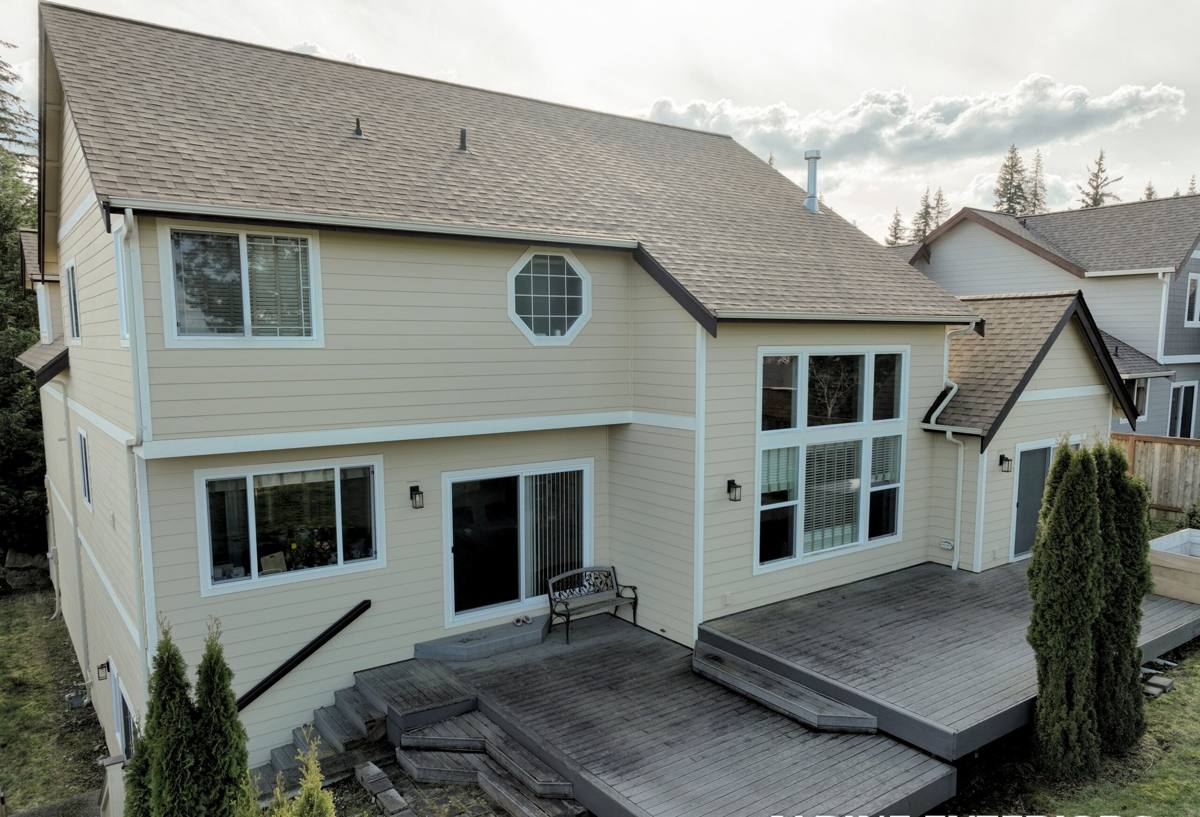
What Edison's Climate Actually Does to a Deck
Three things drive most of the decking problems we see in this part of Skagit County:
Driving rain and standing moisture
Storms off the water tend to come in sideways rather than straight down, which means rain gets driven into board gaps, fastener holes, and any spot where flashing or drainage wasn't done right. Wood decks that don't shed water fast enough stay damp for days at a time, which is exactly the condition rot and fungal growth need.
Salt air corrosion
Proximity to Samish and Padilla Bay means airborne salt settles on exterior surfaces, including deck hardware. Uncoated or poorly rated fasteners and structural connectors corrode faster here than they would further inland, and a corroded fastener is a hidden failure point you won't see until a board starts moving underfoot.
Moss and algae in low light
Edison's mix of tree cover, fog, and long overcast stretches creates ideal conditions for moss and algae on any surface that stays damp and shaded. On a wood deck, moss holds moisture against the board surface and accelerates decay. On composite, it's mostly a surface nuisance — but only if the boards were installed with enough airflow underneath to keep them from staying saturated.
Why Composite Makes Sense Here
Composite decking — a blend of wood fiber and plastic, often with a protective cap layer — doesn't absorb water the way solid wood does, doesn't need annual staining or sealing, and resists the kind of surface decay that moss and standing moisture cause in untreated lumber. For a lot of Edison properties, especially ones with some tree cover or a lower, shadier deck footprint, that's a meaningful reduction in the maintenance a homeowner has to keep up with year after year.
That said, composite isn't automatically maintenance-free, and it isn't automatically the right call for every deck. Uncapped composite boards can still take on moisture at cut edges and fastener points if they aren't sealed correctly during installation. And composite only performs as well as the framing underneath it — if the structure isn't built for proper drainage and airflow, you can still end up with a deck that stays damp and grows algae, just on a different material.
What a Correct Composite Installation Involves
The board itself is only part of the job. Most of the long-term performance of a composite deck in this climate comes from decisions made before a single composite board goes down.
- Ledger flashing: where the deck attaches to the house, proper flashing keeps driving rain from working its way behind the ledger board and into the wall structure — one of the most common sources of hidden rot on any Skagit County deck.
- Joist spacing and blocking: composite boards typically require tighter joist spacing than solid wood, especially on diagonal layouts or near stair openings. Manufacturer spec sheets vary, and using wood-deck spacing under composite boards is a common shortcut that shows up later as sagging or bounce.
- Ground clearance and airflow: low decks need enough clearance underneath to let air move and moisture evaporate. In a damp, shaded lot, tight clearance is one of the biggest contributors to persistent moss and mildew on the underside of boards.
- Hidden fastener systems: most composite installs today use hidden clips rather than face screws, which keeps water out of the board surface and gives a cleaner look, but the clips and screws themselves need to be rated for coastal exposure.
- Cut-edge sealing: any field cut on a composite board — around a post, at a stair stringer, at the deck perimeter — exposes the board's core. In a wet climate, unsealed cut edges are where moisture gets in first.
- Post and footing depth: Skagit County soil and frost conditions determine footing depth for any structural posts; this is inspected, not guessed at.
Composite Board Types: What the Differences Mean for Edison Homes
Not all composite decking is built the same way, and the differences matter more in a wet, salty climate than they would somewhere dry.
| Board Type | Moisture Behavior | Best Fit For |
|---|---|---|
| Uncapped composite | Absorbs some moisture at surface and edges over time; more prone to staining and mold in shaded, damp areas | Budget-conscious projects with good sun exposure and drainage |
| Capped composite | Protective polymer shell resists moisture absorption and staining; performs well under tree cover and salt exposure | Most Edison lots, especially shaded or low-clearance decks |
| PVC / cellular decking | No wood fiber content, essentially impervious to moisture; heavier upfront cost | Waterfront-adjacent or high-moss properties wanting the lowest possible maintenance |
We install capped composite on most Edison projects because it's the point where cost, appearance, and moisture resistance line up best for this climate. Uncapped boards can still make sense on a well-drained, sun-exposed deck where budget is the priority. We'll walk through the honest trade-offs for your specific site rather than pushing one product line by default.
How Our Process Works
1. On-site assessment
We look at your existing deck or build site, sun and shade exposure, tree cover, drainage path, and how close you are to open water. This tells us how much airflow and moisture protection your framing needs, not just what board color you want.
2. Structural evaluation
If you're replacing an existing deck, we check the ledger, posts, and footings before assuming the substructure is reusable. Coastal Skagit County framing that's more than 10-15 years old often has corrosion or rot at connection points that isn't visible from the surface.
3. Framing and flashing
Any repairs, new blocking, or flashing work happens before decking goes down. This is the stage that determines whether the deck sheds water correctly for the next 20-plus years.
4. Composite installation
Boards are laid with manufacturer-specified spacing, hidden fastener systems, and sealed cut edges. Stairs, railings, and picture-frame borders are built to match the same moisture standards as the field of the deck.
5. Final walkthrough
We go over drainage, fastening, and basic care with you directly, so you know what a normal-wear composite deck looks like versus something that needs a call back to us.
What Composite Decking Costs in This Area
Pricing depends on square footage, framing condition, board tier, and details like railings, stairs, and picture-frame edges. In general terms, a few factors move the price more than homeowners expect:
| Cost Factor | Why It Matters |
|---|---|
| Existing framing condition | Rotted or corroded substructure adds repair costs before decking can go down |
| Board tier (uncapped vs. capped vs. PVC) | Material cost per square foot varies significantly between tiers |
| Deck height and railing requirements | Taller decks often require code-mandated railings, which add labor and material |
| Stairs and custom edges | Picture-frame borders, angled cuts, and stair stringers add labor time |
| Site access | Tight or sloped lots, common around Edison's rural properties, can add setup and material-handling time |
We give straightforward, itemized estimates rather than a single number, so you can see exactly what's driving the cost and where there's room to adjust scope.
Living With a Composite Deck in Edison's Climate
Composite cuts down on maintenance, but "low-maintenance" isn't "no-maintenance" here. A few habits keep a composite deck performing the way it's supposed to through wet Skagit County winters:
- Sweep debris and fallen leaves off the deck surface regularly in fall — trapped organic matter under leaves is what feeds moss and algae growth.
- Rinse the deck surface a few times a year, more often in shaded areas, to keep spores from establishing.
- Check railings and stair connections annually for movement, since hardware is where corrosion shows up first.
- Keep gutters and downspouts near the deck clear so runoff isn't draining directly onto or under the deck structure.
- Avoid pressure-washing at close range or high pressure, which can damage the cap layer on capped composite boards.
Why a Local, Edison-Familiar Crew Matters
Anyone can install composite decking on a dry, flat lot with full sun exposure. What separates a deck that lasts here from one that doesn't is experience with the specific conditions Edison and the surrounding Skagit County shoreline throw at a structure — the driving rain angle, the salt exposure off the bay, the shaded, slower-drying lots common on rural and wooded properties in this area. A crew that's already worked decks in this specific pocket of the county isn't guessing at joist spacing or flashing details; they've seen what fails here and build around it from the start.
That familiarity also means fewer surprises during the project itself — knowing which fastener ratings hold up near the water, which framing shortcuts don't survive a second winter, and how to sequence work around this area's weather windows.
Signs Your Current Deck May Need Replacing, Not Repairing
- Soft or spongy spots underfoot, especially near the ledger or stair landing
- Persistent moss or dark staining that returns within weeks of cleaning
- Visible gaps opening between boards or fasteners backing out
- Rust streaking around screws, brackets, or post connections
- Railings that flex or feel loose when leaned on
Any one of these on its own might be a simple repair. A combination usually points to a structural or moisture problem worth addressing at the framing level rather than patching the surface.
Get a Straightforward Estimate
If you're weighing a new composite deck or replacing one that hasn't held up to Edison's weather, we're glad to come take a look and give you an honest read on what your property actually needs. The estimate is free, there's no pressure, and you'll get a clear breakdown of the work and the reasoning behind it — use the form below to get started.