 Anacortes Roofing
 Building a Deck That Actually Holds Up in Edison
Edison sits low in the Skagit Valley farm flats, close enough to the water that the air carries salt and moisture most of the year, with almost nothing in the way to slow the wind or the rain coming off the bay. That combination is hard on decks in ways that don't show up right away. A deck that looks fine the first summer can start showing soft spots, lifted fasteners, or a slick green film by year three if it wasn't built with this specific environment in mind. We build decks for homes in and around Edison the way the conditions here actually demand, not the way a generic build sheet says to.
This page is about one thing: deck building for Edison-area homes. Not a general overview of decks everywhere in Skagit County — the specific choices that matter for a property sitting in open, damp, salt-influenced flatland.
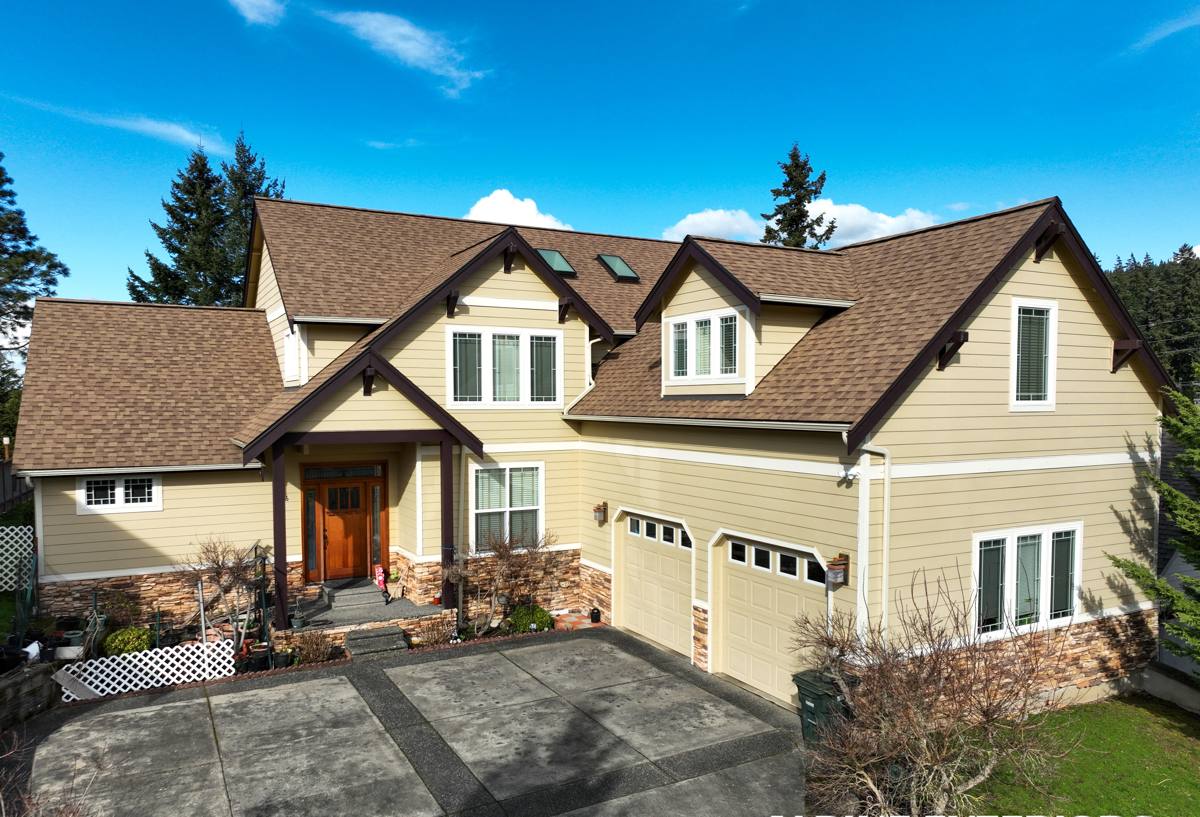
What This Environment Does to a Deck Over Time
Three things drive almost every deck problem we see out this way, and they compound each other.
Salt Air
Even a few miles inland from Samish Bay and Padilla Bay, salt-laden air travels on the wind and settles on exposed metal and wood. Salt accelerates corrosion on fasteners, brackets, and any hardware that isn't rated for it, and it draws moisture into wood grain faster than plain rain does. A deck built with standard interior-grade hardware ages faster here than the same deck would forty miles inland.
Driving Rain
Skagit County doesn't just get rain — a lot of it comes in sideways, pushed by wind off the open flats with nothing to break it up. That means water gets driven into joints, ledger connections, and end grain that a calmer rain pattern would never reach. Flashing details and drainage that would be "good enough" in a sheltered yard aren't good enough here.
Moss and Algae Season
Long, damp, low-light stretches of fall and winter are ideal moss and algae conditions, especially on decks with any shade from trees or the house itself. Moss holds moisture against the deck surface, which slowly breaks down wood fiber and turns a walking surface slick and dangerous. It also finds its way into board gaps and fastener heads, working moisture in where it doesn't belong.
None of these three problems is dramatic on its own. Together, over several wet seasons, they're what separates a deck that needs replacing at year eight from one still solid at year twenty-five.
Choosing the Right Decking Material for This Area
There's no single "best" decking material — there's a best material for this climate and this budget. Here's how the common options actually perform in Edison's conditions specifically.
| Material | How It Handles Salt Air & Moisture | Moss Resistance | Maintenance Burden |
|---|---|---|---|
| Pressure-treated lumber | Good when properly sealed; treatment resists rot but not surface staining | Moderate — needs periodic cleaning | Highest — annual inspection and re-sealing |
| Cedar | Naturally rot- and insect-resistant; still needs finish maintenance in salt air | Moderate — smooth grain sheds moss better than rough-sawn | High — finish reapplication every 2-3 years |
| Composite decking | Excellent — doesn't absorb moisture or salt into the material itself | Good, though surface film can still build in shaded, damp spots | Low — periodic washing, no sealing or staining |
| PVC decking | Excellent — fully synthetic, unaffected by salt or standing moisture | Good, same surface-cleaning caveat as composite | Low |
Composite and PVC cost more up front but remove the yearly sealing and staining cycle that wood requires — a real consideration when the maintenance window is short because of how much of the year is wet here. Wood, done right with the correct fasteners and finish schedule, still has a place, especially where a homeowner wants a natural look and is willing to keep up with it. We'll walk through the honest trade-offs for your specific deck rather than push one material by default.
Fasteners and Hardware
This matters as much as the decking material itself, and it's the part most often cut on lower-bid jobs. In a salt-air environment, standard galvanized fasteners can start showing rust bleed within a few seasons. We use stainless steel or coated fasteners rated for coastal exposure, along with corrosion-resistant structural connectors at every load-bearing point. It costs more than the hardware store box of deck screws — it's also the difference between hardware that outlasts the decking and hardware that stains and weakens it early.
Framing and Structure: The Part You Don't See
A deck's surface gets all the attention, but the framing underneath is what determines whether it's safe and long-lived. In this climate, three framing details matter more than they would in a drier region:
- Ledger board flashing — where the deck attaches to the house is the single most common source of hidden rot. Proper flashing and a gap for water to escape behind the ledger keeps driving rain from wicking into the house rim joist.
- Joist protection — joist tape or a comparable moisture barrier over the top of each joist keeps standing water from soaking into the wood through fastener holes, which is where rot typically starts even on treated lumber.
- Post base elevation — posts set directly on or near grade in damp, low-lying ground stay wet longer than posts on proper elevated bases with drainage. Ground contact is one of the fastest ways to shorten a deck's structural life out here.
We also pay close attention to airflow underneath the deck. A structure that traps still, damp air against the framing is a moss and rot magnet regardless of how good the decking material is on top.
How We Build a Deck in Edison
- Site walk and assessment. We look at drainage, sun exposure, shade patterns, and how exposed the site is to wind and rain direction — all of which shape material and framing decisions.
- Material and layout conversation. We go over decking options, railing choices, and layout against your budget and how you'll actually use the space, with the climate trade-offs laid out plainly.
- Permit handling. We take care of the Skagit County permit process where required, including any setback or height review that applies to your property.
- Structural build. Footings, framing, ledger flashing, joist protection, and connections go in first — this is the stage that determines the deck's actual lifespan, even though it's invisible once finished.
- Decking, railing, and finish work. Surface installation, railing, stairs, and any finish or sealant application happen last, with attention to fastener spacing and drainage gaps between boards.
- Final walkthrough. We go over the finished deck with you, including what maintenance it needs and roughly when, so there are no surprises down the line.
Permits and Code in Skagit County
Most new deck construction and many significant deck rebuilds in Skagit County require a building permit, and decks near shoreline or wetland-adjacent properties — which describes a fair amount of ground around Edison — can also trigger additional critical areas review. Setback requirements, guardrail height, and footing depth all get checked. We handle this process as part of the job rather than leaving it for the homeowner to sort out, and we won't cut corners on permitting just to move faster — an unpermitted deck can become a real problem at resale or insurance time.
Maintenance: What Actually Keeps a Deck Going Here
Every deck, regardless of material, needs some upkeep in this climate. The schedule below is a realistic starting point — we'll tailor it to your specific deck and site conditions at the time of the build.
- Sweep debris and standing organic matter off the surface regularly during fall and winter, when leaf litter and damp buildup are worst.
- Wash the deck surface at least once a year with a deck-safe cleaner to break up early moss and algae growth before it embeds.
- Check and touch up wood sealant or stain every 2-3 years; composite and PVC decking skip this step entirely.
- Inspect fasteners and railing connections annually for rust bleed, looseness, or corrosion, especially at ledger and post-base connections.
- Keep gutters and downspouts near the deck clear so runoff isn't dumping extra water directly onto or under the structure.
- Trim back overhanging branches that keep the deck surface shaded and damp longer than necessary.
What Drives the Cost of a Deck Build
Every deck is priced around the specifics of the site and the materials chosen — we won't quote a number without seeing the job — but these are the factors that move the price up or down the most.
| Factor | Why It Matters |
|---|---|
| Decking material | Composite and PVC cost more upfront than pressure-treated wood but need far less long-term maintenance spend |
| Height and structure | A deck requiring taller posts, stairs, or extra structural bracing costs more in both material and labor |
| Site access and grade | Sloped, wet, or hard-to-access sites add labor time for footings and material staging |
| Railing style | Cable, glass, and custom railing systems cost more than standard baluster railing |
| Permit and review scope | Properties near shoreline or critical areas may need additional review, adding time to the project timeline |
Why a Crew That Already Works This Area Matters
A contractor who mostly builds decks in drier, more sheltered parts of the state will default to specs that work fine there and fall short here. Knowing that Edison sits exposed to wind and salt-laden marine air, that moss season runs long, and that Skagit County's permitting process has its own local requirements isn't optional background knowledge — it directly shapes which fasteners, flashing details, and materials belong on your deck. We work throughout Anacortes and the surrounding Skagit County communities, including Edison, and we build every deck to the same standard we'd want on our own homes in this climate — not a standard borrowed from somewhere drier.
Get a Straight Answer on Your Deck
If you're planning a new deck or replacing one that's showing its age, we're happy to come take a look and give you an honest read on what it needs — materials, framing, and a realistic sense of cost — with no pressure to sign anything on the spot. Use the form below to request a free estimate.