 Anacortes Roofing
 Why Windows Take a Beating in Bow
Bow sits in that stretch of Skagit County where farmland meets saltwater, close enough to Samish Bay and the greater Anacortes shoreline that homes here deal with a mix of conditions most inland communities never see. Salt-laden air moves through on the marine breeze and settles on anything metal or painted. Driving rain comes in sideways during winter storms, testing every seam around a window opening. And because so much of the area sits under tree cover or in the shade of hills near the water, moss and algae have a long growing season that runs nearly year-round.
None of this means windows fail overnight. It means they fail slowly, in ways that are easy to miss until a homeowner notices a draft, a fogged pane, or soft wood at a corner. Energy-efficient windows done right for this climate aren't just about a lower heating bill — they're about a window system built to shed water, resist corrosion, and keep working through decades of Skagit County weather.
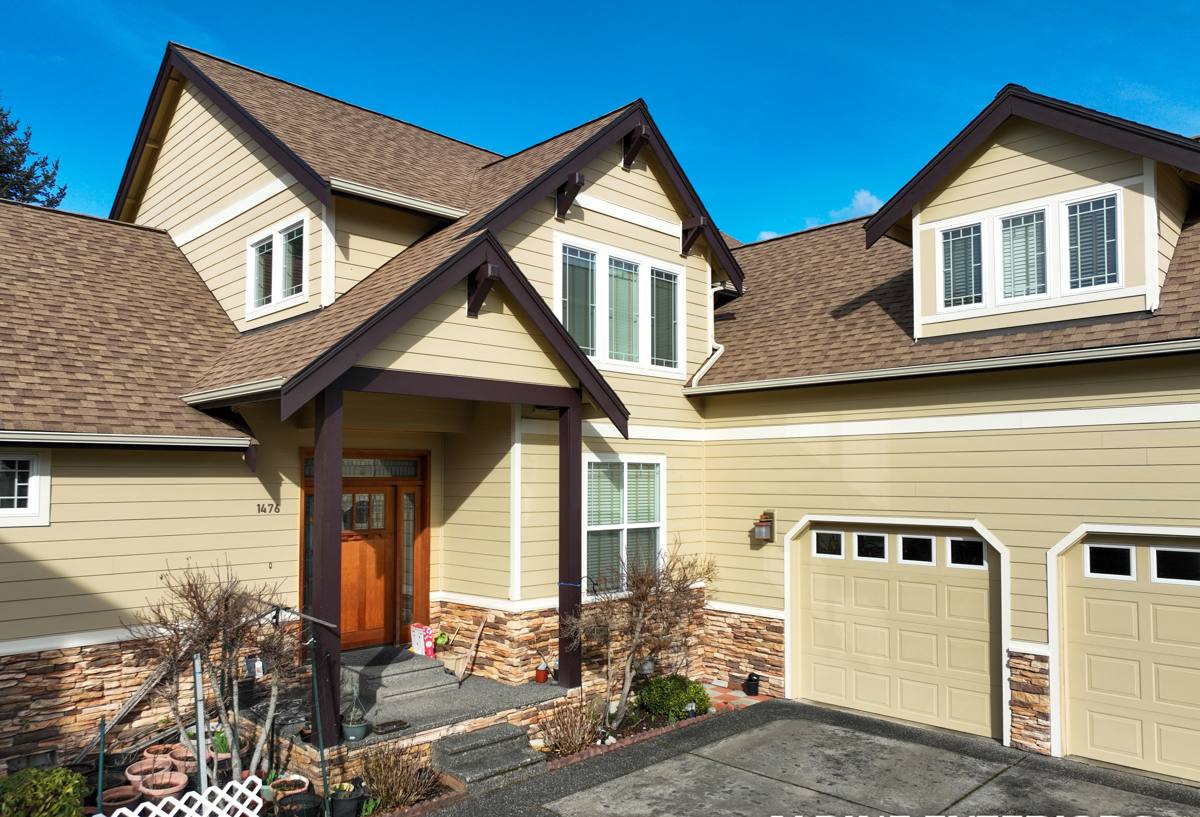
What "Energy-Efficient" Actually Means Here
Energy performance ratings on a window label — U-factor and Solar Heat Gain Coefficient (SHGC) — matter, but they only tell part of the story in a marine climate. A window with excellent U-factor numbers is still a bad investment if the frame corrodes, the seals fail early from constant moisture exposure, or the installation doesn't account for wind-driven rain.
U-Factor and SHGC in Plain Terms
U-factor measures how much heat escapes through the window — lower is better for our cooler, wet winters. SHGC measures how much solar heat comes through the glass — for Bow's mild, often overcast summers, this matters less than it would in a sunnier inland climate, so we weigh U-factor more heavily when helping a homeowner pick glazing.
Glazing Options
Most homes here do well with a quality double-pane, low-E, argon-filled unit. Triple-pane glass offers a further step up in insulation and sound dampening, which some homeowners value given nearby road or water traffic, but it adds weight, cost, and isn't always necessary to hit a comfortable, efficient result in this climate. We'll walk through the honest trade-off rather than upsell glass a house doesn't need.
Frame Material: The Decision That Matters Most Near Saltwater
In a coastal-influenced climate like Bow's, frame material affects long-term performance more than almost any other choice. Salt air accelerates corrosion on unprotected metal hardware and finishes, and constant moisture punishes any material prone to swelling, rot, or peeling paint.
| Frame Material | Salt Air / Moisture Behavior | Maintenance | General Cost Tier |
|---|---|---|---|
| Vinyl | Won't rot or corrode; UV can affect finish over many years | Low — occasional cleaning | Lower |
| Fiberglass | Very stable in moisture and temperature swings; strong resistance to salt exposure | Low | Mid to higher |
| Wood-clad | Attractive, but exposed wood or damaged cladding is vulnerable near saltwater | Higher — needs monitoring at joints and sills | Higher |
| Aluminum | Prone to corrosion and heat transfer without thermal breaks; generally not our recommendation this close to the water | Moderate | Lower to mid |
We don't push one manufacturer or one material on every job. What we won't do is install a frame system in a Bow home that we know struggles in salt air and driving rain — that's a maintenance headache we'd rather help a homeowner avoid up front than fix in five years.
Signs Your Current Windows Are Losing the Battle
Window failure in this climate is gradual. Here's what we tell homeowners to watch for between now and their next full exterior check:
- Fogging or a hazy look between panes — a sign the seal has failed and insulating gas has escaped
- Persistent moss or dark algae staining on the sill or bottom frame, even after cleaning
- Drafts you can feel near the frame on a windy day, especially during a driving rainstorm
- Sashes that stick, stay stuck, or won't latch fully — often a sign of swelling or warping
- Soft, spongy, or discolored wood at the corners or bottom of a wood-frame window
- Visible daylight or a gap where the frame meets the siding or trim
- Condensation forming on the inside of the glass regularly, beyond normal winter humidity
Any one of these on its own might not mean a full replacement. Several together, especially on the weather-facing side of a house, usually mean the window system has reached the end of its useful life.
What a Correct Installation Actually Involves
Energy-efficient glass only performs as well as the installation around it. This is where a lot of window jobs quietly go wrong, and it's the part homeowners can't easily inspect once trim is back in place.
Flashing and Water Management
Every opening needs proper flashing that directs water down and out, never trapping it behind the frame. In a climate with sustained driving rain, a flashing detail that's "close enough" eventually lets water into the wall assembly — and that damage often isn't visible until it's significant.
Sealant and Sill Prep
Sill pans, backer rod, and the right sealant at the right joints matter more here than in a drier climate. We treat sealant as a backup to good flashing, not a substitute for it.
Fit and Insulation
A window that's shimmed correctly and insulated around the frame — without over-packing insulation that can bow the frame — performs as designed. A window that's slightly out of square loses efficiency and stresses the seals faster, regardless of how good the glass unit itself is.
Respecting the Existing Wall Assembly
Older homes in this area may not have a modern rain screen or drainage plane behind the siding. We evaluate what's actually there before assuming a one-size-fits-all install method, so the new window works with the house instead of against it.
Our Process for a Bow Window Project
- On-site assessment — we look at existing window condition, framing, siding type, and exposure (which walls take the worst of the wind and rain)
- Product selection — we walk through frame material and glazing options based on your home's exposure and budget, not a default package
- Accurate measurement — precise measurements prevent gaps that require field improvisation later
- Removal and prep — old units come out carefully, and we check the opening for any hidden moisture damage before anything new goes in
- Flashing and installation — proper water management first, then the window, shimmed and secured to manufacturer spec
- Sealing and trim — exterior and interior finish work sealed against wind-driven rain
- Walkthrough — we test operation, check the seal, and go over care so the windows perform for the long haul
Why a Crew That Already Works in Bow Makes a Difference
Bow doesn't get the volume of contractor traffic that a bigger city sees, and that's exactly why local experience matters. A crew that regularly works this stretch of Skagit County already understands how wind moves off the water and hits certain exposures harder, how long moss season really runs here, and what wall assemblies are common in homes of different ages in the area. That translates into fewer surprises mid-project and product recommendations that are grounded in what actually holds up nearby — not a generic climate assumption.
There's also the practical side: scheduling around this region's wet season, knowing which permitting steps apply for exterior work in unincorporated Skagit County versus inside Anacortes city limits, and being reachable afterward if a question comes up rather than having moved on to a different region entirely.
What Affects the Cost of a Window Project
Every home is different, but these are the main factors that move a project's price up or down. We'll give you specifics for your home during an on-site estimate rather than a number that doesn't account for your actual house.
| Factor | Why It Matters |
|---|---|
| Number and size of openings | More or larger windows means more material and labor |
| Frame material chosen | Vinyl, fiberglass, and wood-clad carry different material costs |
| Glazing (double vs. triple-pane) | Triple-pane adds cost and weight for a further efficiency gain |
| Condition behind the existing window | Hidden rot or moisture damage found during removal adds repair scope |
| Access and height | Second-story or hard-to-reach windows take more time and equipment |
| Trim and finish work | Matching existing trim profiles or repainting adds to the scope |
Generally, homeowners in this area should expect a wide range depending on how many of these factors apply — a single window replacement is a much smaller project than a full-home upgrade, and we'll be upfront about where your project falls once we've seen the house.
Ready When You Are
If your windows are drafty, fogged, or just past their prime, we're happy to take a look and give you a straightforward, no-pressure estimate — no inflated urgency, just an honest read on what your Bow home actually needs. Use the form below to get started.