 Anacortes Roofing
 Roofing Flounder Bay: A Different Kind of Exposure
Flounder Bay sits close enough to the water that homes here take a different kind of weathering than roofs a few miles inland in Anacortes. The combination of salt-laden air off Fidalgo Bay and the Guemes Channel, wind-driven rain that comes in sideways during winter storms, and the deep shade many Flounder Bay lots get from mature fir and cedar cover adds up to a roofing environment that punishes shortcuts. We've worked enough roofs in this pocket of Skagit County to know which failure points show up first and why, and we build our asphalt shingle installations to address them from day one rather than patch them later.
This page covers what asphalt shingle roofing specifically needs to hold up around Flounder Bay, what a correctly done job actually includes, and how our process works from first look to final walk-through.
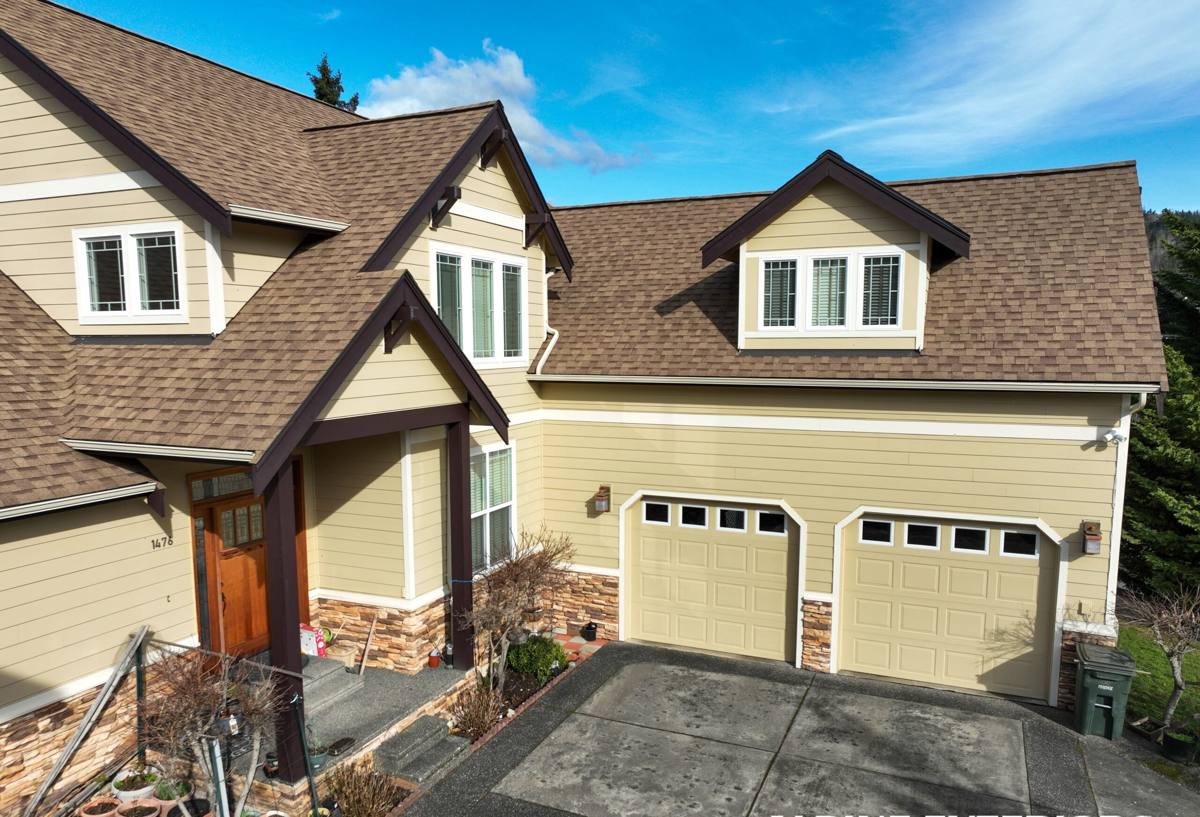
What Salt Air and a Long Moss Season Do to a Shingle Roof
Salt Air and Metal Components
Asphalt shingles themselves are fairly tolerant of salt exposure, but the metal components tied into the system are not. Cheap or mismatched flashing, exposed fasteners, and low-grade drip edge corrode faster this close to saltwater. Once flashing starts to pit and thin, water finds its way behind it long before the shingles themselves show any wear. We spec corrosion-resistant flashing and fasteners on every Flounder Bay job specifically because of this.
Wind-Driven Rain
Rain that comes in nearly horizontal during a winter blow doesn't behave like rain falling straight down. It gets pushed up under shingle tabs, into exposed nail heads, and along any seam that isn't properly lapped or sealed. Standard shingle installation practices written for calmer inland conditions leave gaps that a Flounder Bay storm will eventually find. Proper nailing patterns, sealant at vulnerable transitions, and correct shingle overlap matter more here than in a lot of other parts of Anacortes.
Moss, Shade, and Moisture Retention
Tree cover keeps a lot of Flounder Bay roofs shaded and damp for long stretches of the year, which is exactly what moss needs to establish. Moss doesn't just sit on top of shingles — its root structure works into the granule surface and lifts shingle edges, and a thick mat holds moisture against the roof deck far longer than bare shingles would. Left unaddressed over a full moss season, that trapped moisture leads to granule loss, premature shingle aging, and eventually deck rot underneath.
Why Asphalt Shingles Still Make Sense Here
Asphalt shingle roofing remains one of the most practical choices for Flounder Bay homes when it's installed with the local climate in mind. It's not the only roofing material that can handle this environment, but it offers a combination of upfront cost, repairability, and proven performance that's hard to match — provided the installation accounts for salt exposure, wind-driven rain, and moss the way it should.
Where Asphalt Shingles Earn Their Keep
- Lower installed cost than most alternatives, which matters on larger roof footprints common in this area
- Straightforward repairs — a damaged section can be fixed without re-roofing the whole house
- Wide range of algae-resistant and impact-rated product lines suited to wet, shaded climates
- Manufacturer warranties that are well understood and easy to service through an authorized installer
- Good performance record on moderate-pitch roofs, which describes most homes in this neighborhood
Where We're Honest About the Trade-Offs
Asphalt shingles are not maintenance-free. In a moss-prone, shaded environment they need periodic cleaning and inspection to hit their full service life, and the algae-resistant granule treatments that resist streaking do wear down gradually over the decades. We'll always tell a homeowner straight when a roof's pitch, shade level, or condition points toward a different material being the better long-term call — that's a maintenance-burden and moisture-behavior conversation, not a sales pitch either direction.
What a Correct Installation Actually Involves
A shingle roof is a system, not a single layer of material. Skipping or downgrading any one part of that system is where premature failures around here usually trace back to.
Deck Inspection and Repair
Before anything goes down, the decking gets inspected for soft spots, delamination, or rot — especially common under old moss mats or around chimneys and skylights where leaks tend to originate. Any compromised sheathing gets replaced, not covered over.
Underlayment
We use synthetic underlayment rated for the wind and moisture exposure this area sees, with self-adhered membrane at eaves, valleys, and other water-concentration points. This is the layer that saves a roof when wind-driven rain does get past the shingles.
Flashing and Penetrations
Chimneys, vents, skylights, and wall-to-roof transitions are where the vast majority of leaks start. Corrosion-resistant step flashing, counter-flashing, and properly sealed penetrations are non-negotiable on a Flounder Bay roof given the salt air.
Shingle Installation and Nailing
Correct nail count, placement, and pattern — following manufacturer specs for the wind zone — is what keeps shingles sealed down through winter storms instead of lifting and cracking their seal strips.
Ventilation
A shaded, damp roof needs balanced intake and exhaust ventilation to keep the attic from becoming a moisture trap. Poor ventilation accelerates deck rot and shortens shingle life from underneath, which is easy to miss until it's a bigger repair.
Comparing Shingle Options for a Flounder Bay Roof
| Shingle Type | Best Fit For | Moss/Algae Resistance | Typical Lifespan Range |
|---|---|---|---|
| 3-Tab Asphalt | Budget-conscious re-roofs, simpler rooflines | Standard granules unless algae-resistant line specified | Shorter end of the range |
| Architectural (Laminate) | Most Flounder Bay homes — better wind rating, dimensional look | Available with algae-resistant granule treatment | Mid to long end of the range |
| Impact-Rated Architectural | Homes wanting extra durability against debris and hail | Available with algae-resistant granule treatment | Long end of the range |
For most homes in this neighborhood, we point people toward architectural shingles with an algae-resistant rating. The upgrade cost over 3-tab is modest, and the combination of better wind performance and moss/algae resistance directly addresses the two things that shorten roof life here fastest.
Cost Factors on a Flounder Bay Re-Roof
| Factor | Why It Matters Here |
|---|---|
| Roof pitch and access | Steeper pitches and tree-crowded lots slow the job and affect safety setup |
| Deck condition | Rot from long-term moss retention or old leaks means sheathing replacement, not just shingles |
| Number of penetrations | Chimneys, skylights, and multiple vents each add flashing labor |
| Shingle line chosen | Algae-resistant and impact-rated products cost more but reduce future maintenance |
| Tear-off layers | Removing an existing layer (or two) versus a bare deck changes disposal and labor time |
| Ventilation upgrades | Adding or correcting intake/exhaust venting is often worth bundling into the same project |
We don't quote a flat per-square number over the phone for this reason — every one of these factors moves the price, and a homeowner deserves a number based on their actual roof, not a generic estimate.
Our Process on a Flounder Bay Roof
1. On-Site Inspection
We walk the roof, check the deck condition where accessible, look at existing flashing and ventilation, and note tree cover and shade patterns that affect moss risk.
2. Written Estimate
A clear scope of work and price — what's being replaced, what shingle and underlayment products are specified, and what happens if we find deck damage once tear-off starts.
3. Tear-Off and Deck Prep
Old roofing comes off down to the deck, any damaged sheathing gets replaced, and the deck is cleared and inspected before anything new goes down.
4. Underlayment, Flashing, and Shingle Installation
Installed in the order and manner described above — underlayment, flashing at all penetrations and transitions, then shingles nailed to spec for wind exposure.
5. Site Cleanup and Walk-Through
Magnetic sweep for stray nails, debris hauled off, and a final walk-through so the homeowner can see the finished work and ask questions before we consider the job done.
Maintenance That Actually Extends Roof Life Here
- Have moss and debris removed before it builds into a thick mat, not after — early removal prevents granule and shingle damage
- Keep gutters clear so wind-driven rain has somewhere to go instead of backing up under the shingle edge
- Trim back overhanging branches where practical to reduce shade and debris buildup on the roof
- Get flashing and penetrations checked every couple of years, since that's where salt-air corrosion shows up first
- Address small leaks or lifted shingles right away — a small repair now is cheaper than deck replacement later
Why a Crew That Already Works Flounder Bay Matters
A roofing crew that's only worked drier, inland jobs will spec the same underlayment, flashing, and nailing pattern they'd use anywhere else — and on a roof this close to Fidalgo Bay, that's often not enough. Working regularly in Flounder Bay and the surrounding Anacortes waterfront means we've seen firsthand which flashing metals hold up, which shingle lines actually resist algae staining under heavy tree cover, and where wind-driven rain finds the gaps that inland-standard installs leave open. That local pattern recognition is the difference between a roof that needs attention again in a few years and one that goes the distance.
Get a Free, No-Pressure Estimate
If you're weighing a re-roof, dealing with moss buildup, or just want a straight answer on what your Flounder Bay roof actually needs, we're happy to take a look. Use the form below to request a free estimate — no pressure, just a clear picture of your roof's condition and what it would take to get it right.