 Anacortes Roofing
 Flounder Bay Sits Right at the Edge of the Weather
Flounder Bay homes get the full benefit of waterfront living — and the full brunt of what Anacortes weather throws at exterior surfaces. This part of Skagit County sits close enough to the water that salt-laden air is a daily fact of life, not an occasional nuisance. Add in wind-driven rain off the Salish Sea and the long, damp shoulder seasons that let moss and algae take hold on anything shaded or north-facing, and you have one of the tougher siding environments in western Washington.
None of that means siding is doomed to fail here. It means the material, the installation details, and the finish matter more in Flounder Bay than they would on a house twenty miles inland. Siding that's marginal in a dry climate can fail outright in a marine one. That's the lens we use for every siding installation we do in this neighborhood.
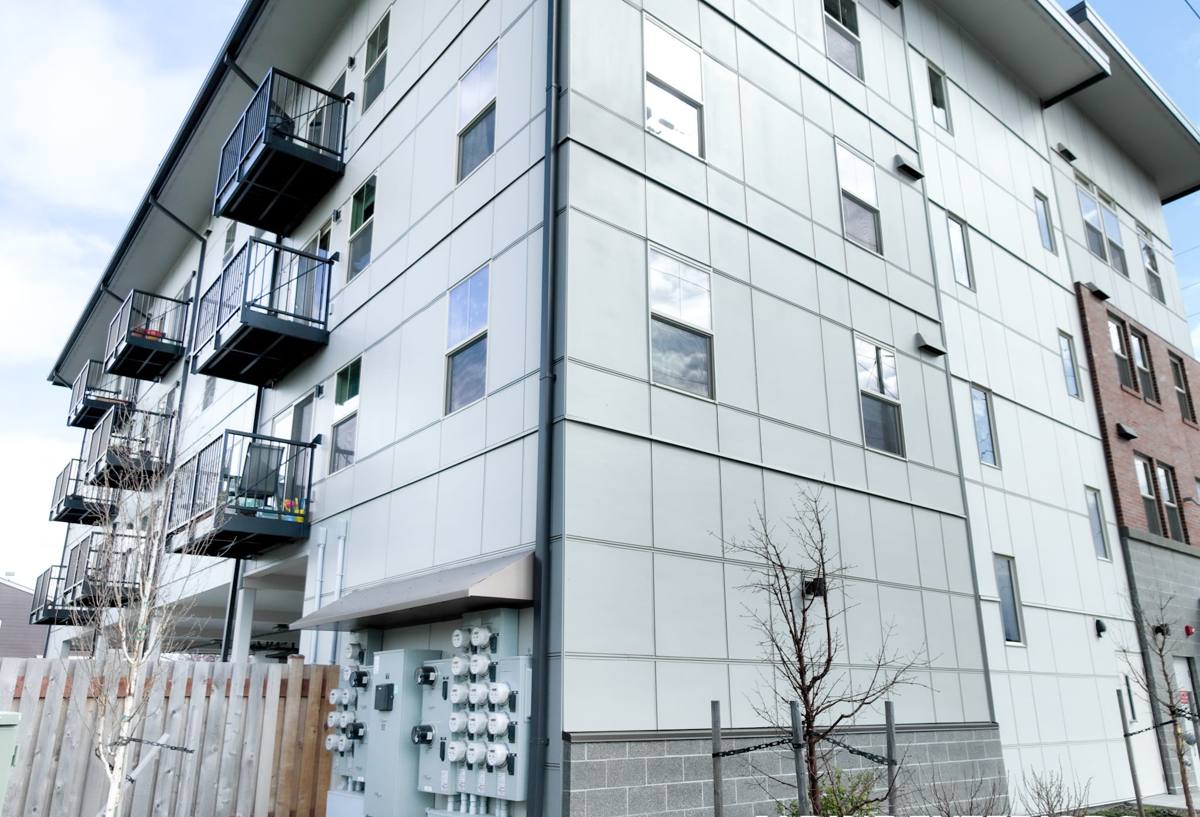
What Salt Air, Driving Rain, and Moss Actually Do to Siding
Salt air
Airborne salt is corrosive to metal fasteners, flashing, and trim, and it accelerates the breakdown of finishes that aren't formulated to resist it. Paint chalks and fades faster. Caulk joints dry out sooner. Anything with exposed raw fasteners or unprotected cut edges becomes a weak point years before it would inland.
Driving rain
Wind off the water doesn't just drop rain — it pushes it sideways, into laps, seams, and penetrations that would stay dry in a calmer climate. Siding systems depend on water shedding down and out, and every horizontal seam, window trim detail, and butt joint is a place where that discipline either holds up or doesn't.
Moss and algae season
Shaded walls, north exposures, and anything near overhanging trees stay damp for extended stretches through fall, winter, and spring. Organic growth on siding isn't just cosmetic — moss holds moisture against the surface, and over time that constant dampness works against paint, caulk, and the substrate underneath it.
Put those three together and you get a simple rule for Flounder Bay: siding has to be dimensionally stable when wet, resistant to moisture intrusion at every joint, and finished with something that won't give up its color or its seal after a few wet winters.
Why We Only Install James Hardie Fiber Cement Siding
We install one siding product on every home we side, full stop: James Hardie fiber cement. We don't install vinyl, LP SmartSide, cedar, primed spruce, Cemplank, or Allura, and we're upfront about why — it isn't brand loyalty, it's what holds up in this climate without demanding constant upkeep from the homeowner.
- Non-combustible: fiber cement won't contribute fuel to a fire the way wood-based products can.
- Dimensionally stable when wet: it doesn't swell, cup, or rot the way wood-based siding can when it takes on moisture repeatedly — a real issue in a place that stays damp much of the year.
- Factory-applied ColorPlus finish: baked-on, not field-sprayed, which matters enormously in salt air where field paint fades and chalks faster.
- Engineered for this climate specifically: James Hardie makes region-specific HZ product lines rather than one generic board for the whole country.
- A warranty structure built around the finish, not just the substrate — the finish is usually what fails first in a marine environment, so that matters.
We've made the call that other products ask homeowners to accept trade-offs — more frequent repainting, more caulking maintenance, more vulnerability to moisture cycling — that don't make sense on a waterfront-adjacent property. That's a professional standard we hold to on every job, not a sales pitch for one particular install.
HZ5 and Why Climate Zone Assignment Isn't Marketing
James Hardie assigns its siding products an HZ (HardieZone) rating based on regional climate exposure, and western Washington — including Anacortes and the rest of Skagit County — falls into the wetter, more humidity- and moisture-exposed zone. The formulation and engineering behind HZ5 products account for sustained moisture exposure and freeze-thaw cycling in a way a one-size-fits-all board doesn't.
For a Flounder Bay home, that climate engineering is doing real work every day: shedding wind-driven rain, resisting moisture absorption at cut edges and joints, and holding its shape through wet winters and drier summers without the expansion and contraction issues that plague some wood-based alternatives.
ColorPlus Factory Finish vs. Field-Applied Paint
The finish is where salt air does the most visible damage first, so it's worth understanding the difference between a factory finish and paint applied on site after installation.
| Factor | ColorPlus Factory Finish | Field-Applied Paint |
|---|---|---|
| Application environment | Controlled factory conditions, multiple baked-on coats | Outdoor conditions, dependent on weather at time of painting |
| Salt air / UV resistance | Formulated specifically to resist fading and chalking | Standard exterior paint, fades faster in coastal exposure |
| Repainting interval | Backed by a dedicated finish warranty; repainting deferred for years | Typically needs repainting on a shorter cycle in marine climates |
| Color consistency | Uniform, batch-matched at the factory | Can vary by sprayer, batch, and conditions |
This is one of the clearer reasons we won't install primed-only or field-painted products on a Flounder Bay home. The homeowner ends up owning the maintenance schedule the finish creates — and a marine climate shortens that schedule considerably.
What a Correct Installation Involves
Siding failures in this climate are rarely about the board itself — they're about details that were rushed or skipped during installation. A correct job on a Flounder Bay home includes:
Weather-resistive barrier and flashing
A continuous water-resistive barrier behind the siding, properly lapped, with flashing at every window, door, and penetration so water is directed out and down rather than trapped behind the cladding.
Proper clearances
Correct gaps at grade, roof lines, and decks so siding isn't sitting in standing water or wicking moisture from adjacent surfaces — a common oversight that causes problems regardless of what siding product is used.
Fastening to spec
Corrosion-resistant fasteners, driven at the manufacturer's specified pattern and depth — critical in a salt-air environment where the wrong fastener becomes a rust streak and a failure point within a few years.
Joint and seam treatment
Butt joints, corners, and trim intersections sealed and detailed per manufacturer specification, not just caulked over as an afterthought.
Cut-edge sealing
Factory finishes don't extend to field cuts. Sealing cut edges on-site protects against moisture wicking into the board at every trim and corner cut.
Our Process for a Flounder Bay Siding Installation
- On-site assessment — we look at the home's specific exposure: which walls take the most wind-driven rain, which stay shaded and damp longest, and what the existing wall assembly looks like underneath the current siding.
- Tear-off and substrate check — old siding comes off and we inspect sheathing and framing for any moisture damage before anything new goes up. Problems found here get addressed, not covered.
- Weather barrier and flashing installation — the water management layer goes in correctly before a single piece of siding is hung.
- James Hardie installation to manufacturer spec — correct fasteners, clearances, and joint treatment throughout, not shortcuts to save labor time.
- Trim, caulking, and final detailing — the finish work that determines how the job ages over its first few wet winters.
- Walkthrough — we go over the work with the homeowner before calling the job done.
Cost Factors for Siding Installation in Flounder Bay
Every home is different, but these are the variables that most commonly move the price on a job in this neighborhood:
| Factor | Why It Matters Here |
|---|---|
| Existing siding removal | Tear-off and disposal add labor, especially if multiple layers exist |
| Substrate condition | Moisture-damaged sheathing found during tear-off needs repair before new siding goes on |
| Home size and complexity | Dormers, multiple gables, and cut-up wall lines take more trim and labor than simple rectangular walls |
| Product line and profile | Lap width, panel vs. lap siding, and trim style all affect material cost |
| Site access | Waterfront and hillside lots can complicate staging and scaffolding |
We'll walk through these specifics for your home during an estimate rather than quoting from a general range that doesn't reflect your actual wall conditions.
Watch for These Signs Before Small Problems Get Bigger
- Persistent moss or dark streaking on north-facing or shaded walls that doesn't clean off and comes right back
- Caulk joints at trim and corners that have cracked, shrunk, or pulled away
- Fading or chalking that's noticeably worse on the water-facing side of the house than elsewhere
- Soft spots, bubbling, or visible cupping in existing siding, especially near grade or roof lines
- Rust streaks below fasteners or trim, a sign the hardware isn't holding up to the salt air
- Paint that needs recoating on a shorter cycle than it used to
Any one of these is worth a look before it becomes water intrusion behind the wall, which is a materially bigger repair than surface siding work.
Why Hiring a Crew That Already Works Flounder Bay Matters
Siding contractors who mostly work inland don't always think about wind-driven rain angles, salt exposure on hardware, or how long a shaded wall stays wet after a Skagit County winter storm rolls through. Those aren't textbook concerns — they're things a crew learns from installing and revisiting jobs in this specific environment over time.
We work in Anacortes and the surrounding waterfront neighborhoods regularly, which means our approach to flashing details, fastener selection, and clearances already accounts for what this climate does to a house. That's less about a sales pitch and more about not having to relearn the same lessons on every job.
If you're planning a siding project for a Flounder Bay home, we're happy to walk the property, look at what your walls are dealing with, and put together a straightforward, no-pressure estimate for a James Hardie installation built for this exposure. There's a form below — reach out and we'll get you scheduled.