 Anacortes Roofing
 Why Guemes Island Decks Wear Differently
Guemes Island sits out in the marine air off Anacortes, and that changes how a deck ages compared to one a few miles inland in Skagit County. Salt-laden air speeds up corrosion on anything metal — nails, screws, joist hangers, railing hardware — long before the wood around it shows obvious damage. Combine that with the driving rain that comes off the water during fall and winter storms, and you get moisture working its way into end grain, ledger connections, and fastener holes in ways a drier site never sees.
Then there's moss. The Pacific Northwest's long wet season, made worse by the shade many island lots have from surrounding trees, keeps deck surfaces damp for weeks at a stretch. Moss and algae hold that moisture against the boards, which is exactly the condition rot needs to get started. On Guemes Island specifically, we see this combination — salt exposure plus prolonged surface moisture — accelerate deck problems by years compared to a similar deck built the same way somewhere more sheltered.
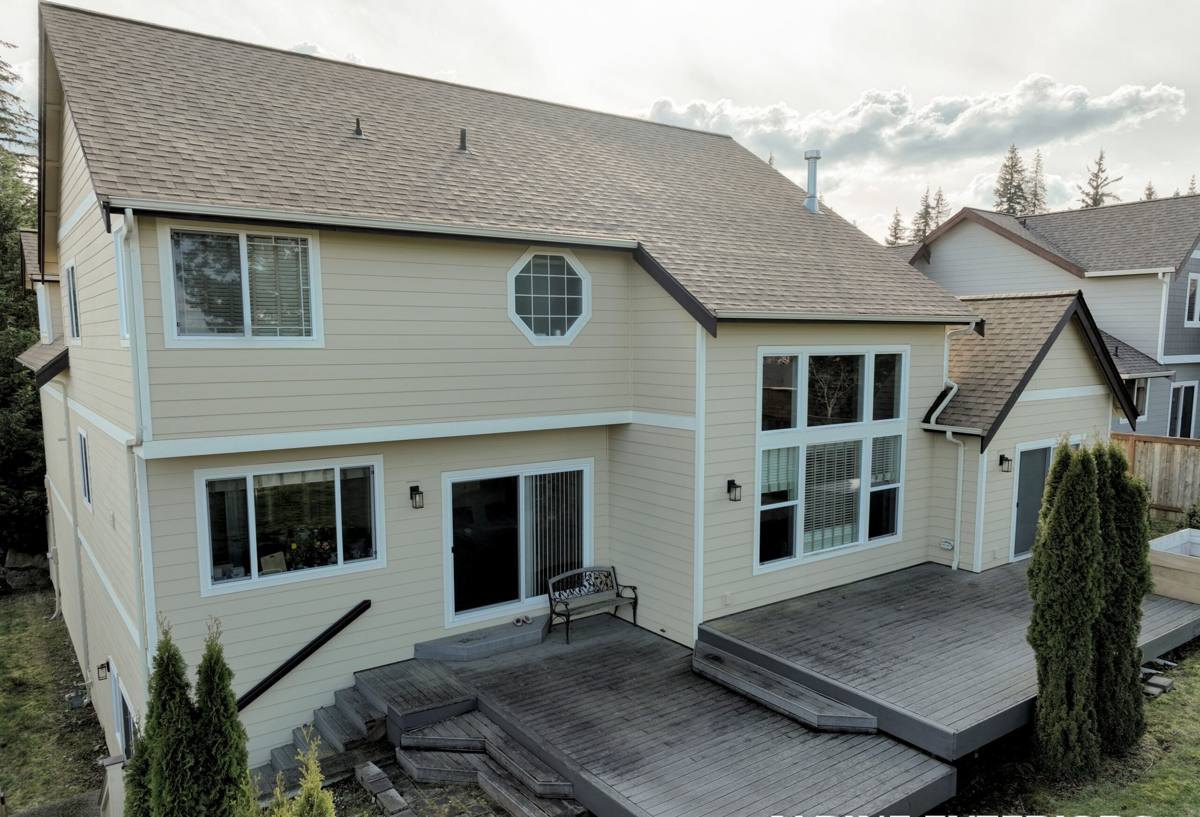
Common Deck Problems We Find on the Island
Ledger Board and Structural Connections
The ledger board — where the deck attaches to the house — is the single most important structural connection on most decks, and it's also the one most likely to be hidden behind trim or flashing that looks fine from the outside. Water that gets behind inadequate flashing at this joint can rot the ledger, the rim joist behind it, or both, sometimes for years before anyone notices sagging or bounce in the deck surface.
Fastener and Hardware Corrosion
Standard galvanized fasteners and hangers are rated for general outdoor use, but they weren't designed with sustained salt air in mind. On island and waterfront properties we regularly find corroded joist hangers, rusted-through screws, and railing hardware that's seized or crumbling well before the wood itself needs attention.
Surface Rot, Moss, and Delamination
Wood decking that stays damp under moss growth softens and eventually rots, usually starting at board ends, around fastener heads, and wherever two boards butt together and trap debris. On composite decking, prolonged moisture exposure combined with organic buildup can lead to surface delamination or discoloration at seams and cut edges, particularly where the manufacturer's factory-sealed edge has been cut on site without resealing.
Railings, Stairs, and Guardrails
Railing posts and stair stringers take direct weather exposure and structural stress at the same time, which makes them a common failure point. Loose or wobbly railings are often a sign of post connections that have loosened or rotted at the base, not just a hardware problem you can fix by tightening a bolt.
What a Correct Repair Actually Involves
A proper deck repair starts with figuring out why the damage happened, not just patching what's visible. We check the ledger connection and flashing, probe joists and beams for soft spots, inspect fastener and hardware condition throughout the structure, and evaluate the drainage path — is water shedding away from the house and off the deck surface, or pooling somewhere it shouldn't?
Only after that inspection do we scope the actual repair. Sometimes that's replacing a handful of deck boards and re-flashing a section of ledger. Other times it means sistering a rotted joist, upgrading undersized or corroded hangers, or rebuilding a section of railing from the posts up. The goal is always to fix the underlying cause — not just swap out the boards that look bad and leave the same conditions to cause the same failure again in a few years.
Repair or Replace: How We Help You Decide
Not every deck problem calls for a full rebuild, and not every deck is worth patching indefinitely. The table below covers the signs we weigh when helping a homeowner decide which way to go.
| Sign | Usually Repairable | Usually Points to Replacement |
|---|---|---|
| Structural framing (joists, beams, posts) | Isolated soft spots, one or two damaged members | Widespread rot, sagging across multiple joists |
| Ledger connection | Flashing failure caught early, ledger itself still sound | Rotted ledger or rim joist behind the house wall |
| Decking surface | Scattered board replacement, isolated moss damage | Rot or delamination across most of the deck |
| Railings and stairs | Loose hardware, single damaged post | Multiple rotted posts, stringers failing under load |
| Age and fastener condition | Newer build, hardware still sound | Original galvanized fasteners heavily corroded throughout |
Age alone isn't the deciding factor — we've seen well-built older decks that just need targeted repair, and newer decks with flashing or fastener choices that were wrong for this environment from day one.
How Our Process Works on Guemes Island
Working on the island means planning around ferry schedules for both the crew and materials, so we build that into how we quote and schedule the job rather than treating it as an afterthought. We try to batch trips efficiently — getting all the lumber, hardware, and fasteners staged and loaded before we ever cross — so the on-site time is spent working, not waiting on a supply run back to the mainland.
On site, the process is straightforward: confirm the scope against what we found during the inspection, protect the surrounding landscaping and structure, do the repair, and clean up thoroughly before we leave. For anything involving the ledger connection or structural framing, we pull the necessary Skagit County permits ahead of time rather than starting work and sorting it out later.
What to Expect at Each Stage
- On-site inspection and honest assessment of what's actually wrong, not just what's visible
- A written scope and price before any work starts — no surprise add-ons mid-project
- Materials and hardware selected for marine/island exposure, not generic inland-grade parts
- Permit pulled through Skagit County when the repair touches structural or ledger connections
- Cleanup and a final walkthrough so you know exactly what was done and why
Materials and Fasteners That Hold Up in This Environment
Our standard on island and waterfront jobs is to use stainless steel or marine-grade coated fasteners and hardware rather than standard galvanized parts, because the extra upfront cost is small compared to the labor of tearing out and replacing corroded hardware again in a few years. The same logic applies to joist hangers and structural connectors near the ledger — this is not a place to save a few dollars on the wrong-grade part.
For decking material itself, both quality pressure-treated lumber and composite decking can perform well here, but they come with different trade-offs worth being honest about. Wood needs regular cleaning and refinishing to keep moss and moisture from getting a foothold, but it's straightforward to repair board-by-board when damage does show up. Composite decking resists moss and rot better on the surface but is less forgiving of poor drainage or trapped moisture underneath, and cut edges need proper sealing to perform the way the manufacturer intends — a step that's easy to skip and hard to notice until it's already a problem.
Maintenance That Extends the Life of an Island Deck
A deck repair holds up longer when it's paired with a bit of regular upkeep, especially given how much faster this environment can undo a good repair. A few habits make a real difference:
- Sweep or rinse debris and standing moss off the deck surface before it has a chance to hold moisture
- Keep gutters and downspouts near the deck clear so runoff isn't dumping directly onto it
- Check railing posts and stair connections for movement at least once a year
- Look at the ledger flashing where the deck meets the house for gaps, cracks, or staining
- Re-seal or re-stain wood decking on the manufacturer's recommended schedule rather than waiting until it looks obviously weathered
- Address small fastener corrosion or loose boards early, before they turn into a structural repair
Why a Crew That Already Works Guemes Island Matters
A contractor who's never worked out here will often underestimate what the ferry schedule, weather windows, and marine exposure actually mean for a project timeline and material choices. We've done the logistics enough times to plan around them instead of letting them turn into delays or change orders. Just as important, we know what this specific climate does to a deck over time, so the repair we recommend accounts for salt air and moss exposure from the start rather than treating this like any other Anacortes or Skagit County job.
If you've got a deck on Guemes Island that's showing rot, loose railings, moss buildup, or corroded hardware, we're glad to come take an honest look. We'll tell you straight whether it's a targeted repair or something bigger, with no pressure either way — reach out below for a free estimate.