 Anacortes Roofing
 Why Guemes Island Decks Wear Out Faster Than You'd Expect
Guemes Island sits right in the path of Rosario Strait weather, and that changes how a deck ages compared to one built further inland in Skagit County. Salt-laden air corrodes exposed metal fasteners and hardware faster than most homeowners realize, driving rain drives moisture into end grain and hidden joints, and the long, damp shoulder seasons here give moss and algae months to establish themselves on any surface that doesn't dry out quickly. A deck that would hold up for fifteen-plus years in a drier climate can start showing structural problems in half that time if it wasn't built with this specific environment in mind.
We're not describing a hypothetical. It's the pattern we see repeatedly on decks around Anacortes and the surrounding islands: fasteners bleeding rust stains into the decking, ledger boards that stayed wet against the house for years, and framing that looks fine from the top but is soft and compromised underneath. Replacement done right accounts for all of it, not just the boards you can see.
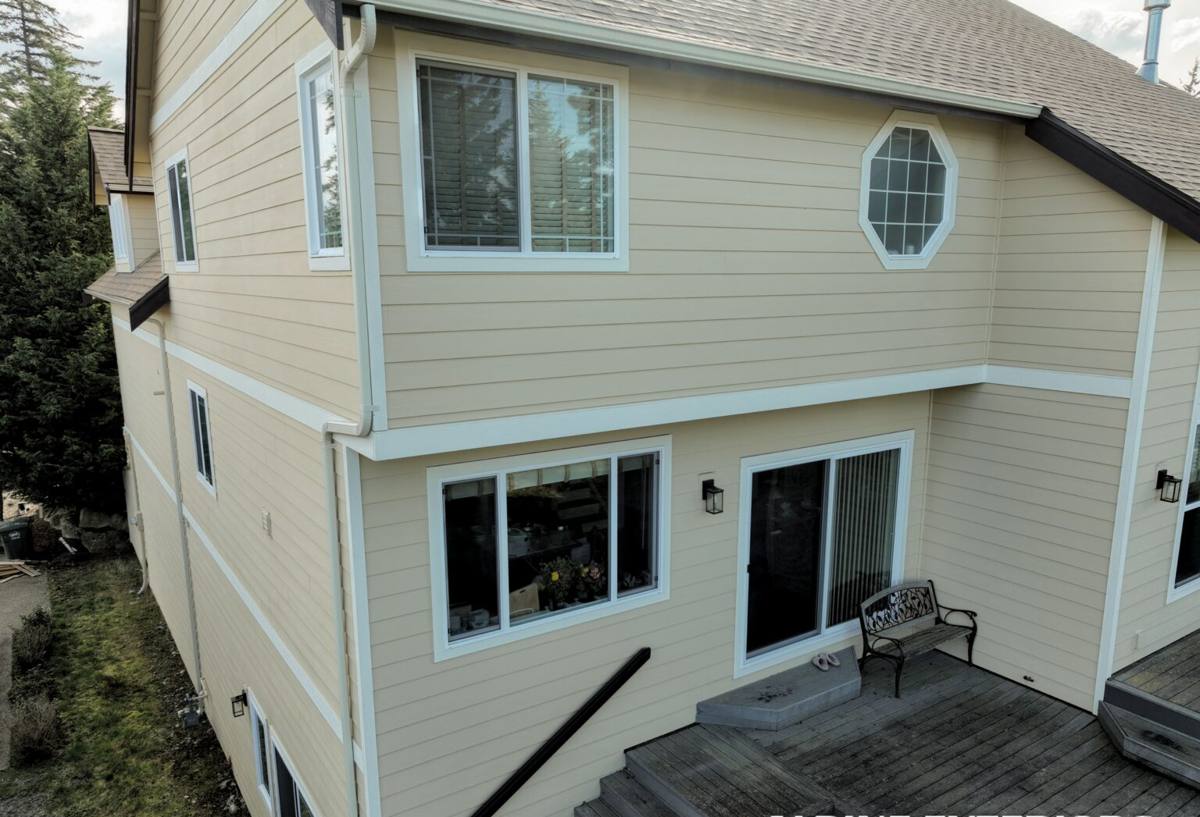
Signs a Guemes Island Deck Has Reached the End of Its Life
Repairs make sense for isolated problems. Full replacement makes sense once the damage is systemic — in the framing, the connection to the house, or spread across most of the decking. Here's what tells us which situation you're in:
- Boards that feel spongy, spring underfoot, or have visibly cupped or split along their length
- Rust streaking down from screws or nail heads, or fasteners that are backing out on their own
- Persistent moss or dark algae staining that comes back within weeks of cleaning
- Soft or discolored wood where the deck ledger meets the house siding
- Visible gaps, sag, or bounce in the framing when you walk near the rim joist or stair stringers
- Railings that flex or wiggle at their post connections
- A deck more than 20 years old that has never had its structural framing inspected
If you're only seeing one or two of these on a small section, a repair might buy you time. If several apply, or the framing itself is affected, replacement is the honest recommendation — patching over compromised structure just delays a bigger problem.
What a Correct Deck Replacement Actually Involves
The Connection to Your House
The ledger board — where the deck attaches to the house — is the single most common failure point we find on older decks in this climate. Done correctly, it gets proper flashing that directs water away from the house framing rather than trapping it against the ledger, along with structural fasteners rated for the load and spaced to code. This is the detail that's easiest to shortcut and the most expensive to ignore, since a failed ledger connection is a safety issue, not just a cosmetic one.
Footings and Framing
Guemes Island's mix of soil conditions means footings need to be sized and set to actually reach stable bearing, not just poured to a standard depth out of habit. We use pressure-treated framing lumber rated for ground contact where it's near or in soil, and we run joists and beams sized for the actual span and load, not the minimum that happens to look adequate.
Fasteners and Hardware
In a salt-air environment, fastener choice matters more than most homeowners expect. Standard galvanized screws and joist hangers can start corroding within a few years out here. We use stainless steel or heavy-duty coated fasteners and hardware rated for coastal exposure throughout the structure — not just on the visible decking, but in the hidden hangers and structural connectors too, since those are the hardest to inspect once the deck is closed up.
Drainage and Airflow
A deck that can't shed water and dry out underneath will grow moss and rot regardless of what it's built from. Correct spacing between boards, a slight slope away from the house, and enough clearance underneath for air to move are all part of getting the build right the first time.
Decking Material Options for Guemes Island's Climate
There's no single "best" decking material — the right call depends on your budget, how much upkeep you're willing to do, and how the deck sits relative to sun, shade, and moisture. Here's how the common options actually perform out here:
| Material | Moss/Algae Resistance | Maintenance | Typical Lifespan Here |
|---|---|---|---|
| Pressure-treated wood | Low — needs regular cleaning and sealing to resist moss | Annual cleaning, periodic staining/sealing | 10-15 years with upkeep |
| Cedar | Moderate — natural oils help but fade over time | Cleaning plus re-oiling every 1-2 years | 15-20 years with upkeep |
| Composite decking | Good — resists rot, but can still grow surface algae if shaded and damp | Periodic washing, no sealing/staining | 25+ years |
| PVC decking | Best — fully synthetic, sheds moisture, doesn't feed algae growth the way wood fiber can | Occasional washing | 25-30+ years |
Wood costs less upfront and has a natural look many homeowners prefer, but it's the material most affected by our climate — it needs consistent maintenance to keep moss from taking hold and to prevent moisture damage at the end grain. Composite and PVC cost more initially but hold up with far less attention, which matters on a deck that's exposed to salt air and driving rain year-round. We'll walk through the honest trade-offs for your specific deck rather than pushing one material across the board.
Permits and Building Requirements
Deck replacement projects on Guemes Island typically fall under Skagit County's building permit requirements, particularly for anything involving structural framing, footings, or a deck attached at a height where railings and guards come into play. We handle the permit process as part of the job — pulling what's required, building to the inspected standard, and making sure the finished structure will pass. Skipping this step to save time is a common shortcut on older decks, and it's part of why so many decks on the island have connection or framing issues that were never caught.
How We Handle the Ferry Access and Island Logistics
Building on Guemes Island isn't the same as building in town, and it changes how a project needs to be planned. Material deliveries, dumpster drop-off and pickup, and crew transport all have to work around ferry schedules rather than around our convenience. That means:
- Ordering and staging materials ahead of time so a single ferry trip covers what the crew needs for that phase of work
- Scheduling demolition and disposal hauls to match ferry capacity and timing, not scrambling day-of
- Planning crew arrival and departure around the ferry schedule so work days aren't cut short waiting on a sailing
- Building in realistic timelines up front, since island logistics add time that a mainland job wouldn't need
None of this is complicated once you've done it a few times, but it does mean an out-of-area contractor unfamiliar with the ferry rhythm can end up costing you time and money in ways that have nothing to do with the actual carpentry.
Why a Crew That Already Works Guemes Island Matters
We're based in Anacortes and already work Guemes Island regularly, which means the ferry scheduling, material staging, and logistics questions above aren't things we're figuring out for the first time on your project. It also means we've seen how decks actually fail out here — which connections corrode first, where moss takes hold, which older builds are missing flashing that should have been there from day one — and we build to prevent those specific problems rather than following a generic checklist written for a different climate.
That local track record also matters for accountability. A crew that plans to keep working Guemes Island has every reason to build something that holds up, stands behind the work, and is easy to reach if a question comes up after the project's done.
Caring for Your New Deck After Replacement
A properly built deck still needs some seasonal attention in this climate, especially heading into the wetter months:
- Sweep off fallen leaves and debris regularly so moisture doesn't sit trapped against the boards
- Rinse off moss and algae growth before it has a chance to establish, rather than waiting until it's heavy
- Check railings and stair connections once a year for any looseness
- If you chose wood or cedar, keep to a sealing or staining schedule rather than letting it lapse
- Keep gutters and downspouts near the deck clear so runoff isn't draining directly onto it
Composite and PVC decking cut this list down considerably, which is part of why they've become the practical choice for a lot of island homeowners who don't want an annual maintenance project.
Get a Straight Answer About Your Deck
If your deck is showing any of the wear signs above, or you're just not sure whether it's a repair or a replacement situation, we're glad to take a look and give you an honest read — no pressure, no upsell. Fill out the form below for a free estimate, and we'll work around the ferry schedule to get out to Guemes Island and walk the deck with you.