 Anacortes Roofing
 Asphalt Shingle Roofing Built for the Skagit Valley
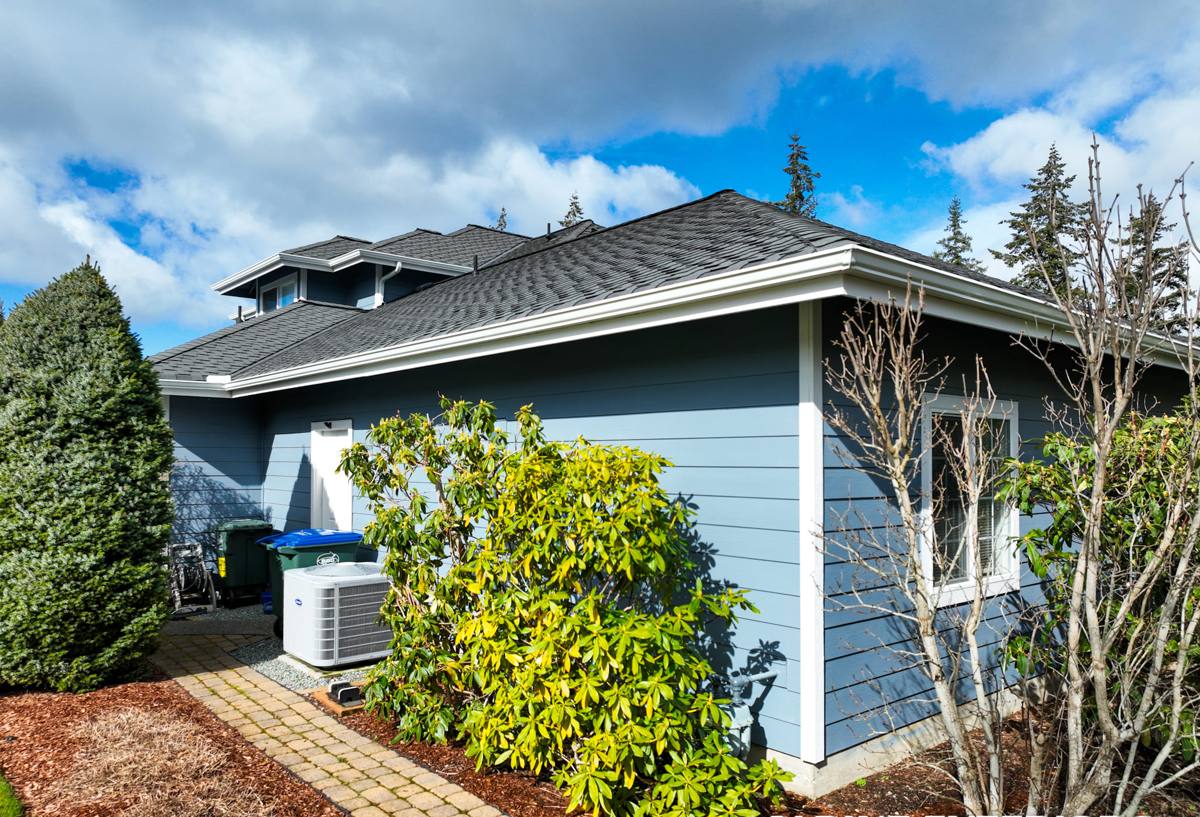
Mount Vernon sits in the Skagit Valley, a short drive from our Anacortes home base, and it shares the same weather pattern that defines roofing work across this whole corner of Washington: long stretches of low, driving rain, a marine air layer that carries salt and moisture off the Salish Sea, and tree cover that keeps roofs shaded and damp for months at a time. Asphalt shingle roofing is still the most practical, cost-effective choice for the vast majority of homes here, but "asphalt shingles" covers a wide range of quality and installation practices. A shingle roof done right in this climate looks almost identical to one done wrong, right up until the first winter it fails to protect the deck underneath.
This page is about one thing: asphalt shingle roofing for Mount Vernon homes specifically, what the local climate demands from the materials and the install, and how we approach the work when we're on your street instead of somewhere across the county.
What Skagit County Weather Does to a Shingle Roof
Rain Volume and Duration
It's not any single storm that wears out a roof here, it's the sheer number of wet days in a row. Skagit Valley roofs spend a large share of the year damp, which means underlayment quality, flashing details, and ventilation matter more here than they would in a drier climate. A roof that's merely "watertight on a sunny day" isn't good enough. It needs to shed water correctly through weeks of steady rain without ever giving moisture a place to sit.
Moss and Shaded Roof Sections
Mount Vernon's mix of open valley and tree-lined residential streets means a lot of roofs have north-facing or shaded sections that rarely see direct sun. Those areas hold moisture longer and are where moss gets its first foothold. Once moss establishes itself under shingle tabs, it lifts them, traps water against the mat, and accelerates granule loss. A roof that's fine on the south slope can be quietly failing on the north slope for years before it shows up as a leak inside the house.
Wind and Salt-Influenced Air
Being close to the Salish Sea, this whole region gets salt-influenced marine air, which is harder on exposed metal flashing, fasteners, and vent components than inland weather would be. Combined with the wind gusts that come through the valley during winter storms, fastener quality and shingle wind ratings aren't details you can skip on.
What a Correct Asphalt Shingle Installation Actually Involves
A shingle roof is a system, not a single product. Skipping any layer of that system is where most premature failures start, and it's rarely visible from the ground once the job is finished.
Tear-Off and Deck Inspection
We remove the old roofing down to the deck rather than layering over it. That's the only way to actually see the plywood or plank sheathing underneath, catch soft or delaminated spots caused by long-term moisture intrusion, and replace only what needs replacing before anything new goes down.
Ice and Water Barrier at Vulnerable Areas
Eaves, valleys, and areas around penetrations get a self-adhering waterproof membrane underneath the underlayment. In a climate with this much sustained rain, these are the spots where wind-driven water is most likely to find a way under the shingles, and they're not a place to cut corners.
Synthetic Underlayment
Over the rest of the deck, a synthetic underlayment gives a second line of defense and holds up far better than old felt paper during the weeks a roof deck can be exposed mid-project.
Flashing Details
Step flashing at walls, counter-flashing, valley metal, and pipe boot flashing are where the majority of real-world leaks originate, not the open field of shingles. Correct flashing work takes more time and more attention than laying shingles in a straight field, which is exactly why it's the part most often rushed on lower-bid jobs.
Balanced Attic Ventilation
Intake at the eaves and exhaust at the ridge keep air moving through the attic space, which controls moisture buildup from the inside and helps prevent the ice-and-condensation cycle that shortens shingle life from underneath. Ventilation is invisible once the job is done, but it has a direct effect on how long the roof actually lasts.
Fastening and Nail Placement
Manufacturer nailing patterns exist for a reason, especially for wind resistance. Correct nail count, placement, and depth are what keep shingles attached during valley wind events rather than relying on the adhesive strip alone.
Choosing a Shingle for This Climate
Most Mount Vernon homes do well with a standard architectural (laminated) asphalt shingle, but the right pick depends on your roof's exposure, budget, and how long you plan to stay in the home.
| Shingle Type | Typical Lifespan Here | Best For | Trade-Offs |
|---|---|---|---|
| 3-Tab Asphalt | 15-20 years | Budget-conscious re-roofs, simple roof lines | Lower wind rating, less dimensional look, shows moss faster |
| Architectural (Laminated) | 25-30 years | Most Mount Vernon homes | Higher upfront cost than 3-tab, worth it in a wet, windy climate |
| Impact-Resistant Architectural | 25-30+ years | Homes under tree cover with falling debris exposure | Premium price, may qualify for insurance discounts |
| Premium/Designer Laminate | 30+ years | Homes prioritizing appearance and longest service life | Highest material cost, still needs correct flashing and ventilation to earn that lifespan |
Regardless of the tier, the shingle itself is only part of the equation. A premium shingle installed with poor flashing and no ventilation will underperform a standard shingle installed correctly. We'll talk through what actually fits your roof rather than upselling a product your house doesn't need.
Signs a Mount Vernon Roof Needs Attention
Because leaks often show up inside the house long after the roof itself started failing, it helps to know what to look for from the ground or the attic before it becomes a ceiling stain.
- Granules collecting in gutters or at downspout outlets
- Dark streaking or green-black moss growth, especially on shaded or north-facing slopes
- Shingle edges curling, cupping, or lifting
- Visible daylight or damp insulation in the attic near the roof deck
- Soft spots when walked on, or a spongy feel underfoot
- Rust staining or gaps at pipe boots, vents, or chimney flashing
- Missing or displaced shingles after a windstorm
Any one of these on its own isn't necessarily an emergency, but they're worth a professional look before the next wet season sets in.
How Our Process Works
Inspection and Honest Estimate
We walk the roof, check the attic where accessible, and give you a straight assessment: repair, partial replacement, or full re-roof, along with a written estimate. If a repair genuinely solves the problem, that's what we'll recommend.
Materials and Scheduling
We schedule around the weather window as much as any Skagit Valley crew can. Tear-off and dry-in happen the same day whenever possible, so your deck isn't sitting exposed overnight during an unpredictable forecast.
Installation
Deck inspection and repair, ice-and-water membrane at vulnerable areas, synthetic underlayment, correct flashing at every wall, valley, and penetration, ventilation check, and shingles installed to manufacturer nailing specs for the wind conditions this valley actually sees.
Cleanup and Walkthrough
Magnetic sweep for stray fasteners, full site cleanup, and a walkthrough so you know what was done and what to watch for going forward.
Maintaining a Shingle Roof in a Wet, Mossy Climate
A correctly installed roof still benefits from basic upkeep in this climate, particularly around moss and debris management.
- Keep gutters clear so water isn't backing up under the lowest course of shingles
- Trim back overhanging branches to reduce shade, debris, and moss pressure on north-facing slopes
- Have moss treated before it spreads under shingle tabs, not after it's already lifted them
- Schedule a walk-through inspection after major wind events
- Check attic ventilation isn't blocked by insulation at the eaves
- Address small flashing issues early, before a slow leak reaches the deck
Why a Crew That Already Works in Mount Vernon Matters
Roofing companies that mainly work drier, inland climates sometimes underbuild for what Skagit County actually throws at a roof over a decade, lighter underlayment, minimal flashing work, ventilation treated as optional. A crew that regularly works Mount Vernon and the surrounding Anacortes area builds every job around this specific climate as the baseline, not an afterthought. That means correct ice-and-water placement at eaves and valleys as standard practice, flashing details sized for sustained rain rather than occasional storms, and shingle choices that account for moss-prone shade patterns common on local lots. It's the difference between a roof that's built for "roofing in general" and one that's built for roofing here.
Get a Free, No-Pressure Estimate
If you're weighing a repair against a full replacement, or just want an honest read on how much life is left in your current shingle roof, we're glad to take a look. Fill out the form below for a free estimate on asphalt shingle roofing for your Mount Vernon home, no pressure, no obligation.