 Anacortes Roofing
 Windows Built for Mount Vernon's Weather, Not Just the Showroom
Mount Vernon sits in the flats of the Skagit Valley, close enough to Puget Sound that salt-tinged air and marine moisture are part of daily life, and far enough inland that fog and standing damp can linger through the shoulder seasons. Add in a long, gray stretch of driving rain from fall through spring and a moss season that seems to start earlier every year, and you have a climate that is genuinely hard on windows. Old aluminum-frame single-panes and worn-out wood sashes don't just waste energy here — they let in drafts, fog up, and slowly take on water damage that's invisible until the trim starts to soften.
Energy-efficient windows are not a luxury upgrade in this part of Skagit County. They're a practical response to a climate that punishes anything with a weak seal or a poor moisture path. When we talk about "energy-efficient windows" for a Mount Vernon home, we're talking about a system: glass, frame, flashing, and installation all working together to keep water out and heat in.
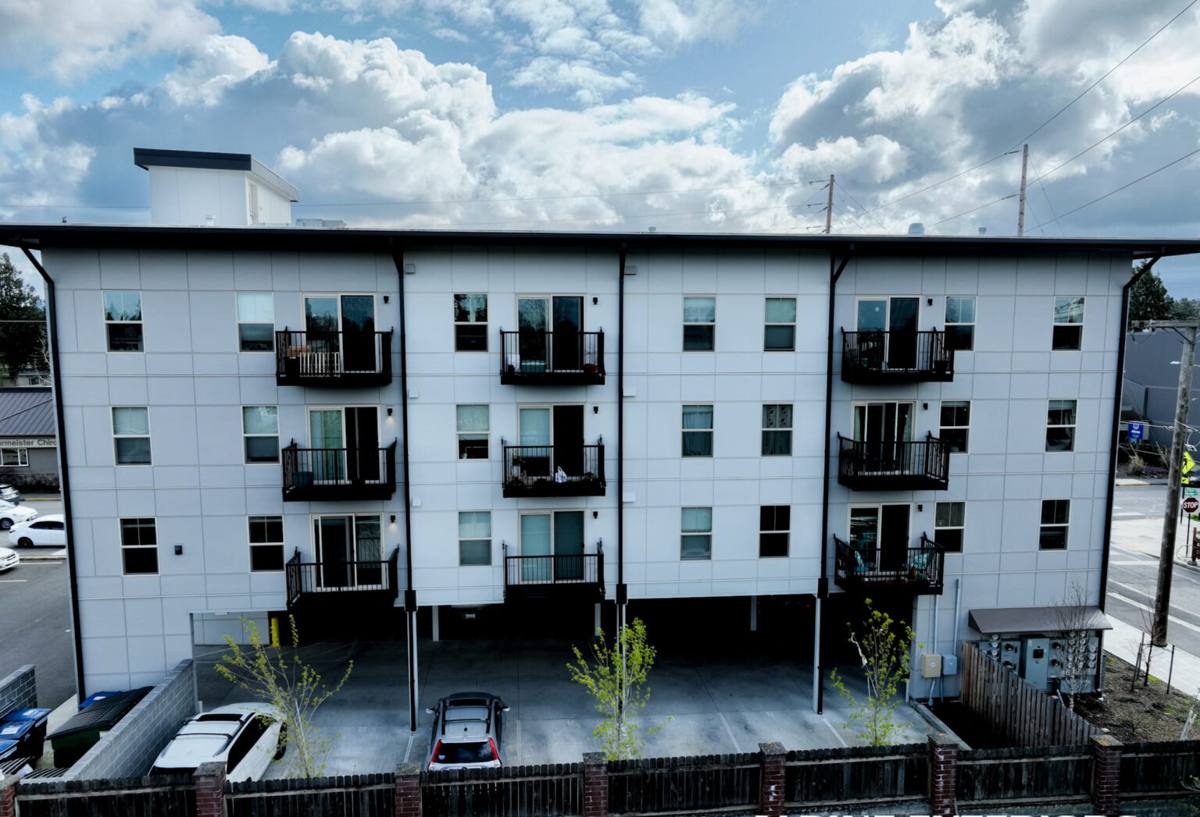
What Skagit Valley Weather Does to Older Windows
Understanding the damage pattern helps explain why the fix matters. In this region, window failure rarely happens all at once — it's a slow accumulation of small problems.
Moisture Intrusion
Driving rain, especially wind-driven rain off the Sound, finds any gap in old caulking, worn weep systems, or failed flashing. Once water gets behind the trim or into the wall cavity, it doesn't dry out quickly in our humidity — it sits, and that's when rot and mold set in.
Seal and Glass Failure
Older insulated glass units rely on a sealed gas gap between panes. Constant temperature swings and moisture cycling break down that seal over years, which is why you'll see fogging or condensation trapped between panes on older double-panes. Once that seal fails, the insulating value of the glass is largely gone even though the window still looks intact.
Wood and Trim Deterioration
Moss and algae thrive in the shade and moisture that's common on the north and west sides of homes here. On wood-framed or wood-trimmed windows, that growth holds moisture against the surface, which accelerates rot at joints and sills long before the glass itself becomes a problem.
Salt Air Corrosion
Closer to the water, airborne salt accelerates corrosion on hardware, weatherstripping fasteners, and lower-grade aluminum components. It's a slower process than storm damage, but it steadily degrades the parts that keep a window sealed and operating smoothly.
What "Energy-Efficient" Actually Means
The term gets used loosely, so it's worth being specific. A window's efficiency comes down to a handful of measurable factors, not just the number of panes.
- U-factor — how well the window resists heat flow. Lower is better for our cool, wet climate.
- Solar Heat Gain Coefficient (SHGC) — how much solar heat passes through the glass. This matters less here than in sunnier climates, but it still affects comfort on south-facing walls.
- Air leakage rating — how much air passes through the assembled unit, which is often the biggest real-world driver of comfort and drafts.
- Frame material and construction — the frame is where most long-term moisture and durability issues actually originate, not the glass.
Frame material is where we spend the most time with Mount Vernon homeowners, because it's the piece most affected by our specific climate.
| Frame Material | Moisture Resistance | Maintenance | Typical Lifespan |
|---|---|---|---|
| Vinyl | Good — won't rot, but seams and welds matter | Low | 20–30+ years |
| Fiberglass | Very good — dimensionally stable in wet/dry cycles | Low | 30–40+ years |
| Wood (unclad) | Requires diligent upkeep in our climate | High — regular painting/sealing | Varies widely with maintenance |
| Wood-clad (vinyl or aluminum exterior) | Good on the exterior face; interior wood still needs some care | Moderate | 25–35+ years with upkeep |
| Aluminum (older, non-thermally-broken) | Poor — conducts cold and condenses easily | Low, but prone to corrosion near salt air | Varies; often the first to show problems |
We don't push one material on every home. A tight budget with a rental property calls for a different answer than a forever home with south-facing exposure. What we won't do is recommend an unclad wood window on a wall that takes direct driving rain, or an older-style aluminum frame anywhere near the water — not because those products are bad in general, but because they demand a level of maintenance that doesn't hold up well against this specific climate, and we'd rather set honest expectations up front than have a homeowner dealing with sill rot in five years.
Signs Your Current Windows Are Costing You Money
Most homeowners don't realize how much a failing window is costing them until they start looking for it. Walk your home's exterior and interior with this in mind:
- Visible fog, haze, or moisture trapped between panes of glass
- Cold drafts near the window frame even when it's fully closed and latched
- Paint or trim that's peeling, bubbling, or soft to the touch around the frame
- Difficulty opening, closing, or latching — often a sign the frame has swelled or warped
- Moss, algae, or black staining building up on sills or lower sashes
- Noticeably higher heating bills compared to similar homes nearby
- Condensation forming on the inside of the glass regularly through winter
Any one of these on its own might not mean much. Several together, especially on the same wall or side of the house, usually points to a window (or a whole run of windows) that's past the point where caulk and weatherstripping can fix it.
What a Correct Installation Actually Involves
The window unit itself is only part of the job. In a climate that throws this much wind-driven rain at a building envelope, the installation details matter as much as the product.
Flashing and Water Management
Proper flashing directs any water that gets past the exterior finish back out and away from the framing, rather than letting it pool at the sill. This is the single most common shortcut we see in poor past installations, and it's almost always the reason a "new" window ends up with rot behind it within a few years.
Air Sealing and Insulation
The gap between the window frame and the rough opening needs to be sealed and insulated correctly — not overpacked with expanding foam, which can bow the frame, and not left with gaps that undercut the window's rated efficiency.
Level, Plumb, and Square
A window that's slightly out of square will bind, won't seal evenly against its weatherstripping, and will wear unevenly. This is a workmanship issue more than a product issue, and it's the difference between a window that operates smoothly for decades and one that starts sticking within a year or two.
Exterior Trim and Finish Detailing
Where trim meets siding, the joint has to shed water, not collect it. This is especially important on the sides of a home that take the brunt of Skagit Valley's prevailing wind and rain.
Our Process for Mount Vernon Window Projects
- On-site assessment. We look at each window's current condition, the exposure it faces (sun, wind, rain direction), and any existing moisture or rot issues before recommending anything.
- Honest product recommendation. We walk through frame material, glass package, and budget trade-offs specific to your home's exposure — not a one-size-fits-all pitch.
- Accurate measurement and ordering. Ill-fitting windows cause more long-term problems than almost any other factor, so we measure carefully before anything is ordered.
- Removal and inspection. When we pull the old windows, we check the framing underneath for hidden rot or moisture damage and flag anything that needs attention before the new unit goes in.
- Installation with proper flashing and sealing. Every unit is set level, plumb, and square, flashed correctly, and insulated around the frame.
- Exterior finish work and cleanup. Trim is finished to shed water, and the site is left clean.
- Final walkthrough. We test operation on every window and go over care and maintenance before we consider the job done.
Choosing the Right Windows for Your Home's Exposure
Not every window on a house needs to be the same spec. A north-facing wall that stays shaded and damp most of the year has different needs than a south- or west-facing wall that takes direct sun and driving rain. On homes closer to the water, we pay extra attention to hardware and frame materials that hold up against salt air exposure. On homes tucked into tree cover, moss and algae resistance on sills and trim becomes the bigger concern.
Glass packages matter too. Double-pane with a low-E coating and an argon fill is a solid baseline for this climate and fits most budgets. Triple-pane adds meaningful sound dampening and a slightly lower U-factor, which some homeowners want on busy roads or exposed sites, but it's a heavier unit and a higher cost that doesn't pencil out for every project. We'll walk through where the extra investment actually pays off on your specific home rather than defaulting to the most expensive option.
Why Hiring a Crew That Already Works Mount Vernon Matters
Window installation looks similar on paper everywhere, but the details that determine whether a job lasts 25 years or 5 come from understanding the specific conditions a home will face. A crew that regularly works Skagit County homes already knows which exposures need extra flashing attention, which materials hold up against sustained moss growth, and how to sequence work around the region's rain patterns so openings aren't sitting exposed longer than necessary. That local pattern recognition is hard to substitute for, no matter how good a product's warranty looks on paper.
It also means faster response if something needs a warranty check or adjustment later — you're not waiting on a crew that has to drive in from out of the area.
What Affects the Cost of a Window Project
Every home is different, but the main cost drivers on a Mount Vernon window project are consistent:
| Factor | Why It Matters |
|---|---|
| Number and size of windows | Larger openings and full-house replacements naturally scale cost |
| Frame material chosen | Vinyl, fiberglass, and wood-clad each carry different material costs |
| Glass package | Double-pane low-E vs. triple-pane vs. added coatings |
| Condition of existing framing | Hidden rot or water damage found during removal adds repair scope |
| Installation complexity | Second-story access, unusual shapes, or historic trim detailing take more time |
Rather than quote a number without seeing the home, we'd rather walk the property and give you a range that actually reflects your windows, your exposure, and your goals — whether that's a single problem window or a full-house replacement.
If your windows are drafty, fogging, or just past their useful life, we're happy to take a look and talk through honest options for your home. There's a free, no-pressure estimate form below — reach out and we'll get you scheduled.