 Anacortes Roofing
 Mount Vernon's Siding Climate: What Homes Are Really Up Against
Mount Vernon sits in the Skagit River valley, a few miles inland from the Salish Sea, and that location shapes everything about how siding performs here. The marine air that moves through Skagit County carries a lot of moisture year-round, rainfall is frequent and often driving rather than gentle, and the combination of shade, humidity, and mild temperatures gives moss and algae a long growing season on north-facing walls, under eaves, and anywhere sun doesn't reach for most of the day. None of this is dramatic weather — it's just relentless, and that's exactly what wears siding down over a decade or two.
A siding product that looks fine in a showroom or in a drier climate can behave very differently after five or six wet seasons in the Skagit Valley. Homeowners here need a siding system, and an installation, that account for constant moisture exposure and slow-drying conditions, not just curb appeal on installation day.
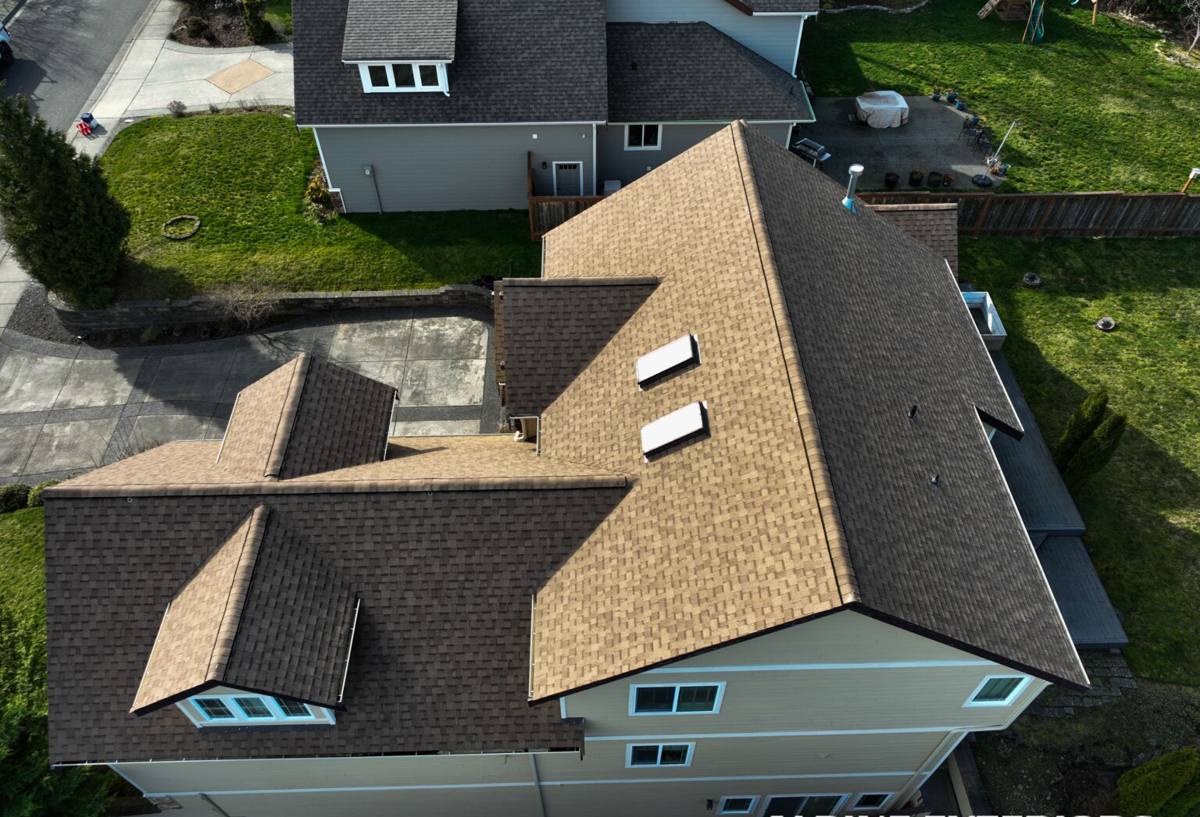
How the Wrong Siding Fails in Conditions Like Ours
Most siding failure in this region isn't sudden — it's cumulative. Moisture gets behind or into the material, doesn't get a chance to dry out between rain events, and the damage compounds season after season. Depending on the product, that shows up as:
- Swelling, delamination, or soft spots where engineered wood or composite panels have absorbed water at seams and cut edges
- Persistent moss and mildew staining on shaded walls that never fully dries between storms
- Paint and caulk failing early, because the substrate underneath is moving with moisture and temperature rather than staying dimensionally stable
- Warping or buckling in vinyl during temperature swings, and brittleness that shows up as cracking after years of UV and cold exposure
- Hidden rot at butt joints, corners, and penetrations where water intrusion isn't visible until it's already caused structural damage
These aren't hypothetical failure modes — they're the predictable result of putting moisture-sensitive materials in a climate that rarely lets anything dry out completely. It's a big part of why we've standardized on one type of siding for homes in this area.
Why We Install Only James Hardie Fiber Cement Siding Here
We install James Hardie fiber cement siding exclusively — we don't offer LP SmartSide, vinyl, Cemplank, Allura, or primed wood siding. That's a deliberate standard, not a lack of options. Each of those alternatives has real strengths, but each also carries a moisture or maintenance trade-off that we don't think holds up well over the long run in a climate like Skagit County's: engineered wood products rely on factory sealing that has to stay perfect at every cut edge, vinyl expands and contracts with temperature and can crack with age, and unfinished wood siding needs a repainting and caulking cycle that most homeowners don't want to keep up with for thirty years.
Fiber cement is cement, sand, and cellulose fiber, fully cured, so it doesn't absorb and swell the way wood-based products can, and it doesn't expand and contract with temperature the way vinyl does. It's also non-combustible, which matters to a lot of homeowners regardless of climate.
Engineered for This Exact Climate
James Hardie manufactures different formulations for different climate zones, and the HZ5 product line used throughout western Washington is engineered specifically for cold, wet, high-moisture regions like ours. That's a meaningful distinction — it means the product isn't a generic siding adapted to our climate, it's built for conditions like the ones Mount Vernon actually sees. On top of that, Hardie's ColorPlus factory finish is baked on and cured under controlled conditions, which gives it better resistance to fading and moisture-related failure than a field-applied paint job, and it comes with a meaningful warranty backing both the substrate and the finish.
What a Correct Fiber Cement Installation Actually Involves
Fiber cement is only as good as the installation behind it. A huge share of the siding problems we see on older homes aren't a product failure — they're a water-management failure from an installation that skipped steps that don't show up in a drive-by inspection. Done right, a fiber cement job includes:
- A proper weather-resistive barrier installed over the sheathing, lapped correctly at every seam and penetration
- Rainscreen or furring strips in situations that call for a drainage gap, so any water that does get behind the siding has somewhere to go and can dry out
- Correct flashing at every window, door, deck ledger, and roof-to-wall intersection — the single most common source of hidden rot when it's missed
- Manufacturer-specified fastener type, spacing, and placement, since fiber cement is unforgiving of improvised nailing patterns
- Proper clearance between the bottom edge of the siding and grade, decks, patios, and roof lines, so water and splash-back don't sit against the material
- Factory-cut and factory-primed edges kept intact wherever possible, with any field cuts sealed per Hardie's specifications
- Caulking used only where it's actually needed structurally, not as a substitute for correct flashing and overlap
Water Management Details That Matter Most Here
In a climate that doesn't give walls much time to dry, the flashing and drainage details matter more than they would somewhere drier. We pay particular attention to horizontal trim, window heads, and any area under an overhang or in constant shade, since those are the spots where moss gets a foothold first and where a missed flashing detail will show up as a problem years down the road rather than immediately.
Siding Options Mount Vernon Homeowners Consider
| Material | Moisture Performance in This Climate | Long-Term Maintenance | Fire Resistance |
|---|---|---|---|
| James Hardie Fiber Cement | Engineered for wet, cold climates; doesn't swell or rot | Low — factory finish holds up for years between repaints | Non-combustible |
| Vinyl | Doesn't absorb water, but can warp, gap, or crack with age and temperature swings | Low, but replacement panels can be hard to color-match later | Combustible |
| LP SmartSide / Engineered Wood | Vulnerable at cut edges and seams if sealing isn't perfect and maintained | Moderate — depends on ongoing edge sealing and caulk maintenance | Combustible |
| Primed Wood / Cedar | Absorbs moisture readily; performs poorly without diligent upkeep | High — regular repainting and caulking required | Combustible |
This is a general comparison, not a claim that every alternative product will fail — plenty of siding materials perform adequately when installed and maintained perfectly. It's simply why, weighing moisture behavior, upkeep, and longevity against what we're willing to warranty and stand behind, fiber cement is what we install on homes in this area.
Our Process for Mount Vernon Siding Projects
Every project starts the same way regardless of the home's age or condition:
- On-site assessment — we look at the existing siding, sheathing condition, and any signs of past moisture intrusion before recommending a scope of work
- Product and color selection — walking through Hardie's plank, panel, and shingle profiles and ColorPlus palette against the home's style
- Tear-off and sheathing inspection — removing old siding to check for hidden rot or damage that needs to be addressed before new siding goes on, rather than covering it up
- Weather barrier and drainage installation — the unglamorous layer that determines how the siding performs for the next thirty years
- Flashing and trim detailing — done before panels go up, at every window, door, and penetration
- Fiber cement installation — following Hardie's fastening and clearance specifications throughout
- Final walkthrough — reviewing the completed work with the homeowner and covering warranty registration
Signs It's Time to Replace Your Siding
Not every home needs full replacement — sometimes repair or spot maintenance is the honest answer. These are the signs worth having looked at:
- Soft, spongy, or visibly swollen sections of siding, especially near the bottom courses or around windows
- Persistent moss or dark staining that returns quickly after cleaning
- Paint that's peeling, bubbling, or failing faster than a normal repaint cycle would suggest
- Visible gaps, warping, or buckling in vinyl panels
- Cracking, chipping, or crumbling at siding edges and corners
- Rising energy bills that could point to compromised insulation or air sealing behind failing siding
- Any past water staining on interior walls near exterior siding that's never been fully explained
Why Local Experience in Mount Vernon Matters
A crew that already works regularly in Mount Vernon and the surrounding Skagit County area knows how this specific climate behaves on a job site — which walls hold moisture longest, how much drying time to plan for between steps, and what flashing details actually matter here versus in a drier region. That experience also means familiarity with local permitting requirements and inspection expectations, and a track record of jobs in the area that homeowners can ask about directly. Siding is a long-term investment in the home; it's worth hiring people who already understand the specific conditions it has to survive.
If you're weighing a siding project on your Mount Vernon home, we're happy to walk through what we see on your specific house and what a correct fiber cement installation would involve — no pressure, no obligation. Use the form below to request a free estimate.