 Anacortes Roofing
 Roofing on Fidalgo Island's Ship Harbor Side
Homes in the Ship Harbor area sit close enough to the water that the roof takes a different kind of beating than a house a few miles inland. You've got salt-laden air drifting off the harbor, wind-driven rain that finds every weak seam, and enough tree cover in spots to keep parts of the roof shaded and damp for days after a storm passes. Add in the long moss season that Skagit County is known for, and a roof out here is working harder than most homeowners realize until something starts leaking.
A new roof installation in this part of Anacortes isn't just about swapping old shingles for new ones. It's about building the roof system correctly for the conditions it will actually face — proper ventilation, the right underlayment, flashing detail that won't corrode prematurely, and a material choice that can handle years of salt exposure without shortening its own lifespan.
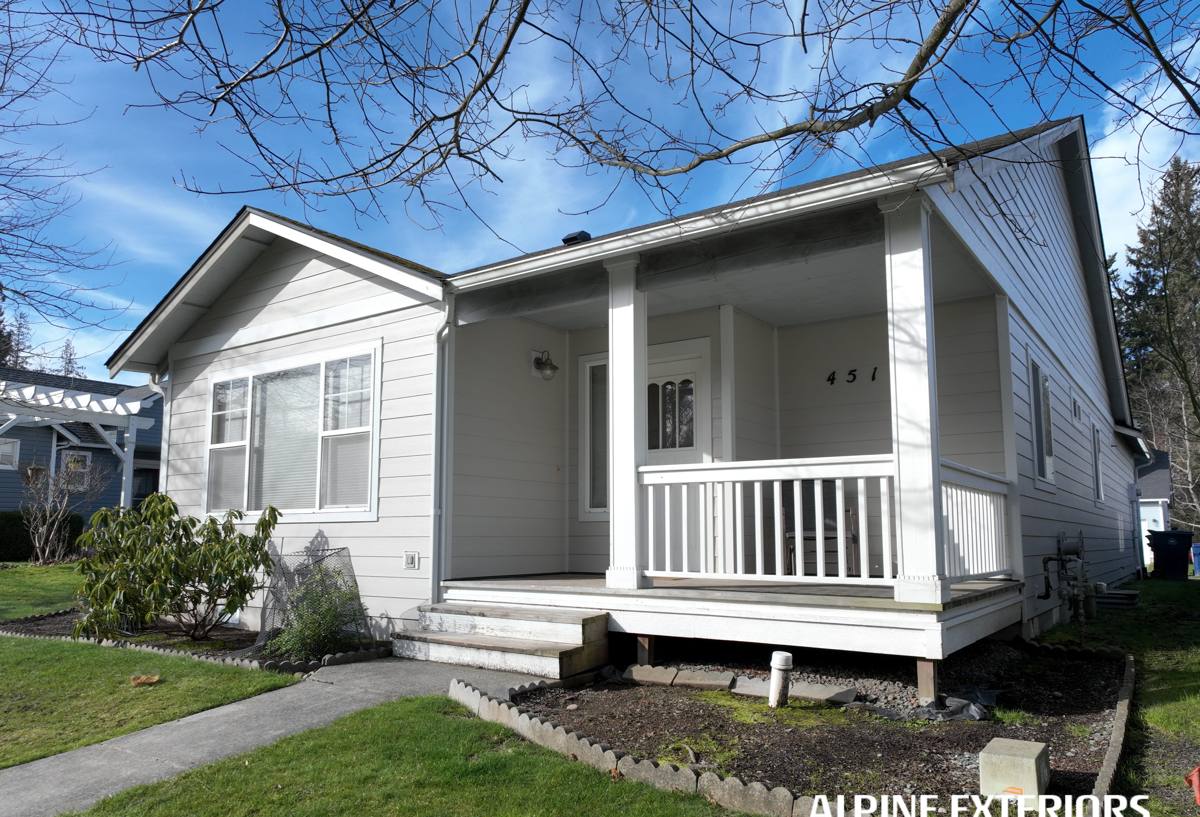
What Salt Air, Rain, and Moss Actually Do to a Roof
It helps to understand the specific ways this environment wears down a roofing system, because it changes what "correct installation" means out here compared to a drier, inland job.
Salt Air and Metal Fasteners
Salt in the air accelerates corrosion on exposed metal — nails, flashing, vent boots, and hardware. A roof installed with the wrong fastener grade or unprotected flashing can show rust streaks and weakened attachment points years before a comparable roof further from the water. This is one of the biggest differences between a generic install and one done with this location in mind.
Driving Rain and Wind-Driven Water
Rain that comes in sideways during a winter storm doesn't behave like rain falling straight down. It gets pushed up under shingle tabs, around chimney flashing, and into any gap where the underlayment or flashing wasn't lapped correctly. Roofs here need every water-shedding detail — laps, flashing direction, sealant placement — done to hold up against wind, not just gravity.
Moss, Shade, and Moisture Retention
Wherever a roof stays shaded and damp longer than the surrounding area, moss gets a foothold. Moss holds moisture against the roofing surface, works its way under shingle edges, and can lift material enough to let water underneath. A long moss season means this isn't a once-a-decade concern — it's an ongoing maintenance factor that starts the day the new roof goes on.
Signs a Ship Harbor Home May Need a New Roof
Some of these are obvious, others show up gradually:
- Granule loss showing up in gutters or at downspout outlets
- Shingles that are cupping, curling, or cracking, especially on the sides that face prevailing wind and rain
- Moss buildup that keeps returning within a season or two of cleaning
- Soft spots or sagging when walked on, which usually points to deck damage underneath
- Rust staining around flashing, vent pipes, or nail heads
- Daylight visible through the attic or water stains on interior ceilings after a storm
- A roof that's simply reaching the end of its material's expected service life
If you're seeing more than one of these, it's worth having the roof looked at before you're dealing with an active leak.
What a Correct New Roof Installation Involves
A roof is a system, not a single layer. Skipping or shortcutting any part of it undermines the whole job, especially in a marine climate like this one.
Tear-Off and Deck Inspection
We remove the old roofing down to the deck rather than layering over it. That's the only way to actually see the condition of the sheathing underneath — soft, delaminated, or water-stained deck sections get replaced before anything new goes down. Installing a new roof over a compromised deck just hides the problem for a few more years.
Ice and Water Barrier at Vulnerable Points
Eaves, valleys, and areas around penetrations get a self-adhering waterproof membrane underneath the primary underlayment. These are the spots where wind-driven rain and ice dams are most likely to force water backward under the roofing material, so they get extra protection beyond a standard underlayment.
Underlayment Across the Full Roof
A synthetic underlayment goes down over the rest of the deck as a second line of defense. In a location that sees this much wind-driven rain, underlayment quality and correct overlap direction matter more than they would in a milder climate.
Flashing Done Right
Chimneys, skylights, sidewalls, and roof-to-wall transitions are where most roof leaks actually originate — not the open field of shingles. Flashing has to be formed, lapped, and fastened so water is always directed out and down, never allowed to pool or wick backward. Given the corrosion risk here, we also pay attention to flashing material and fastener compatibility so dissimilar metals aren't set up to corrode each other over time.
Ventilation
Proper intake and exhaust ventilation keeps the attic space at a stable temperature and moisture level. Without it, trapped humidity condenses on the underside of the deck, which rots sheathing from the inside and can void material warranties. In a damp climate, ventilation isn't optional — it's part of what keeps the whole system dry long-term.
Final Material Installation and Detail Work
Shingles, panels, or whatever material was chosen go on last, following manufacturer spacing and fastening specs exactly. Ridge caps, exposed nail sealing, and edge metal are finished with the same attention as the field of the roof — these details are often where corners get cut on lower-quality installs.
Choosing a Roofing Material for This Environment
There's no single "best" roofing material for every home — it depends on budget, roof pitch, and how the house is shaded and exposed. Here's how the common options generally hold up in a salt-air, high-moss climate like Ship Harbor's:
| Material | Salt Air Performance | Moss Resistance | Typical Lifespan |
|---|---|---|---|
| Architectural asphalt shingle | Good with correct fasteners | Moderate — benefits from algae-resistant granules | 25–30 years |
| Standing seam metal | Very good with marine-grade coatings | Excellent — sheds moss naturally | 40–50+ years |
| Composite/synthetic shingle | Good | Good | 30–50 years |
| Cedar shake | Fair — requires more upkeep near salt air | Poor without regular treatment | 20–30 years with maintenance |
We're upfront about trade-offs rather than pushing one product for every roof. Cedar, for example, can look great, but it demands more regular maintenance in a damp, mossy climate to avoid moisture retention issues — that's a maintenance-burden conversation we'll have honestly, not a reason to avoid the material altogether if you want that look and are willing to keep up with it.
Our Installation Process
- On-site inspection and honest assessment of your current roof's condition
- Written estimate covering material options, scope, and timeline
- Scheduling that accounts for Skagit County weather windows — we don't tear off a roof ahead of a forecast that won't let us close it back up the same day
- Tear-off, deck inspection, and any necessary sheathing repair
- Waterproof membrane and underlayment installation
- Flashing, ventilation components, and material installation
- Full site cleanup, including magnetic sweep for stray nails
- Final walkthrough so you know exactly what was done and what to expect from the new roof
Why a Crew That Already Works Ship Harbor Matters
A roofer who works this specific stretch of Anacortes regularly already knows which fastener and flashing grades hold up against the salt air, which north- and shade-facing roof sections need extra moss prevention, and how local wind patterns off the water affect flashing and edge details. That's knowledge you don't get from a crew that mostly works dry, inland neighborhoods and treats every job the same.
It also means realistic scheduling. Skagit County weather doesn't always cooperate, and a crew familiar with the area plans tear-offs around forecasts instead of leaving a roof exposed and hoping.
Protecting Your New Roof: First-Year Checklist
A correctly installed roof still needs some basic upkeep, especially in a climate that grows moss year-round. A few habits go a long way:
- Keep gutters and downspouts clear so water doesn't back up under the roof edge
- Trim back tree limbs that shade the roof and keep it damp longer than necessary
- Have moss growth removed gently before it spreads, rather than waiting for a full season of buildup
- Schedule a walkthrough inspection after the first major winter storm season
- Watch for granule accumulation in gutters as an early sign of wear
- Avoid pressure washing the roof surface, which can strip granules and damage shingles
If your roof in the Ship Harbor area is showing its age, or you just want an honest read on where it stands, we're happy to take a look. Use the form below to request a free, no-pressure estimate — we'll walk the roof, tell you what we actually find, and lay out your options in plain terms.