 Anacortes Roofing
 Building a Deck That Actually Holds Up Near the Water
A deck built for Oak Harbor and the surrounding Anacortes waterfront needs to handle conditions that inland decks never see. Salt-laden air corrodes hardware faster than it does even a few miles inland. Driving rain off the water finds every gap in flashing and fastening. And the long, wet moss season here means anything horizontal — deck boards, stair treads, railing caps — is going to grow something green if it isn't built and finished to shed water properly. A deck that looks right on installation day but wasn't detailed for this climate will show problems within a couple of seasons: cupped boards, rusting screws bleeding through the finish, soft spots where water pooled instead of draining.
This page covers what we actually do differently when we build a deck for a home in this area — the materials, the framing details, the fasteners, and the maintenance realities — so you know what to ask for whether you hire us or someone else.
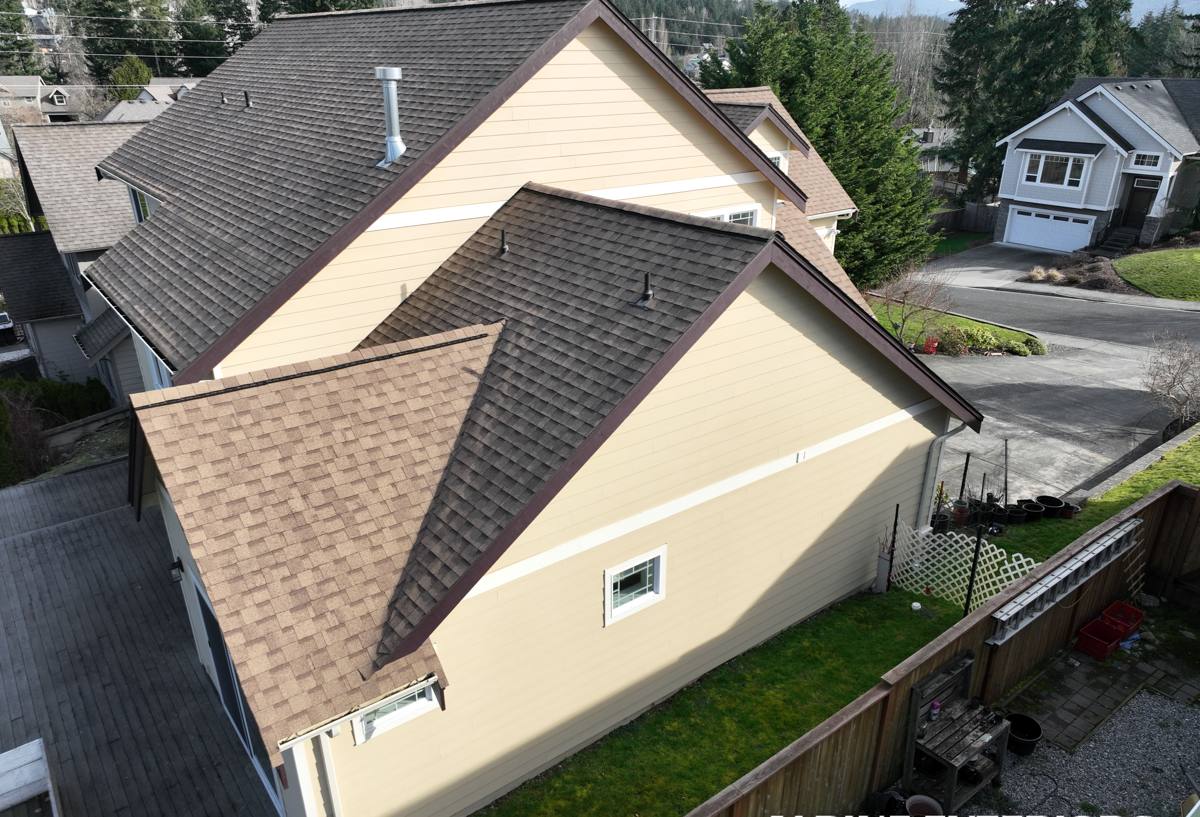
What Marine Exposure Does to a Deck Over Time
Homes closer to the water take a different kind of weathering than homes a few miles inland, even within the same general region of Skagit County and the nearby island communities. Three things matter most for deck longevity here:
Salt Air and Corrosion
Salt in the air accelerates corrosion on anything metal — nails, screws, joist hangers, bolts, and railing hardware. Standard hot-dip galvanized fasteners that are perfectly fine inland can start showing rust streaks near a saltwater deck within a few years. This isn't cosmetic only; corroded fasteners lose holding strength, and a joist hanger that's rusting through is a structural problem, not just an eyesore.
Driving Rain
Wind-driven rain off the water doesn't fall straight down — it gets pushed sideways into ledger connections, under railing posts, and into any seam that isn't properly flashed or caulked. A deck built assuming rain falls vertically will leak at the house connection eventually. This is one of the most common failure points we see on older decks in this area.
Moss and Standing Moisture
Long, wet winters and shaded lots grow moss on anything that stays damp and doesn't get sun or airflow. Moss holds moisture against the wood or composite surface, which accelerates rot in real wood and can stain or degrade the surface of some composite products over time. Deck boards with poor drainage gaps, or decks built low to the ground with no airflow underneath, are the ones that moss the fastest.
Choosing the Right Decking Material for This Climate
There's no single "best" decking material — it depends on your budget, how much upkeep you want to do, and how exposed the deck is to sun, shade, and moisture. Here's how the common options actually perform in a wet, salt-air environment:
| Material | Upfront Cost | Maintenance | How It Handles This Climate |
|---|---|---|---|
| Pressure-treated wood | Lowest | Annual cleaning, re-sealing every 1-2 years | Affordable and repairable, but needs consistent sealing or it checks, cups, and grows moss in shaded or damp spots |
| Cedar | Moderate | Sealing every 1-2 years to hold color and resist moisture | Naturally more rot-resistant than PT wood but still an organic material that needs upkeep near salt air |
| Composite decking | Higher | Occasional washing, no sealing or staining | Doesn't rot, but lower-quality or uncapped composites can absorb moisture at cut ends and stain in mossy shade |
| Capped composite / PVC | Highest | Occasional washing | Best moisture and mildew resistance of the group; capped edges matter most where cut ends face weather |
For decks with significant shade, low airflow underneath, or direct salt spray, we usually steer clients toward capped composite or well-sealed cedar over bare pressure-treated wood, simply because the maintenance burden of an unsealed PT deck in this climate is real — it's not a "seal it once" situation here the way it might be in a drier region.
What's Underneath Matters More Than What's On Top
Homeowners naturally focus on the decking surface, but the framing, ledger connection, and footings are what actually determine whether a deck lasts 10 years or 30. This is also where corner-cutting is hardest to spot after the fact.
Ledger Board Flashing
The ledger board — where the deck attaches to the house — is the single most common failure point on decks in wet climates. It needs proper flashing that directs water away from the house rim joist, not just caulk over a bolted board. Caulk alone will fail; flashing is a physical water path, and it's the difference between a dry rim joist and a rotted one hiding behind the siding.
Footings and Frost
Footings need to be sized and set to local frost depth and soil conditions, not guessed at. Undersized or shallow footings are a common source of deck settling and railing wobble over time, especially on sloped lots common near the water.
Joist Spacing and Airflow
Tighter joist spacing than code minimum gives a stiffer deck and less bounce, but it also matters for how well the decking material performs — composite in particular has manufacturer-specified span ratings that shouldn't be stretched. We also leave enough clearance underneath for airflow, which directly reduces moss growth and slows rot on the framing.
Our Deck Building Process
- On-site assessment. We look at sun exposure, drainage, existing structure (if replacing a deck), and how the site sheds water, since that drives material and framing decisions.
- Design and material selection. We walk through decking, railing, and hardware options against your budget and how much maintenance you actually want to do long-term.
- Permitting. Most decks above a certain height or attached to the house require a permit; we handle that so you're not the one navigating it.
- Demolition (if applicable). Removing an old deck also lets us inspect the rim joist and siding behind it for hidden rot before anything new goes up.
- Framing and flashing. Footings, ledger flashing, joists, and any structural connections go in first, built to handle this area's rain and salt exposure specifically.
- Decking, railing, and stairs. Surface material, railing system, and any stairs are installed with attention to drainage gaps and fastener choice.
- Final walkthrough. We go over the finished deck with you, including what maintenance it actually needs and on what schedule.
Fasteners and Hardware: The Detail That Gets Skipped
This is worth its own section because it's the most common shortcut we see on decks that failed early. Standard fasteners aren't rated the same way, and in a salt-air environment the difference shows up as rust stains, weakened holding power, and eventually hardware failure at connection points.
- Stainless steel or high-grade coated fasteners for anything near direct salt exposure, not bare galvanized
- Structural connectors (joist hangers, post bases) rated for the corrosion exposure of the site, not just the load
- Hidden fastener systems on composite decking, which also reduce the number of exposed metal points that can corrode or stain the surface
- Matched, compatible hardware — mixing metal types at a connection point can accelerate corrosion through galvanic reaction
None of this is visible once the deck is finished, which is exactly why it's the detail that gets cut on a low-bid job. It's also the detail that determines whether your railing post is still solid in year twelve.
Railings, Stairs, and Code Considerations
Railings and stairs are both a safety requirement and a maintenance consideration. Railing height, baluster spacing, and stair geometry are governed by code, and those requirements exist because they prevent real injuries — they're not optional details. Beyond code minimums, railing material choice matters for this climate the same way decking does: wood railings need the same sealing schedule as wood decking, while composite or metal railing systems reduce upkeep but should be checked for the same corrosion-resistant hardware standards as the rest of the structure. Stair treads in particular are worth extra attention to drainage and slip resistance, since they're the first place moss and standing water become a hazard rather than just a maintenance nuisance.
Maintenance: What a Coastal Deck Actually Needs
Even the right materials and build quality won't eliminate maintenance entirely — they just reduce how much you need and how often. Here's a realistic checklist for a deck in this climate:
- Sweep debris and standing organic matter off the surface regularly, especially in fall
- Wash the deck surface at least once a year to remove the moss and algae film that builds up over a wet winter
- Check and re-seal wood decking or railings on the schedule the product actually needs — don't wait for visible graying or cupping
- Inspect ledger flashing and the house connection annually for any gaps, cracking caulk, or water staining on the siding above it
- Look underneath the deck once a year for framing moisture, moss buildup on joists, or any signs of pest activity
- Tighten or replace any visibly corroding hardware before it becomes a structural issue, not after
Composite and capped decking reduce the sealing and staining line items but don't eliminate the washing, inspection, or hardware checks — nothing fully "set and forget" survives this climate unattended.
Why It Matters to Hire a Crew That Works This Area Regularly
A deck built to a generic national spec sheet, without accounting for salt air, driving rain, and a long moss season, tends to show its problems early — usually right at the ledger connection or in the hardware. A crew that regularly builds and repairs decks around Anacortes and the nearby Oak Harbor area already knows which fastener grades hold up, which decking products handle shaded, damp sites without staining, and how local framing needs to account for this specific coastline's weather rather than a textbook average. That local pattern recognition is the difference between a deck that needs real repair work in year five and one that's still solid decades out.
If you're planning a new deck or need to replace one that's showing its age, we're happy to take a look and talk through what makes sense for your site and budget. Fill out the form below for a free, no-pressure estimate.