 Anacortes Roofing
 Building Decks for Old Town Anacortes' Older Homes and Coastal Exposure
Old Town Anacortes is one of the older residential pockets in the city, and it comes with a mix of conditions that a deck builder has to respect: homes with some age on their framing and siding, lots close enough to the water to catch salt-laden air off the sound, and mature tree cover that keeps things shaded and damp for long stretches of the year. A deck built here needs to do more than look good for the first summer. It needs to shrug off the specific abuse that Anacortes and the rest of Skagit County throw at exterior wood and fasteners year-round.
We build custom decks throughout Anacortes, and Old Town projects tend to have their own personality: smaller, older lots, mature landscaping to work around, and homes where the deck has to tie into existing grade, foundations, or additions that weren't planned with a deck in mind. That's a different job than a new-construction deck on a flat lot, and it pays to have a crew that's done both.
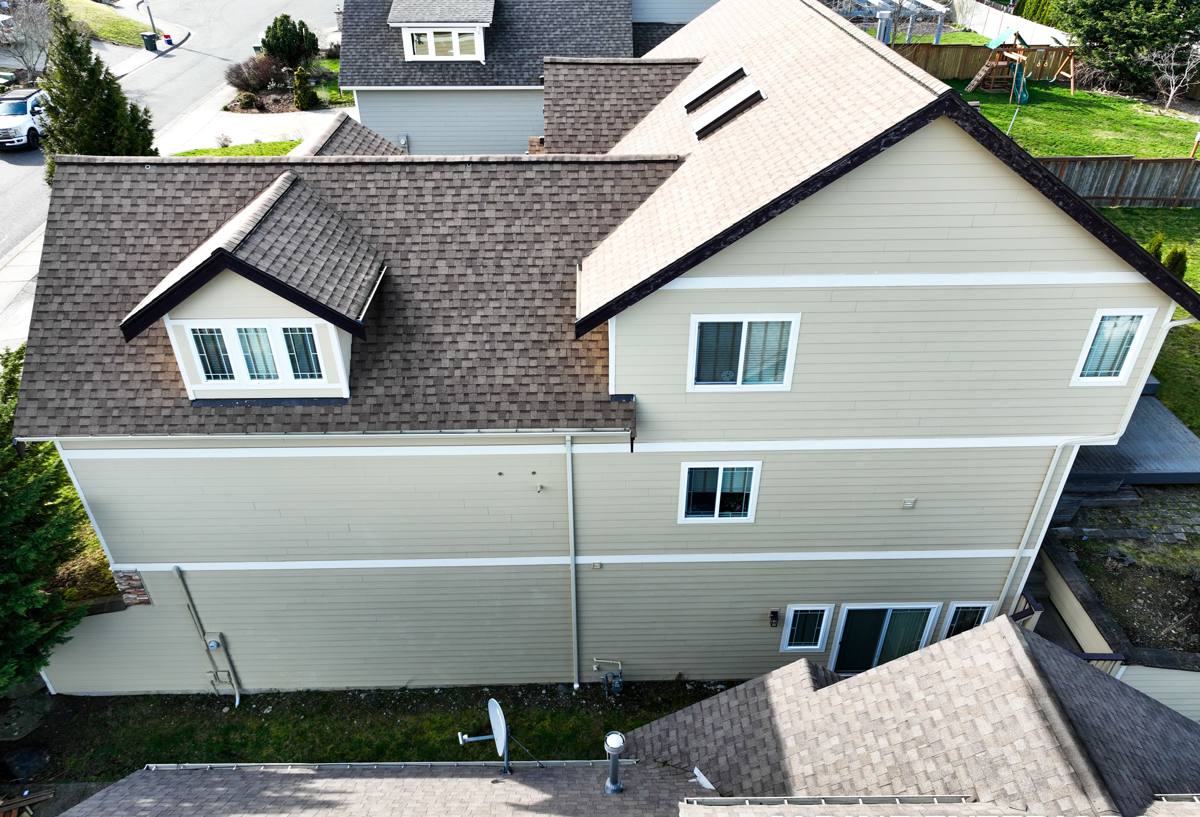
What Anacortes' Climate Actually Does to a Deck
Three things drive almost every deck failure or premature repair we see in this area:
- Salt air: Even a few blocks inland, airborne salt accelerates corrosion on fasteners, hardware, and any metal railing or post base that isn't rated for it. Standard interior-grade or bargain exterior hardware will rust and stain the wood around it within a couple seasons.
- Driving rain: Storms here don't just fall straight down — wind-driven rain gets pushed sideways into ledger connections, under poorly flashed rim joists, and into end grain on boards that weren't sealed on all six sides. Most of the rot we find starts at a connection point, not in the middle of a board.
- Long moss season: Shade from mature trees plus persistent damp means moss and algae get a real foothold on any deck surface that doesn't shed water and dry out between rains. Moss holds moisture against the decking, and on wood surfaces that moisture works its way into the grain.
None of this is unique to Old Town specifically, but the combination of older tree canopy, proximity to the water, and homes that have already settled into their grade tends to make these issues show up sooner here than on a newer, more exposed lot.
Where We See the Most Damage on Existing Decks
On repair and replacement calls in this neighborhood, the recurring problem areas are the ledger board connection to the house, stair stringers where they meet grade or a concrete pad, and any post base sitting in soil or mulch instead of on a properly drained footing. Fastener corrosion around railings is the other common one — you'll see rust streaks bleeding down the face of a board well before the structure itself is actually compromised.
Material Choices That Hold Up Here
There's no single "right" decking material for every budget, but there are real trade-offs specific to this climate that we walk every homeowner through before they commit.
| Material | How It Handles Salt Air & Moss | Maintenance | General Cost Position |
|---|---|---|---|
| Pressure-treated lumber | Needs sealing on all sides and ends; end grain is where rot starts if untreated cuts are left exposed | Annual cleaning and periodic re-sealing | Lowest upfront cost |
| Cedar | Naturally rot- and insect-resistant, but still needs a moss-inhibiting cleaning routine in shaded, damp spots | Periodic cleaning and finish renewal | Mid-range |
| Composite / capped composite | Doesn't absorb moisture into the board core, which cuts down on rot risk; surface can still grow moss/algae in shade and needs washing | Low — mostly washing, no sealing | Higher upfront, lower long-term upkeep |
| Fastener/hardware grade | Standard coated fasteners corrode faster in salt air; stainless or marine-rated hardware holds up far longer | None if spec'd correctly the first time | Small upcharge, large difference in longevity |
Our standard on any deck we build, regardless of decking material, is stainless steel or otherwise marine-rated fasteners and structural hardware. It costs a little more up front than the coated fasteners often used elsewhere, but replacing rusted-out hardware under a finished deck is a much bigger job than paying for the right hardware once.
Structural Details That Matter More Than People Expect
Ledger Flashing and Water Management
The single biggest point of failure we address on both new builds and rebuilds is the ledger-to-house connection. Proper flashing that directs water away from the house band joist — not just a bead of caulk — is non-negotiable given how much wind-driven rain this area sees. We also detail the ledger connection so it isn't the lowest point where water can pool against the house.
Footings and Post Bases
On older Old Town lots, grade around the house has often shifted over decades, and drainage patterns aren't always what they look like on the surface. We set footings below frost depth per code and keep post bases up off the soil on proper hardware, so posts aren't sitting in damp mulch or standing water after a storm.
Board Spacing and Airflow
Correct gapping between boards and adequate airflow underneath the deck are what actually keep moss from taking hold as fast. A deck built tight to the ground with poor ventilation in a shaded yard will grow moss noticeably faster than one with proper clearance and drainage below it — that's a design decision made at framing time, not something you can fix later with a pressure washer.
Our Process for Old Town Anacortes Deck Projects
- On-site walk and grade assessment: We look at existing grade, drainage, tree cover, and how the deck will tie into the house before we talk materials.
- Design and material selection: We go over the trade-offs above in plain terms — no upselling toward the most expensive option if a mid-range choice fits the budget and the site conditions.
- Permitting: Deck permits and inspections go through the City of Anacortes; we handle that paperwork and coordinate inspections as part of the build.
- Demo of any existing structure: If we're replacing a deck, we inspect the ledger and framing underneath as soon as the old decking is off, before pouring new footings or reusing anything questionable.
- Framing and flashing: Ledger flashing, footings, and post bases go in to the standard described above, not the minimum code allows.
- Decking, railing, and finish work: Final surface, railing system, and stairs installed with fastener and hardware choices suited to salt air exposure.
- Walkthrough: We go over basic maintenance — cleaning frequency, what to watch for around fasteners and ledger flashing — so the deck actually gets the lifespan it's built for.
Maintenance Realities for This Neighborhood
A deck in Old Town Anacortes isn't a "set it and forget it" structure, no matter what material you choose. What we recommend to homeowners here:
- Clean the deck surface at least once a year, more often under heavy tree cover, to knock back moss and algae before it stains or holds moisture against the boards.
- Check fastener heads and visible hardware annually for rust streaking — it's an early warning sign, not just a cosmetic issue.
- Keep gutters and downspouts near the deck clear so runoff isn't dumping extra water onto or under the structure during storms.
- Reseal wood decking (cedar or pressure-treated) on the schedule recommended for that finish — skipping a cycle in this climate shows up faster than it would somewhere drier.
- Trim back overhanging branches where practical to cut down shade and speed up drying time after rain.
Why Hire a Crew That Already Works This Area
A deck built to a generic spec sheet — the kind that works fine in a drier inland climate — is often under-detailed for what Anacortes actually delivers over a few winters. Crews who work Skagit County's coastal edge regularly know to flash ledgers more aggressively, spec corrosion-resistant hardware as standard rather than upgrade, and account for moss-prone shade patterns at the design stage instead of leaving it as a maintenance problem for the homeowner. On older lots like the ones common in Old Town, that local judgment about grading, drainage, and tie-in to an existing structure is worth as much as the materials themselves.
If you're planning a new deck or looking at replacing one that's showing its age, we're happy to come take a look and put together a straightforward, no-pressure estimate — just fill out the form below to get started.